
Backpackers & solo explorers
Find walkable neighborhoods, budget eats, and flexible routes that maximize daylight and minimize transit friction.
A free online travel guide, trip guide, and tourist guide in your pocket, covering 49 countries and 201+ cities — no app to download.
Plan smarter with day-by-day itineraries, self-guided city walks, and audio companions you can follow on foot — free for every trip.
Tour Guide helps curious travelers plan smarter with city walk-throughs, day-by-day itineraries, and insider tips from locals across 49 countries.
Start with a destination like Rome, Tokyo, or Paris, then dive into our travel guides for food, culture, and neighborhood picks.
Or browse by attraction type to discover world-class museums, medieval castles, natural wonders, and more.
Explore the #tourguide hub to turn social inspiration into a real itinerary.
A tour guide is a local expert who shows you around a destination — narrating its history, steering you past the queues, and pointing out the small details a map never mentions. The words vary — some travelers look for a tourist guide, a trip guide, or simply a guide for their holiday — but the need is the same: someone who turns an unfamiliar city into a place you actually understand. Some want a private guide for a whole trip; others just want a tourist guide for a single museum or a half-day neighborhood walk. Our full explainer covers what a tour guide is, the different types you can hire, and what each one typically costs.
Think of this site as your free travel guide for the whole world. Free city walk-throughs across 49 countries mean you always have a trusted guide for tourists in your pocket — whether you are booking a world tour or just working out how to travel with a guide's confidence for a single weekend away. Point yourself at any destination and the page reads like a local briefing rather than a brochure.
You do not always need to book a person to travel with a guide's confidence. Every city page here works as a self-guided tour guide: a clear highlight loop, walking times from the nearest station, and the opening hours that decide whether your morning runs smoothly. When a site genuinely rewards expert commentary — the Vatican, the Alhambra, or the Acropolis — the page flags where a booked guide is worth the money and where a free self-guided route wins.
Not sure which approach fits you? Our guide for every type of traveler matches families, solo explorers, history lovers, and luxury travelers to the right style, while our walkthrough on how to find a tour guide covers licensing, fair pricing, and booking in the local language across our worldwide destinations.
Travelers use “tourist guide”, “tour guide”, and “trip guide” more or less interchangeably, but the practical question is simpler: how much hand-holding does each stop actually need? The comparison below lines up the main ways to see a city — a licensed tourist guide, a small-group tour, a free self-guided route, or an audio walk — so you can pay for expertise only where it changes the visit and read the rest of the trip for free.
| Way to see a city | Best for | Typical cost | Where it shines |
|---|---|---|---|
| Licensed tourist guide | Dense history or restricted-access sites | ≈ €150–€350 ($160–$380) a day, private | The Vatican, the Alhambra, or the Acropolis |
| Small-group tour guide | Meeting people and a quick themed intro | ≈ €20–€55 ($20–$60) per person for 2–3 hours | First-day orientation, food and market walks |
| Self-guided route (free here) | Independent travelers who like to linger | Free | Neighborhoods, waterfronts, and any destination with a highlight loop and walking times |
| Self-guided audio walk | A story on the move without a group pace | Free | The Colosseum and Roman Forum and other audio walks |
Not sure which row is you? Our guide for every type of traveler matches families, solo explorers, and history lovers to a style, the tour budget calculator turns any option into a price range before you commit, and our explainer on what a tour guide does walks through licensing and fair pricing. When you would rather just set off, the tour guides near me tool ranks our worldwide destinations by distance from where you are standing.
A good trip guide is more than a list of sights: it answers when to go, what a visit costs, and how to string a route together. Start with our when-to-visit calendar, which rates every city month by month so you can dodge the crowds, catch the festivals, and travel when a place is at its best. Already have your dates? The trip planner lets you save cities and build a multi-stop itinerary that stays in your browser — no account, no sign-up, just a working plan you can travel with.
If you are weighing whether to travel with a guide for part of the journey, the tour budget calculator turns tour type, group size, and duration into an instant price range in local currency and USD, so a booking never blindsides you. And when you would rather set off on foot from wherever you have landed, the tour guides near me tool ranks our covered destinations by distance from your location. Together they work like a world tour guide you carry in your pocket, pointing you across our worldwide destinations from the first spark of an idea to the last day of the trip.
Every page here is an online travel guide first: it opens in any phone or laptop browser, with no app to download and no sign-up to sit through. Read it at the kitchen table while you plan, then pull the same tour guide up online mid-street when a museum turns out to be shut and you need a fresh plan in seconds. Because there is nothing to install, the guide is ready the moment you land — search a destination, tap a city, and its highlight loop, opening hours, and walking times are already on screen.
Working a tour guide online does not mean you need a signal for every step. Load a city page over café Wi-Fi and it stays readable as you walk, while our self-guided audio walks let your browser narrate the route aloud with your phone still in your pocket. From Rome's Colosseum to a first morning in Tokyo, the same free online guide spans 201+ cities — no roaming bill, no ticket counter, and no fixed tour to keep pace with. When you are still deciding where to point it, search any city and start reading.
What makes an online travel guide worth the name is that it never goes stale in your bag. Opening hours, ticket prices, and closures are kept current on each destination page as places change, so the version you read on the plane is the version you follow on the pavement — not a guidebook printed eighteen months ago. It renders the same on a phone, a tablet, or a laptop, so you can plan on a big screen at home and pick up exactly where you left off on a small one abroad. And because nothing sits behind an account, you can hand your screen to a travelling companion or check the best time to visit without logging in anywhere.
The first question in any new place is always the same: what are the best things to do here? Every destination on this site answers it with a ranked highlight loop rather than an overwhelming A-to-Z list — the two or three experiences that define a city come first, followed by the neighbourhood detours worth your time if the schedule allows. Landing in Rome with a single free morning is a different brief from a slow week in Kyoto, and each page is built to scale to whichever one you have.
Prefer to chase a theme instead of a city? Browse by attraction type to line up the same kind of experience across the whole map — a run of world-class museums, a castle-and-palace itinerary through Europe, the natural wonders that anchor a road trip, or the markets and food halls where a city actually eats. When you are still deciding where to point all that energy, the travel bucket list and our planning guides turn a vague urge to go somewhere into a shortlist you can act on.
A city is where a trip happens, but the most useful travel guide starts one step wider — with the country around it. Before you commit to Rome or Kyoto, our country guides answer the questions that shape a whole route: which regions justify the extra train, when the shoulder season really falls, and what a first-timer needs to know at the border. Open Italy, Japan, or France and you get the national picture — the regional split, the rhythm of the seasons, and the cities that anchor a two-week loop — before you ever zoom in to a single street.
That country-first view is what turns a pile of landmarks into a real travel guide. A week in Spain reads very differently depending on whether you base yourself in Andalusia or the north, and Greece splits cleanly between its mainland and its islands, so the guide tells you where the ferries and driving distances will cost you a day. Longer-haul trips lean on the same framing: an Egypt itinerary hinges on the Nile corridor, while Thailand trades beaches against temple towns. Pick the country first and the individual city guides slot into a route that actually holds together.
Click on any city marker to explore guides, tours, and key attractions available.
Use these quick links to jump into the most-read city itineraries.
Pick the route that matches how you travel. Each pathway links to destination pages with tailored tips. Not sure which guide format suits your trip? Our guide for every type of traveler maps families, solo explorers, history lovers, and more to the right approach.
Find walkable neighborhoods, budget eats, and flexible routes that maximize daylight and minimize transit friction.
Shorter loops, open plazas, and must-see highlights with built-in breaks so everyone stays engaged.
Neighborhoods with signature stays, art districts, and refined culinary itineraries—planned with time to linger.
Story-rich routes that connect museums, ruins, and neighborhoods into a clear narrative arc.
Each format blends storytelling, visual cues, and practical tips so you stay autonomous while feeling guided.

Eiffel, the Louvre, and Saint-Germain backstreets in 72 hours—downloadable maps, flexible pacing, and photo cues at every stop.

A free self-guided audio walk from the Colosseum through the Roman Forum — read the narration or have your browser read it aloud.

Osaka Castle, neon-lit lanes, and market bites: authentic stories and community photos from Osaka.

Walk the Thames, catch skyline sunsets, and grab ready-to-download London routes.
Browse downloadable itineraries, offline audio guides, and compact maps for your next destination.

Expert guides covering planning, tours, practical tips, and seasonal travel advice for destinations worldwide.

When to visit Yogyakarta: the dry and wet seasons, crowd and price peaks, and the best months for Borobudur sunrise and the Prambanan ballet.
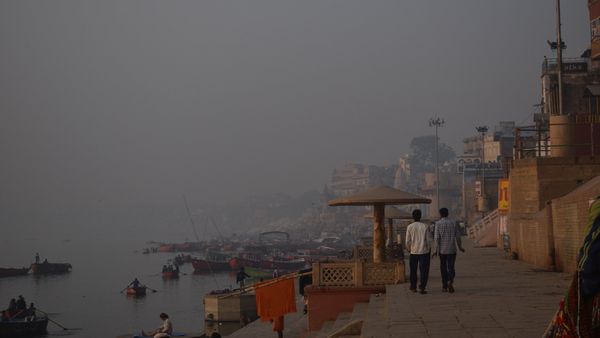
How to choose a guided tour in Varanasi: dawn Ganges boat rides, the Ganga Aarti, old-city ghat walks, silk-weaving visits, and Sarnath day trips.

Choosing the right guided tour in Udaipur: City Palace visits, old-city heritage walks, Lake Pichola boat rides, craft workshops, and Mewar day trips.

A practical planning guide to Mumbai — how many days to give the city, when to go, where to stay, which tour to pick, and how to budget.
Feeling spontaneous? Hit the button and let the globe choose your next destination from our full collection of 1018 places.
Quick answers to help you choose the right itinerary and keep exploring.
Yes — that is the whole idea. Rather than booking a person for every outing, you can open Tour Guide on your phone and let it act as an online tour guide for wherever you happen to be standing. Each city page reads like a briefing from a knowledgeable local: a highlight loop you can follow on foot, walking times from the nearest station, current opening hours, and the etiquette cues that keep you welcome inside temples, churches, and palaces. There is no app to install and no sign-up — every page works in any browser, so you can read it at home while planning or pull it up mid-street when a plan changes. Where a booked guide genuinely adds value, such as the Acropolis in Athens or the Alhambra in Granada, the page says so plainly; everywhere else, the free self-guided route is the tour guide you carry in your pocket.
Yes, and that personalisation is where it parts ways with a booked guide. A hired guide runs their own fixed script; Tour Guide reshapes itself around the trip you actually want to take. Tell it how you like to travel and the guide for every type of traveler sends solo explorers, families, and history lovers down different routes through the same city. Lock your dates against the when-to-visit calendar, save the stops that appeal in the trip planner, and the site strings them into an itinerary that is yours alone — kept in your own browser, with no account and no stranger's schedule to keep pace with. Out on the road, the tour guides near me tool reorders every covered destination by how close it is to you, so travelling with a guide's confidence never hinges on booking a person days ahead. It is less a guide you follow than one that quietly follows your lead.
It depends on what you value, but an online travel guide solves two problems a printed guidebook and a downloaded app rarely do. A paper guidebook is already out of date the day it is printed, and a travel app tends to eat phone storage and hide its best routes behind a subscription. Every city page here loads in any browser with nothing to install and nothing to pay, and the opening hours, ticket prices, and walking times are refreshed as places change rather than frozen in ink. Unlike a book you have to carry, you can search any city the moment plans shift, and unlike most apps there is no account wall between you and the self-guided audio walks or planning guides. Load a page over café Wi-Fi and it stays readable on the street, so you are not stranded without a signal. The one thing a printed guide still wins on is browsing with no device at all — for everything else, a free online guide that updates itself is hard to beat.
Tour Guide is a website rather than a downloadable app, so it is not a true offline product — but it copes with a dead zone far better than that sounds. Once a city page has loaded, it stays readable in your browser tab even after you walk out of coverage, so the trick is to open the pages you need over hotel or café Wi-Fi before you head out for the day. The highlight loop, walking times, and opening hours are plain text and images that render instantly and never phone home. The self-guided audio walks work the same way: load the route while you still have a signal and your browser can narrate it aloud as you go. Most phone browsers also let you save a page for later reading if you know a stretch of the trip will be offline. Live features such as search and the tour guides near me distance tool do need a connection, but the core guide is built to survive without one — no roaming bill required.
The best tour guide websites share a handful of practical traits, and it is worth checking for them before you trust any site with a trip. First, the content should be free to read with no account wall — a guide you have to sign up for is a guide you cannot check quickly mid-street. Second, it should be genuinely current: opening hours, ticket prices, and closures change constantly, so look for a visible last-updated date on each destination page rather than advice frozen on the day the site launched. Third, a strong touristic guide works in any browser with no app to download, so it loads the moment you land and stays readable over patchy café Wi-Fi. Fourth, depth beats a long wall of links — the best sites lead with a ranked highlight loop, walking times from the nearest station, and honest notes on where a booked guide earns its fee versus where a self-guided route wins. Tour Guide is built around exactly those criteria: a free online travel guide covering 201+ cities, refreshed as places change, with no sign-up and no download. Browse the destination library or search any city to see how it reads before you rely on it.
The terms overlap in everyday speech, but professional usage makes a useful distinction. The World Federation of Tourist Guide Associations uses 'tourist guide' for someone who interprets a place's cultural and natural heritage, normally with a qualification recognised for that area. 'Tour guide' is a broader informal label and does not, by itself, establish a person's training or licence. A tour manager mainly handles the itinerary, logistics and group welfare; one person can combine roles if appropriately qualified. When booking, check the guide's qualifications, language, itinerary and any local licensing requirements instead of relying on the job title alone. For self-guided planning, browse our destination guides and nearby places; read what a tour guide does when deciding whether to hire a person.
Tour Guide gathers tours and guides of every format in one place, so you can match the level of hand-holding to what each stop actually needs. The backbone is a self-guided tour guide for every destination: a ranked highlight loop, walking times from the nearest station, and current opening hours you follow at your own pace. For streets that reward a narrator, the self-guided audio walks let your browser read a route aloud as you go, starting with the Colosseum and Roman Forum in Rome. When a booked guided tour genuinely earns its fee — the crowded, ticketed, or densely historic sites — each city page flags it plainly, and our walkthrough on how to find a tour guide covers licensing, fair pricing, and the questions worth asking before you pay. Prefer to chase a theme across the whole map instead of one city? Browse by attraction type to line up museums, castles, and natural wonders into a single trip. Whichever mix you choose, the tours and guides here stay free to read, with no app to download and no account to create.
Start with the city page for wherever you are headed: instead of a flat A-to-Z list, it leads with a ranked highlight loop — the two or three things to do that genuinely define the place — then layers in the neighbourhood detours, viewpoints, and food stops worth adding if your schedule has room. Short on time? Follow the loop in order and you will hit the essentials without backtracking. If you would rather chase a particular interest across the whole map, browse by attraction type to pull up every museum, castle, natural wonder, or market we cover in one view, then route between them. And when you are still deciding where to go at all, the travel bucket list and our planning guides turn a vague urge to travel into a concrete shortlist of things to do.
Start with the destination, not the guide: open the city page for where you are headed and it flags the specific sites — the Vatican, the Alhambra, a dense old town — where a booked guide genuinely earns its fee, and the many places a free self-guided route serves you just as well. When you do want a person, prioritise a licensed local guide (many countries issue an official badge or number you can ask to see), read recent independent reviews rather than operator-supplied testimonials, and book through the official site of the monument or a reputable platform rather than an unvetted street tout. Confirm the language, group size, duration, and exactly what the price includes — tickets, transport, tips — before you pay. If you are travelling without fixed plans, the tour guides near me tool ranks our covered destinations by distance from your location, and our walkthrough on how to find a tour guide covers licensing, fair pricing, and booking in the local language.
Prices vary widely by city, format, and season, but a few benchmarks help. A shared small-group walking tour typically runs about $20–$60 (€18–€55) per person for two to three hours, while a private licensed guide is usually booked by the half or full day — roughly $120–$350 (€110–€320) for a full day in most European and North American cities, more for scarce specialists such as an Egyptologist in Luxor or a private Vatican guide. Hourly private rates commonly land around $50–$90 (€45–€85). Entry tickets, transport, and gratuities are often extra, so always confirm what the quote includes. To turn tour type, group size, and duration into an instant range in local currency and USD, use our free tour budget calculator — and remember that every destination guide on this site is free, so you only pay for a guide on the legs of the trip where one clearly adds value.
A country guide zooms out from the individual cities to the decisions you make before anything is booked: how the country breaks into regions, when its high and shoulder seasons fall, roughly how long the internal distances take, and the entry basics worth checking for your passport. The matching city page then handles the on-the-ground detail — the highlight loop, walking times, and current opening hours — so the two are meant to be read as a pair. Planning Italy, Japan, or Spain, you start on the country guide to sketch the route and pick the shoulder-season weeks, then open each city to fill in the days. For a trip that crosses borders, string the country guides together with the when-to-visit calendar and save each stop in the trip planner so the whole itinerary lives in one place.
Start with the city overview page, which presents the top landmarks, a suggested day-by-day flow, and a map of key neighborhoods — everything you need to orient yourself within five minutes. From there, open the dedicated travel guides for deeper dives into specific districts, restaurant clusters, and seasonal considerations such as avoiding summer crowds at the Colosseum or timing a canal walk in Amsterdam for golden-hour light. Each city guide is structured so that the first section covers the essential highlights — the two or three experiences that define the destination — while later sections layer in local nuance: neighbourhood cafés, off-peak transport tips, and free admission days at major museums. If your trip is short, follow the highlight loop in full before exploring secondary suggestions. The guide is designed to be useful whether you have 24 hours or a full week, scaling up naturally as your schedule allows.
Tour Guide was built specifically for independent travelers who want reliable structure without surrendering spontaneity to a group itinerary. Every route is designed for self-navigation: walking distances are stated in minutes from the nearest metro or tram stop, and transit shortcuts are called out so you spend less time on platforms and more time exploring. For example, the Tokyo guide flags the IC card system and explains exactly which train lines connect Shinjuku to Asakusa faster than the tourist-marketed alternatives. Each city page also notes the best hours to arrive at popular sites — arriving at the Sagrada Família before 9 am cuts queue time by roughly 40 minutes compared to a midday visit. Practical notes on solo-travel safety, luggage storage, and neighbourhood walkability are woven throughout, making the guides as useful for first-time solo travelers as for seasoned backpackers planning their tenth trip.
Tour Guide focuses on self-guided walking and transit routes, but recommends targeted guided experiences for the specific moments where a local expert adds irreplaceable value. Inside the Louvre, a 90-minute guided tour of the Richelieu wing covers more depth than three hours of wandering with an audio guide — so the Paris city page links to that option directly. For the rest of the day, the self-guided loop through the Marais and Île Saint-Louis requires no booking, no fixed start time, and no group pace to match. The balance is intentional: guided slots work best for sites with complex history, restricted access, or high crowd density, such as Vatican City, Alhambra, or the Acropolis. Self-guided routes work best for neighbourhoods, waterfronts, food markets, and anywhere the experience improves when you can linger. Our guides indicate which mode suits each stop so you can plan the right mix.
One-day visitors should go directly to the highlight loop on the city page, a curated route that covers the three to five experiences that matter most and sequences them to minimise backtracking. In Barcelona, for instance, the one-day loop routes you from the Gothic Quarter in the morning to the Eixample for lunch, then up to Park Güell before the afternoon crowds thin, and finishes with a walk down La Barceloneta as the light drops — approximately 9 kilometres total, all on foot or with two metro hops. The loop is timed so that famous sites are visited at their least congested hours: most open early, so arriving at 9 am instead of 11 am can recover 90 minutes of productive sightseeing. Secondary suggestions — day-two neighbourhoods, half-day escapes, evening dining streets — appear lower on the page so one-day visitors are never distracted by content that does not apply to their trip.
Tour Guide currently covers 49+ countries, 201+ cities, and 768+ individual attractions across four continents, ranging from European capitals like Paris, Rome, and Vienna to Southeast Asian hubs like Bangkok, Singapore, and Hanoi. The coverage spans three content tiers: country overview pages that explain entry requirements, regional differences, and best travel seasons; city pages with full itineraries, neighbourhood maps, and transit guides; and individual attraction pages with opening hours, ticket prices, GPS coordinates, and visit-duration estimates. New cities and attractions are added every month — recent additions have included secondary European cities such as Porto, Ghent, and Tallinn, which offer a high-quality travel experience with significantly lower crowds than the top-tier destinations. The destination library is updated in response to reader interest and seasonal relevance, so cities popular for winter travel receive fresh content ahead of the Northern Hemisphere autumn.
Tour Guide organises all attractions into browsable categories so you can filter by the kind of experience you want rather than searching city by city. Current categories include museums and galleries, castles and palaces, religious sites and cathedrals, natural wonders and national parks, beaches and coastline, historic neighbourhoods, and viewpoints. Each category page lists every matching attraction across all covered cities, with the city name, country, a one-line description, and a link to the full attraction page. This is particularly useful for travelers with a specific interest — someone planning a European castle itinerary can pull up every covered fortress across France, Germany, Spain, and the Czech Republic in a single view, then map their route from there. The Browse by Type section is accessible from the homepage and from every city page, making it easy to pivot from a city-first approach to a theme-first approach at any point in your planning.
Every city guide, country overview, itinerary, and attraction page on Tour Guide is completely free to access, with no account required and no content locked behind a subscription. This applies to all content tiers — the one-day highlight loops, the multi-day itineraries, the neighbourhood deep dives, and the individual attraction pages with opening hours and ticket prices. There are no paywalls, no premium tiers, and no hidden fees. The site does not require registration to read any page. Tour Guide is ad-supported, which means occasional display advertising may appear alongside content, but this does not affect the editorial independence of the guides or the accuracy of the recommendations. The goal is to make serious travel planning as accessible as possible — a backpacker on a tight budget and a traveler booking business-class flights should have access to the same quality of destination information.
Every attraction and city page on Tour Guide displays a last-updated date at the bottom of the page so you can assess freshness before committing to a plan. City pages are reviewed on a rolling monthly schedule, with priority given to destinations entering their peak travel season or cities where significant changes — new transport links, major site closures, updated admission prices — have been reported. Attraction pages are updated when opening hours, ticket prices, or visitor policies change; popular sites like the Eiffel Tower and Colosseum are checked quarterly because their entry conditions shift frequently. Seasonal tips within each guide — such as which months to avoid due to school holiday crowds or monsoon weather — are reviewed annually and calibrated to recent visitor reports rather than historical averages alone. If you spot outdated information, the site includes a feedback link on every page so corrections reach the editorial team directly.
Yes — the site is built to work as a world tour guide across an entire route, not just a single stop. Start on the when-to-visit calendar, which rates every covered city month by month, so a two-week run through Italy and Greece can be timed for Rome in shoulder season and the Greek islands before the August peak. Save each stop in the trip planner to build a multi-city itinerary that stays in your browser with no account, then open any destination for its highlight loop, walking times from the nearest station, and opening hours. If you are weighing a booked local guide for one leg of the journey, the tour budget calculator turns tour type, group size, and duration into a price range in local currency and USD. Used together, the tools act as a free trip guide that carries you from the first spark of an idea to the last day of the trip — whether you travel with a guide for part of it or self-guide the whole way.
Almost anywhere you travel, yes — but the way you find one depends on whether you book a person or self-guide. If you want a live guide, most licensed guides list the languages they lead in, and official monument sites, tourist boards, and reputable booking platforms let you filter tours by language, so you rarely have to settle for a route you can only half-follow; our walkthrough on how to find a tour guide explains how to confirm the guide's language, licence, and what the price covers before you pay. If you would rather not depend on a person at all, every destination guide here is written in plain English and works as a self-guided tour guide you read at your own pace — no interpreter, no group, and no risk of a tour running in a language you do not speak. The tour guides near me tool then ranks our covered destinations by distance so you can start reading the moment you land, wherever you are.
Every recommendation is editorially independent: the guides are not sponsored, and no tour operator pays to be featured. The default position is self-guided, because most neighbourhoods, waterfronts, and food markets reward the freedom to linger far more than a fixed group pace does. A booked tourist guide is only flagged where local expertise genuinely changes the visit — sites with dense history, restricted access, or heavy crowds, such as a guided walk through the Acropolis in Athens or the ticketed palaces of the Alhambra in Granada. You can read the full methodology behind how each call is made, and learn who researches and writes the guides on the about page. The aim is straightforward: point you toward a paid guide only when it clearly earns its place, and hand you a free self-guided route everywhere else.
A great tour guide blends three things: deep local knowledge, the storytelling to make it stick, and the judgement to read the group standing in front of them. The best guides do more than recite dates — they tie a building to the street it sits on, point out the detail you would have walked straight past, and shift the pace when the family at the back is flagging. Formal credentials matter where a country licenses guides — an official badge or registration number you can ask to see — but a licence alone does not make someone good; recent, independent reviews tell you far more about whether a guide can actually hold a room than an operator's own testimonials do. When you are weighing whether to hire one, our walkthrough on how to find a tour guide covers licensing, fair pricing, and the questions worth asking before you book. And when you would rather explore alone, every destination guide here is built to carry those same qualities — a clear highlight loop, the context behind each stop, and honest notes on where a booked guide genuinely earns its fee versus where a free self-guided route wins. Tell us how you travel and the guide for every type of traveler points solo explorers, families, and history lovers toward the style that suits them.
Every country and city on Tour Guide, linked straight from the homepage — open any destination for a self-guided tour guide with local tips.