
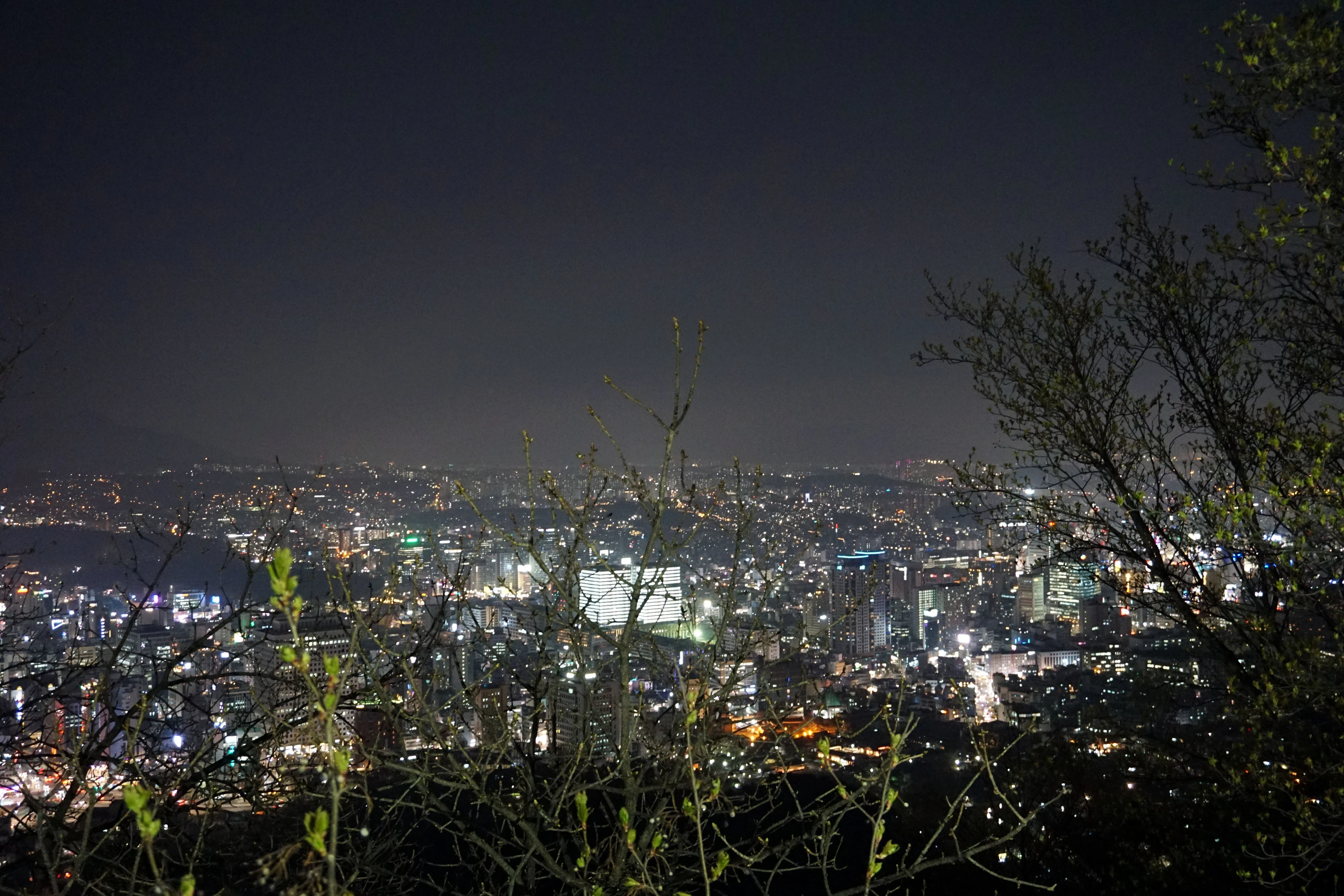
Seoul timeline
- 18 BCE
Baekje founds Wiryeseong
The Baekje kingdom set an early capital near the Han River, on ground the modern city now covers.
-
Joseon capital moves to Hanyang
King Taejo relocated the Joseon court to Hanyang — today's Seoul — beginning six centuries as the nation's political seat.
-
Gyeongbokgung and city walls completed
The main royal palace and a fortress wall anchored a capital laid out by Confucian and geomantic design.
-
Japanese annexation
Colonial rule renamed the city Gyeongseong and demolished much of the palace precinct it governed from.
-
Palace turning point
Japanese colonial rule from 1910 to 1945 renamed the city Gyeongseong and demolished much of the palace precinct;
-
Capital of the Republic of Korea
Seoul became capital of the newly declared republic, a role tested within two years by war.
-
Korean War devastation
The capital changed hands four times and was largely destroyed before the 1953 armistice fixed the divided peninsula.
-
Seoul Summer Olympics
The Games showcased the capital's post-war transformation into a modern industrial metropolis.
-
Cheonggyecheon stream restored
A covered expressway was torn out to daylight the historic stream, signalling a turn toward liveable-city planning.
Cited city facts
Key facts for visiting Seoul
Seoul Metro has 23 lines and over 900 stations
The Seoul Metropolitan Subway is one of the world's largest urban transit systems by total track length and station count; a T-money IC card provides seamless transfer between subway lines, city buses, and even some water taxis on the Han River, making Seoul among the most transit-accessible capitals on earth for visitors
Five Joseon dynasty royal palaces survive within Seoul city limits
Gyeongbokgung, Changdeokgung, Changgyeonggung, Deoksugung, and Gyeonghuigung were all built between 1395 and 1616 as residences and ceremonial sites for Joseon kings; their survival within a city that was largely destroyed during the Korean War is itself remarkable, and Changdeokgung's rear Secret Garden is inscribed on the UNESCO World Heritage List
Greater Seoul is home to roughly 26 million people — about half of South Korea
The Seoul Capital Area concentrates close to half the national population and generates a comparable share of GDP; that density produces the culture, food, and commerce that make the city so compelling for visitors — and the scale that makes local guide knowledge genuinely valuable for navigating it
Seoul has served as a capital almost continuously since 1394
King Taejo moved the Joseon court to Hanyang — today's Seoul — in 1394, and the city has been the peninsula's political centre with few interruptions for more than six centuries, a span of capital-city continuity matched by only a handful of places on earth
Source: tour-guide.com — Free to cite with attribution
Things to see
What are the top attractions in Seoul?
- Gyeongbokgung Palace — the Joseon dynasty's grandest throne hall complex, with 330 buildings and a famous changing of the guard ceremony
- Bukchon Hanok Village — Seoul's most photographed neighbourhood: 600+ traditional wooden houses on a hillside between two royal palaces
- Namsan Tower — an observation tower 480 metres above sea level with panoramic views across the entire Seoul basin
- Changdeokgung Palace & Secret Garden — UNESCO World Heritage; the Secret Garden (Huwon) requires a timed ticket and guided tour in Korean
- Gwangjang Market — Seoul's oldest market, legendary for yukhoe (raw beef) and bindaetteok (mung bean pancakes) eaten at crowded communal stalls
- Insadong — the traditional culture district for celadon pottery, Korean calligraphy materials, and labyrinthine alleyways of tea houses and galleries
- DMZ (Demilitarized Zone) — 55 km north of Seoul, the world's most visited militarised border requires a licensed guide and advance permit
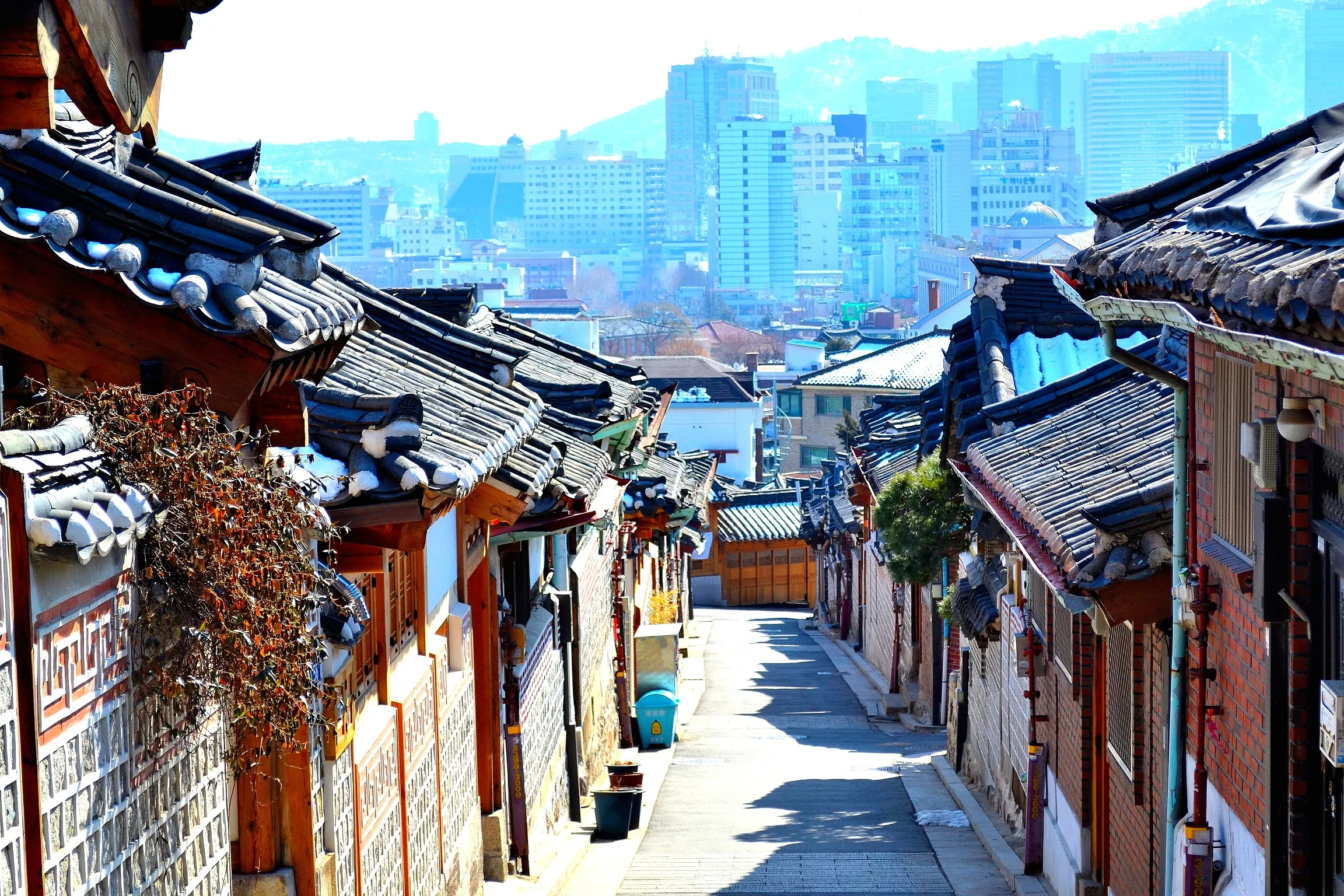
Bukchon Hanok Village
Six hundred traditional wooden houses on a Seoul hillside — where Joseon aristocrats once lived
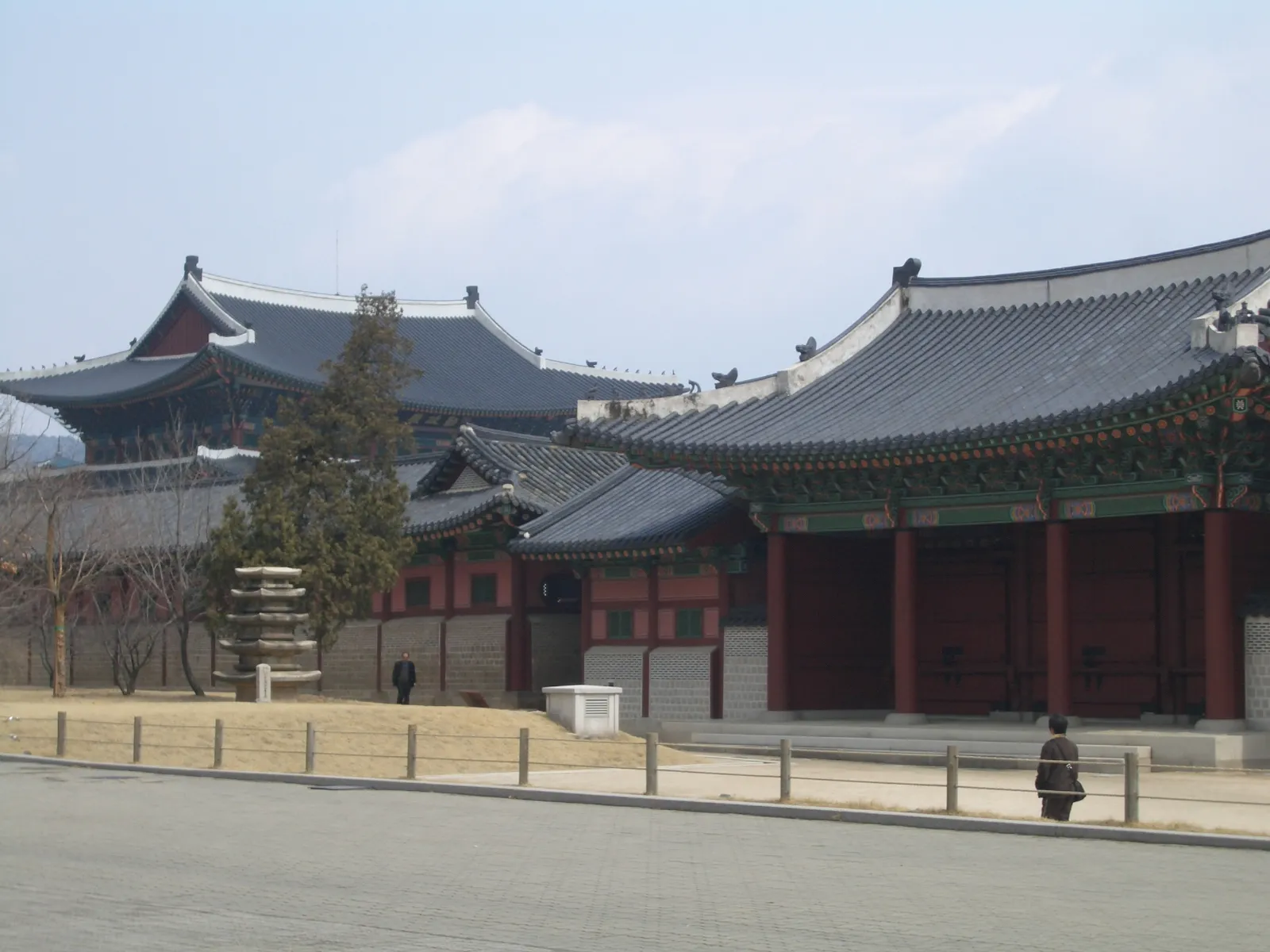
Gyeongbokgung Palace
The Joseon dynasty's supreme throne complex — 600 years of Korean imperial power in stone and timber
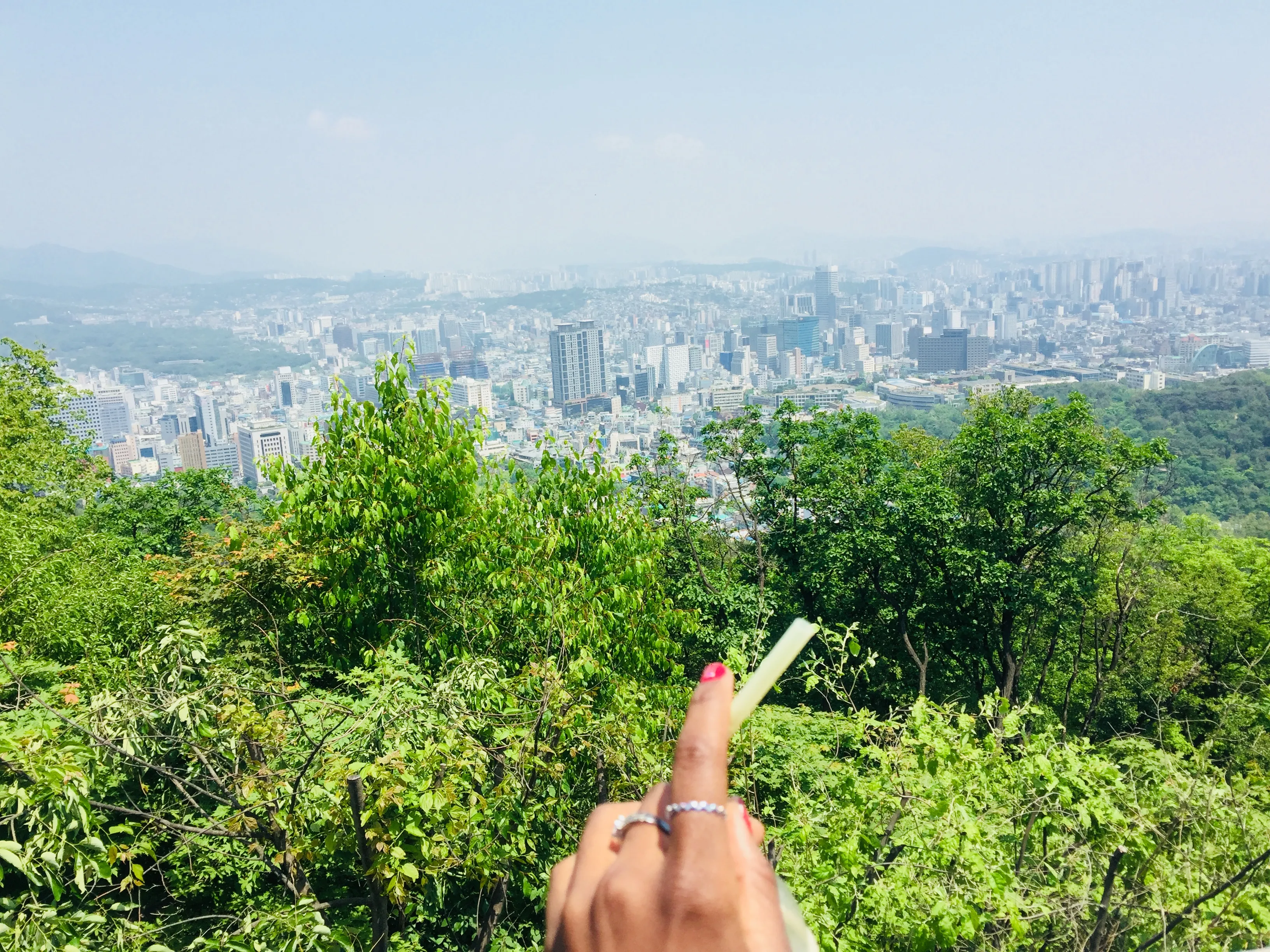
Namsan Tower
Seoul's rooftop landmark — a broadcast tower turned beloved city symbol, 480 metres above the Han River basin
Guide planning
How much does a tour guide cost in Seoul?
| Tour Type | Price (KRW) | Price (USD) |
|---|---|---|
| Group palace & Bukchon walk | ₩25,000–50,000 | $18–37 per person |
| Food tour (Gwangjang / Myeongdong) | ₩60,000–100,000 | $44–74 per person |
| Half-day private (palaces + Insadong) | ₩150,000–280,000 | $110–207 |
| Full-day private city tour | ₩280,000–400,000 | $207–296 |
| DMZ full-day private (guide fees only) | ₩350,000–500,000 | $258–370 |
| Hanbok & cultural experience tour | ₩80,000–150,000 | $59–111 per person |
Season planner
When is the best time to visit Seoul?
Spring (late March–early May) is Seoul's most celebrated season: cherry blossoms appear first along the Yeouido riverside in late March, then progress northward through the palace gardens and up the hillside paths of Bukchon, typically peaking in the first week of April. Mild temperatures (12–20°C), low humidity, and the drama of blossom against palace architecture make this the peak tourism window — book accommodation and guided tours well in advance. Autumn (mid-September–November) rivals it: the maple and ginkgo around the palaces turn amber and red, the air clears, and Namsan Tower views become exceptionally sharp. Summer (June–August) is hot and humid, with a July monsoon (jangma) bringing heavy rain; the city stays fully operational but outdoor palace and village visits are sweaty affairs. Winter is cold and dry — regularly below freezing in January — but the palace grounds under snow are spectacular and far quieter, with the lowest hotel rates of the year.
Seoul's festival calendar rewards travellers who can time a visit:
- Yeondeunghoe (Lotus Lantern Festival) — in the weeks before Buddha's Birthday (April or May), a vast lantern parade winds through Jongno; the festival is inscribed on UNESCO's Intangible Cultural Heritage list
- Royal palace night openings — Gyeongbokgung and Changdeokgung open for limited evening admission in spring and autumn, with tickets released by online lottery weeks ahead
- Seoul Lantern Festival — illuminated installations strung along the restored Cheonggyecheon stream, usually in November
- Seoul Kimchi Festival (Kimjang) — a November celebration of the communal winter kimchi-making tradition, with public tastings and demonstrations near City Hall
A guide who tracks the palace night-opening lottery windows and the shifting peak-bloom forecast can build an itinerary around the exact days these events fall.
Spring
Mar-May
Summer
Jun-Aug
Autumn
Sep-Nov
Winter
Dec-Feb
Each score averages that season’s monthly ratings out of 5. The top-rated window is usually the peak season too, so read the guidance above for its trade-offs before you book.
On the ground
How do you get around Seoul?
- Seoul Metro — 23 colour-coded lines with English and Korean signage; tap in with a T-money card for fare discounts and free subway-to-bus transfers within 30 minutes
- T-money card — buy and reload at any convenience store (GS25, CU, 7-Eleven) or station kiosk; it covers subway, city bus, some taxis, and even a few Han River water taxis, and the deposit is refundable
- City bus — four colour classes (blue trunk, green feeder, red express, yellow circulator) reach the gaps between subway stations; board and alight tapping the same card
- Kakao T app — the local ride-hailing standard; works in English, accepts international cards, and is more reliable than flagging a taxi, though metered orange and silver cabs are plentiful
- Walking — the palace district, Bukchon, and Insadong are best on foot; wear comfortable shoes for the cobbled hanok lanes
- Namsan cable car — climbs from a Myeongdong-side base station to near the Namsan Tower summit, avoiding the 40-minute forest hike
- Airports & rail — Incheon International (ICN) links to the city by AREX express train (about 43 min to Seoul Station, ₩9,500) or limousine bus, while the closer Gimpo (GMP) handles domestic and short-haul flights; the KTX high-speed rail departs Seoul Station for Busan in roughly 2.5 hours
Our Seoul trip planner covers T-money top-ups, the Korea-only mapping apps that outperform Google Maps here, and how to sequence neighbourhoods to minimise backtracking.
Frequently Asked Questions
What makes Seoul different from other Asian capitals?
Seoul occupies a unique position among Asian capitals: it is simultaneously one of the world's oldest continuously inhabited royal cities and one of its most technologically advanced metropolises. The Joseon dynasty governed from here for over five centuries from 1392, and five of their grand palaces still stand within the modern city limits — an almost unparalleled density of dynastic heritage for any world capital. Yet Seoul also leads globally in broadband penetration, mobile payment adoption, and urban transit engineering. The tension between this deeply Confucian imperial past and a hyper-modern present runs through every neighbourhood: a Buddhist temple beside a glass skyscraper, a centuries-old hanok house steps from a K-beauty flagship store.
How much does a tour guide cost in Seoul?
Group walking tours of the palace district and Bukchon run 25,000–50,000 KRW ($18–37) per person. Private half-day guides covering Gyeongbokgung, Bukchon Hanok Village, and Insadong cost 150,000–280,000 KRW ($110–207). Full-day private guides including a DMZ excursion typically run 350,000–500,000 KRW ($258–370) including guide fees, though DMZ entry permits and transport are additional. Food-focused guides for Gwangjang Market or a Myeongdong street food circuit cost 60,000–100,000 KRW ($44–74) per person with tastings.
Is Seoul safe and easy to navigate without a guide?
Seoul is exceptionally safe by global standards and its metro system has English-language signage throughout all 23 lines. Independent navigation is entirely feasible and many visitors manage well on their own. The value of a guide lies elsewhere: understanding the Confucian and Buddhist symbolism encoded into every palace gate and courtyard, knowing which street food vendor in a market has the best bindaetteok, reading the social dynamics of a neighbourhood like Bukchon that is simultaneously a living residential community and a tourism destination, and accessing experiences like the Gyeongbokgung sunrise lottery program that require local knowledge to even discover.
Why is Seoul the capital of South Korea, and how long has it held that role?
Seoul has been the seat of power on the Korean peninsula almost continuously since 1394, when King Taejo moved the newly founded Joseon court to Hanyang and laid out a capital of palaces, ancestral shrines, and fortress walls chosen for its mountain-and-river geomancy. The Joseon dynasty governed from here for over five centuries; when the Republic of Korea was declared in 1948, Seoul naturally became its capital, a role it kept through the devastation of the Korean War and the rebuilding that followed. Today the presidential office, the National Assembly on Yeouido island, and the Constitutional Court all sit within the same basin the Joseon kings ruled — a span of capital-city continuity few places on earth can claim, and one reason the city's layers of political history stay so legible to a visitor with a guide to read them.
Can you visit the DMZ on a day trip from Seoul?
Yes — the Demilitarized Zone begins about 55 km north of the city and is the most-visited stretch of the world's most heavily fortified border. Because the area is under military control, independent access is not possible: visitors must join a licensed guided tour that registers names and passport details in advance, typically several days out. Standard half- and full-day tours reach the Third Infiltration Tunnel, the Dora Observatory looking into North Korea, and Imjingak Park; access to the Joint Security Area at Panmunjom is more tightly restricted and periodically suspended depending on inter-Korean tensions. A guide supplies both the permit logistics and the historical context — the 1953 armistice, the divided-peninsula story, and the tunnels' Cold War background — that make the visit meaningful rather than merely bleak.