
Planning Your Seoul Trip: Palaces, Street Food, and K-Culture
Everything you need to plan a Seoul trip — navigating the subway, choosing a neighbourhood, and timing your visit around blossoms or autumn foliage.
Read the full guideUpdated · 11 min read
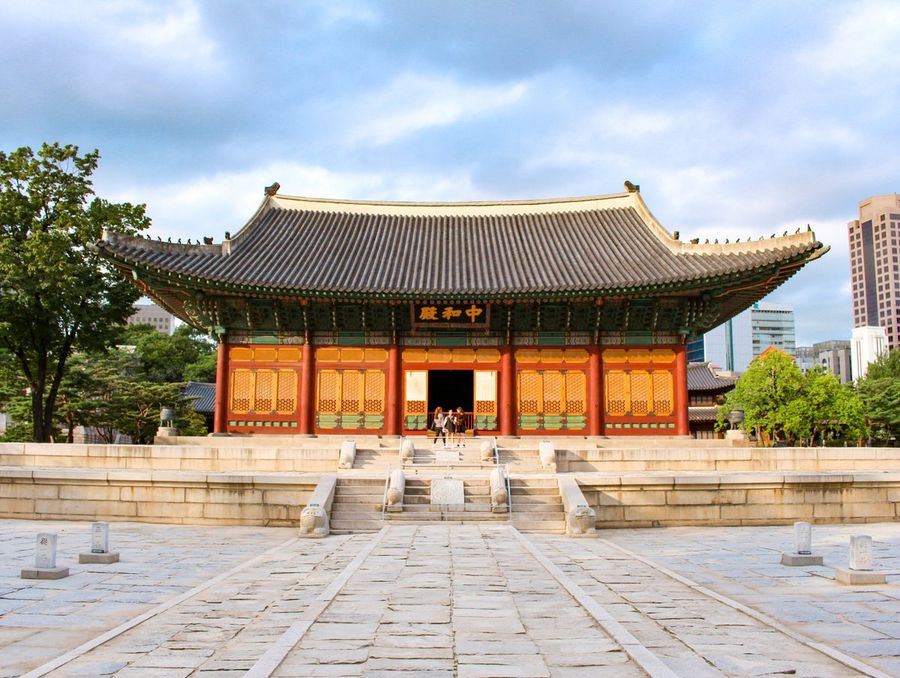
Give Seoul at least five days to balance its Joseon palaces, street-food markets, and K-culture districts. Visit for cherry blossoms in early April or crisp autumn foliage from late September to October, ride the cheap English-signed subway with a T-money card, and base yourself around Jongno for the historic core.
Seoul is a megacity of ten million people that has urbanised, modernised, and reinvented itself so rapidly in the past sixty years that the contrast between its contemporary face and its deep historical layers creates a perpetual visual tension. A five-hundred-year-old Joseon Dynasty palace sits directly behind the Presidential Office. A neon-lit K-beauty shopping district is a ten-minute walk from a Buddhist temple where monks have practised the same rituals for centuries. This layering is not a contradiction — it is the character of the place.
When do Seoul's cherry blossoms and snow-dusted palaces arrive?
Seoul is emphatically four-season. Spring, from late March to May, is most celebrated, with cherry blossoms peaking in early-to-mid April and mild 10-20°C days. Autumn, September to November, rivals it for comfortable weather and foliage. Summer is hot, humid, and monsoon-prone; winter runs a cold −5 to 5°C but delivers snow-dusted palaces and the lowest hotel rates.
Seoul's climate is emphatically four-season. Each period has distinct advantages:
Spring (late March to May) is the most celebrated time to visit. Cherry blossoms (beotkkot) typically peak in early to mid-April; the city's parks, riverside embankments, and palace grounds become genuinely spectacular. Temperatures are mild (10–20°C), accommodation is easy to find if you book a few weeks ahead, and the cultural calendar is full. The timing of peak bloom shifts by a week or two each year — follow the National Institute of Meteorological Sciences forecast as your trip approaches.
Autumn (September to November) rivals spring. Temperatures are comfortable, the leaves on Bukhansan mountain turn through October, and the city's culture season is in full swing. This is arguably the best time for hiking, palace visits, and the outdoor markets.
Summer (June to August) is hot and humid, with a monsoon season (jangma) in late June and July that can bring days of rain. Temperatures reach 33–36°C in August; air conditioning is universal. Many travellers find summer manageable if they plan outdoor activities early in the morning or evening and accept midday rest.
Winter (December to February) is cold (-5 to 5°C) and dry. Snow occasionally falls but rarely persists. The ski resorts outside Seoul are active; the city's sauna (jimjilbang) culture becomes even more relevant; and hotel rates drop to their lowest. The palaces under snow are exceptionally beautiful.
How are Seoul's neighbourhoods laid out?
Seoul functions as a cluster of village-like districts. Jongno and Insadong form the historical core around the five palaces and Bukchon Hanok Village. Gangnam, south of the Han River, is the modern commercial showcase; Hongdae is the young university and music quarter; Itaewon is the cosmopolitan international district; and Bukchon and Seochon preserve traditional hanok houses.
Seoul is organised around distinctive districts that function like separate villages within the megacity:
Jongno and Insadong form the historical core — home to the five Joseon palaces, the Bukchon Hanok Village (a preserved area of traditional Korean houses), and the Insadong gallery and tea house street. This is where the city's relationship with its own heritage is most apparent.
Gangnam (south of the Han River) is the contemporary commercial and entertainment district that gained global recognition through the 2012 Psy song. The reality is a dense mix of luxury malls, corporate headquarters, K-beauty clinics, and high-end restaurants — interesting for what it represents about Korean economic transformation, though not the most atmospheric neighbourhood for visitors.
Hongdae is the university district — young, creative, densely packed with independent music venues, cafés, street performers, and affordable restaurants. The street performance plaza on weekend afternoons is one of Seoul's most genuinely spontaneous public spaces.
Itaewon is the historically international district near the US military base, now one of the city's most cosmopolitan and LGBTQ+-friendly areas, with restaurants representing virtually every national cuisine alongside Korean dining.
Bukchon and Seochon are the two preserved hanok neighbourhoods on either side of the Gyeongbokgung Palace — quieter, more residential, with galleries, independent craft shops, and tea houses in traditional buildings.
Which Joseon palaces should you visit in Seoul?
Seoul has five Joseon palaces (1392-1897). Gyeongbokgung is the largest and most formal, with a twice-daily changing of the guard. Changdeokgung, a UNESCO site, hides the timed-entry Huwon Secret Garden. Deoksugung is the most urban, ringed by skyscrapers. Allow two to three hours per palace, and hanbok-wearers enter the major ones free.
Seoul has five royal palaces from the Joseon Dynasty (1392–1897), each with its distinct character:
Gyeongbokgung (Palace Greatly Blessed by Heaven) is the largest and most formal — the primary royal residence for most of the Joseon period. The changing of the royal guard ceremony (twice daily, free admission to the palace grounds during the ceremony) is the city's most theatrical public performance. The National Folk Museum is within the palace grounds; the National Palace Museum of Korea is adjacent.
Changdeokgung is a UNESCO World Heritage Site and the best-preserved of the five palaces. Its most celebrated feature is the Huwon (Secret Garden) — a forty-hectare woodland landscape with pavilions, ponds, and vegetable gardens that served as the royal private retreat. Access to the Huwon is limited and by timed guided tour only (book online in advance).
Deoksugung is the most urban palace, surrounded by modern buildings in the city centre. The contrast between its traditional architecture and the surrounding skyscrapers is itself the point. Free entry to the palace grounds during the changing of the guard ceremony (11 a.m. and 2 p.m. on most days).
Allow two to three hours per palace if you are visiting seriously.
What can you do at Bukhansan and Seoul's temples?
Bukhansan National Park sits 45 minutes from central Seoul by Metro, its granite peaks rising to 836 metres with trails from valley walks to summit scrambles — visit on a weekday to dodge crowds. Jongno's Jogyesa Temple anchors the Jogye Order and the Seoul Temple Stay programme, where visitors join meditation, chanting, and monastic life.
Bukhansan National Park, accessible by Metro from central Seoul in about 45 minutes, is the city's primary mountain escape — granite peaks rising to 836 metres, with trails ranging from family-friendly valley walks to serious scrambles on the main summits. The park is the world's most visited national park per unit area and can feel crowded on autumn weekends; weekday visits are significantly quieter.
The Jogyesa Temple in Jongno, headquarters of the Jogye Order of Korean Buddhism, is the starting point for the Seoul Temple Stay programme that allows visitors to spend one or several days participating in monastic life — meditation, chanting, and the disciplined simplicity of Buddhist practice. Even without the programme, the temple grounds at dawn, with monks moving through morning ritual, are among the most quietly affecting spaces in the city.
Where is the best street food in Seoul?
Gwangjang Market near Jongno is the city's best-preserved traditional market, famed for bindaetteok mung-bean pancakes, mayak gimbap, and raw yukhoe — arrive at lunch or early evening. Tongin Market in Seochon runs a charming brass-token system for banchan portions. Skip the tourist-facing Myeongdong carts if you want where Koreans actually eat. Bring cash.
Seoul's street food culture is serious and geographically organised. The major destinations:
Gwangjang Market near Jongno is the best-preserved traditional market in the city and one of Korea's oldest. The stall vendors here have been cooking the same preparations for decades — bindaetteok (mung bean pancakes), mayak gimbap (small sesame and carrot rice rolls), and raw yukhoe (beef tartare seasoned with Asian pear and sesame) are the specialities. Arrive at lunch or early evening.
Tongin Market in Seochon near the palaces operates a unique token system: buy tokens at the market office and use them to buy small portions of banchan (side dishes) from individual stalls, then sit at the communal eating area. It is one of the most genuinely local market experiences available to visitors.
Myeongdong street food carts near the shopping district are accessible but primarily tourist-facing — takoyaki, various fried items on sticks, flavoured soft-serve ice cream. Not wrong, but not where Koreans eat.
How do the Seoul Metro and T-money card work?
Seoul's Metro, jointly run by Seoul Metro and KORAIL, is among the world's best — comprehensive, air-conditioned, affordable, and fully signed in English. The rechargeable T-money card is the standard payment across Metro, buses, and some taxis; top it up at any convenience store. Taxis are plentiful, and Kakao T offers app booking with fixed-price options.
Seoul's Metro system (operated jointly by Seoul Metro and KORAIL) is one of the world's best: comprehensive, air-conditioned, affordable, and fully signposted in English. The T-money card (a rechargeable transit card) is the standard payment method and works on Metro, buses, and even some taxis. Top it up at any convenience store.
Taxis are plentiful and affordable by international standards; Kakao T (the Korean Uber equivalent) allows app booking with fixed-price options.
Is a guide essential for Seoul's palaces and the DMZ?
For Seoul's layered history — the Joseon Dynasty, Japanese occupation, the Korean War, and the compressed economic miracle — a licensed guide adds real depth on palace-district walks, food tours, and K-culture routes. For the DMZ and the Joint Security Area at Panmunjom, a guided day tour is the only practical option, since the border requires pre-registration.
Seoul's historical complexity — the Joseon Dynasty, Japanese colonial occupation, the Korean War and division, the compressed economic miracle of the following decades — is best understood with expert interpretation. Licensed tour guides in Seoul offer historical walking tours of the palace district, demilitarised zone day trips, K-pop and contemporary culture tours, and food-focused walks.
For the DMZ (Demilitarised Zone) between North and South Korea, guided tours are the only practical option — the area requires pre-registration, and the context that a guide provides for the most tense border on earth is genuinely irreplaceable. Day tours from Seoul to Panmunjom and the Joint Security Area run regularly from major hotels and booking platforms.
What should you know about Seoul's Wi-Fi, sockets, and etiquette?
Wi-Fi is effectively universal, and portable routers rent daily at Incheon Airport. Korea uses Type C and F sockets, so North American visitors need an adapter. Tipping is not customary and may confuse staff. Learn gamsahamnida for thank you and massisseoyo for delicious — small phrases Koreans genuinely appreciate. Public bathrooms are plentiful, clean, and free.
- Wi-Fi is effectively universal in Seoul; portable Wi-Fi routers (available for daily rental at Incheon Airport) provide reliable coverage outside
- Korea uses Type C and Type F power sockets (same as most European countries); North American visitors need an adapter
- Tipping is not customary in Korean culture; doing so may confuse restaurant and taxi staff
- The Korean word for "thank you" (감사합니다, gamsahamnida) and "delicious" (맛있어요, massisseoyo) are among the most appreciated phrases a visitor can deploy
- Public bathrooms in Seoul are plentiful, clean, and free
- Tokyo and Beijing are the most common regional comparators for travel planning; Seoul occupies a distinct middle ground that deserves to be experienced on its own terms
Seoul is a city that does not announce itself as obviously as some of its regional rivals but whose range — from the refinement of the Joseon palaces to the energy of a Hongdae Friday night — is among the widest of any city in Asia. Give it at least five days.
Frequently Asked Questions
When is the best time to visit Seoul?
Spring for the cherry blossoms in early April and autumn from late September to October for crisp weather and foliage are the most pleasant. Summers are hot and humid with monsoon rain, and winters are very cold.
Is Seoul's subway easy for foreign visitors?
Yes. It is extensive, cheap, clean and signed in English, with a rechargeable T-money card working on subways and buses. Apps like KakaoMap or Naver Map give the best directions, as Google Maps is limited in Korea.
Should I wear hanbok to visit Seoul's palaces?
It is popular and worthwhile, as visitors wearing hanbok enter major palaces like Gyeongbokgung free of charge, and rental shops near the gates make it easy to dress up for a few hours.
Where is the best street food in Seoul?
Markets such as Gwangjang and the evening stalls of Myeongdong are famous for street food, from tteokbokki to hotteok. Bring cash, as many small vendors do not accept cards.