
Planning Your Mexico City Trip: Pyramids, Markets, and Tacos
A comprehensive Mexico City trip planner — from understanding the city's sprawling geography and safest neighbourhoods to visiting Teotihuacán, navigating the Zócalo, and eating your way through Condesa and Coyoacán.
Read the full guideUpdated · 11 min read
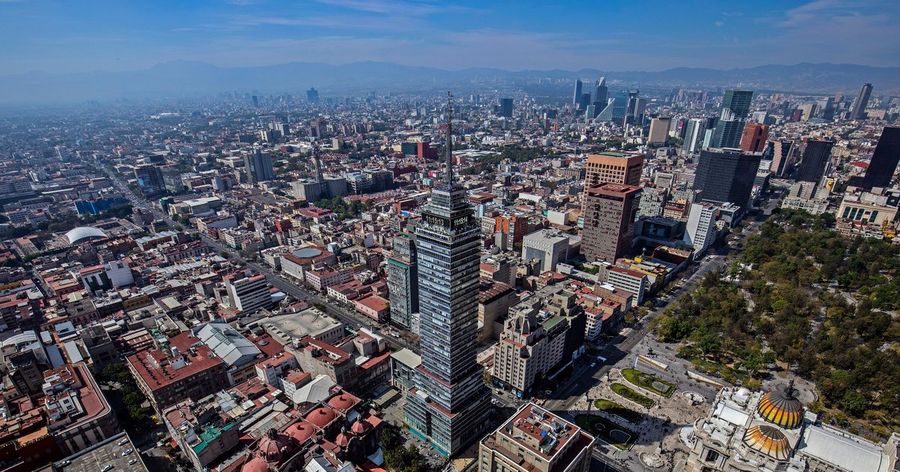
Mexico City rewards three to four days across its layered neighbourhoods. Base yourself in leafy Roma or Condesa, visit the Centro Histórico and Templo Mayor, take an early day trip to Teotihuacán, and book Frida Kahlo's Casa Azul ahead. Come in the November-to-April dry season and ease into the 2,240-metre altitude.
Mexico City (Ciudad de México, or CDMX) is one of the largest cities on earth — a metropolitan area of 22 million people built on the lakebed of ancient Lake Texcoco at 2,240 metres above sea level. It is also, by any serious measure, one of the world's great cities: a place with genuinely world-class museums, a street food culture that UNESCO has designated intangible cultural heritage, and an architectural layering that places Aztec temple foundations beneath Spanish colonial churches beneath modernist concrete beneath glass-and-steel contemporary architecture, all in the same city block.
The reputation for safety that has kept some visitors away is worth addressing directly: certain areas of Mexico City require the same caution you would apply in any major city, and a few should be avoided by visitors. The established tourist neighbourhoods (Condesa, Roma, Polanco, Coyoacán, Histórico Centro) are generally as safe as comparable tourist districts in European capitals. Common sense applies.
When is the best time to visit Mexico City?
The November-to-April dry season is most comfortable, with clear skies and easy sightseeing; December and January peak but the sprawling city rarely feels crowded. The June-to-September rains bring short afternoon thunderstorms that clear quickly, so sightsee in bright mornings. At 2,240 metres, take the first day easy while you acclimatise.
Mexico City's altitude moderates what would otherwise be tropical heat. Year-round temperatures are relatively mild (15–25°C daily), with the main seasonal variable being rain.
The dry season (November to April) is the most comfortable period — clear skies, low humidity, easy sightseeing. December and January are peak tourist months but the city is large enough that peak season doesn't produce the same crowding pressure as European tourist cities.
The rainy season (June to September) brings afternoon thunderstorms that typically last 1–2 hours and then clear. Mornings are nearly always bright; plan outdoor sightseeing in the first half of the day. The rain keeps the city green and reduces air pollution.
Altitude adjustment: At 2,240 metres, first-day fatigue and mild headaches are common for visitors not accustomed to altitude. Drink more water than you think you need, avoid alcohol on the first day, and plan a lighter schedule for the first 24 hours.
How is Mexico City laid out?
The city is enormous, so knowing its zones matters. The dense Centro Histórico around the Zócalo holds the oldest monuments, tree-lined Roma and Condesa concentrate independent restaurants and mid-range hotels, luxury Polanco sits by Chapultepec Park, and the village-like Coyoacán to the south holds Frida Kahlo's Casa Azul and artisan markets.
Mexico City is enormous and navigating it without understanding the geography is disorienting. The key zones for visitors:
Centro Histórico (Historic Centre) around the Zócalo square is the oldest and most historically significant area — the Aztec ruins of Templo Mayor, the Metropolitan Cathedral, and the National Palace are all within a few blocks. It is also dense, commercial, and can feel overwhelming. Best explored on foot in the mornings before noon.
Roma and Condesa are adjacent neighbourhoods south of the centre that have the highest concentration of independent restaurants, cafés, and mid-range hotels. The streets are tree-lined, the architecture is early twentieth-century Art Deco and Porfiriato-era Spanish Renaissance, and the neighbourhood has a liveable quality that makes it the preferred base for most international visitors.
Polanco north of Chapultepec Park is Mexico City's luxury district — high-end hotels, the Museo Soumaya, and the Carso shopping complex. More expensive but very comfortable and well-served by Metro.
Coyoacán is a village-within-the-city to the south — a preserved colonial-era neighbourhood that was a separate town before Mexico City's urban expansion absorbed it. The Frida Kahlo Museum (Casa Azul) is here, along with artisan markets, the central plaza cafés, and a weekend atmosphere that is among the most pleasant in the city.
What should you see in the Centro Histórico?
Start at Templo Mayor, the excavated double-pyramid heart of Aztec Tenochtitlan, and its museum of the Coyolxauhqui monolith. Then circle the vast Zócalo to the Metropolitan Cathedral, built over 250 years from 1573, and the National Palace, where Diego Rivera's monumental history murals are free to visit. Explore before noon.
Templo Mayor is the excavated remains of the most important religious site in the Aztec empire (known to the Aztecs as Tenochtitlan). The ruins are extraordinary: a double pyramid temple complex dedicated to Huitzilopochtli (sun and war) and Tlaloc (rain and agriculture), surrounded by dozens of associated structures and altars. The adjacent museum houses the most significant finds, including the massive circular Stone of Tizoc and the monolith of Coyolxauhqui, which transformed understanding of the site's mythological programme.
The Zócalo (officially the Plaza de la Constitución) is one of the world's largest public squares — the central meeting point of Aztec Tenochtitlan, Spanish colonial Mexico, and contemporary CDMX. The Metropolitan Cathedral on its north side was built over 250 years beginning in 1573 and shows the full evolution of New Spain's architectural ambitions, from early Renaissance severity to Baroque elaboration to Neoclassical restraint. The National Palace on the east side of the square contains Diego Rivera's monumental murals depicting Mexican history from pre-Columbian times through the Revolution — one of the most ambitious mural cycles in the world, and free to visit.
How do you visit Teotihuacán from Mexico City?
Teotihuacán lies 50 km north, its Pyramid of the Sun the third-largest on earth. Take an early ADO bus from the TAPO terminal, roughly an hour, or join a morning tour. Arrive at the 9 a.m. opening, climb the 248 steps before the heat, and leave before the tour buses swarm at 11.
Teotihuacán, 50 km north of Mexico City, is the pre-Aztec city of pyramids that was already ancient and abandoned when the Aztecs encountered it. The Pyramid of the Sun (third-largest pyramid in the world by volume) and Pyramid of the Moon at the end of the Avenue of the Dead are the main structures, but the site also includes the Ciudadela complex and the Feathered Serpent Pyramid with its carved serpent heads.
Climbing the Pyramid of the Sun (248 steps, 65 metres high) on a clear morning — arriving at opening time (9 a.m.) before the crowds and before the midday heat — is one of the most dramatic experiences available within reach of any major city in the western hemisphere.
The best way to visit: take an early morning ADO bus from the TAPO bus terminal (about 1 hour) or join an organised morning tour from the city. Arrive at opening time, spend three to four hours, and return to Mexico City for the afternoon. Avoid the tour buses that arrive at 11 a.m. — the site becomes significantly more crowded after that point.
Where can you see Frida Kahlo and Diego Rivera's work?
The Museo Frida Kahlo, or Casa Azul, in Coyoacán was Kahlo's home until 1954 and displays her paintings, clothing, and personal objects in situ; book timed-entry tickets well ahead. The Museo Anahuacalli, a pyramid-form building Rivera designed himself, houses his vast pre-Columbian collection and is far less crowded but architecturally extraordinary.
Mexico City's two most important modern artists, Frida Kahlo and Diego Rivera, have dedicated museums that are among the most visited in the city for good reason.
The Museo Frida Kahlo (Casa Azul, the Blue House) in Coyoacán was Kahlo's childhood home and residence until her death in 1954. Her studio, her clothing (including the traditional Tehuana dress she adopted as a conscious political and aesthetic statement), her orthopaedic corsets, and her personal objects are all on display alongside her paintings. The intimacy of seeing art in the physical context of the artist's life is something that no gallery installation replicates. Book timed-entry tickets online well in advance — the museum is one of the most popular in the country and walk-in tickets are rare.
The Museo Anahuacalli houses Rivera's vast collection of pre-Columbian objects in a pyramid-form building Rivera designed himself — less visited than the major museums but architecturally extraordinary and a fascinating document of how Rivera used ancient Mexican art as a source for his muralism.
What should you eat in Mexico City?
Tacos are the fundamental unit — canasta at breakfast, al pastor from vertical spits at night, guisado in the markets — and the quality floor is remarkably high. The Mercado de Medellín in Roma offers an accessible market introduction, while Contramar, booked weeks ahead, serves the city's defining tuna tostadas and split-painted fish.
Mexico City's food is the reason many visitors extend their stay. The range — from street stalls serving four-peso tacos to restaurants with internationally recognised chefs — is extraordinary, and the quality floor at every level is remarkably high.
Tacos are the fundamental unit. The best in the city tend to come from stalls run by families who have been doing one thing for decades. Tacos de canasta (basket tacos, braised fillings in tortillas stacked in cloth-lined baskets and carried by bicycle vendors) are breakfast; tacos al pastor (pork on a vertical spit with pineapple, inspired by the Lebanese shawarma that Syrian immigrants brought to Mexico in the twentieth century) are a midday and evening staple; tacos de guisado (stewed filling tacos) are found in the markets.
The Mercado de Medellín in Roma is a neighbourhood market with excellent prepared food stalls — an accessible introduction to Mexico City market culture that is less overwhelming than the enormous Central de Abastos (the wholesale market, which is extraordinary to visit but requires a guide and several hours).
The Contramar restaurant (book several weeks ahead) is considered the defining Mexico City seafood restaurant. The tostadas de atún and the fish split-painted with red chile and green parsley are dishes that independent food media has covered extensively; they live up to the coverage.
What should you know before visiting Mexico City?
The Metro is the fastest way across the city — 12 lines, 195 stations, fares near $0.30 — with women-only front carriages. Pay in pesos, tip 10–15% in restaurants, and use Uber or Cabify rather than street taxis. The established tourist neighbourhoods are safe with standard urban caution and a little Spanish.
Metro: Mexico City's Metro is one of the world's largest — 12 lines, 195 stations, fares approximately $0.30 USD. Trains are crowded during rush hours; the women-only carriages at the front of each train are available at all times. The Metro is the fastest way to move across the city for most routes.
Currency: Mexican pesos (MXN). USD is widely accepted in tourist districts but at disadvantageous exchange rates; use ATMs or exchange at banks. Tipping (10–15% in restaurants, round-up for taxis) is expected and important — service industry workers earn low base wages.
Safety: Register travel advisories from your country's foreign affairs office before visiting. The established tourist neighbourhoods (Roma, Condesa, Polanco, Coyoacán, Histórico Centro) are generally safe for visitors who exercise standard urban caution. Avoid displaying expensive equipment and use Uber or Cabify rather than hailing taxis from the street (app-dispatched rides have traceable drivers).
Language: Spanish throughout; in tourist districts, English is increasingly spoken but a few basic phrases (por favor, gracias, la cuenta por favor for the bill) are always appreciated.
Mexico City rewards travellers who arrive expecting to be surprised. The scale, the food, the art, and the layered civilisations beneath the city streets make it one of the world's genuinely irreplaceable destinations — comparable in historical significance and aesthetic richness to Rome and as culinarily serious as any city on earth.
Frequently Asked Questions
Is Mexico City safe for tourists?
The main tourist neighbourhoods like Condesa, Roma, Polanco and the Centro Historico are generally safe with normal big-city precautions. Use registered taxis or ride-share apps and avoid displaying valuables.
How do I get to Teotihuacan from Mexico City?
Buses to the pyramids depart regularly from the Terminal del Norte and take about an hour, or a guided day tour handles transport and context. Arrive early to beat the heat and crowds.
When is the best time to visit Mexico City?
The dry season from November to April offers the most reliable weather. The high altitude keeps temperatures mild year-round, but afternoon rains are common in summer.
Does the altitude in Mexico City affect visitors?
At around 2,240 metres, some visitors feel mild breathlessness or fatigue on arrival. Take the first day easy, stay hydrated and limit alcohol until you acclimatise.