

Phuket timeline
- 16th–18th century
The island known as Junk Ceylon
European and Indian traders knew tin-rich Phuket as "Junk Ceylon," a landmark on the Andaman sea routes long before mass tourism arrived.
-
Burmese siege resisted
Two local women, later honoured as the "Two Heroines" whose monument still guards the island's main crossroads, rallied the defence of Thalang against a Burmese invasion.
- 19th century
Tin boom
Mining wealth drew Hokkien Chinese migrants and bankrolled the Sino-Portuguese shophouses of old Phuket Town.
-
Tsunami and rebuilding
The Indian Ocean tsunami struck the west-coast beaches on 26 December, reshaping coastal planning, warning systems and visitor awareness.
-
UNESCO City of Gastronomy
Phuket became the first Thai city in UNESCO's Creative Cities Network for food, recognising its Peranakan-Hokkien culinary heritage.
Cited city facts
Key facts for visiting Phuket
543 square kilometres — Thailand's largest island
Roughly the size of Singapore, Phuket has been joined to the mainland by the Sarasin Bridge since 1967, turning a once-remote tin island into Thailand's busiest beach gateway.
A UNESCO Creative City of Gastronomy since 2015
Phuket was the first Thai city admitted to UNESCO's Creative Cities Network for food, recognising a Peranakan-Hokkien kitchen built over two centuries of Chinese migration — from Hokkien mee to the Old Town's century-old coffee shops.
A 9-day Vegetarian Festival rooted in an 1825 recovery
Phuket's Tesagan Kin Je (Nine Emperor Gods Festival) traces to a touring Chinese opera troupe in Kathu who adopted a strict vegetarian diet to recover from illness; today spirit mediums perform fire-walking and body-piercing rituals through the ninth lunar month each September or October.
Dive visibility often beyond 20 metres at the Similan Islands
Northwest of Phuket, Mu Ko Similan National Park protects some of the Andaman Sea's clearest water and richest reefs; the park closes each year through the southwest monsoon to let the corals recover.
Sino-Portuguese shophouses lining Thalang Road
Phuket Old Town's arcaded shophouses took shape through the late-19th and early-20th-century tin boom, when Hokkien Chinese merchants blended southern-Chinese and European colonial styles into the pastel terraces now protected as a conservation zone.
Source: tour-guide.com — Free to cite with attribution
Things to see
What are the top attractions in Phuket?
- Phi Phi Islands — Maya Bay, Pileh Lagoon and snorkelling in crystalline water, a two-hour boat ride east
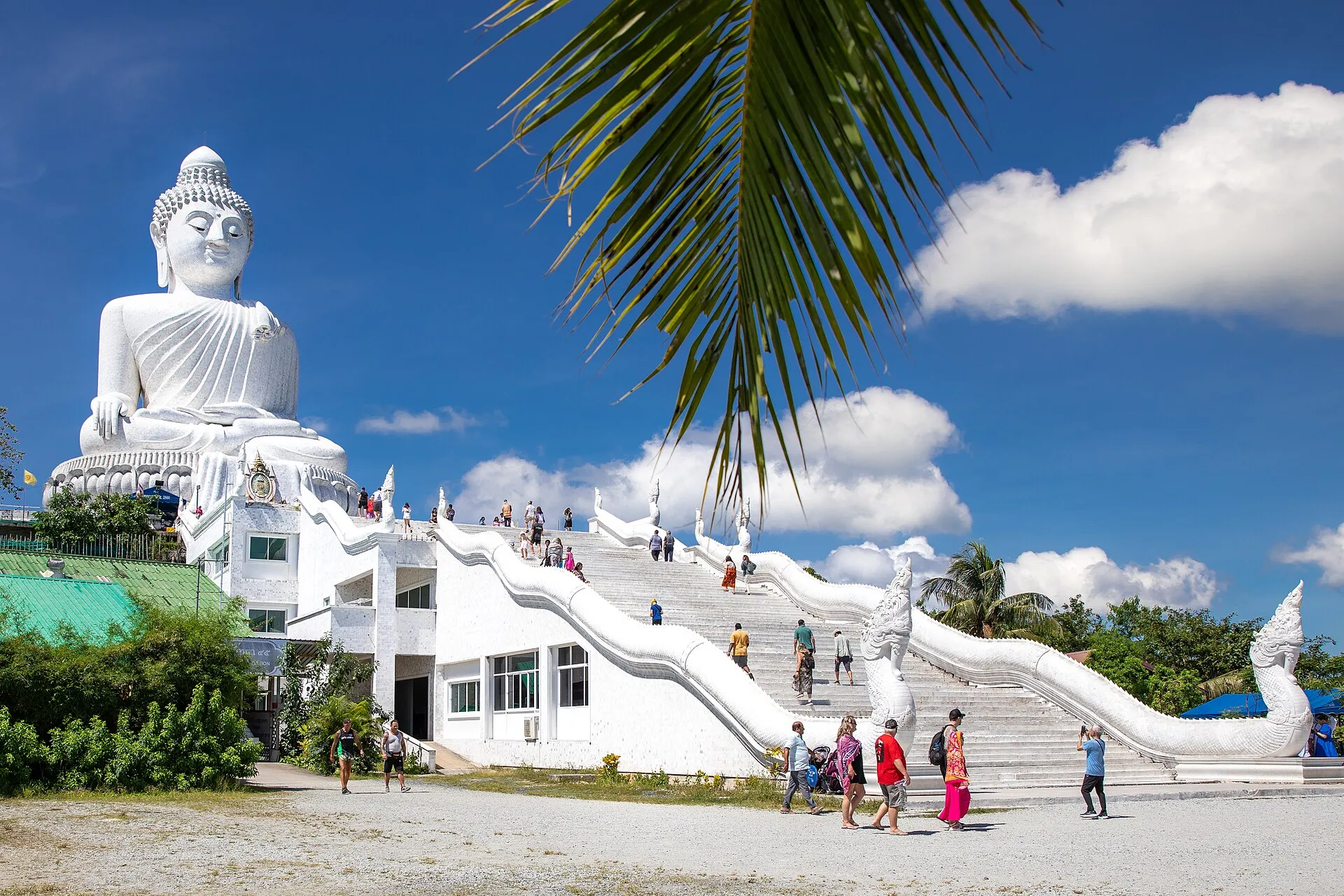
- Big Buddha — a 45-metre white-marble Maitreya on Nakkerd Hill with 360-degree island views
- Patong Beach — water sports by day, Bangla Road nightlife after dark
- Similan Islands — world-class diving with manta rays and whale sharks (Nov–Apr only)
- Promthep Cape — the island's famous sunset viewpoint at its southern tip
- Old Phuket Town — Sino-Portuguese shophouses, street art, Peranakan cafés and a UNESCO-listed food scene
- Ethical elephant sanctuaries — no riding, just feeding and bathing rescued elephants
Big Buddha Phuket
A 45-metre white marble Buddha crowning Nakkerd Hill above the Andaman
Patong Beach
Phuket's most famous beach - nightlife, shopping, water sports

Phi Phi Islands
Stunning limestone cliffs and crystal-clear waters

Guide planning
How much does a tour guide cost in Phuket?
Phuket has thousands of operators, so the gap between a polished day and a rushed one comes down to who you book with. Prices below are typical per-trip rates; national-park entry fees (such as the ฿400 Maya Bay fee) and gear rental are usually charged separately.
| Tour Type | Price | Details |
|---|---|---|
| Group Island Tours | ฿1,500-2,500 | $43-72 per person, full day with lunch |
| Private Boat Tours | ฿8,000-15,000 | $230-430, up to 10 people, full day |
| Diving Trips | ฿3,500-5,500 | Per person, 2-dive trip with equipment |
| Private Land Tours | ฿3,500-6,000 | Up to 6 people, full day with transport |
Season planner
When is the best time to visit Phuket?
- November-April: Dry season, calm seas — the best window for beaches, diving and island-hopping
- December-February: Peak season, higher prices but the most reliable weather
- May-October: Southwest monsoon, rough seas, many boat tours cancelled
- Avoid: September-October (heaviest rain), and expect crowds at Chinese New Year
- Festivals: the 9-day Vegetarian Festival (Sept/Oct), Songkran water-splashing New Year (Apr) and Loy Krathong lantern floats (Nov) are all worth timing a visit around
Spring
Mar-May
Summer
Jun-Aug
Autumn
Sep-Nov
Winter
Dec-Feb
Each score averages that season’s monthly ratings out of 5. The top-rated window is usually the peak season too, so read the guidance above for its trade-offs before you book.
On the ground
How do you get around Phuket?
Phuket has songthaews (shared pickup-truck minibuses) running fixed routes between Phuket Town's market and the major beaches, though service is slow and thins out by early evening. Grab ride-hailing and motorbike taxis are widely available and affordable for point-to-point travel. Car or scooter rentals are the most flexible option for exploring the island's 543 square kilometres at your own pace — handy for reaching quieter beaches, the Big Buddha and southern viewpoints well away from the main tourist strips. Phuket International Airport sits about 32 km north of Patong, so budget 45–75 minutes by road for transfers to the main beach towns.
Frequently Asked Questions
What is the best time to visit Phuket?
The dry season from November to April brings calm Andaman seas, reliable sunshine, and the best diving and island-hopping conditions. December to February is the peak — guaranteed weather but the highest prices and busiest beaches. From May to October the southwest monsoon rolls in: greener hills and lower rates, but rough seas that cancel many boat tours, with September and October the wettest months.
How much does a tour guide cost in Phuket?
Expect ฿1,500–2,500 ($43–72) per person for a group island-hopping day tour with lunch, and ฿3,500–6,000 ($100–170) for a private land tour for up to six people. For quality and safety, look for a TAT-licensed guide (certified by the Tourism Authority of Thailand), book diving through a PADI- or SSI-affiliated operator, and remember that national-park entry fees — such as the ฿400 Phi Phi / Maya Bay fee — are usually charged on top of the tour price.
How do you get around Phuket?
Phuket has songthaews (shared pickup-truck minibuses) running fixed routes between Phuket Town and the main beaches, though they are slow and stop running by early evening. Grab ride-hailing, metered taxis, and motorbike taxis cover point-to-point trips, while renting a car or scooter is the most flexible way to explore the island's 543 square kilometres and reach quieter beaches and viewpoints.
Which area of Phuket should I stay in?
It depends on your pace. Patong is the nightlife and shopping hub, loud and central; Kata and Karon suit families with calmer beaches; Rawai and Nai Harn at the southern tip are quiet and local; Bang Tao and Surin in the northwest hold the luxury resorts and beach clubs; and Phuket Old Town, inland, is the cultural base for travellers who care more about food and heritage than sand.
How many days do you need in Phuket?
Allow four to five days to balance the island itself with a day trip or two. A typical plan: a beach day around Kata or Karon, a full-day boat trip to the Phi Phi Islands or the Similan reefs, a morning at the Big Buddha and Wat Chalong, and an evening wandering the Sino-Portuguese streets and food stalls of Old Town. Divers and island-hoppers easily fill a week.