Country guide
What makes Northern Ireland a must-visit destination?
Northern Ireland is a place of dramatic contrasts, packed into a corner of the island barely 110 miles across. Its volcanic coastline drops sheer into the Atlantic, its six counties ripple from the drumlins of County Down to the heather uplands of the Sperrins, and at its heart sits Lough Neagh — the largest freshwater lake in the British Isles. The capital, Belfast, spent decades synonymous with the Troubles but has transformed into one of the UK's most dynamic short-break destinations, with Titanic Belfast drawing over a million visitors annually to the waterfront where the world's most famous ship was built.
To understand the place, a visitor needs its history, and this is where a local guide is irreplaceable. The modern story begins with the Plantation of Ulster from 1609, when the English Crown settled Scottish and English Protestant colonists on land confiscated from the Gaelic Irish — a demographic re-engineering whose fault lines still run through the region. The symbolic Battle of the Boyne in 1690, the industrial boom that gave the north its linen mills and shipyards, the partition of Ireland in 1921, three decades of conflict after 1969, and the Good Friday Agreement of 1998 are not abstract dates here — they are legible in murals, street names, flags, and the very walls of Belfast. A guide who lived through it can explain the two traditions with the balance and first-hand nuance no guidebook manages.
Yet Northern Ireland is far more than its conflict. It is the land of C. S. Lewis, whose Mourne-inspired imagination gave the world Narnia; of the fiddle-and-bodhrán traditional music sessions that fill pubs from the Cathedral Quarter to rural Fermanagh; of the hearty Ulster fry and warm wheaten bread; and of a landscape so cinematic that it doubled as Westeros for eight seasons of Game of Thrones. Beyond the capital, the Causeway Coastal Route rivals any scenic drive in Europe, linking the basalt columns of the Giant's Causeway to their place in Irish mythology. Whether you come for heritage, hiking, or the craic, the country rewards curiosity — and it sits within an easy hop of the Republic of Ireland and the rest of the UK, including Scotland just 13 miles across the North Channel.
- Language
- English Widely spoken across Northern Ireland
- Currency
- Pound sterling (£) Legal tender across Northern Ireland
- Time zone
- UTC+0 (GMT) Local time in Northern Ireland
- Power plugs
- Type G · 230V Sockets used across Northern Ireland
- Getting around
- Rail & buses (Translink) Getting between Northern Ireland's cities
- Best months
- Apr, May, Jun, Jul, Aug, Sep Averaged across Northern Ireland's city ratings
Northern Ireland timeline
-
Plantation of Ulster
Settlement policy reshaped land, towns, and identities across the north of Ireland.
-
Battle of the Boyne
The battle became a touchstone for identity, commemoration, and contested memory.
-
Belfast granted city status
Linen, rope, and shipbuilding turned the Lagan-side town into a booming Victorian industrial city.
-
Titanic sails from Belfast
Harland and Wolff's most famous liner tied the waterfront forever to global maritime memory.
-
Northern Ireland formed
Partition created Northern Ireland and the political frame behind Belfast civic history.
-
The Troubles begin
Decades of conflict made Belfast murals, peace lines, and memorial walks essential context.
-
Good Friday Agreement
The peace agreement changed borders, governance, and how guides explain recent history.
-
Titanic Belfast opens
The visitor attraction signaled waterfront regeneration and a new tourism chapter.
Local context
Culture and travel signals
The Giant's Causeway contains around 40,000 basalt columns
Formed by volcanic activity roughly sixty million years ago, the mostly hexagonal columns were inscribed in 1986 as Northern Ireland's first UNESCO World Heritage Site, listed for both their geological significance and the folklore of the giant Finn McCool
The Titanic was built in Belfast
The White Star Line's RMS Titanic was laid down at the Harland and Wolff shipyard in Belfast in 1909, launched in 1911, and delivered in 1912 — making the city's Titanic Quarter one of maritime history's most significant sites, now anchored by the Titanic Belfast museum on the original slipways
Derry/Londonderry has the only completely intact city walls in Ireland
Built between 1613 and 1619 by the London livery companies, the one-mile circuit of walls has never been breached — earning the city the nickname 'the Maiden City' — and today offers a walkable elevated promenade around the entire historic core
Game of Thrones was filmed extensively across Northern Ireland
Over eight seasons, more than twenty Northern Ireland locations stood in for Westeros, bringing visitors to the Dark Hedges avenue of beech trees, Tollymore Forest Park, Ballintoy Harbour, and the Antrim coast cliffs
Northern Ireland is home to around 1.9 million people
The 2021 Census recorded a usually-resident population of just over 1.9 million across six counties, with roughly a third living in the Belfast metropolitan area — a small nation whose compact scale means the coast, the capital, and the Mourne Mountains are all within a short drive
The Good Friday Agreement was signed on 10 April 1998
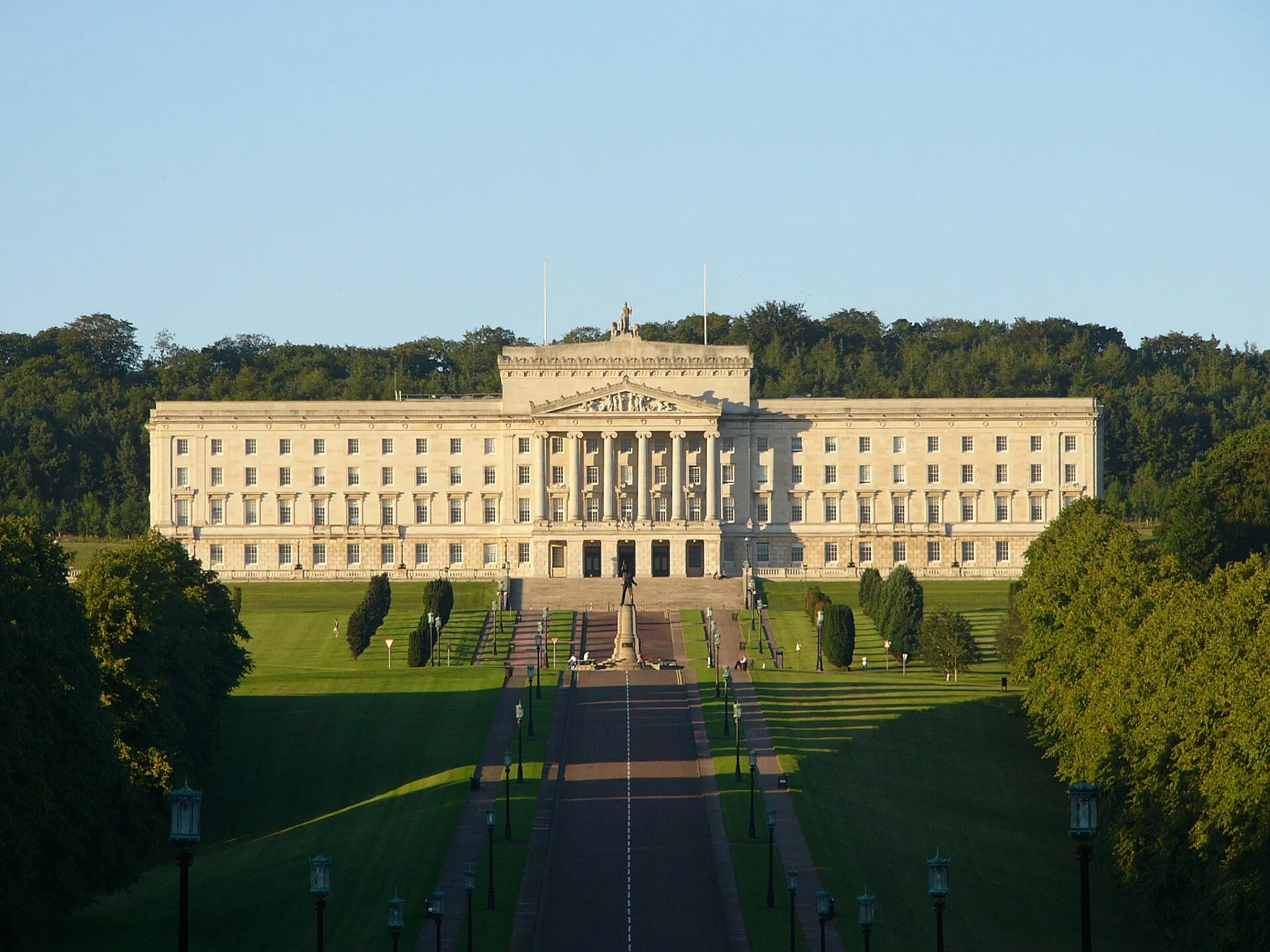
The multi-party accord ended most of the violence of the Troubles, established a power-sharing Assembly at Stormont, and created the cross-border and British-Irish institutions that frame how guides explain the region's recent past and shared present
Source: tour-guide.com — Free to cite with attribution
Season planner
A year in Northern Ireland
Use this best time to visit snapshot as a country-wide average, then check the city guides for local timing.
Mar-May
Spring
Spring holds up well for guided travel in Northern Ireland, averaging Mar-May (4/5).
Jun-Aug
Summer
Summer is Northern Ireland's strongest guide window — Jun-Aug (4.7/5) across its cities.
Sep-Nov
Autumn
Autumn stays workable in Northern Ireland at Sep-Nov (3/5), so lean on city-by-city timing.
Dec-Feb
Winter
Winter is Northern Ireland's quietest stretch at Dec-Feb (2.3/5) — plan narrower, local days.
Where should you go in Northern Ireland?
Belfast — Transformed Capital
Belfast is Northern Ireland's capital and largest city, rebuilt physically and psychologically since the Troubles ended in the late 1990s. Its wealth was Victorian: by the time the town won city status in 1888, Belfast's linen mills had made it "Linenopolis", and the Harland and Wolff shipyard — whose twin cranes Samson and Goliath still dominate the skyline — was among the largest in the world. That prosperity built the ornate Crown Liquor Saloon, a gin palace now protected by the National Trust, the lavish Grand Opera House, and the mosaic-floored Belfast Cathedral. South of the centre, the free Ulster Museum and the Palm House glasshouse of the Botanic Gardens anchor a leafy university quarter, while the regenerated Cathedral Quarter buzzes with independent bars, murals, and traditional music sessions. A guided Black Cab tour of the Falls and Shankill roads remains the single most illuminating way to read the city's divided-but-healing identity.
The Causeway Coast
The Antrim coast road between Belfast and the Giant's Causeway — officially the Causeway Coastal Route, running some 120 miles up to Derry — ranks among the most photogenic drives in the British Isles. Its set pieces come in quick succession: the nine Glens of Antrim tumbling to the sea, the swaying Carrick-a-Rede rope bridge strung 30 metres above the waves, the clifftop ruin of Dunluce Castle, and the whiskey stills of the Old Bushmills Distillery, licensed in 1608 and among the oldest in the world. The star, of course, is the Giant's Causeway itself: roughly 40,000 interlocking basalt columns that Victorian science attributed to cooling lava and Irish legend to the giant Finn McCool. The same shoreline supplied many Game of Thrones backdrops, from the Dark Hedges to Ballintoy Harbour.
Derry/Londonderry
Northern Ireland's second city carries two names that reflect its divided history, but within the only completely intact city walls in Ireland — a one-mile circuit raised between 1613 and 1619 and never breached — lies a city of genuine warmth and cultural energy. From the ramparts you look down on the Bogside, where the vast gable-end People's Gallery murals and the award-winning Museum of Free Derry recount the civil-rights era and Bloody Sunday of 1972. The graceful Peace Bridge (2011) now links the mostly Nationalist cityside to the mostly Unionist Waterside, and the walled core's Georgian streets, the neo-Gothic Guildhall, and a thriving festival calendar — Derry was the UK's first City of Culture in 2013 — reward an unhurried, guide-led half-day.
Must-see attractions across Northern Ireland
Jump past the planning and straight to what makes Northern Ireland memorable, city by city. A guided visit is where the specifics click into place.
What do visitors need to know about Northern Ireland?
Finding a Guide
- Tourist Information Centre Belfast — The Visit Belfast centre provides lists of accredited guides and can book tours directly
- Titanic Quarter tours — Specialist guides focus on the maritime history of the Harland and Wolff yard and the Titanic Belfast museum
- Political tours — Several licensed guides offer Black Cab tours of Belfast's murals and peace walls; these guides typically have personal connections to the history they explain
- Causeway Coast day trips — Guided minibus tours from Belfast cover the major sites in a single day
- GetYourGuide and Viator — Good platforms for verified licensed guides
Typical Costs
| Tour Type | Price Range |
|---|---|
| Group walking tour Belfast (2–3 hrs) | £10–25 per person |
| Black Cab political tour | £40–60 per taxi (up to 6 people) |
| Private half-day city tour | £100–200 |
| Causeway Coast day trip with guide | £250–350 (includes transport) |
Must-See Experiences
- Titanic Belfast — World-leading maritime heritage museum at the ship's birthplace
- Giant's Causeway — Sixty-million-year-old basalt columns and UNESCO World Heritage Site
- Crown Liquor Saloon — The finest Victorian gin palace in the British Isles, now owned by the National Trust
- Derry's City Walls — The only fully intact medieval city walls in Ireland
- Dark Hedges — Avenue of ancient beech trees, arguably the most photographed spot in Northern Ireland
- Belfast Cathedral — Partly medieval, partly twentieth-century, with a fascinating mosaic floor
Getting Around
- Flights — Belfast has two airports: George Best Belfast City (BHD, minutes from the centre) for UK and Dublin hops, and Belfast International (BFS) for wider European routes
- From Dublin — Frequent Enterprise trains and coaches cross the invisible open border in about two hours; many visitors combine a trip here with the Republic of Ireland
- Trains and buses — Translink runs the integrated rail and Metro/Ulsterbus network; a day of travel is cheap, but coastal coverage is thin, so the Giant's Causeway and glens really need a car or a guided minibus
- Driving — Drive on the left; roads are good and distances short, but the Antrim cliff roads are narrow, which is why guided day trips are so popular
Food, Music & Culture
The classic plate is the Ulster fry — bacon, egg, sausage, and the local griddle breads soda farl and potato bread — best chased with wheaten bread and a pot of tea. Seafood shines along the coast (Strangford Lough oysters, Portavogie prawns), and Comber Earlies potatoes, Armagh Bramley apples, and Lough Neagh eels all carry protected geographical status. Evenings belong to the pub: a good guide can point you to a genuine traditional music session rather than a tourist show, and to the folklore of the two communities expressed everywhere from Orange Order murals to Gaelic place-names. Sport matters too — rugby and Gaelic games (hurling and Gaelic football) are followed with real passion.
Tips for Visitors
- Currency — Northern Ireland uses Pounds Sterling (GBP), not the Euro, and local banks issue their own distinctive banknotes (keep some for the Republic of Ireland, which uses euros)
- Naming sensitivity — The city officially called Londonderry by the UK government is known as Derry by many residents; asking a local guide how to navigate this is a genuinely worthwhile conversation
- Accessibility — Titanic Belfast and the main Belfast museums are step-free and wheelchair-friendly; the Giant's Causeway visitor centre runs a shuttle bus to the stones for those who cannot manage the downhill walk
- Titanic Belfast — Book tickets online in advance, especially in summer; a guided visit adds rich context the self-guided audio tour lacks
- Weather — Always pack waterproofs; the north Antrim coast is exposed and weather changes fast even in summer
Frequently Asked Questions
What is the best time of year to visit Northern Ireland?
Late spring and early summer (May through July) bring the longest daylight hours — evenings stretch past ten o'clock — and the most reliable dry spells for coastal walks along the Causeway Coast. August hosts many local festivals. Autumn can be stunning along the Dark Hedges and in the Mourne Mountains. Winter is wet and grey but peaceful, and Belfast's Christmas atmosphere is genuinely warm and festive.
Is Northern Ireland part of the Republic of Ireland or the UK?
Northern Ireland is one of the four countries of the United Kingdom, sharing a land border with the Republic of Ireland. Both countries use English and welcome visitors without border checks thanks to the Common Travel Area agreement. Belfast is the capital of Northern Ireland; Dublin is the capital of the Republic. A guide can help visitors understand the complex history and contemporary significance of this relationship.
How much does a private tour guide cost in Northern Ireland?
Northern Ireland is affordable compared to many UK destinations. Group walking tours in Belfast typically cost between £10 and £25 per person. Private half-day tours for up to six people range from £100 to £200. Full-day guided trips along the Causeway Coast — covering the Giant's Causeway, Carrick-a-Rede rope bridge, and Dunluce Castle — typically run between £250 and £350 including transport.
How many days do you need to see Northern Ireland?
Three to four days is the sweet spot for a first visit. Give two days to Belfast — one for Titanic Belfast and the Black Cab murals tour, a second for the Crown Liquor Saloon, Belfast Cathedral, and the Ulster Museum in the Botanic Gardens. Devote a full day to the Causeway Coast and at least half a day to the walled city of Derry/Londonderry. Because the country is compact — barely 110 miles corner to corner — you can base yourself in Belfast and reach almost everything on day trips.
Is Northern Ireland safe to visit, and how should I talk about The Troubles?
Northern Ireland is a safe, welcoming destination, and the sectarian violence of the Troubles ended with the Good Friday Agreement of 1998. The murals, peace walls, and memorial gardens are now openly visited heritage sites rather than no-go areas. A good local guide will explain the two traditions — Unionist and Nationalist — with balance and sensitivity; the most useful thing a visitor can do is listen and ask open questions rather than take sides. Treating the history with curiosity and respect is always welcomed.