
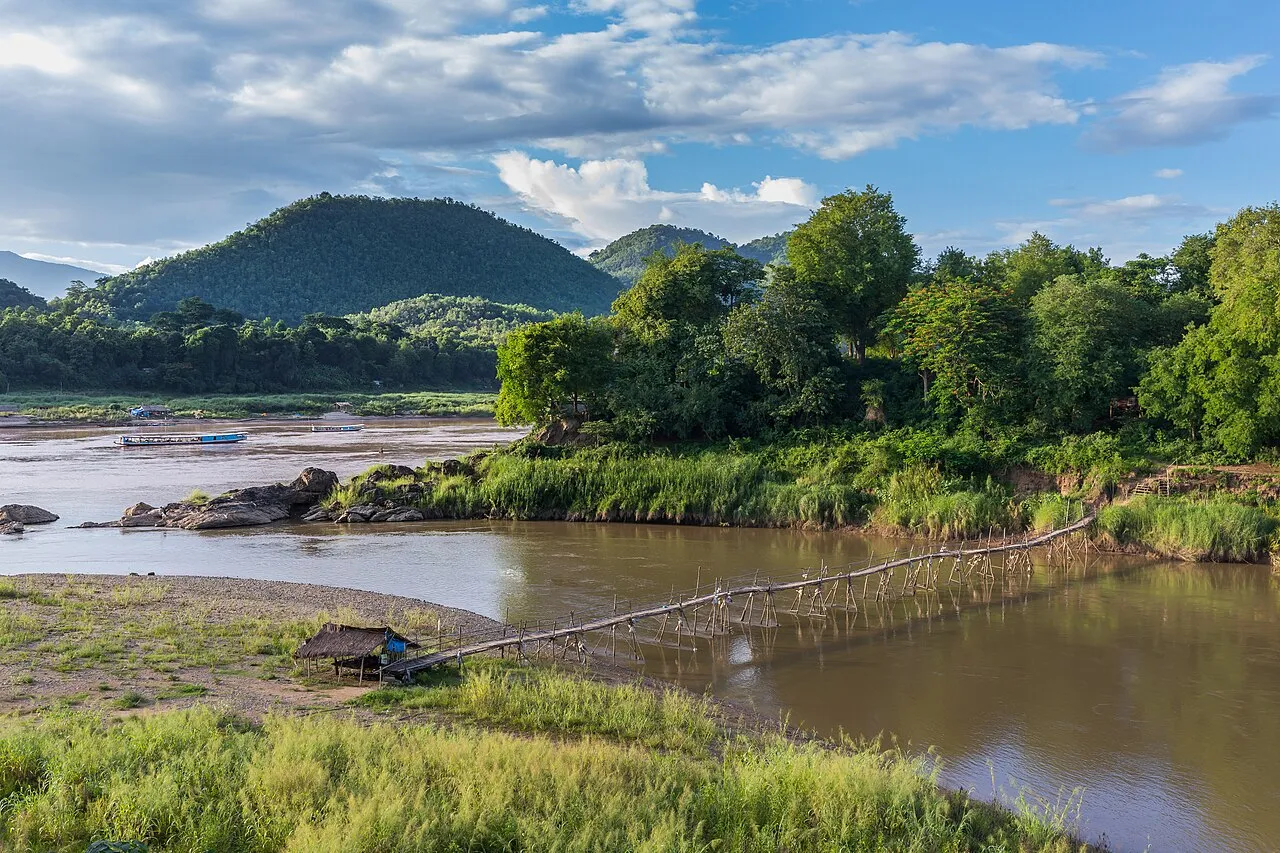
Luang Prabang timeline
-
Lan Xang capital
The kingdom's founding made Luang Prabang a royal and Buddhist center.
-
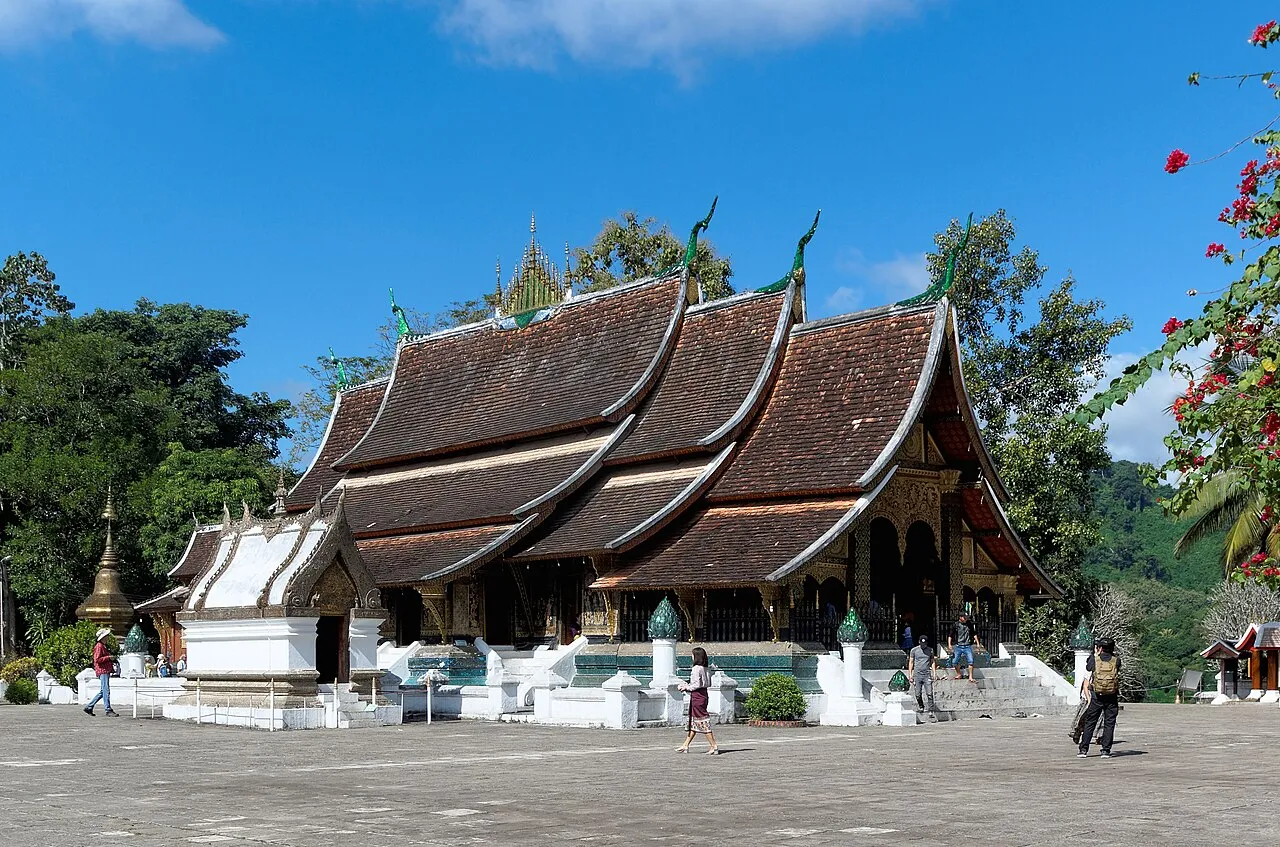
Wat Xieng Thong built
King Setthathirath's royal coronation temple crowned the peninsula's northern tip.
-
French protectorate era
Colonial rule added villas, administrative buildings, and a new urban layer.
-
Royal Palace completed
The Haw Kham became the home of the last Lao kings until 1975.
-
Kingdom begins
For more than six centuries this was the country's centre of gravity: founded in 1353 as the royal and religious capital of the Lan Xang kingdom — the "land of a.
-
UNESCO town
World Heritage listing protected the blend of monasteries, royal buildings, and colonial streets.
-
Railway capital era
Since 2021 the Laos–China Railway has given the town a second fast link: its station, a short drive north-east of the peninsula, reaches the capital Vientiane in about.
Cited city facts
Key facts for visiting Luang Prabang
Inscribed on the UNESCO World Heritage List in 1995
Luang Prabang was listed under cultural criteria (ii), (iv) and (v) as an outstanding example of the fusion of traditional Lao architecture with the urban structures the European colonial authorities built in the 19th and 20th centuries — a recognition that reframed the town's national standing and drove decades of conservation investment
Royal and religious capital of Lan Xang from 1353
Founded as the seat of the Lan Xang kingdom — the "land of a million elephants" — Luang Prabang remained the royal capital of Laos until the monarchy was abolished in 1975, a continuity of political and spiritual authority that underpins the property's outstanding universal value
Thirty-odd active monasteries on a peninsula barely 2 km long
The listing protects an exceptionally dense ensemble of working Buddhist monasteries whose monks still shape daily life; this concentration of living religious architecture is why the entire town, rather than a single monument, carries World Heritage status
A historic town at the confluence of the Mekong and Nam Khan rivers
The World Heritage property occupies the tongue of land where the Nam Khan joins the Mekong, framed by forested ridges — a setting UNESCO singles out as giving Luang Prabang its exceptional and still-legible urban form
A townscape layering 1353 royal foundations with post-1893 colonial streets
French protectorate rule from 1893 added villas, shophouses and administrative buildings among the wats; UNESCO protects this rare, legible superimposition of a Southeast Asian royal city and a European colonial town on one small peninsula
Source: tour-guide.com — Free to cite with attribution
Things to see
What are the top attractions in Luang Prabang?
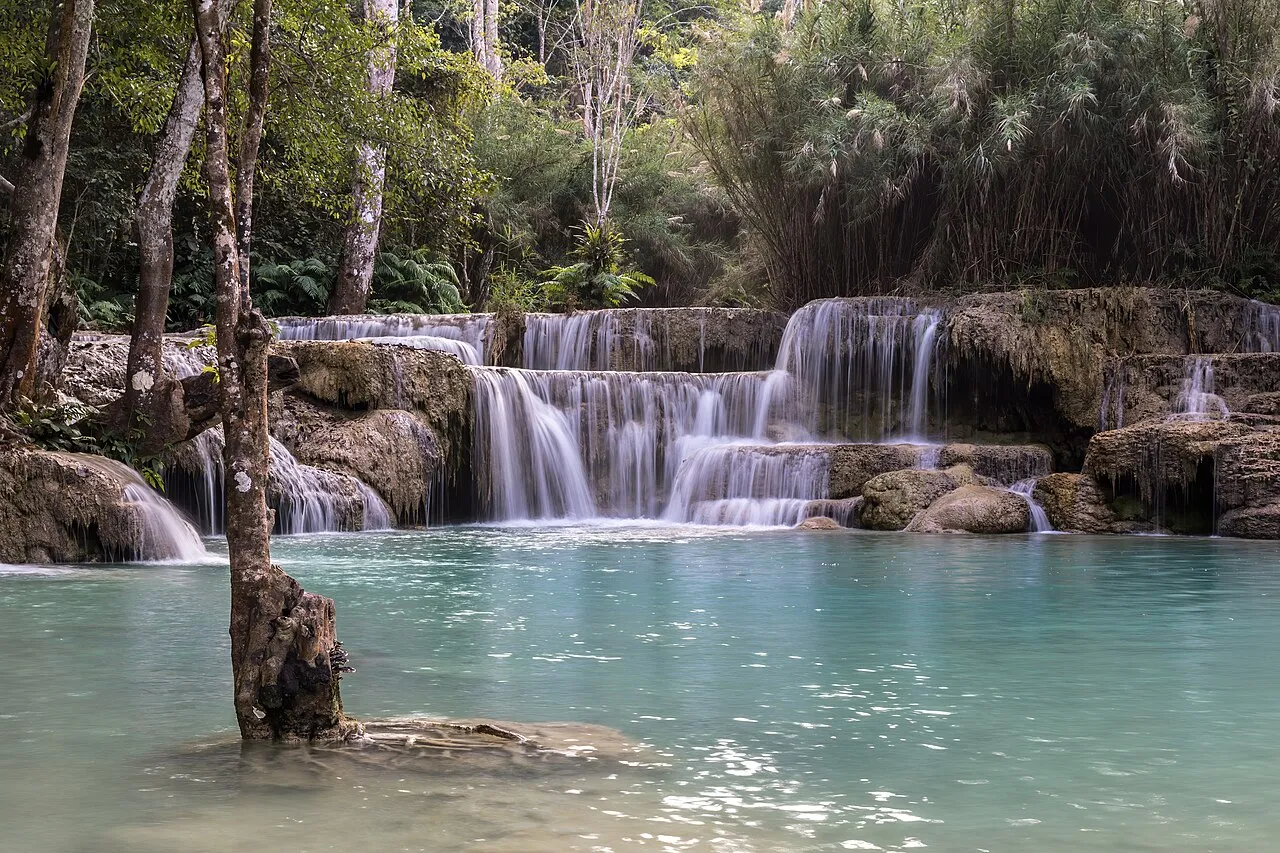
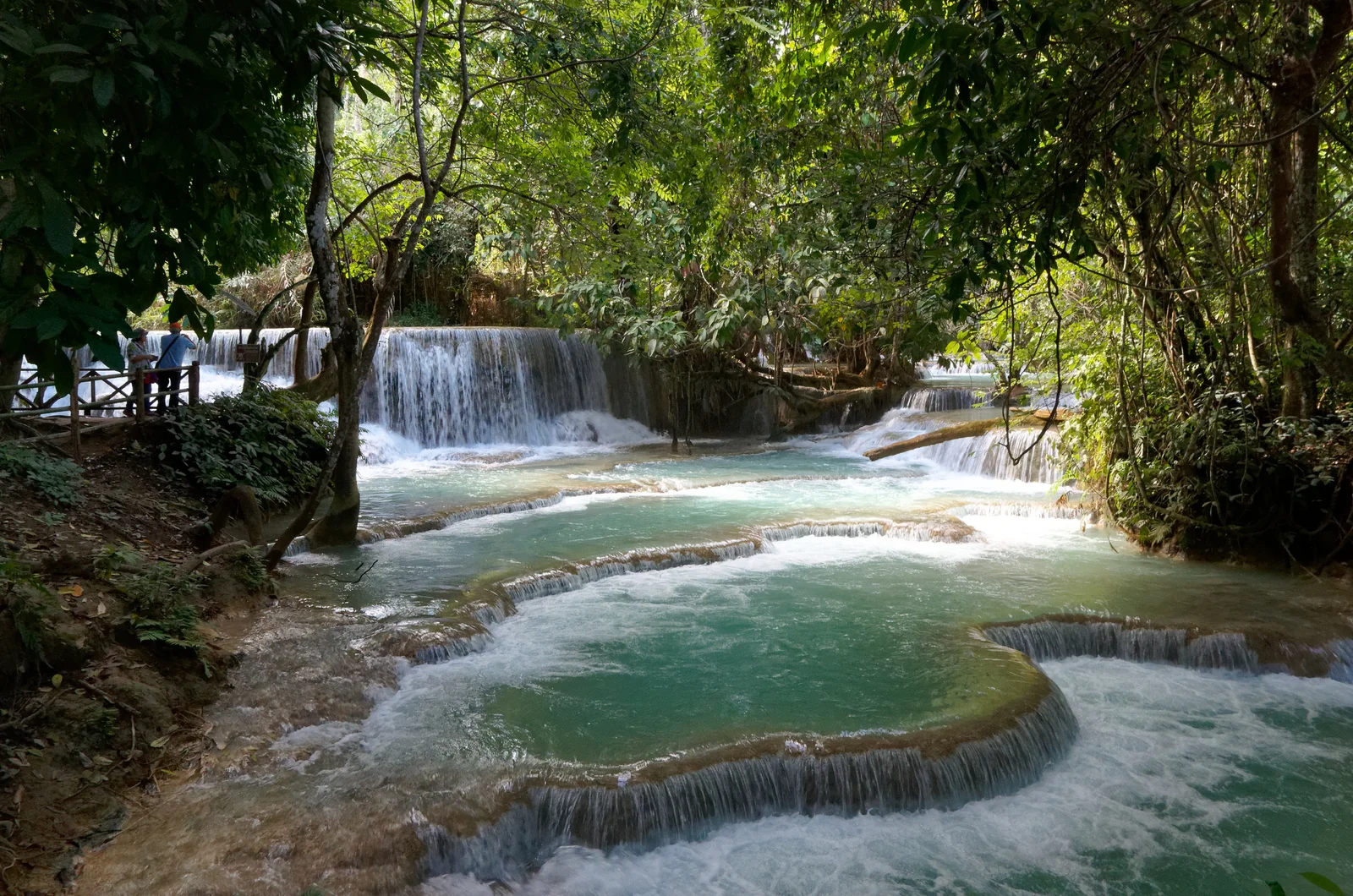
- Kuang Si Waterfall — a 60-metre cascade of turquoise limestone pools in dense jungle 30 km south of town, with a rescued-bear sanctuary at the trailhead
- Royal Palace Museum — the 1904 Haw Kham, home of the last Lao kings, now preserving the royal regalia and the sacred Pha Bang Buddha
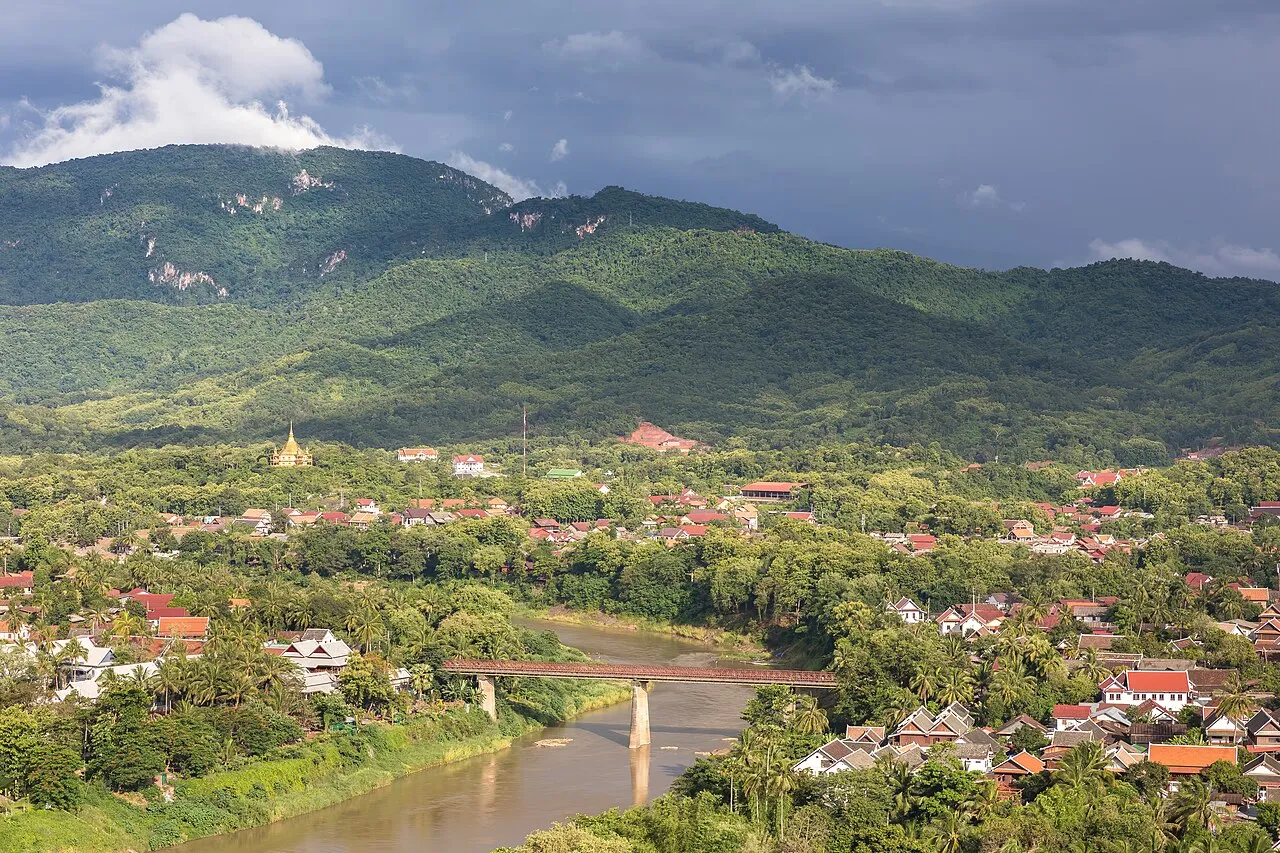
- Mount Phousi — 328 steps to the That Chomsi stupa and the finest sunset panorama over the Mekong
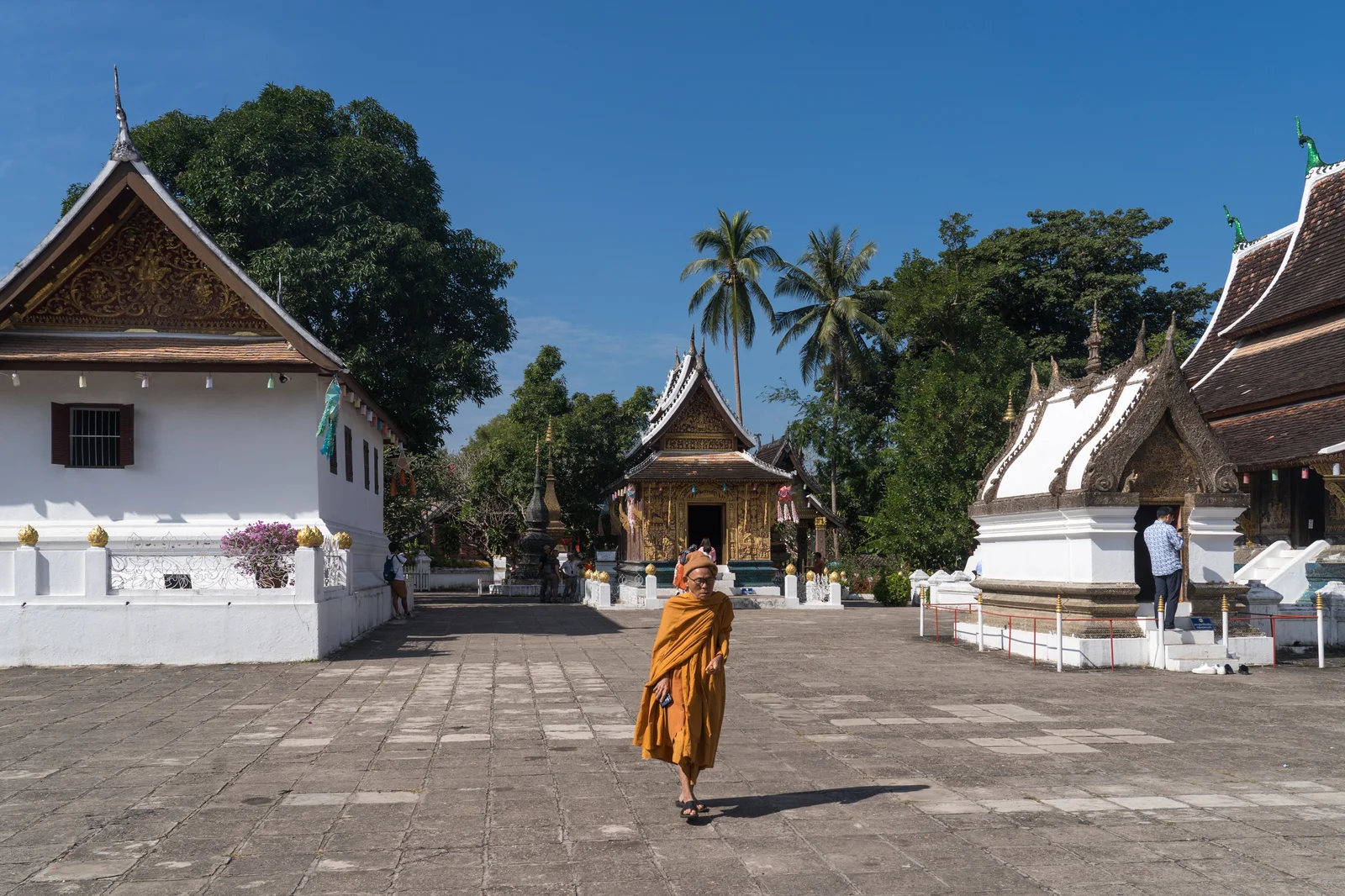
- Wat Xieng Thong — the 1560 royal coronation temple, famous for its Tree of Life glass mosaic and sweeping tiered roofs
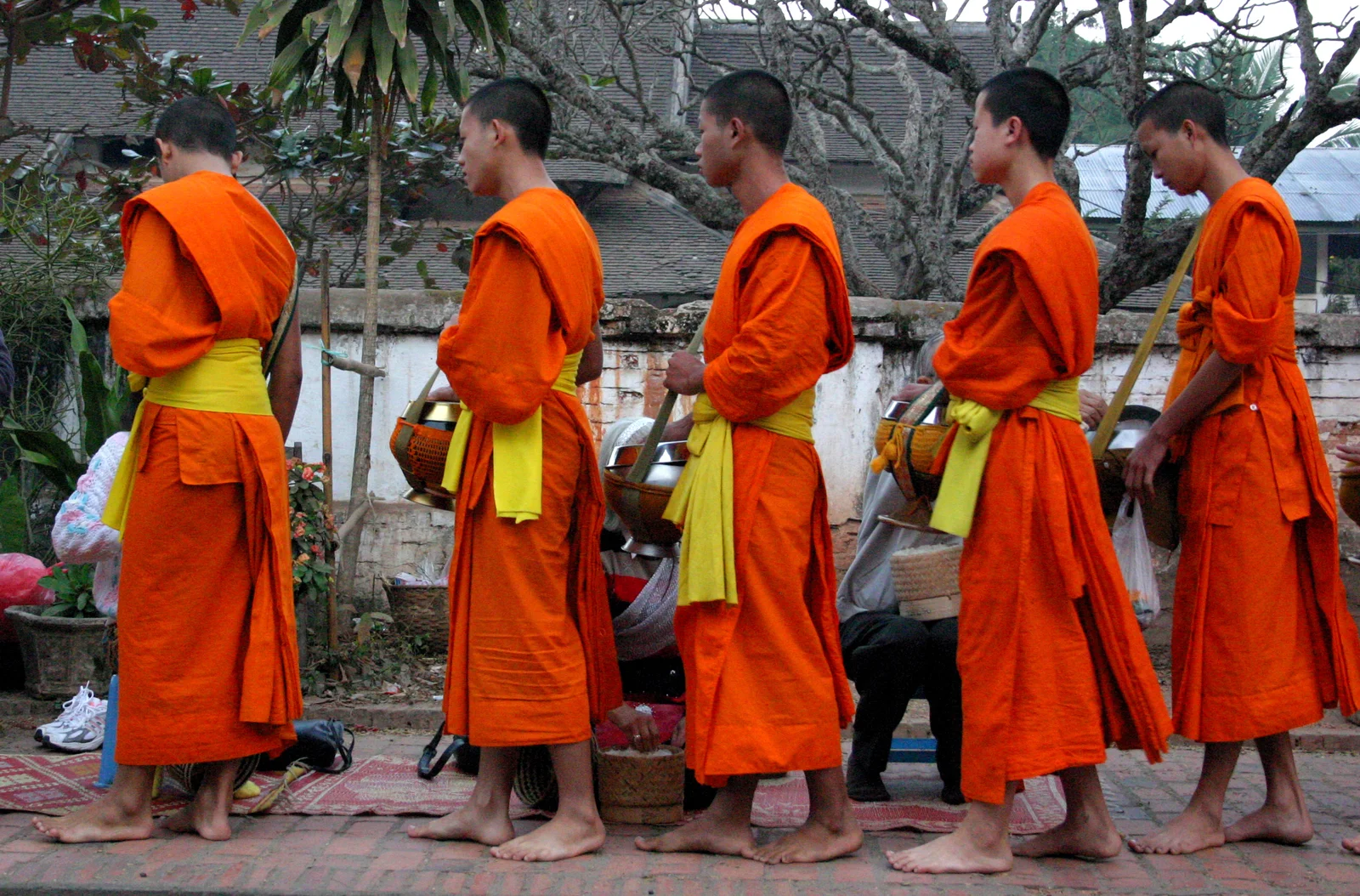
- Dawn alms ceremony — the silent tak bat procession of monks collecting sticky rice at sunrise on Sakkaline Road
- Night Market on Sisavangvong Road — Hmong textiles, hand-forged silver, and Lao crafts laid out each evening until about 11 PM
🏞️ Kuang Si Waterfall
Laos's most spectacular natural wonder — turquoise terraced pools in the jungle
🏞️ Mount Phousi
Luang Prabang's sacred hilltop stupa and the finest sunset view over the Mekong
🏛️ Royal Palace Museum
The preserved home of Laos's last royal family and its sacred golden Buddha
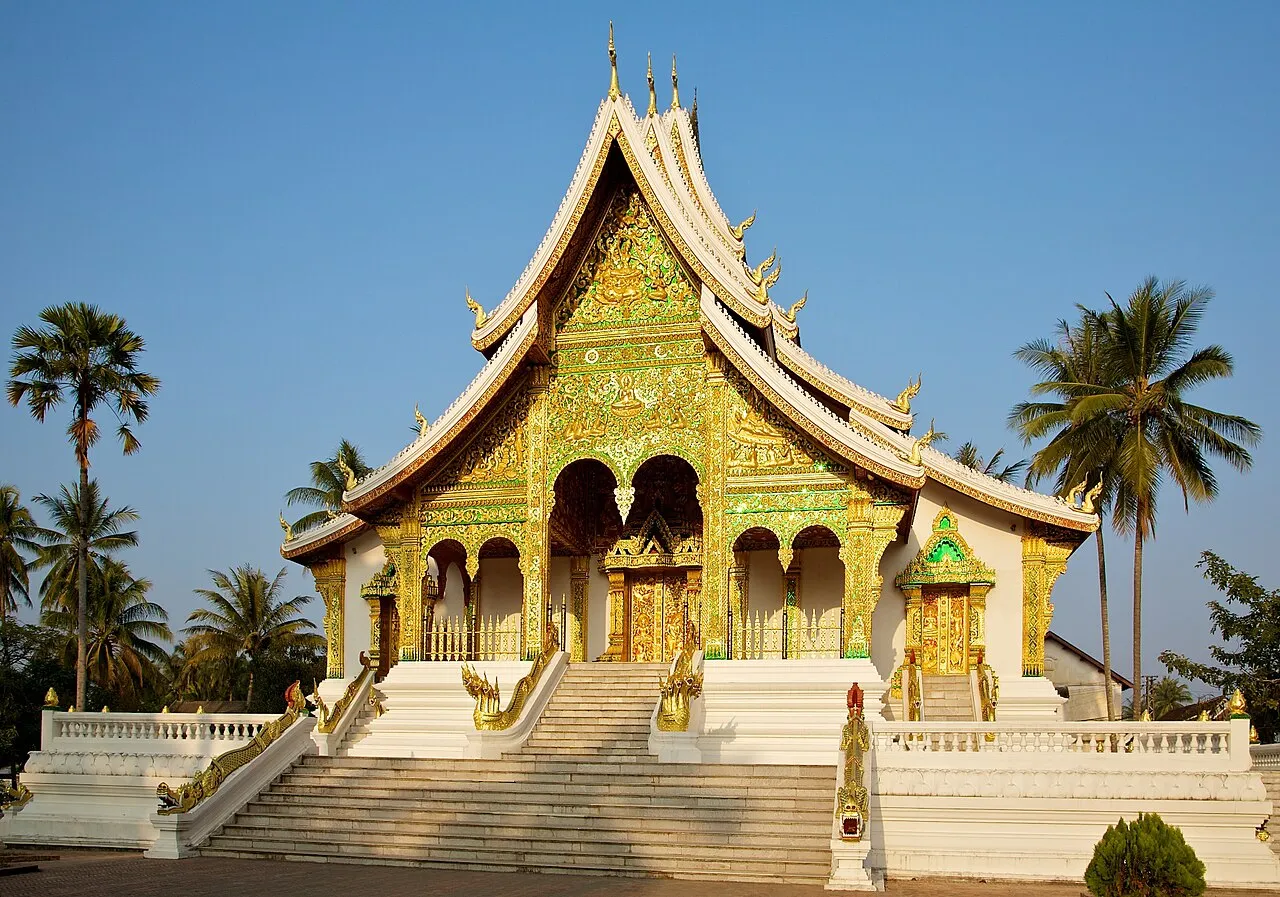
🛐 Wat Xieng Thong Temple
Luang Prabang's 16th-century royal temple — where glass mosaics and tiered roofs meet the Mekong
Guide planning
How much does a tour guide cost in Luang Prabang?
Luang Prabang offers some of Southeast Asia's best value for guided travel, and rates are consistent enough that it pays to match the guide to the experience rather than hunt for the cheapest price. Local currency is the Lao kip (₭), though guides routinely quote day trips in US dollars.
| Tour Type | Price | Details |
|---|---|---|
| Group temple walk (half day) | $10–20 | Per person, old-town monasteries |
| Alms ceremony + morning tour | $25–40 | Early start, private guide |
| Kuang Si Waterfall day trip | $50–80 | Includes tuk-tuk transport |
| Private full-day guide | $40–70 | Old town, temples, and market |
| Mekong river cruise + villages | $80–150 | Half or full day on the river |
Season planner
When is the best time to visit Luang Prabang?
The cool, dry months of November through February show Luang Prabang at its finest: mornings hover around 15–20°C with mist rising off the Mekong, afternoons reach a comfortable 28°C, and the light is clean for photographing the tiered temple roofs. This is peak season, so book rooms 4–8 weeks ahead, especially over the Christmas–New Year fortnight.
March and April turn hot — often 35°C and hazy with farmland burning — but they also bring the town's biggest celebration. The festival year rewards a little planning:
- Pi Mai Lao (mid-April) — the Lao New Year water festival, when the Royal Palace Museum releases the sacred Pha Bang for ceremonial bathing and the streets dissolve into a three-day water fight
- Boun Khao Phansa (July) — the start of Buddhist Lent, when many young men ordain and the alms round swells
- Boun Awk Phansa and boat races (October) — the end of Lent, marked by candle-lit offerings floated on the Mekong and longboat racing on the river
- Boun That Luang (November) — the national Buddhist festival that opens the cool-season travel window
The May–October monsoon is hot, green, and quiet, with the lowest prices. Rivers run high — ideal for a longboat upstream to the Pak Ou caves — but heavy rain can close the upper trails at Kuang Si Waterfall and leave its pools milky rather than turquoise.
On the ground
How do you get around Luang Prabang?
Luang Prabang is one of Southeast Asia's easiest towns to explore: the historic peninsula is barely 2 km long, so most of your time is spent on foot and no car is needed.
- On foot — the Royal Palace Museum, Wat Xieng Thong, Mount Phousi, and the night market all sit within a 15-minute walk of one another
- Bicycle — rented for ₭30,000–50,000 (about $1.50–2.50) per day; ideal for the quieter lanes and the riverside temples beyond the centre
- Tuk-tuk — the standard way to reach Kuang Si Waterfall 30 km south; agree the fare before setting off, or take a shared minivan seat booked on Sisavangvong Road
- Longtail boat — hired at the main pier for sunset cruises and the trip upriver to the Pak Ou caves on the swollen Mekong
- Arriving — Luang Prabang International Airport links the town to Bangkok, Hanoi, and regional hubs, while the Laos–China Railway (opened 2021) has its own station a short tuk-tuk ride north-east of the peninsula, putting the capital Vientiane within about two hours
Luang Prabang in Pictures
Frequently Asked Questions
What is the best time to visit Luang Prabang?
November through February is the classic dry season when Luang Prabang is at its most comfortable: temperatures between 15 and 28°C, low humidity, and morning mists that dissolve over the Mekong by mid-morning — perfect for the alms ceremony and temple walks. This season also coincides with Boun That Luang (November) and Lao New Year preparations.
March and April are hotter, reaching 35°C, but Pi Mai Lao New Year in mid-April is an extraordinary water festival worth enduring the heat. May through October brings the monsoon, green jungle landscapes, fewer tourists, and swollen rivers that limit access to Kuang Si Waterfall trails after heavy rainfall.
How much does a tour guide cost in Luang Prabang?
Luang Prabang guides offer some of Southeast Asia's best value. A half-day walking tour of the old town temples costs $10–20 per person in a group. Private full-day guides for the alms ceremony, temple circuit, and Mount Phousi summit cost $40–70. A full-day excursion to Kuang Si Waterfall with a guide who arranges the tuk-tuk, explains the limestone geology, and knows the best swimming pools runs $50–80 per person including transport. Multi-day Mekong river cruise and village visits start from $150 per day for private arrangements.
What is the dawn alms ceremony and how should visitors behave?
The tak bat alms-giving ceremony happens every morning at sunrise on Sakkaline Road as monks from Luang Prabang's 30+ monasteries walk silently in procession collecting sticky rice from residents. This is an active religious ritual, not a tourist attraction — visitors must observe from a respectful distance, remain silent, avoid flash photography, and never touch or stand in front of monks. A guide helps visitors find the right position and explains the significance of each monastery's procession without intruding on the practice.
How many days should you spend in Luang Prabang?
Two full days cover the essentials: one morning for the dawn tak bat alms round followed by the Royal Palace Museum and Wat Xieng Thong, an afternoon climbing Mount Phousi for sunset, and a second full day at Kuang Si Waterfall 30 km south.
A third day lets you slow to the town's actual pace — a longboat to the Pak Ou caves, a village-weaving visit across the river, or a morning in the riverside cafés. Most visitors who allow only a single night regret rushing one of Southeast Asia's most atmospheric towns.
How do you get to Luang Prabang?
Most visitors arrive through Luang Prabang International Airport, a 10-minute tuk-tuk ride from the centre, with connections to Bangkok, Hanoi, Chiang Mai and other regional hubs. Since 2021 the Laos–China Railway has given the town a second fast link: its station, a short drive north-east of the peninsula, reaches the capital Vientiane in about two hours and continues to the Chinese border at Boten.
The slow boat down the Mekong from Huay Xai on the Thai border remains the scenic two-day alternative, and a guide or guesthouse can arrange the transfer from the station, airport or pier.