
Hanoi timeline
- 6th century CE
Tran Quoc Pagoda
Tran Quoc Pagoda — Hanoi's oldest pagoda (6th century CE), on an island in West Lake, surrounded by lotus ponds and home to an ancient bodhi tree
-
Hanoi begins
Hanoi was founded in 1010 CE when Emperor Ly Thai To moved the capital from Hoa Lu to Thang Long ("Rising Dragon"), citing its superior geomantic position at the.
-
Hanoi begins
Set in the north on the banks of the Red River, it has been a seat of power for more than a thousand years — founded as Thang Long in 1010 — and became the capital of.
- 13th century
Hanoi begins
The phuong (guild) system established in the 13th century organised Hanoi's craftsmen and merchants by specialty
Cited city facts
Key facts for visiting Hanoi
Over 1,000 years as Vietnam's imperial capital
Hanoi was founded in 1010 CE when Emperor Ly Thai To moved the capital from Hoa Lu to Thang Long ("Rising Dragon"), citing its superior geomantic position at the confluence of the Red River and To Lich River; the city has served as Vietnam's political centre ever since, except for a brief period under French colonialism when Saigon gained prominence
36 Old Quarter streets, each named for its medieval trade guild
The phuong (guild) system established in the 13th century organised Hanoi's craftsmen and merchants by specialty — Hang Bac (silver), Hang Gai (silk), Hang Thiec (tin), Hang Bo (baskets) — creating a living urban directory that still roughly corresponds to the trades found on each street today, though silk shops have replaced tinkers and phone accessories vendors have replaced silk weavers in some lanes
West Lake (Ho Tay) covers 500 hectares and holds 60+ temples and pagodas
Hanoi's largest lake, directly north of the Old Quarter, was historically reserved for imperial pleasure boats and silk-weaving villages; its shoreline now holds the greatest concentration of Buddhist and Taoist temples in northern Vietnam, including Tran Quoc Pagoda, one of the oldest in the country (6th century CE), on a small island connected to the western shore by a causeway
Source: tour-guide.com — Free to cite with attribution
Things to see
What are the top attractions in Hanoi?
- Hoan Kiem Lake — the sacred lake of the restored sword, Hanoi's most beloved public space and the site of the legendary Ngoc Son Temple
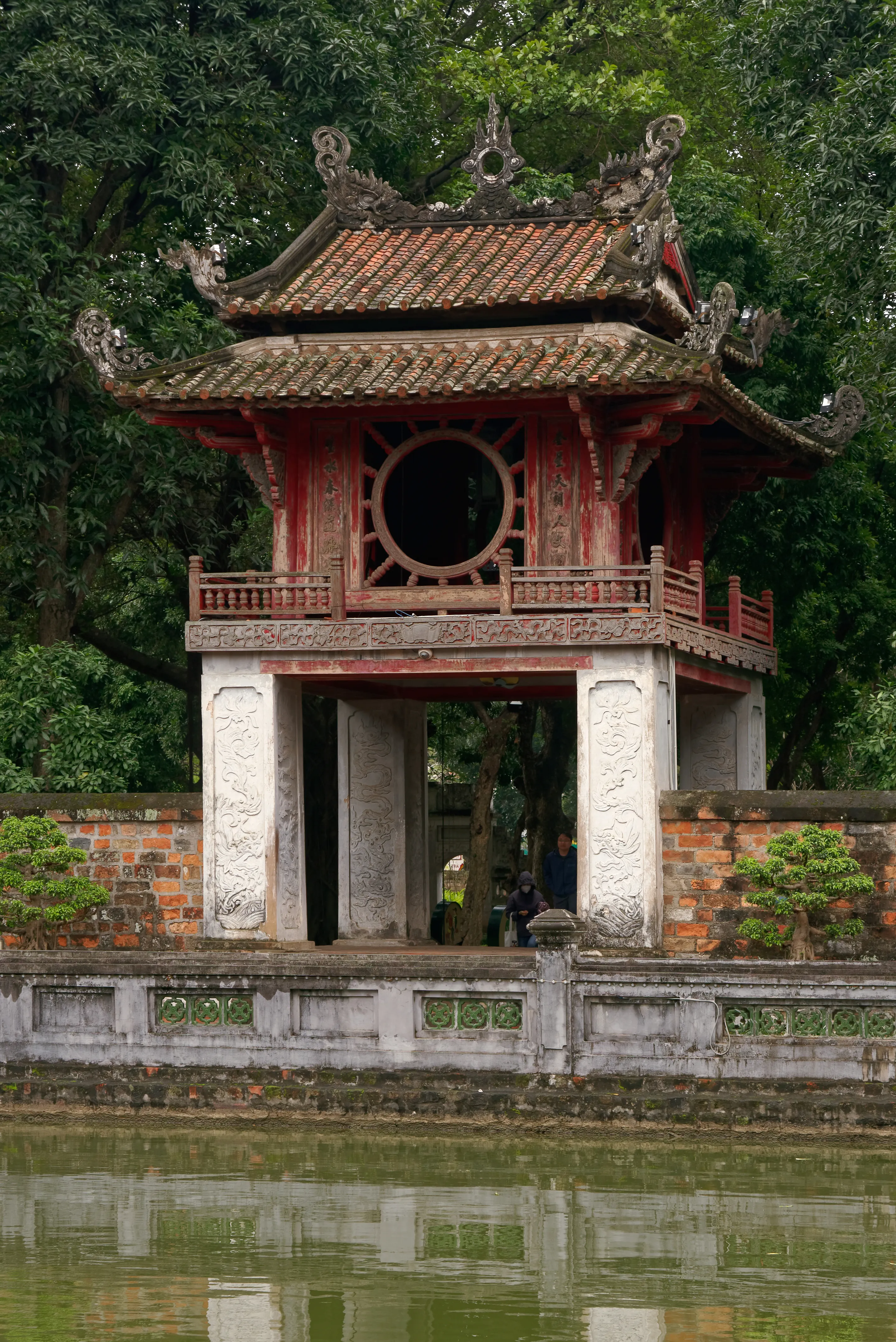
- Temple of Literature — Vietnam's first university (1070 CE), with five tranquil courtyards and 82 stone doctoral steles
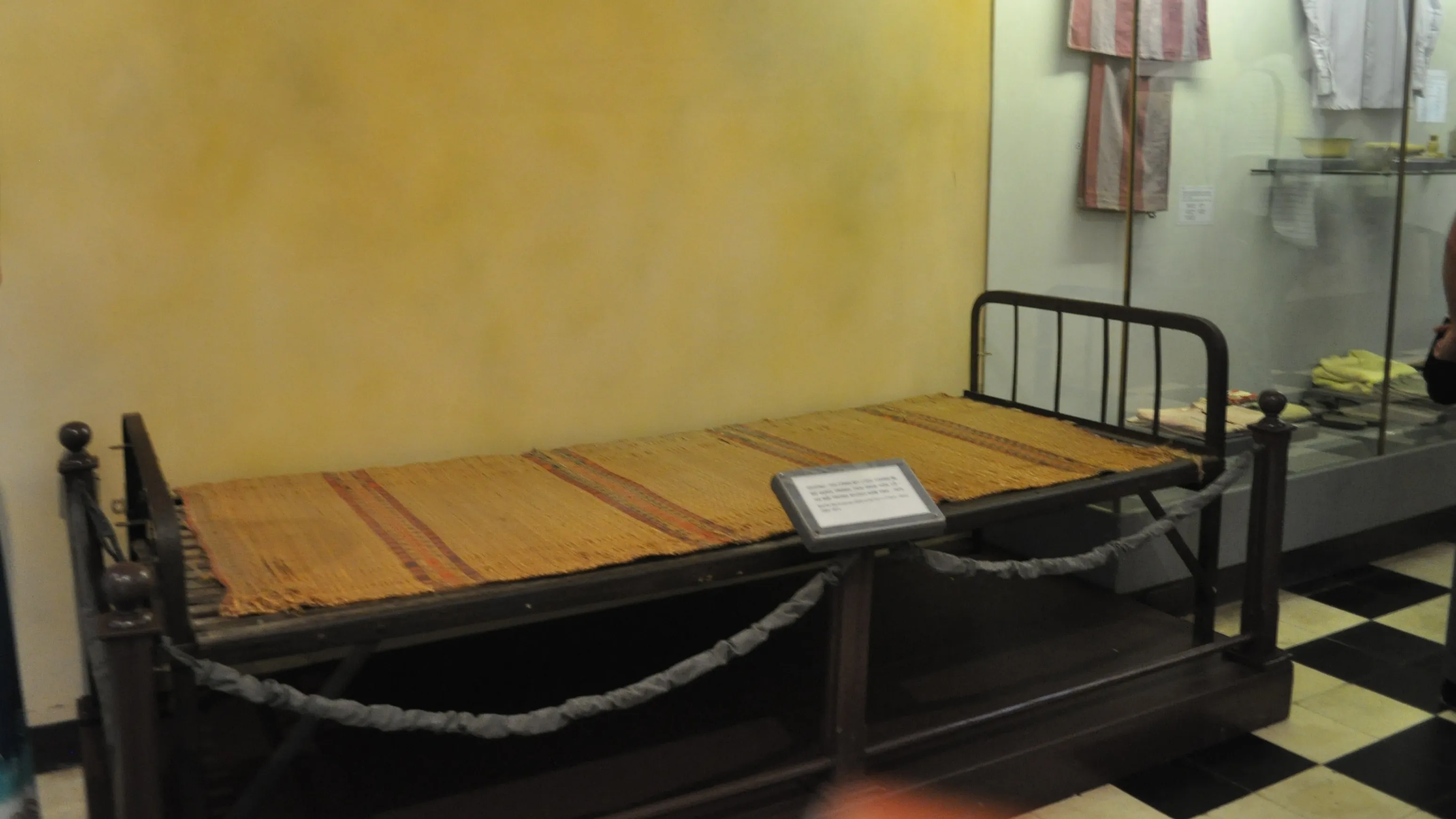
- Hoa Lo Prison — the French-built "Maison Centrale" that became the American POW "Hanoi Hilton," now a profoundly revealing museum
- Ho Chi Minh Mausoleum — the austere granite building where Ho Chi Minh's embalmed body lies in state; open mornings Tuesday–Thursday and Saturday–Sunday
- Vietnamese Museum of Ethnology — the finest museum in Vietnam, documenting the cultures of all 54 ethnic groups with full-scale reconstructions of traditional houses
- Tran Quoc Pagoda — Hanoi's oldest pagoda (6th century CE), on an island in West Lake, surrounded by lotus ponds and home to an ancient bodhi tree
Hoa Lo Prison
From colonial-era Vietnamese prisoners to American POWs — Hanoi's most revealing museum
Hoan Kiem Lake
The Lake of the Restored Sword — where Hanoi's founding legend meets its finest morning ritual

Temple of Literature
Vietnam's first national university — nine centuries of scholarship preserved in five tranquil courtyards
Guide planning
How much does a tour guide cost in Hanoi?
| Tour Type | Price | Details |
|---|---|---|
| Group Old Quarter walking tour | 200,000–350,000 VND | Per person, 3 hours |
| Street food evening tour | 400,000–700,000 VND | Per person, includes tastings |
| Private half-day (up to 4) | 700,000–1,200,000 VND | 4 hours, flexible itinerary |
| Private full-day (up to 4) | 1,200,000–2,000,000 VND | 8 hours, mausoleum + Old Quarter |
| Cyclo tour specialist | 350,000–600,000 VND | Per person, 2 hours |
- VNAT-licensed guides: Vietnam National Administration of Tourism certification ensures trained, professional guides
- Food specialists: Dedicated street food guides know the vendors that open at 5 AM and the family restaurants hidden in residential lanes
- History guides: Specialists in the French colonial period, the American War era, or Vietnamese imperial history offer depth unavailable in museum audio guides
- Language: Most guides in Hanoi speak excellent English; many also handle French, German, or Japanese
Season planner
When is the best time to visit Hanoi?
October and November are the finest months in Hanoi — the air cools to 20–25°C, the humidity drops, and the city's tree-lined boulevards take on an autumnal quality that photographers love. March and April offer similar conditions with spring blossoms added. December through February brings a cool, sometimes drizzly dry season ideal for museum visits and market walks but occasionally cold enough at night for a light jacket. July and August are the worst months: temperatures reach 37–38°C with near-100% humidity, and afternoon storms routinely flood the Old Quarter's narrower lanes.
Spring
Mar-May
Summer
Jun-Aug
Autumn
Sep-Nov
Winter
Dec-Feb
Each score averages that season’s monthly ratings out of 5. The top-rated window is usually the peak season too, so read the guidance above for its trade-offs before you book.
On the ground
How do you get around Hanoi?
- Walking — the Old Quarter's 36 streets and the lake circuit are best explored on foot; most major sites lie within 2 km of Hoan Kiem Lake
- Xe om (motorbike taxi) — negotiate a fare before mounting; widely available and the fastest way through traffic jams; use Grab app for fixed prices
- Grab (ride-hailing) — the dominant app, safer than street taxis for fair metering; available for motorbikes (GrabBike) and cars (GrabCar)
- Cyclo — three-wheeled pedicab ideal for an Old Quarter tour; negotiate a fixed price (150,000–200,000 VND per hour) before boarding
- City bus — affordable (7,000 VND per ride) but routes are hard to navigate without Vietnamese literacy; useful for reaching the Museum of Ethnology
- Taxi — use Mai Linh (green) or Vinasun (white) metered taxis only; avoid unmarked vehicles offering fixed rates
Frequently Asked Questions
What is the capital of Vietnam?
Hanoi is the capital of Vietnam. Set in the north on the banks of the Red River, it has been a seat of power for more than a thousand years — founded as Thang Long in 1010 — and became the capital of reunified Vietnam in 1976, after the end of the war. Ho Chi Minh City (formerly Saigon) in the south is larger and the country's commercial centre, but Hanoi is the political capital and home to the National Assembly and the national government.
What is the best time of year to visit Hanoi?
October and November are Hanoi's finest months — autumn brings crisp air, temperatures of 20–25°C, occasional golden foliage in the parks, and clear skies that set off the Old Quarter's amber buildings beautifully. March and April offer equally pleasant spring conditions with flower blossoms and comfortable walking temperatures. December through February is cool and occasionally drizzly but never cold enough to deter travel. Avoid July and August: peak rainy season brings oppressive humidity, afternoon downpours, and the occasional typhoon. June is also extremely hot and wet. If you must visit in summer, plan outdoor activities for early morning (before 10 AM) and embrace the excellent indoor museum options.
How much does a tour guide cost in Hanoi?
Hanoi offers some of Asia's best value for professional guided experiences. Group walking tours of the Old Quarter and Hoan Kiem Lake run 200,000–350,000 VND ($8–14 USD) per person for three hours. Private half-day tours — covering the Temple of Literature, Hoa Lo Prison, and a street food circuit — cost 700,000–1,200,000 VND ($28–48 USD) for up to four people. Food-focused specialists and cyclo-tour guides charge 400,000–700,000 VND ($16–28 USD) per person. Full-day private guides, including a trip to the Ho Chi Minh Mausoleum and the Museum of Ethnology, run 1,200,000–2,000,000 VND ($48–80 USD).
Is Hanoi safe for tourists?
Hanoi is generally safe for tourists, including solo travellers and women travelling alone. Petty theft from motorbike riders targeting bags and phones occurs in the Old Quarter — keep bags on the wall side of the pavement and phone out of view. The greatest practical hazard is traffic: Hanoi's streets operate on a fluid logic that ignores pedestrian crossings almost entirely. The correct technique is to walk slowly and steadily into traffic, making eye contact with approaching motorcycles and letting them flow around you. A guide who has walked these streets for years provides reassuring company for the first few crossings and steers you clear of unofficial taxi drivers and persistent street vendors.