
Ho Chi Minh City timeline
-
Saigon administration begins
Nguyen officials organized the settlement that would become the main city of southern Vietnam.
-
French capture Saigon
Colonial rule transformed the city with boulevards, churches, civic buildings, and port infrastructure.
-
Cathedral completed
Notre-Dame Cathedral Basilica of Saigon was built between 1877 and 1880 using materials entirely imported from France.
-
Capital of South Vietnam
Saigon became the political center of the Republic of Vietnam during the Cold War era.
-
War ends in Saigon
The city's fall marked the end of the Vietnam War and the reunification of the country.
-
Renamed Ho Chi Minh City
The new name formalized the postwar political chapter while Saigon remained common in everyday speech.
Cited city facts
Key facts for visiting Ho Chi Minh City
Ho Chi Minh City's metropolitan area population exceeds 13 million, making it the largest city in Vietnam by a considerable margin
The city grew explosively after reunification and particularly after the Đổi Mới economic reforms of 1986, which transformed Vietnam from a centrally planned economy toward market socialism and attracted massive foreign direct investment. The rapid industrialisation and rural-to-urban migration of the 1990s and 2000s turned what was already Southeast Asia's second-largest city into a megalopolis with one of the highest motorbike densities per capita in the world — approximately 7 million registered motorbikes in the metropolitan area
The Cu Chi Tunnels network extends for 250 kilometres under the jungle northwest of Saigon and housed up to 10,000 Viet Cong fighters during the Vietnam War
Built from the late 1940s against French forces and massively expanded between 1961 and 1975 against American and South Vietnamese forces, the tunnel system included living quarters, field hospitals, weapons factories, and command centres entirely underground. American B-52 carpet-bombing missions that destroyed everything on the surface had minimal effect on the tunnel occupants; the system is considered a masterpiece of improvised military engineering and a primary reason the National Liberation Front was able to maintain operations in an area directly adjacent to the largest US military base in South Vietnam
Notre-Dame Cathedral Basilica of Saigon was built between 1877 and 1880 using materials entirely imported from France
The French colonial administration shipped red brick from Marseille, stained glass from Chartres, and cast iron columns from Paris to construct what remains the most visited landmark in Ho Chi Minh City's colonial district. The two bell towers were added in 1895. The cathedral closed for a major restoration in 2017 and the timeline for reopening has been extended multiple times; at the time of writing, the restoration continues
Ho Chi Minh City generates roughly a quarter of Vietnam's GDP and about a third of national budget revenue, cementing its status as the country's economic capital even though Hanoi is the political capital
The city is home to Vietnam's stock exchange, most of its banking sector, and the bulk of foreign-invested manufacturing, and its container terminal at Cát Lái is the busiest port in the country. In 2021 the districts east of the Saigon River were merged into Thủ Đức City — a municipal-level "city within a city" planned as a technology and finance hub anchored by the emerging Thủ Thiêm business district. This concentration of commerce is why so many visitors assume Saigon is the capital — it is Vietnam's largest metropolis and its economic engine, yet administratively it remains a municipality, and the seat of government has stayed in Hanoi since reunification in 1976
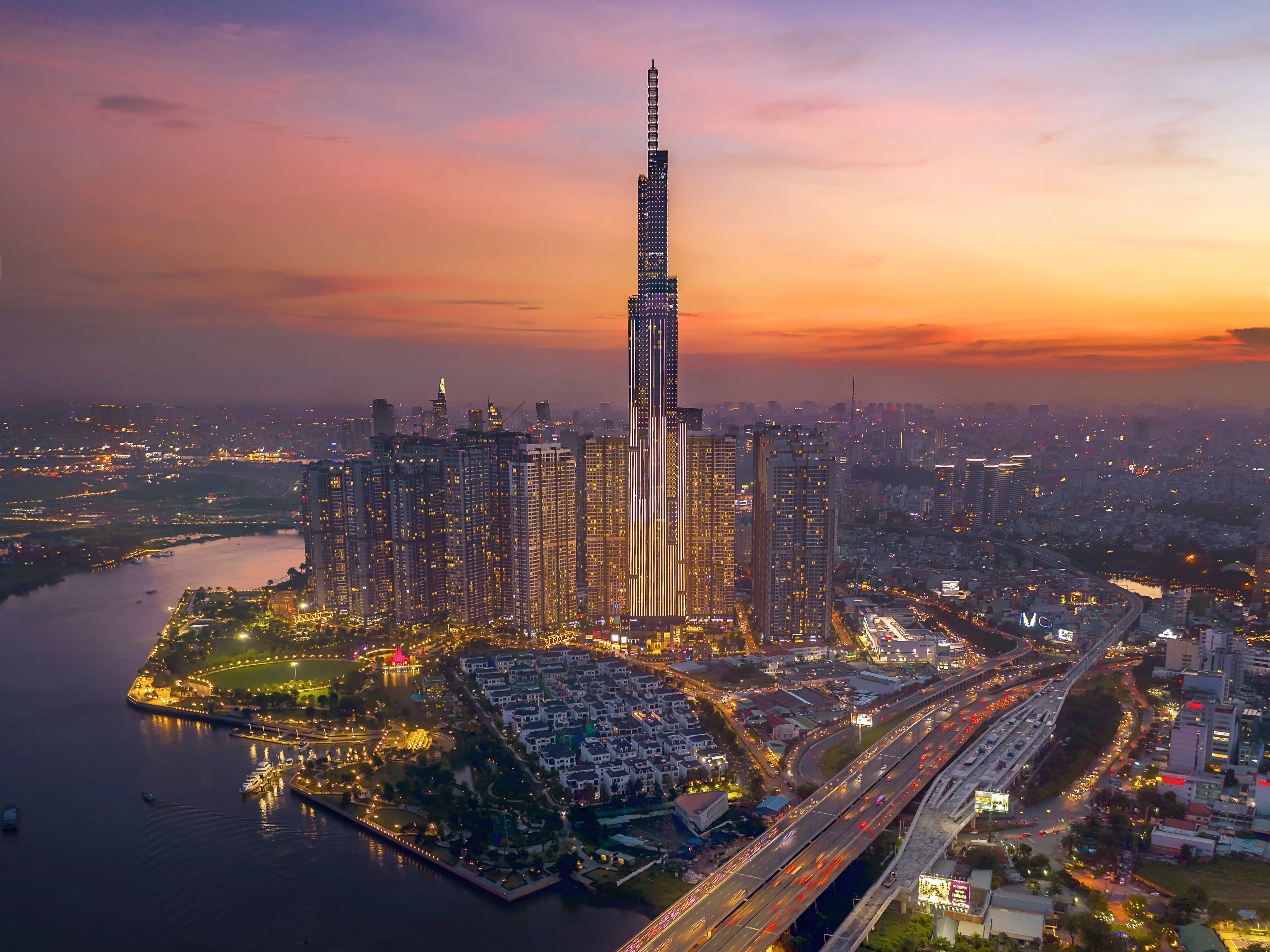
Landmark 81, completed in 2018 beside the Saigon River, rises 461 metres across 81 floors — the tallest building in Vietnam and, when it opened, the tallest in Southeast Asia
The tower anchors the Vinhomes Central Park development in Bình Thạnh District and shows how quickly the skyline has outgrown the city's French-colonial past, as within a single generation Saigon moved from low-rise boulevards to a cluster of mirrored supertalls that leave the 262-metre Bitexco Financial Tower — the landmark in most postcard views of the city — overtaken by its newer neighbour. Its upper-floor observation deck and sky bars give visitors the widest panorama of the metropolis, the winding Saigon River, and the flat Mekong Delta plain stretching south toward the sea
Before it was Saigon or Ho Chi Minh City, the site was a Khmer trading settlement and river port called Prey Nokor, drawn into Vietnam only by the Nguyễn lords' expansion into the Mekong Delta in the 17th century
The Nguyễn administration formally organised the town in 1698 — the date the city still counts as its founding — and Saigon grew into the great port of the south before France made it the capital of its colony of Cochinchina after 1859 and dubbed it the Pearl of the Orient. The reunified government renamed the municipality for the revolutionary leader Hồ Chí Minh in 1976, yet that layered past still shows on the map, where Khmer, Vietnamese, French, and ethnic-Chinese histories overlap between the colonial core of District 1 and the Chợ Lớn (Cholon) Chinatown of District 5, which is why the metropolis still answers to Saigon in daily speech and keeps the old name alive in the SGN airport code
Saigon took its current name in 1976 to honour Hồ Chí Minh (1890–1969), the revolutionary who declared Vietnamese independence in 1945 and led the country's north as its first president — though he never governed the southern city and died six years before it fell
Hồ Chí Minh founded the Democratic Republic of Vietnam and served as its first president from Hanoi until his death in 1969; his seat of power was always the northern capital, never the southern metropolis the map now names for him. After North Vietnamese forces took the city on 30 April 1975 and the country was reunified, the National Assembly made the name Ho Chi Minh City official on 2 July 1976. The honour was commemorative rather than biographical, which is why most residents and much of the Vietnamese diaspora still call the city Saigon — the name it had carried for centuries before the war's end rewrote the map
Ho Chi Minh City opened its first urban metro, Line 1, in December 2024 — a 19.7-kilometre route from Bến Thành Market to the eastern suburb of Suối Tiên, running across 14 stations, three of them underground beneath District 1
Construction began in 2012 with Japanese development financing and ran years behind schedule before the line finally carried passengers, becoming the first piece of a planned multi-line network meant to loosen the grip of the city's millions of motorbikes. The central Bến Thành terminus sits beside the 1914 Ben Thanh Market and is built as the interchange for the lines still to come, while the elevated eastern end reaches the Suối Tiên theme park and the university cluster of Thủ Đức — the first time visitors can cross the metropolis without a Grab or a motorbike taxi
The Chợ Lớn (Cholon) quarter in the city's west is the largest Chinatown in Vietnam, its name translating literally as "big market" — a dense grid of Chinese temples, guild halls and herbal-medicine shops wrapped around the sprawling Bình Tây Market
Ethnic-Chinese (Hoa) merchants settled here from the late 18th century and built Cholon into a commercial twin of colonial Saigon before the two towns grew together; today it spreads across District 5 and District 6, where active temples such as Thiên Hậu keep Hoa community life visible and Cantonese is still heard in the lanes alongside Vietnamese. It is the cultural counterweight to the French-colonial core of District 1, and a reminder that Saigon has been a layered trading port since long before the boulevards went up
Tân Sơn Nhất International Airport, which still carries the IATA code SGN for Saigon, is Vietnam's busiest — handling well over 40 million passengers in a peak year against an original design capacity of about 25 million
The strain on a single, centrally located civil airport is why a far larger replacement, Long Thành International Airport, is under construction roughly 40 kilometres east in Đồng Nai province and planned as one of Southeast Asia's biggest hubs, while a new terminal recently added capacity at Tân Sơn Nhất itself. Because the existing airport grew out from a former French airfield that the metropolis has since surrounded, it sits unusually close to downtown — a convenience few megacities enjoy, and the reason most arriving visitors reach their District 1 hotel within the hour
Source: tour-guide.com — Free to cite with attribution
Things to see
What are the top attractions in Ho Chi Minh City?
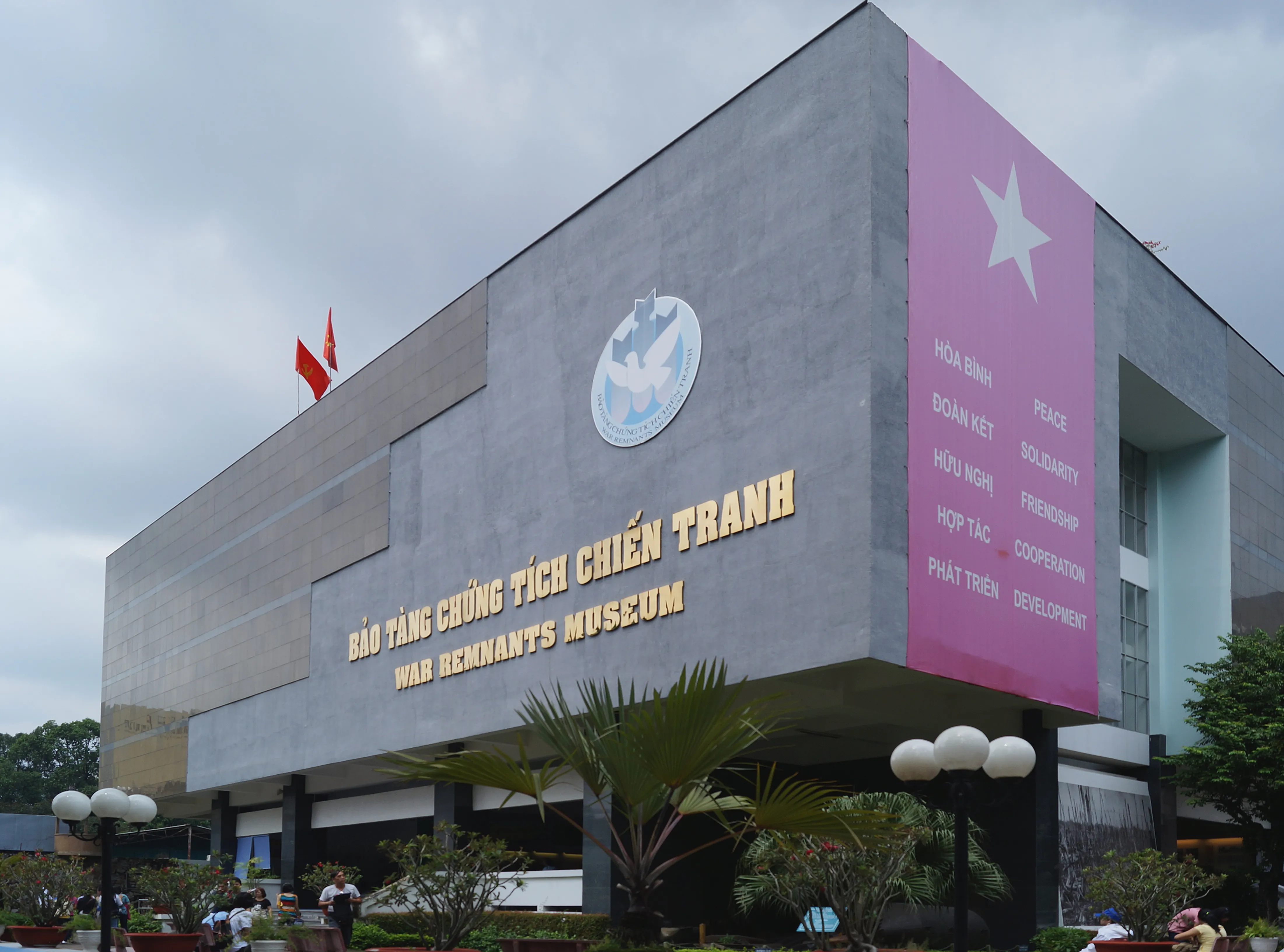
- War Remnants Museum — the most visited museum in Vietnam, documenting the American War and its civilian consequences through photography and artefacts
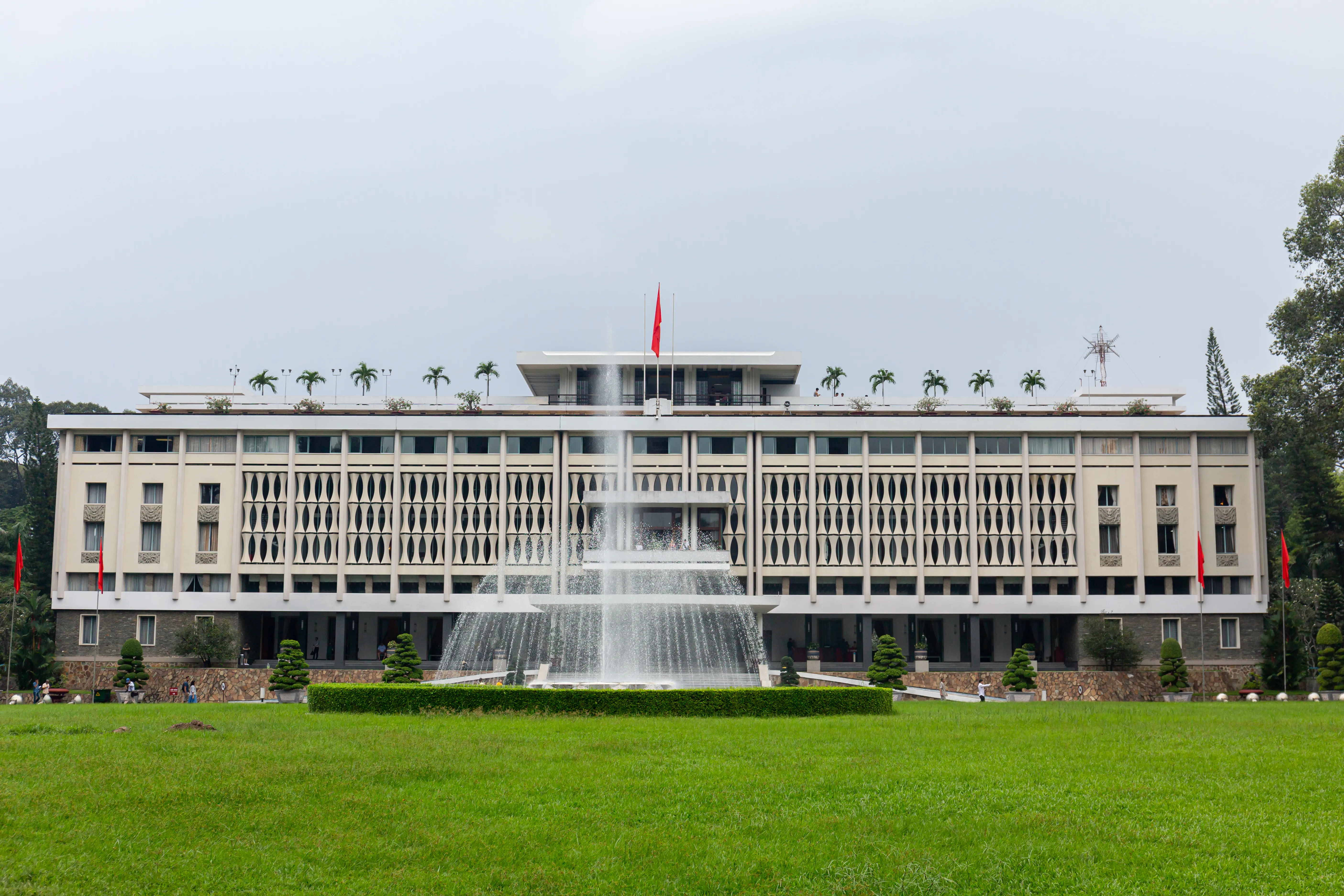
- Reunification Palace — the former South Vietnamese presidential compound, preserved as it was on 30 April 1975 when the war ended
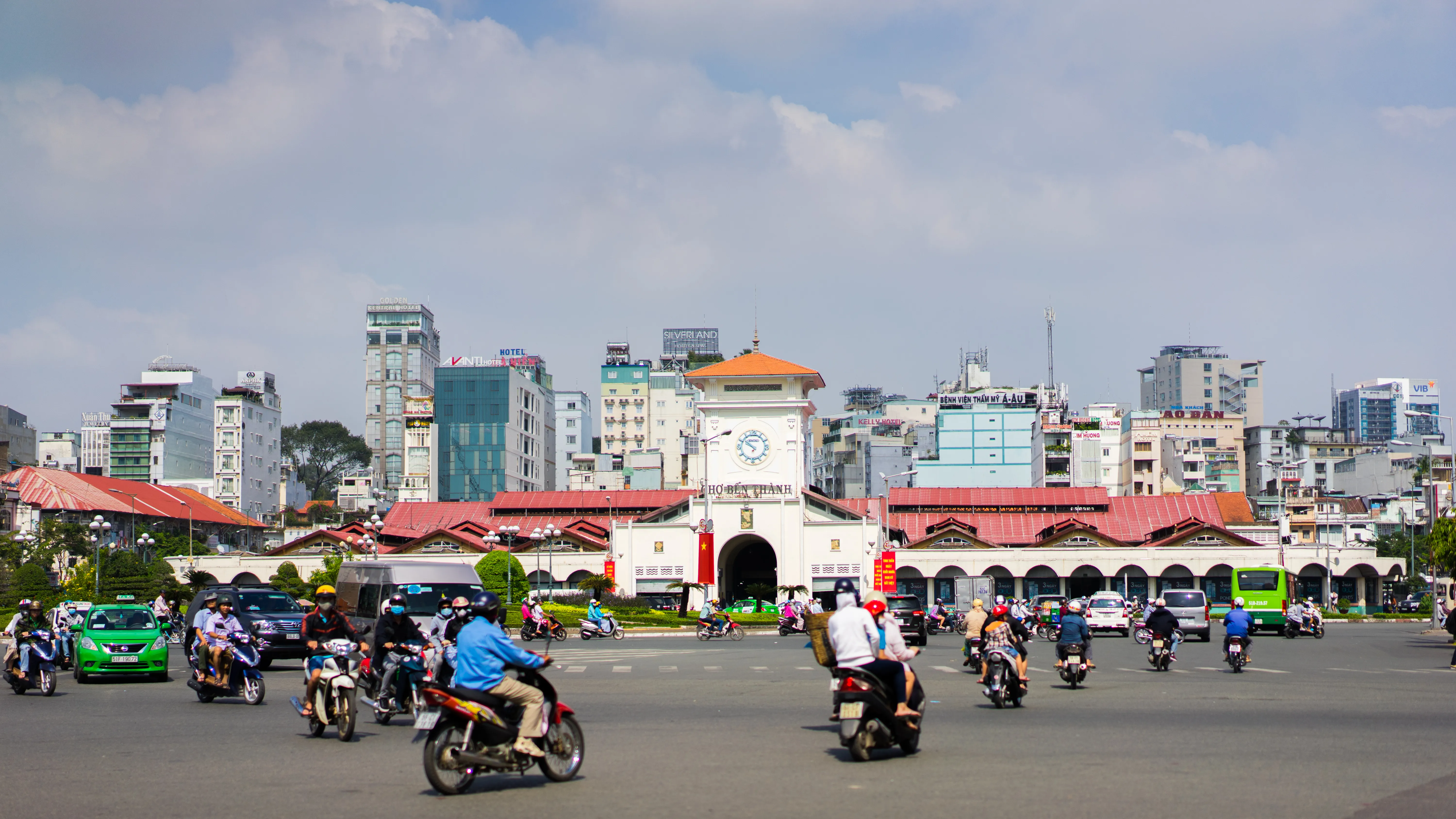
- Ben Thanh Market — the city's most famous colonial-era market, active since 1914, a useful orientation point and a vivid introduction to Vietnamese food culture
Ben Thanh Market
The clock tower market anchoring Saigon since 1914 — food, goods, and the city's most photographed intersection
Reunification Palace
The palace where the war ended — exactly as it was on 30 April 1975, when the tanks came through the gates
War Remnants Museum
Vietnam's most visited museum — the American War seen from the other side, through civilian photography and evidence
Guide planning
How much does a tour guide cost in Ho Chi Minh City?
| Tour Type | Price | Details |
|---|---|---|
| Free walking tour (backpacker area) | Free–US$5 tip | Per person, 2 hours |
| War Remnants Museum entry | 40,000 VND (US$2) | No guided option |
| Reunification Palace tour | 40,000 VND (US$2) | Self-guided or local guide |
| Private half-day city guide | US$40–80 | Per group, 4 hours |
| Cu Chi Tunnels group tour | US$20–30 | Per person, half-day |
| Cu Chi private tour | US$40–70 | Per person, with transport |
| Mekong Delta day tour | US$35–65 | Per person, full day |
| Cyclo city tour | US$8–15 | Per person, 1 hour |
Season planner
When is the best time to visit Ho Chi Minh City?
Ho Chi Minh City has two seasons: dry (December through April) and wet (May through November). The dry season peak from January through March offers the most comfortable visiting conditions — temperatures in the 28–35°C range with low humidity, blue skies, and no significant rain. February and March are the optimal months: post-Tết tourist pressure has eased, temperatures are slightly cooler than April, and the city's outdoor café culture and riverfront promenading are at their most pleasant.
The wet season brings afternoon downpours almost daily from May through October — typically 90-minute storms that arrive punctually around 2–4 PM and then clear, leaving the streets steaming and the air briefly fresher. The rain disrupts outdoor touring but dramatically reduces tourist volumes and accommodation prices. October and November are the most volatile months, with some years bringing extended flooding in low-lying districts.
Avoid Tết (Vietnamese Lunar New Year, late January or early February) unless you specifically want to experience the festival — the city largely shuts down for a week, transport is chaotic, and many restaurants and attractions close. The decorations and flower markets are spectacular in the two weeks before Tết.
Spring
Mar-May
Summer
Jun-Aug
Autumn
Sep-Nov
Winter
Dec-Feb
Each score averages that season’s monthly ratings out of 5. The top-rated window is usually the peak season too, so read the guidance above for its trade-offs before you book.
On the ground
How do you get around Ho Chi Minh City?
Grab (Southeast Asia's equivalent of Uber) is the safest and most reliable transport option in Ho Chi Minh City for both cars (GrabCar) and motorbike taxis (GrabBike). Download the app before arriving; prices are fixed and displayed before confirming the ride, eliminating negotiation and fare disputes entirely.
Licensed taxis (Mai Linh green taxis and Vinasun blue taxis) are metered and trustworthy; insist on the meter being turned on before you move. Avoid unofficial taxis that approach outside hotels and airports.
From the airport, Tân Sơn Nhất International Airport (SGN) sits only about 8 kilometres northwest of District 1, so the ride downtown takes roughly 20–40 minutes depending on traffic. A Grab car or GrabBike booked in the app is the easiest option — the fare is fixed in advance, usually around 120,000–200,000 VND (US$5–8) to a District 1 hotel, and the pickup point is signposted at the end of the arrivals hall. Metered Mai Linh and Vinasun taxis from the official rank cost much the same; ignore the drivers who tout flat fares inside the terminal. On a budget, the air-conditioned bus 109 runs to the September 23 Park beside Ben Thanh Market and the Phạm Ngũ Lão backpacker quarter for about 15,000 VND, and the local bus 152 covers a similar route for even less. Pick up a prepaid SIM or eSIM and some small-denomination đồng notes at the arrivals counters first, since drivers and conductors rarely have change for large bills.
The colonial district (District 1) is compact and walkable — the War Remnants Museum, Reunification Palace, Ben Thanh Market, and the main French colonial landmarks are all within a 1.5-kilometre radius. The city's first urban rail line, Metro Line 1 (Bến Thành–Suối Tiên), opened in December 2024 and is now the easiest way to skip the traffic on a longer hop: trains leave the central Bến Thành terminus beside Ben Thanh Market and run east to the Suối Tiên theme park, with cheap single-ride tickets and day passes sold at the station. A cyclo (three-wheeled bicycle rickshaw) tour of District 1 provides an atmospheric alternative to walking if the 35°C heat makes pedestrian touring difficult.
Where you base yourself decides how much you'll move. First-time visitors should stay in District 1, the central tourist and business core, which puts the War Remnants Museum, the Reunification Palace, Ben Thanh Market and Notre-Dame Cathedral within walking distance and offers the widest range of hotels, from hostels to riverfront five-star towers. Within District 1 the Phạm Ngũ Lão quarter around Bùi Viện Street is the backpacker and nightlife strip — the cheapest beds and the loudest nights — while the streets near Đồng Khởi and the river hold the quieter boutique and luxury addresses. For a calmer, more local stay, District 3 just northwest trades landmarks for leafy streets and café culture at gentler prices, and the riverside Thảo Điền neighbourhood in Thủ Đức is the greener, upscale expat enclave — though it sits a 20–40 minute Grab ride from the main sights. Pick a base near a Metro Line 1 station or inside the central districts unless you are happy relying on Grab for every outing.
Frequently Asked Questions
What is Ho Chi Minh City known for?
Ho Chi Minh City — still called Saigon by most of the people who live here — is best known as the largest city in Vietnam and its commercial powerhouse, a fast, motorbike-filled metropolis in the country's far south rather than the national capital, which remains Hanoi. Travellers come above all for its Vietnam War history: the War Remnants Museum and the preserved Reunification Palace stand in central District 1, with the Củ Chi tunnels a half-day trip out of town. The city is just as famous for the French-colonial landmarks that earned old Saigon the nickname Pearl of the Orient — Notre-Dame Cathedral, the Central Post Office, and the 1914 Ben Thanh Market — and for a round-the-clock street-food and café culture that spills onto every pavement. It is also the gateway to the Mekong Delta, whose canals and floating markets lie a short drive to the south.
Where is Ho Chi Minh City?
Ho Chi Minh City sits in the far south of Vietnam, on the Saigon River about 60 kilometres inland from the South China Sea and along the northern edge of the Mekong Delta — at roughly 10.8° north of the equator, which puts it firmly in the tropics. It lies some 1,700 kilometres south of the national capital, Hanoi: a two-hour domestic flight, or around 30 hours aboard the Reunification Express railway. Almost every visitor arrives through Tân Sơn Nhất International Airport (SGN), about 8 kilometres northwest of the central District 1 and a 20–40 minute Grab ride from downtown depending on traffic. The city is also the springboard for the rest of southern Vietnam: the Củ Chi tunnels lie roughly 70 kilometres to the northwest, the Mekong Delta towns of Mỹ Tho and Bến Tre are 1.5–2 hours south, and the Cambodian border — with onward buses to Phnom Penh — is a half-day drive to the west.
How many days do you need in Ho Chi Minh City?
Two to three days is right for Ho Chi Minh City. A first day works through the war history — the War Remnants Museum and the preserved Reunification Palace — alongside the French-colonial Notre-Dame Cathedral and Central Post Office. A second day dives into District 1 street life: the Ben Thanh Market, rooftop coffee, and a xe om tour of the back lanes. A third day is best spent out of town at the Củ Chi tunnels or on a Mekong Delta excursion, both classic day trips from the city.
Is Ho Chi Minh City safe for tourists?
Ho Chi Minh City is generally safe for tourists, with low rates of violent crime. The main hazard is petty theft — bag-snatching by motorbike riders on busy streets is documented in tourist districts, particularly around Ben Thanh Market and Bùi Viện Street. Keep bags on your inside shoulder, not the street side, and do not use phones while walking on busy roads. Traffic is the other significant challenge: motorbike volume on major roads is extreme, and crossing streets requires either finding a traffic light or moving steadily and predictably through the flow rather than stopping or rushing. Licensed taxis (Mai Linh, Vinasun brands) and app-based motorbike services (Grab) are safe and reliable. Drinking tap water is not recommended; bottled water is widely available and inexpensive.
How much does a tour guide cost in Ho Chi Minh City?
Free walking tours of the colonial centre and backpacker district operate on a tip basis and run 2–3 hours. A private half-day guide covering the War Remnants Museum, Reunification Palace, and the colonial quarter costs approximately US$40–80 (approximately 1,000,000–2,000,000 VND). A full-day private guide including a Mekong Delta day trip costs US$80–150. Cyclo tours of the historic centre run US$8–15 per person for 1 hour. The Cu Chi Tunnels, located 70 kilometres from the city, are best visited on a half-day group tour (US$20–30 per person) or private tour (US$40–70 per person including transport).
Should I use the name Saigon or Ho Chi Minh City?
Both names are in active use and neither is considered incorrect or offensive. After reunification in 1975, the city was officially renamed Ho Chi Minh City in honour of the communist leader; however, many residents — including Vietnamese people who lived through the war and those in the Vietnamese diaspora abroad — continue to use Saigon for the city or specifically its historic centre. International airline codes and many local businesses continue to use SGN (Saigon) as the airport code and informal identifier. For practical purposes, both names are universally understood and you will hear both in everyday local conversation.
How do you spell and pronounce Ho Chi Minh City?
The full name is three words — Ho Chi Minh City — after the Vietnamese revolutionary leader Hồ Chí Minh, whose name carries tone marks in Vietnamese but is written without them in English. In speech it lands close to "haw chee min": the opening H is sounded, and the three short syllables take roughly even stress. English writing tends to compress it — you will see it run together as "Hochiminh City", shortened to the initials HCMC, or trimmed to just the middle syllables on maps and airport boards — and a letter is easily dropped or doubled in the middle, but the standard rendering stays Ho Chi Minh City. Day to day the older name Saigon does most of the work and lives on in the SGN airport code, so both spellings will greet you everywhere you look.
Is Ho Chi Minh City the capital of Vietnam?
No — the capital of Vietnam is Hanoi, in the north of the country. Ho Chi Minh City is Vietnam's largest city and its commercial and financial heart, but it has never been the capital of the unified nation. The confusion is understandable: as Saigon, the city was the capital of the former Republic of Vietnam (South Vietnam) from 1955 until the war ended in 1975, after which the reunified country kept Hanoi — long the seat of government in the north — as its single capital. Ho Chi Minh City is often called Vietnam's "economic capital" because it generates a disproportionate share of national GDP and foreign investment, but administratively it is a municipality, not the seat of government. On a trip through Vietnam, Hanoi is the political and ceremonial capital while Saigon is the country's fastest, most commercial metropolis.
What are some quick facts about Ho Chi Minh City?
A few essentials worth knowing before you arrive:
- Population: about 9 million in the city proper and roughly 13 million across the wider metropolitan area — the largest urban population in Vietnam.
- Area: the municipality covers around 2,095 square kilometres, stretching from the dense central districts to rural outskirts near the Mekong Delta.
- Dialling code: Vietnam's country code is +84, dialled as 00 84 from abroad (the origin of searches for "00084"); the city's own area code is 28 for landlines.
- Postal codes: the city's six-digit codes begin with 700000, assigned to the central District 1.
- Currency: the Vietnamese đồng (VND); expect prices in the hundreds of thousands, and carry small notes for street vendors and xe ôm riders.
- Time zone: Indochina Time, UTC+7, with no daylight saving.
- Airport: Tân Sơn Nhất International Airport still uses the code SGN for Saigon, about 8 kilometres northwest of District 1.
What are Ho Chi Minh City's main districts?
The city is carved into numbered districts (quận) plus a ring of outlying ones, and learning just a handful is enough to find your feet. District 1 is the tourist and business core: it holds the War Remnants Museum, the Reunification Palace, Ben Thanh Market, Notre-Dame Cathedral and the riverfront, and within it the Phạm Ngũ Lão quarter around Bùi Viện Street is the backpacker and nightlife strip. District 3, just northwest, is quieter and more residential — leafy streets, café culture and some of the city's best street food. District 5 is Chợ Lớn (Cholon), the historic Chinatown, dense with Chinese temples, herbal-medicine shops and the Bình Tây Market. East across the Saigon River, Thủ Đức — merged in 2021 into a municipal-level "city within a city" — is the emerging technology and finance hub anchored by the Thủ Thiêm business district. Most visitors base themselves in District 1 and reach everywhere else by Grab or Metro Line 1.