
What To Buy
Inside the building: Vietnamese lacquerware (bình hoa vases, trays, boxes), silk scarves and table runners, coconut shell products from the Mekong Delta, dried shrimp and spices. Quality varies; the higher-end lacquerware from Da Nang and Bình Dương producers is generally a better purchase than the mass-produced items on the tourist-facing stalls. Ao dài (the national dress) can be made to order with fabric purchased from the textile stalls, with a nearby tailor completing the garment in 24–48 hours.
Fresh food section: tropical fruits including mangosteens, rambutans, dragon fruit, and longan — all of which are worth tasting at the market; the vendors often offer samples. The dried goods stalls carry extensive selections of Vietnamese spices, dried mushrooms, and the shrimp paste used in pho broth that is not easily found in export-quality form elsewhere.
Food Stalls
The central food court area operates from early morning through market closing and offers the full range of southern Vietnamese street food in a single covered space. The bún thịt nướng (grilled pork over cold noodles with fresh herbs) vendors on the south side of the eating area are the most popular among local office workers at lunch. The cơm tấm (broken rice with grilled pork chop, egg, and pork roll) is the definitive Saigon breakfast and is prepared at multiple stalls from 6 AM.
For the night market food circuit: the best stands are immediately south and east of the market building on Phan Bội Châu Street, where tables are set up in the street alongside Vietnamese seafood grills, hot pot vendors, and fresh noodle stalls that operate until midnight. Navigate the area by following the charcoal smoke from the grills — it reliably indicates the busiest and most established vendors.
When to Visit
Ben Thanh Market: Open daily 6 AM–6 PM (fresh food sections from 5:30 AM; some stalls from 6:30 AM). Ben Thanh Night Market (surrounding streets): 6 PM–midnight daily. The market is busiest on Saturday and Sunday mornings; weekday mornings before 10 AM are the most authentically local. The fresh fish and produce sections peak activity is 6–8 AM, when the day's produce arrives and restaurateurs shop alongside residents.
Admission and Costs
Entry: Free. Fresh produce section: market prices consistent with Vietnamese supermarkets (no tourist premium). Prepared food section: main dishes 50,000–120,000 VND (US$2–5). Merchandise stalls: prices require negotiation; start at 40–50% of asking price. Guided food tour of the market: US$45–75 per person including tastings (independent operator tours, book ahead online). Night market food: street dishes 20,000–80,000 VND (US$1–3.50) per item.
Tips for Visitors
Negotiate in the merchandise section: Prices on clothing, accessories, and souvenirs in Ben Thanh's outer stalls are set for tourists. Start at 40–50% of the asking price and expect to settle at 60–70%. If the vendor does not move, walking away reliably brings a better offer. The fresh food section inside the market needs no negotiation — prices are genuinely fixed.
Best time to visit: Arrive between 6 AM and 9 AM on a weekday for the most authentic market experience — restaurateurs and residents shopping alongside tourists, full produce selection, and the cleanest and most active food stalls. The market becomes heavily tourist-dominated after 10 AM.
Night market logistics: The Ben Thanh Night Market begins setting up around 5:30 PM as the main building closes. Walk the full circuit before committing to a table — the southern end of Phan Boi Chau Street has the most variety and the best-established vendors. Bring cash in small denominations; few night market vendors accept cards.
Frequently Asked Questions
Is Ben Thanh Market good for shopping or just for tourists?
Ben Thanh Market divides usefully into two zones: the fresh food section — produce, fish, meat, and prepared foods in the inner hall — is where local residents genuinely shop and where prices are fair and consistent. The outer ring of stalls selling clothing, accessories, lacquerware, silk products, and tourist goods is primarily oriented toward visitors, with prices that require negotiation and start considerably above what a local would pay. The food section and the prepared Vietnamese dishes served at the market's central eating area are authentic and recommended; the merchandise sections are entertaining but represent standard tourist market pricing dynamics. Genuine handicrafts at fairer prices are available in dedicated craft markets elsewhere in District 1.
What is the Ben Thanh Night Market?
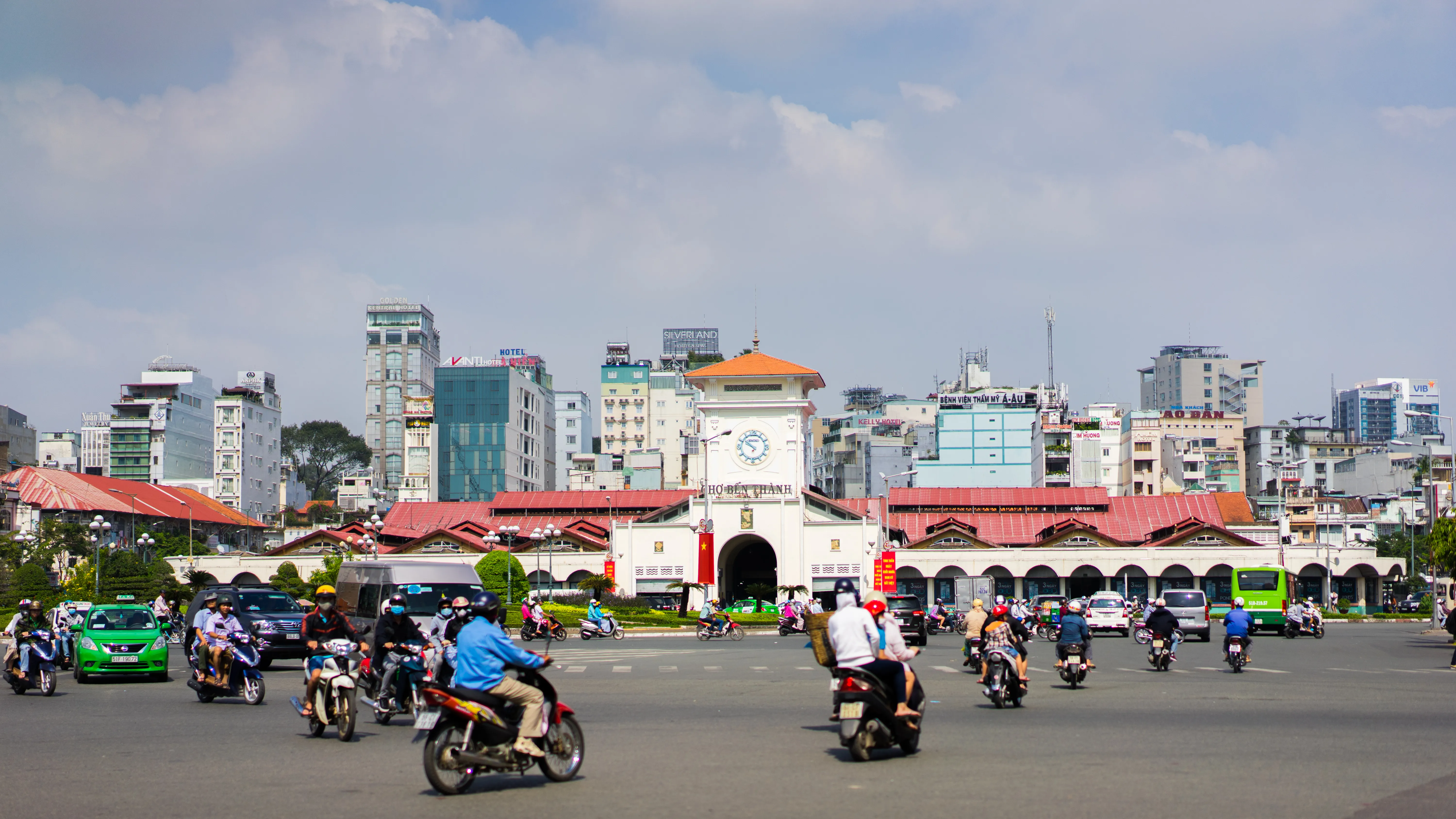
When the main market building closes at around 6 PM, the surrounding streets transform into the Ben Thanh Night Market — an outdoor extension occupying Phan Bội Châu and Thủ Khoa Huân streets with food stalls, fresh fruit vendors, clothing, and merchandise. The night market operates until approximately midnight and attracts a younger, more local crowd than the daytime market inside the building. It is less touristic in character and more useful for understanding what Saigon residents eat as street food in the evenings. The neon signage, motorbike traffic, and mixture of food aromas make the surrounding intersection one of the most atmospheric in the city.
What food should I try at Ben Thanh Market?
The prepared food section inside Ben Thanh Market offers some of the most accessible introductions to Vietnamese cuisine in the city. The bún bò Huế stalls (spicy beef noodle soup from the former imperial capital) operate from early morning. Bánh mì (Vietnamese baguette sandwiches) are made to order at multiple counters. The rice and noodle dishes at the central food court are reliable and use the same ingredients as street-side restaurants at slightly higher prices — the trade-off for airconditioning and fixed seating. The fresh fruit section near the eastern entrance has excellent smoothie and juice vendors using tropical fruits not typically available outside Southeast Asia.