
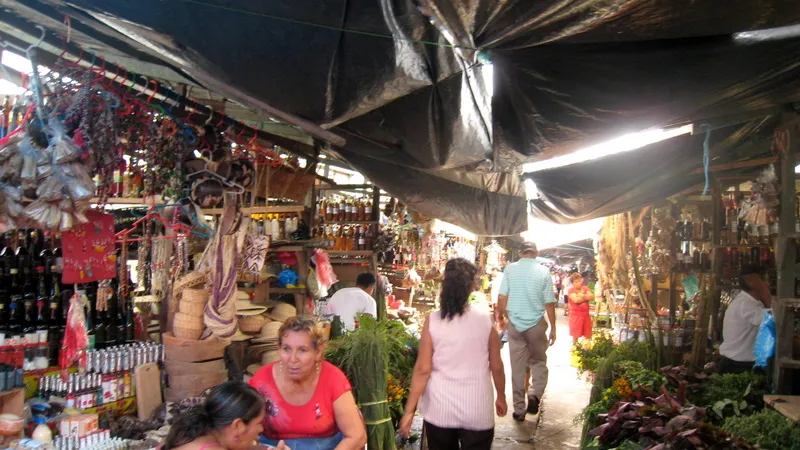
What To Buy
Giant fish section: Paiche, gamitana, and dozens of Amazonian species displayed whole on banana leaves — some as large as a person. Exotic fruit stalls: Camu camu, aguaje, cocona, caimito, and fruits that have no English name — a guide identifies them and explains their flavors and uses. Natural remedies passage: Traditional Amazonian medicine on display — bark, roots, resins, and bottled preparations sold by vendors who explain each remedy's purpose. Market breakfast: Eat juane (the jungle's signature dish — seasoned rice with chicken wrapped in a bijao leaf) at a market stall surrounded by Iquitenos starting their day. Belén floating neighbourhood: The stilted houses behind the market rise and fall with the Itaya River — visit during high water when canoes replace streets. Suri grubs: Grilled palm beetle larvae are a local delicacy sold on skewers — rich in protein and surprisingly mild in flavor.
Food Stalls
Belén's food stalls serve the cuisine of the Amazon basin — dishes built from river fish, jungle fruits, and root vegetables found nowhere else in Peru. Start at the juane vendors near the market's north entrance: this signature selva dish wraps seasoned rice, chicken, olives, and boiled egg inside a bijao leaf, steamed until fragrant — a complete meal for S/5-8. The tacacho con cecina stalls serve balls of mashed and fried plantain alongside strips of smoked pork — a hearty Amazonian breakfast that fuels the market vendors themselves. Fresh juice stands blend camu camu (sour, packed with vitamin C), aguaje (creamy, with a flavour somewhere between carrot and apricot), and cocona (tangy, tomato-like) into tall glasses for S/3-5. For the adventurous, suri grubs (palm beetle larvae) are grilled on skewers and sold near the meat section — surprisingly rich and nutty. The fish section offers grilled paiche steaks and patarashca (fish wrapped in leaves and cooked over coals). Combine a Belén breakfast with a morning boat ride to Pilpintuwasi for a full half-day Iquitos experience.
When to Visit
Daily: 5 AM - 2 PM (busiest 6-10 AM). Best: 6:30-8:30 AM when the market is at full intensity but daylight is good for photography. Avoid: After noon when many stalls close and the heat becomes oppressive. Duration: 1-2 hours with a guide.
Admission and Costs
Market entry: Free. Guided market tour: S/40-80 ($11-22) per person, 1.5-2 hours with tastings. Private guide: S/80-150 ($22-40) with flexibility to linger at areas that interest you. Market breakfast: S/5-15 (~$1.35-4) — juane (rice and chicken in bijao leaf), tacacho (mashed plantain), or fresh jungle fruit juice.
Tips for Visitors
Go early: The market peaks between 6:30-9 AM — later visits miss the best produce and the most authentic atmosphere. A guide is essential: Belén is overwhelming without context, and certain areas require local knowledge to navigate safely and respectfully. Dress down: Leave valuables at your hotel; carry only a small amount of cash in small bills. Strong stomachs: The fish and meat sections are visceral — if you're squeamish, let your guide know and they'll adjust the route. Wear closed shoes: The market floor is wet and uneven — flip-flops are a bad idea. Combine with a city walk: After Belén, walk along the Malecón Tarapacá to see Iquitos's rubber-boom architecture — the Iron House, the Casa de Fierro, and the azulejo-tiled mansions.
Frequently Asked Questions
When is the best time to shop at Belén Market?
Daily: 5 AM - 2 PM (busiest 6-10 AM). Best: 6:30-8:30 AM when the market is at full intensity but daylight is good for photography. Avoid: After noon when many stalls close and the heat becomes oppressive. Duration: 1-2 hours with a guide
What prices should visitors expect at Belén Market?
Market entry: Free. Guided market tour: S/40-80 ($11-22) per person, 1.5-2 hours with tastings. Private guide: S/80-150 ($22-40) with flexibility to linger at areas that interest you.
Best time of day to visit Belén Market for peak atmosphere?
Go early: The market peaks between 6:30-9 AM — later visits miss the best produce and the most authentic atmosphere.