
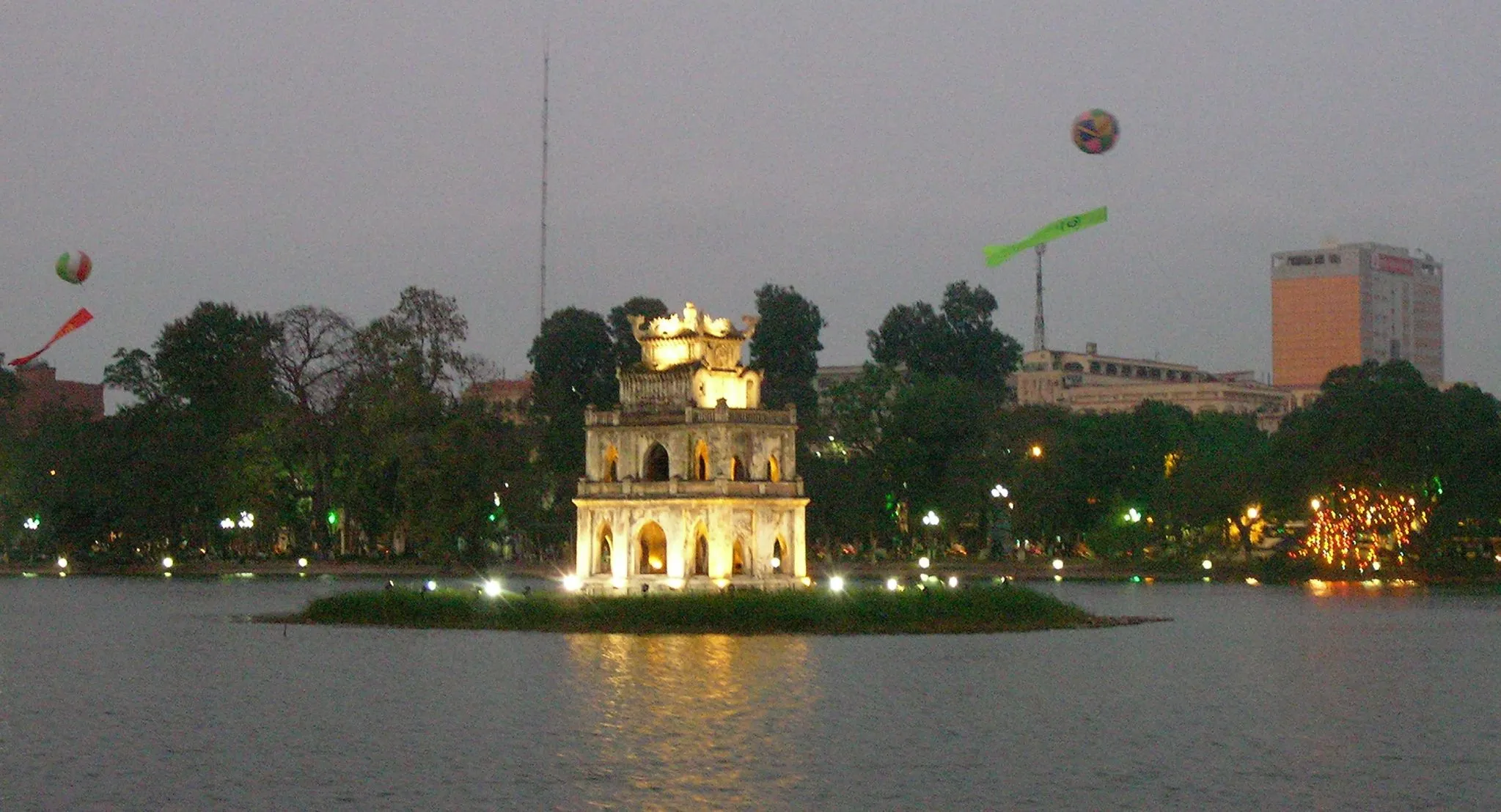
Tips for Visitors
- Arrive before 7 AM on any day for the morning exercise spectacle — by 8:30 AM it thins considerably as Hanoians head to work
- Bring small denominations — the 30,000 VND temple entry is paid in cash; exact change welcomed
- The Huc Bridge photo: For the classic red-bridge-and-lake shot, position yourself on the bank to the bridge's left (north side) in morning light
- Weekend evenings: Friday through Sunday the pedestrian zone creates an entirely different atmosphere — street food, live music, and a chance to see the lake lit at night
- Dress for the temple: Ngoc Son requires covered shoulders and knees; lightweight scarves work well in summer heat
- Combine with Old Quarter: The lake sits at the southern edge of the Old Quarter — a guide who knows both can structure a morning that moves seamlessly between them
When to Visit
- Lake perimeter path: Open 24 hours; free admission
- Ngoc Son Temple: Daily 8:00 AM – 5:00 PM; admission 30,000 VND ($1.20 USD)
- Best morning visit: 5:30–7:30 AM for tai chi, dawn light, and calm water reflections
- Weekend pedestrian zone: Friday–Sunday from ~7 PM — surrounding streets close to motorbikes
- Full circuit walk: 1.8 km perimeter takes 20–30 minutes at a leisurely pace
- Allow extra time: At least 45 minutes if including Ngoc Son Temple visit
Admission and Costs
- Lake perimeter: Free
- Ngoc Son Temple entrance: 30,000 VND ($1.20 USD) per adult
- Guided lake walk (3 hours, with Old Quarter): 200,000–350,000 VND ($8–14 USD) per person on a group tour
- Private guide for lake + temple + Old Quarter: 500,000–800,000 VND ($20–32 USD) for a private half-morning
The Case for a Guide
Hoan Kiem Lake is deceptively simple at surface level — a lake, a tower, a bridge, a temple. The guide's role is to animate the layers beneath the postcard image.
- Le Loi legend in historical context: The magic sword story is not folklore for its own sake — it encodes the Vietnamese assertion that their sovereignty over the Red River Delta is divinely sanctioned, a claim that directly contradicted the Ming dynasty's annexation of Vietnam as a Chinese province. Understanding the legend's political function changes how you read every Vietnamese monument thereafter
- The turtle's scientific significance: The giant Yangtze softshell turtle (Rafetus leloii) is one of the most critically endangered species on earth — fewer than five individuals are estimated to survive globally. The Hoan Kiem individuals were for decades the subject of conservation controversy: the government and local residents resisted capture for breeding programmes out of religious reverence. A guide explains this tension between conservation science and living belief
- Urban sociology of the morning ritual: The tai chi, badminton, and aerobics practices around the lake are not tourist performances — they are the continuation of a not bong (morning exercise) tradition that is deeply embedded in Hanoian social life. A guide who participates in this tradition can introduce you to the regular practitioners, explain the neighbourhood social dynamics, and connect what appears to be casual exercise to the city's relationship with its public spaces
- Old Quarter transition: The guide can walk you from the lake into the specific Old Quarter streets that connect most directly to its history — the former silk-weaving lanes that supplied Ngoc Son's altar cloths, the guild streets where the craftsmen who built the temple's woodwork lived
Frequently Asked Questions
What is the legend of Hoan Kiem Lake?
Hoan Kiem translates as "Lake of the Restored Sword" — the name derives from a 15th-century legend that is central to Vietnamese national identity. After King Le Loi led a ten-year uprising against the Ming Chinese occupation (1418–1428), he was boating on the lake when a giant golden turtle rose from the water and retrieved the magic sword that a sacred turtle god had lent him for the campaign. The sword having served its purpose, it was returned to the lake's depths. The Turtle Tower (Thap Rua), a small stone structure on a rocky islet in the lake's centre, marks the spot of the legendary return. The story encodes the Vietnamese belief that their nation's sovereignty is divinely protected — a guide who knows the Le Loi uprising's historical context transforms the tower from a picturesque ruin into a monument with deep political meaning.
What is the best time of day to visit Hoan Kiem Lake?
Early morning (5:30–7:30 AM) is Hoan Kiem's finest hour. The lake path fills with Hanoians doing tai chi, badminton, aerobics, and early morning exercise in a display of urban community life that disappears by 8 AM when the tourist circuit begins. The low light at dawn reflects the Turtle Tower beautifully in the still water. Weekend evenings (Friday to Sunday) the surrounding streets are pedestrianised from around 7 PM — the Old Quarter street party around the lake is Hanoi's most joyful public event. Avoid midday in summer (May–August): the heat around the exposed lakeside path is unpleasant.
How much does it cost to visit Ngoc Son Temple on Hoan Kiem Lake?
Walking around Hoan Kiem Lake itself is free — it is a public park accessible 24 hours. Crossing the red Huc Bridge to reach Ngoc Son Temple (Temple of the Jade Mountain) on its small island costs 30,000 VND ($1.20 USD) per adult — one of the best-value temple experiences in Hanoi. Inside, a preserved giant softshell turtle specimen (Rafetus leloii) is displayed — the last known representative of the species that historically inhabited the lake; the last living individual died in January 2016. A guide explains the turtle's significance in Vietnamese culture and the conservation efforts made to protect the species.