
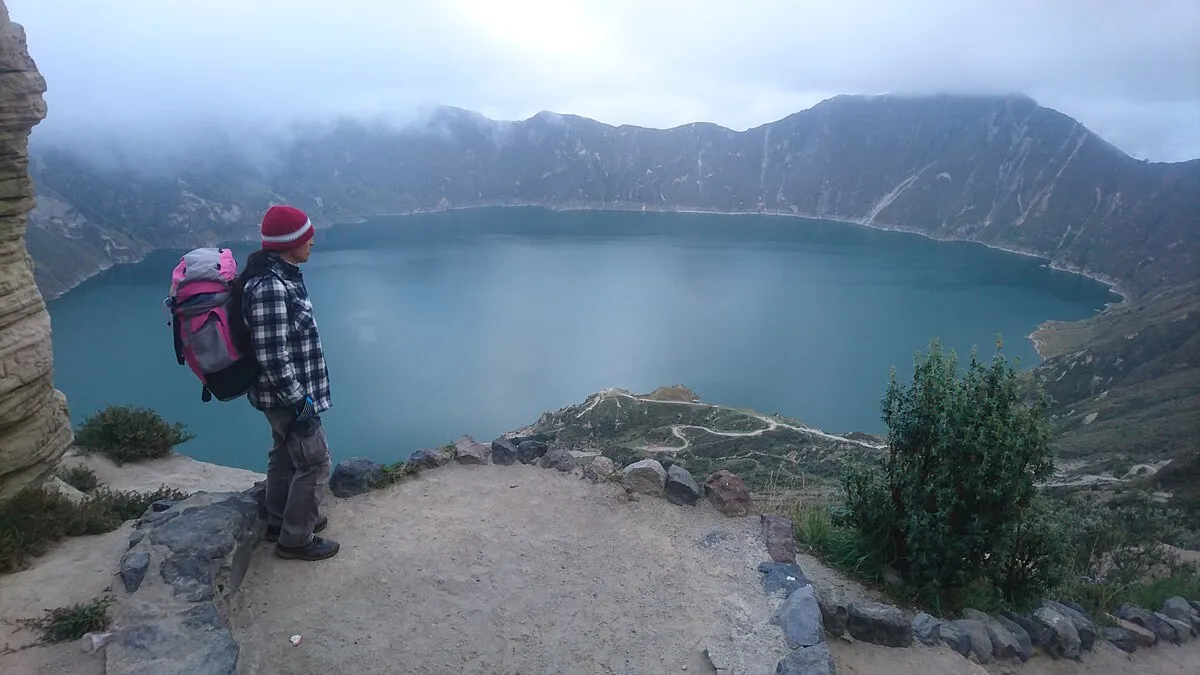
Country guide
What makes Ecuador a must-visit destination?
Ecuador is absurdly well-stocked with superlatives for a country the size of Nevada. It contains the Galápagos Islands, which changed how humanity understands life on earth. It contains the headwaters of the Amazon, where rivers draining from Andean snowfields begin their 6,400-kilometer journey to the Atlantic. And it contains Quito, the world's first UNESCO World Heritage City, set at 2,850 meters in an Andean basin so geologically active that several of its volcanoes are among the highest continuously active volcanoes on earth.
The country's compactness is its greatest travel asset: you can watch the sun rise over Andean cloud forest, spend the afternoon standing on the equator, and eat dinner in a colonial plaza — all on the same day from Quito. A flight away, the Galápagos operates by rules that apply nowhere else: wildlife has no fear of humans, snorkeling alongside marine iguanas and sea lions is routine, and every island is a separate chapter in a natural history that Darwin glimpsed and scientists have been studying ever since.
A local guide makes Ecuador's layered complexity legible. The historic center of Quito contains 40 churches, each with its own iconographic program in gilded baroque wood. The Amazon lodges are most rewarding with a naturalist who can distinguish a 900-species bird call at dawn. And the Galápagos experience is transformed by a licensed naturalist guide who links what you're seeing to the larger evolutionary story.
- Language
- Spanish Widely spoken across Ecuador
- Currency
- US dollar ($) Legal tender across Ecuador
- Time zone
- UTC−5 (−6 Galápagos) Local time in Ecuador
- Power plugs
- Types A, B · 120V Sockets used across Ecuador
- Getting around
- Buses & domestic flights Getting between Ecuador's cities
- Best months
- Apr, May, Jun, Jul, Aug, Sep, Oct Averaged across Ecuador's city ratings
Ecuador timeline
-
Inca expansion reaches Quito
Inca rule added an imperial Andean layer before Spanish Quito took shape.
-
Quito refounded
Spanish Quito rose over an older Andean settlement, creating the layered capital visitors see today.
-
Pichincha victory
Independence forces won above Quito, making the capital a key liberation site.
-
Republic of Ecuador
Ecuador separated from Gran Colombia and formed the republic behind modern civic institutions.
-
Quito and Galapagos listed
Early UNESCO listings recognized both colonial Quito and the islands as global heritage anchors.
-
Dollarization begins
Currency reform became a visible marker of modern economic history in Ecuador.
Local context
Culture and travel signals
Ecuador sits on the equator — giving it two distinct climate zones within the same highland city
Quito straddles the equatorial line but sits at 2,850 meters altitude, creating a perpetual spring climate of 14–20°C despite being zero degrees latitude — visitors can stand with one foot in each hemisphere at the Mitad del Mundo monument just 26km from the city center
Galápagos Islands inspired Charles Darwin's theory of evolution in 1835
Darwin spent five weeks in the Galápagos aboard HMS Beagle, observing the variation in finch beak shapes between islands — observations that, combined with years of subsequent analysis, became the foundation of On the Origin of Species (1859) and modern evolutionary biology
Ecuador has 1,600+ species of birds — more than Europe and North America combined
Compressed into one of the world's smallest countries, Ecuador's transition from Pacific coast through Andean páramo to Amazon lowland creates unmatched avian habitat diversity, including the Andean cock-of-the-rock, more than 130 hummingbird species, and harpy eagles in the jungle east
Quito was the first city to receive UNESCO World Heritage status in 1978
Along with Kraków, Poland, Quito was among the inaugural UNESCO World Heritage Sites in 1978, recognized for having the largest, best-preserved, and least-altered historic center in Latin America — a grid of 16th-century colonial streets barely touched by 20th-century development
Source: tour-guide.com — Free to cite with attribution
Season planner
A year in Ecuador
Use this best time to visit snapshot as a country-wide average, then check the city guides for local timing.
Mar-May
Spring
Spring stays workable in Ecuador at Mar-May (3.7/5), so lean on city-by-city timing.
Jun-Aug
Summer
Summer is Ecuador's strongest guide window — Jun-Aug (4.7/5) across its cities.
Sep-Nov
Autumn
Autumn holds up well for guided travel in Ecuador, averaging Sep-Nov (4/5).
Dec-Feb
Winter
Winter stays workable in Ecuador at Dec-Feb (3/5), so lean on city-by-city timing.
Where should you go in Ecuador?
Quito
Quito is one of South America's most rewarding capitals for those willing to engage with its density. The Historic Center — a dense grid of 16th-century convents, painted plazas, and gilded churches — is the largest and best-preserved colonial urban ensemble in Latin America. The Basílica del Voto Nacional anchors its northern edge with neo-Gothic towers that reward a vertiginous climb. The Middle of the World Monument marks the equatorial line 26 kilometers north of the city.
The Andes
South of Quito, the Avenue of the Volcanoes (as Alexander von Humboldt named it in the 19th century) strings Cotopaxi — the highest active volcano in the world at 5,897 meters — with Chimborazo, Tungurahua, and a dozen other giants. Baños de Agua Santa is the adventure hub for rafting, canyoning, and taffy-pulling (a local tradition). Cuenca, three hours south, is Ecuador's most beautiful colonial city and a popular base for day trips into the páramo.
Galápagos & Coast
Puerto Ayora on Santa Cruz Island is the Galápagos' main hub, where giant tortoise breeding centers, snorkeling with marine iguanas, and day trips to Bartolomé and North Seymour islands are easily arranged. On the Pacific coast, Manta is the sport-fishing capital, while Montañita is the surf town of choice.
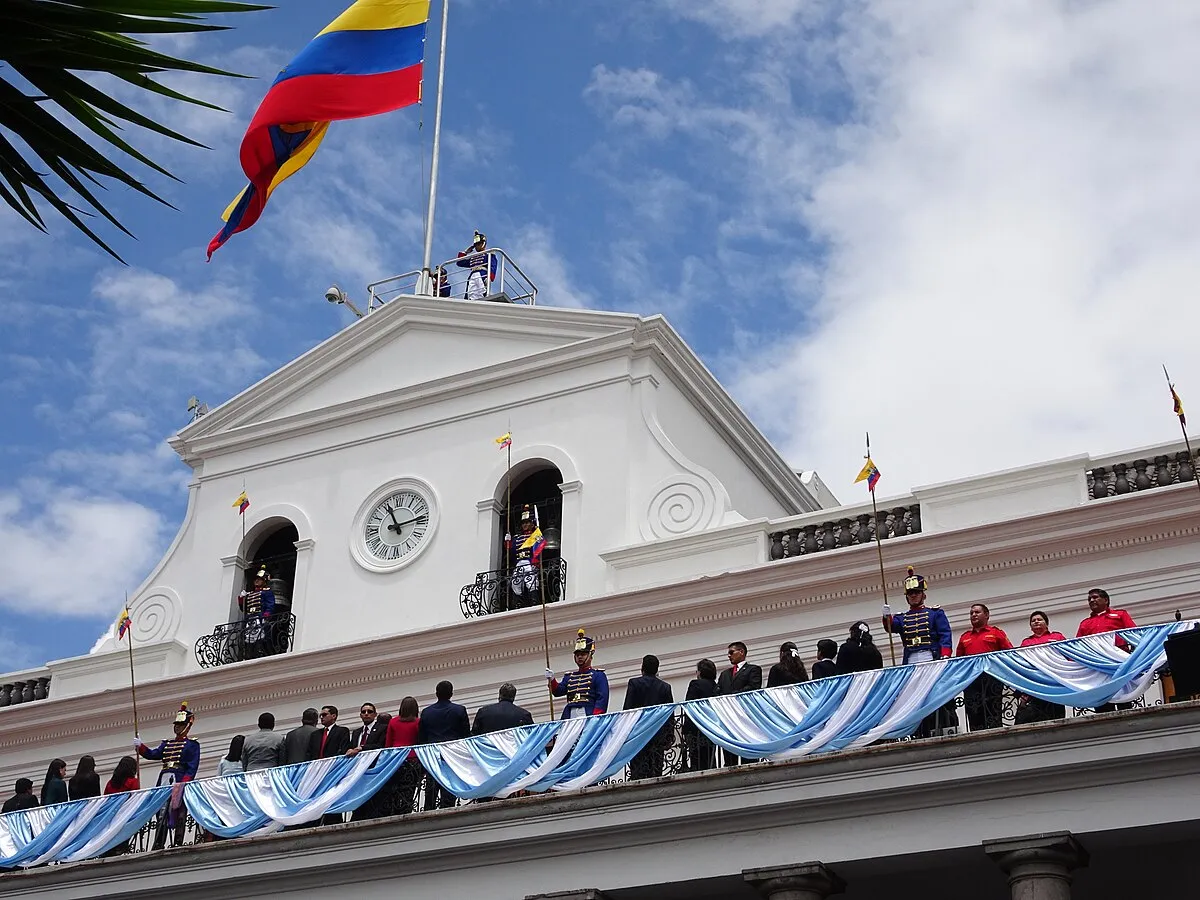
Must-see attractions across Ecuador
Every region of Ecuador has a signature stop. Start with these, then let a guide reveal the stories the plaques leave out.
What do visitors need to know about Ecuador?
Finding a Guide
- Ministerio de Turismo-licensed guides are required for national parks including Galápagos and Cotopaxi; always verify the guide's official license card before booking
- Quito-based operators like Metropolitan Touring, Ecoadventures, and Surtrek have decades of experience across all Ecuador regions and offer bilingual guides
- Cotopaxi and volcano climbs require high-altitude guides with ASEGUIM (Ecuadorian Mountain Guides Association) certification — non-certified guides are prohibited from leading climbs above the refugio
- Galápagos naturalist guides are rated by the Galápagos National Park at Nivel I, II, or III; a Nivel III naturalist guide has university-level natural science training and is the gold standard for educational cruises
Typical Costs
| Tour Type | Price Range |
|---|---|
| Group Quito walking tour | $15–35 per person |
| Private half-day Quito guide | $50–120 |
| Cotopaxi day trip (transport, equipment, guide) | $150–300 per person |
| Galápagos day cruise (includes naturalist guide) | $150–350 per person |
| Amazon lodge (3 nights, all-inclusive with guide) | $450–900 per person |
Must-See Experiences
- Historic Center of Quito — The first and finest UNESCO World Heritage city in the Americas
- Basílica del Voto Nacional — Neo-Gothic marvel with Galápagos creatures carved into the façade instead of gargoyles
- Cotopaxi Volcano — The world's highest continuously active volcano, its perfect cone reflected in a highland lagoon
- Middle of the World Monument — Stand on the equator just 26km from Quito
- Galápagos Islands — Wildlife that shows no fear of humans, on islands that changed how we understand life
- Napo Wildlife Center (Amazon) — Canoe-accessed lodge in Yasuní National Park, one of the most biodiverse spots on earth
Tips for Visitors
- Altitude — Quito sits at 2,850 meters; take it easy your first 24 hours and avoid alcohol until acclimatized
- Currency — US dollars; ATMs in cities; carry cash in smaller denominations for markets and rural areas
- Galápagos fees — The Galápagos National Park entrance fee is $100 for foreign adults; pay at the airport on arrival in Baltra or San Cristóbal
- Booking ahead — Galápagos cruises and Amazon lodges fill months in advance; book at least 3–6 months ahead for high season
- Sun at the equator — UV radiation at altitude on the equator is extreme; SPF 50+ and a hat are essential even on cloudy days
- Health — Yellow fever vaccination recommended for Amazon travel; consult your doctor 4–6 weeks before departure
Frequently Asked Questions
What is the best time of year to visit Ecuador?
Ecuador's seasons vary dramatically by region. In the Andes, June through September is the dry season with clear skies ideal for volcano climbing and Quito sightseeing; December through May brings afternoon cloudbursts but lush green valleys. The Galápagos is good year-round — January through June brings warmer water and calmer seas, while July through December brings cooler, nutrient-rich currents and dramatic wildlife interactions. The Amazon lowlands receive rain year-round but January through August tends to be drier and better for jungle treks.
How much does a guide cost in Ecuador?
Ecuador uses the US dollar, simplifying budgeting. Group walking tours in Quito's historic center cost $15–35 per person for two hours. A private guide for a half-day in Quito runs $50–120. The best value in Ecuador is altitude-specific expertise: volcano guides for Cotopaxi or Chimborazo charge $150–300 per person for a full-day ascent including permits, equipment, and transport. Galápagos naturalist guides are mandatory by law and typically included in cruise or day-tour prices.
Is Ecuador safe for tourists?
Ecuador's tourism areas — Quito's historic center, the Galápagos, and the main highland towns — are generally safe with standard precautions. Quito has tourist police patrols in the Mariscal district. Petty theft is the main risk in cities; avoid displaying expensive electronics and use radio taxis or ride-share apps rather than hailing cabs on the street. The Galápagos is extremely safe. Check your government's current travel advisory before visiting border regions near Colombia.