
Walking Route
Walking Routes
The historic center rewards a single unhurried loop from north to south, following the descent of the grid so the altitude works with you rather than against you. Use the numbered Walking Route map above to trace the sequence on the ground; the whole circuit is roughly 2 kilometres and, at 2,850 metres, is best walked across a morning with generous pauses.
- Begin at the Iglesia y Convento de la Merced, a quieter church whose tower and courtyard offer an easy first stop before the crowds gather. From here it is a two-block walk to the Plaza Grande, where the Carondelet Presidential Palace and the Metropolitan Cathedral frame the classic civic photograph — best shot from the plaza's northwest corner in early light.
- Turn to La Compañía de Jesús, whose gilded nave is the single most photographed interior in the country (photography rules vary — check at the door), then continue downhill to the broad Plaza de San Francisco, where the whitewashed monastery façade set against the Pichincha slopes is Quito's most cinematic wide shot. The atrium steps are the best foreground.
- Walk south along Calle García Moreno, nicknamed the Calle de las Siete Cruces ("Street of the Seven Crosses") for the stone crosses that once marked its churches, to the intimate Plaza de Santo Domingo with its Sucre monument. Finish on La Ronda (Calle Juan de Dios Morales), a restored 16th-century lane of artisan workshops, balconied houses, and cafés that is at its most atmospheric at dusk.
For food and colour along the way, three addresses stand out: Heladería San Agustín, serving helados de paila (fruit sorbet churned by hand in copper basins) since the 19th century; the rooftop terraces off Calle Mejía, where a coffee buys a view over the tiled domes; and La Ronda itself, where vendors ladle canelazo — a hot cinnamon-and-sugarcane drink — and fry empanadas de viento on cold evenings. The Mercado Central on Avenida Pichincha remains the most authentic lunch stop, its second-floor comedores serving a full almuerzo for a few dollars.
Where the best photographs are: the northwest corner of the Plaza Grande frames the Metropolitan Cathedral in early light; the atrium steps of San Francisco give the widest clean shot of a whitewashed colonial façade against the Pichincha slopes; the gilded nave of La Compañía is the interior most worth the (often restricted) camera; and for the classic aerial of tiled rooftops and domes, climb the towers of the Basílica del Voto Nacional a few blocks north or ride a taxi up El Panecillo, where on a clear morning the Cotopaxi cone floats on the southern horizon behind the grid.
Local Life
Quito's colonial center carries layers of history that span three distinct civilizations, and a walk through it is really a walk through all three at once:
- The Inca foundation — The Spanish city was built directly on the ruins of a major Inca administrative center; the colonizers deliberately placed their cathedral and government buildings on the sites of Inca palaces and temples, making the Plaza Grande a continuation of the sacred geography the Inca recognized at the same location. Some colonial building foundations incorporate original Inca stonework, visible in several church basements.
- The Quito School of Art — Between roughly 1550 and 1800, workshops here produced a distinctive style of religious painting, polychrome sculpture, and gold-leaf carving that influenced churches across South America; the La Compañía de Jesús altar is the supreme surviving example, but a guide can identify Quito School work in virtually every major church in the historic center.
- The First Cry of Independence — Quito was the site of the first armed uprising against Spanish colonial rule in South America, on August 10, 1809 — a date celebrated as Ecuador's national day. The Plaza Grande and the adjacent Museum of the City of Quito hold the most detailed documentation of this event and its relationship to the broader South American independence movements that followed.
- A living religious calendar — The center is no stage set. On Good Friday the Jesús del Gran Poder procession sends thousands of purple-robed, cone-hooded cucuruchos winding past San Francisco in one of the largest Holy Week rituals in the Americas; Corpus Christi in June, the Fiestas de Quito in early December, and the August 10 national day each hand the plazas back to the city's own traditions rather than to tourism.
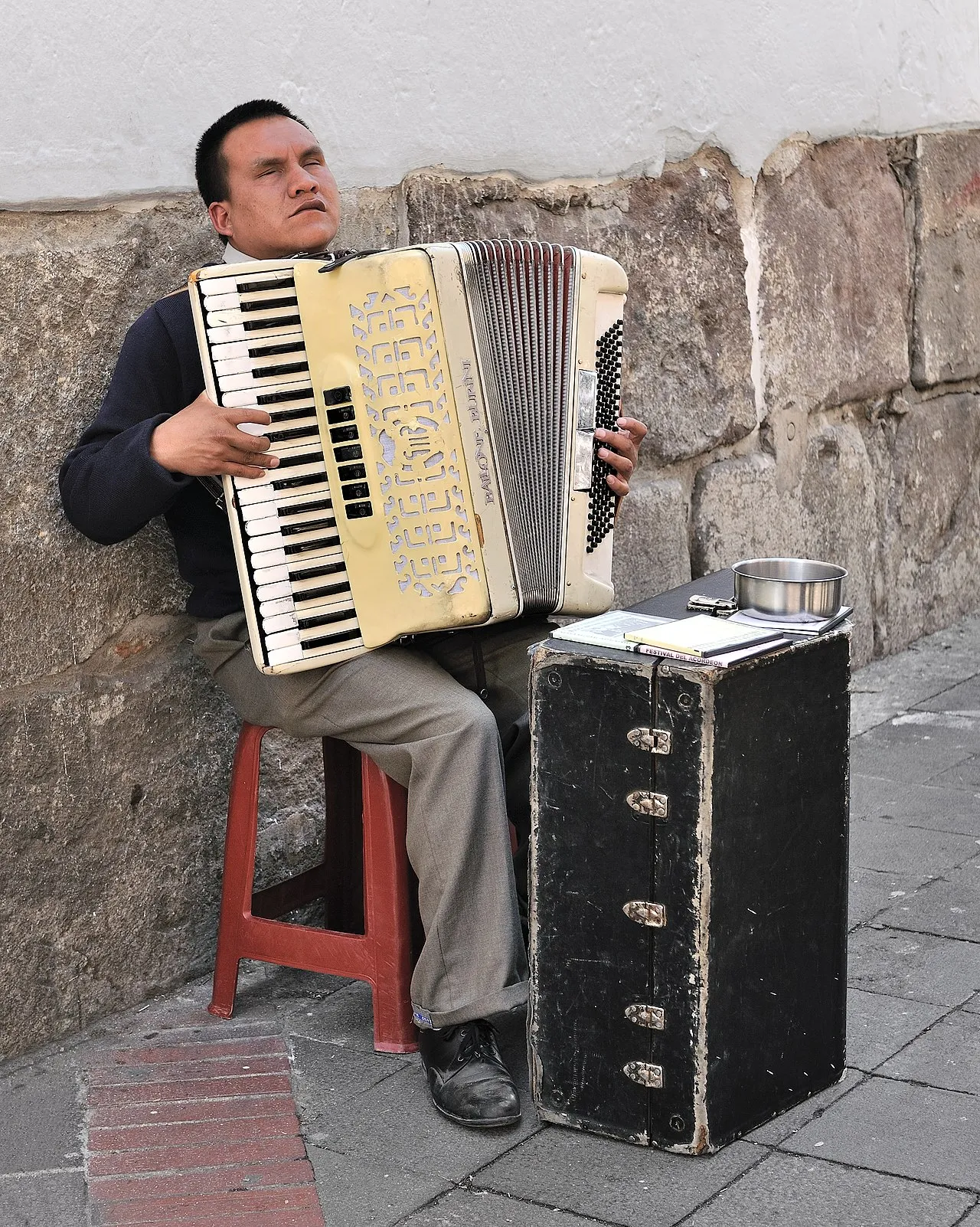
Beneath these layers runs an ordinary working city: at dawn the comedores of the Mercado Central fire their stoves, shoeshiners set up under the cathedral arcade, and indigenous vendors from the surrounding valleys carry produce down streets that were laid out before Ecuador existed as a country.
When to Visit
Open neighborhood: always accessible — the streets and plazas never close. Churches: generally 9 AM–5 PM; La Compañía de Jesús runs specific guided-tour slots (hours vary, so confirm locally). La Compañía: one of the most visited interiors, whose entirely gilded nave sometimes requires timed entry — arrive when it opens at 9 AM to avoid the queue. Best light: 8–10 AM, before the near-daily altitude cloud rolls in around midday and softens the baroque façades. Avoid: Sunday mornings, when many churches are in active religious service and interior visits are restricted. Time a visit to June for the Corpus Christi processions, or to August 10 for the national-day commemorations of the 1809 Primer Grito de la Independencia, when the plazas fill with parades and civic ceremony.
Admission and Costs
Ecuador uses the US dollar, so every price below is already in the currency you carry. Walking the streets and plazas: free. La Compañía de Jesús interior: $5 USD. San Francisco Monastery and its museum: $3 USD. La Merced and most parish churches: $1–2 USD or a donation. Casa del Alabado pre-Columbian art museum near San Francisco: $6 USD. Museo de la Ciudad, in the former San Juan de Dios hospital and tracing Quito from its Inca layer to the republic: about $3 USD. Guided walking tour: $15–30 per person for groups of 2 hours; a private half-day guide runs $50–100 for up to four people. Taxi to El Panecillo for the panorama: about $5 each way; the Quito Metro to the San Francisco station is $0.45. Market lunch at the Mercado Central: roughly $3–4 for a full almuerzo; a canelazo on La Ronda is about $2.
The Case for a Guide
Quito's historic center is dense and architecturally overwhelming without guidance:
- The Quito School iconography — La Compañía's gilded altar is often described as "all gold," but a guide identifies the specific Indigenous faces in the angel panels, the Andean plants in the botanical borders, and the solar symbols embedded in baroque scrollwork — details that transform the visual experience from admiration of wealth to understanding of cultural negotiation.
- The physical layering of civilizations — Several churches have Inca stonework in their foundations, accessible via crypt tours that most visitors never know exist; a guide who knows which churches and how to arrange access reveals the physical evidence of the civilizations the Spanish built over.
- Living neighborhood versus tourist zone — The historic center is simultaneously a UNESCO monument and a working-class urban neighborhood where indigenous market sellers, government workers, and schoolchildren share the streets; a guide navigates this dual character and connects visitors to the human city, not just its stone façades.
- Route logic and altitude pacing — A local guide sequences the plazas and churches so the walk descends the grid rather than climbing it, times La Compañía for the opening hour, and knows when an interior is closed for a service — the difference between a smooth morning and a series of locked doors at 2,850 metres.
Tips for Visitors
Altitude first: the historic center sits at 2,850 metres — take it slowly on day one, stay hydrated, and avoid alcohol; headaches and shortness of breath are common for the first 24 hours. La Compañía at opening: arrive when it opens at 9 AM to see the entirely gilded interior without crowds. Panecillo view: take a taxi to the El Panecillo viewpoint for the best overview of the entire historic center grid — about $5 each way and worth 30 minutes for the panorama, which on clear mornings frames the Cotopaxi cone on the southern horizon. Basílica climb: pair the walk with the tower ascent at the Basílica del Voto Nacional a few blocks north for the finest aerial photograph of the colonial rooftops. Market lunch: the Mercado Central on Avenida Pichincha serves the best and most authentic Quiteño almuerzo (set lunch) in the city for about $3. Footwear: the cobblestones and steep pitches punish thin soles — comfortable, grippy shoes make the day.
Frequently Asked Questions
When is the best time to visit Quito's historic center?
Mornings are best year-round — the altitude clouds that typically arrive by noon are absent early in the day, and the light on the baroque facades from 8–10 AM is at its richest. The dry season from June through September offers the clearest Andean skies and the least chance of afternoon showers interrupting outdoor exploration. The Corpus Christi festival in June brings indigenous dance troupes to the main plazas in an extraordinary display of feathered costumes and pre-Columbian ceremony that has no equivalent elsewhere in South America. Time a visit to August 10 and the whole center commemorates the Primer Grito de la Independencia, the 1809 uprising that gives Ecuador its national day.
How much does a guided tour of Quito's historic center cost?
Group walking tours run $15–30 per person for 2 hours. Private guides for a half-day covering the main plazas, La Compañía church, and the Monastery of San Francisco cost $50–100 for up to 4 people. Full-day tours adding the El Panecillo viewpoint and the Middle of the World Monument run $100–180 per vehicle. Church entrance fees are typically $2–5 each; guided tours to some church interiors require separate arrangements. Ecuador uses the US dollar, so no currency conversion is needed.
Is Quito's historic center safe for visitors?
The historic center has a significant tourist police presence and is generally safe during daytime hours. Petty theft is the primary risk — be cautious with smartphones and cameras in crowded markets and plazas. The area around La Mariscal (the modern tourist district north of the historic center) has more nightlife but also more reported incidents after midnight. For first-time visitors, walking the historic center with a guide significantly reduces any risk from opportunistic theft and provides confidence on the steep, sometimes disorienting streets.
How long do you need to explore the historic center?
A focused half-day of three to four hours covers the essential axis — the Plaza Grande, the gilded La Compañía de Jesús, and the Monastery of San Francisco — with time inside two or three churches. A full day lets you add the restored lane of La Ronda, the Santo Domingo plaza, a market lunch, and a late-afternoon taxi up El Panecillo for the panorama. Because the streets climb and the whole district sits at 2,850 metres, plan on covering less ground than a map suggests — the altitude turns gentle inclines into genuine exertion, and most visitors are grateful for an unhurried pace.
How do you get to the historic center from Quito's new town or the airport?
The historic center and the modern La Mariscal district to the north sit at a similar Andean altitude — both around 2,800 metres — separated by only a gentle slope, so the walk between them is mostly level with a slight downhill run into the colonial grid. A metered taxi runs $2–5, while the Trole and Ecovía bus-rapid-transit lines and the Quito Metro (Line 1, with stations at San Francisco and La Alameda on the edge of the colonial grid) each cost well under a dollar. Walking down from Mariscal takes about 20 minutes and is a scenic way to begin the day. From Mariscal Sucre International Airport at Tababela — some 40 kilometres east of the city — allow 45–75 minutes by taxi or the official airport shuttle; there is no rail link, so budget for road traffic, which is heaviest at morning and evening rush hour.
Is the historic center accessible for visitors with limited mobility?
Only partly. The colonial grid is steep, the streets are cobbled, and many churches and museums have steps at the entrance and no lift, so wheelchair users and anyone who tires easily should plan a selective route rather than the full loop. The Plaza Grande and the broad Plaza de San Francisco are level and easy to enjoy, and a taxi can deliver you directly to the El Panecillo viewpoint to skip the climb. Factor in the altitude, too — the district sits at 2,850 metres, where any incline feels harder than it looks — so the sensible approach for those with mobility or cardiac concerns is short, flat segments linked by short taxi hops rather than one continuous walk.