
The Hague timeline
-
Panorama Mesdag
— Step inside an 1881 cylindrical painting that surrounds you with a 360-degree view of Scheveningen beach
-
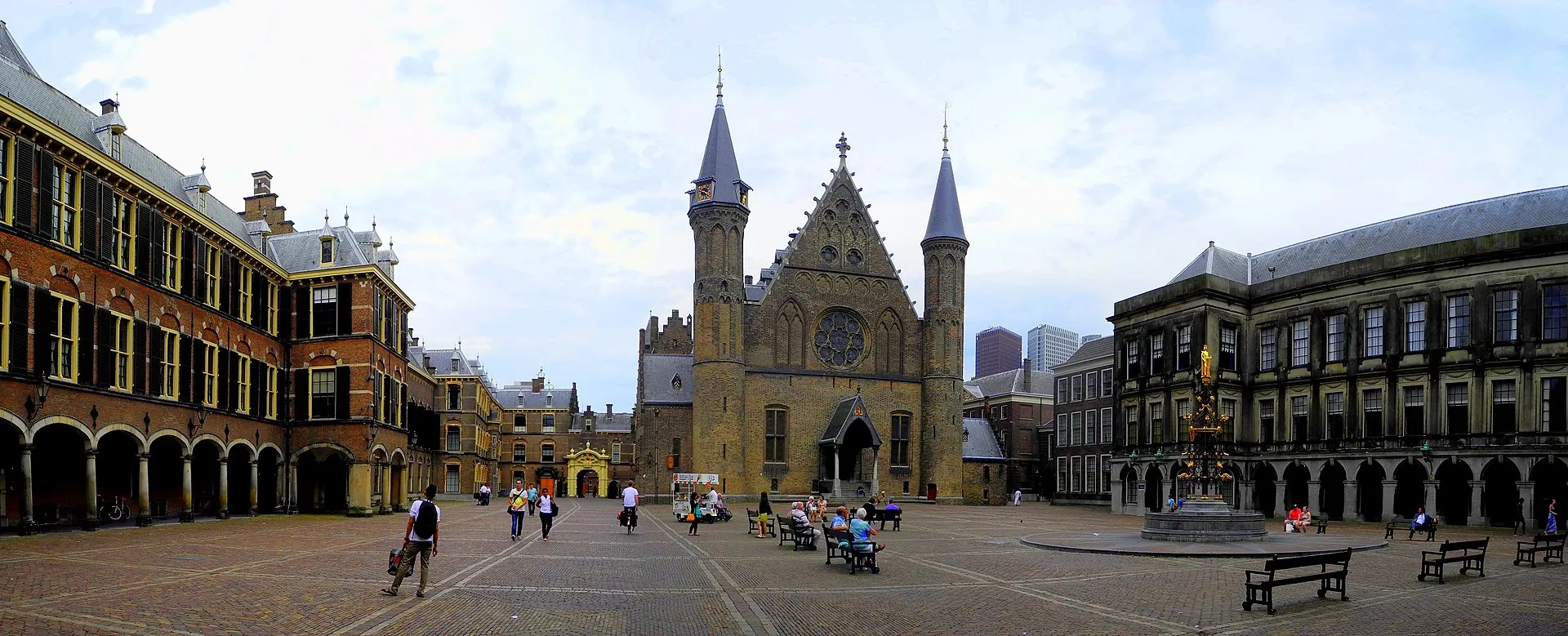
Binnenhof takes shape
Count William II's hall complex began the government quarter that still anchors The Hague.
-
States-General settles here
The Dutch Republic's political center formed around The Hague even without formal city rights.
-
City rights at last
King Louis Napoleon finally granted The Hague formal city rights, ending centuries as the Dutch Republic's grandest "village."
-
First Hague Peace Conference
International diplomacy made the city a global shorthand for law, arbitration, and peace.
-
Peace Palace opens
The palace gave international courts and legal institutions a monumental home.
-
International court era begins
The postwar court system reinforced The Hague's identity as a city of global justice.
Cited city facts
Key facts for visiting The Hague
The States-General has met at the Binnenhof since 1446
The medieval complex beside the Hofvijver lake is one of the oldest parliament buildings still in continuous government use anywhere in the world, and the Binnenhof quarter it anchors has sat at the heart of The Hague for eight centuries.
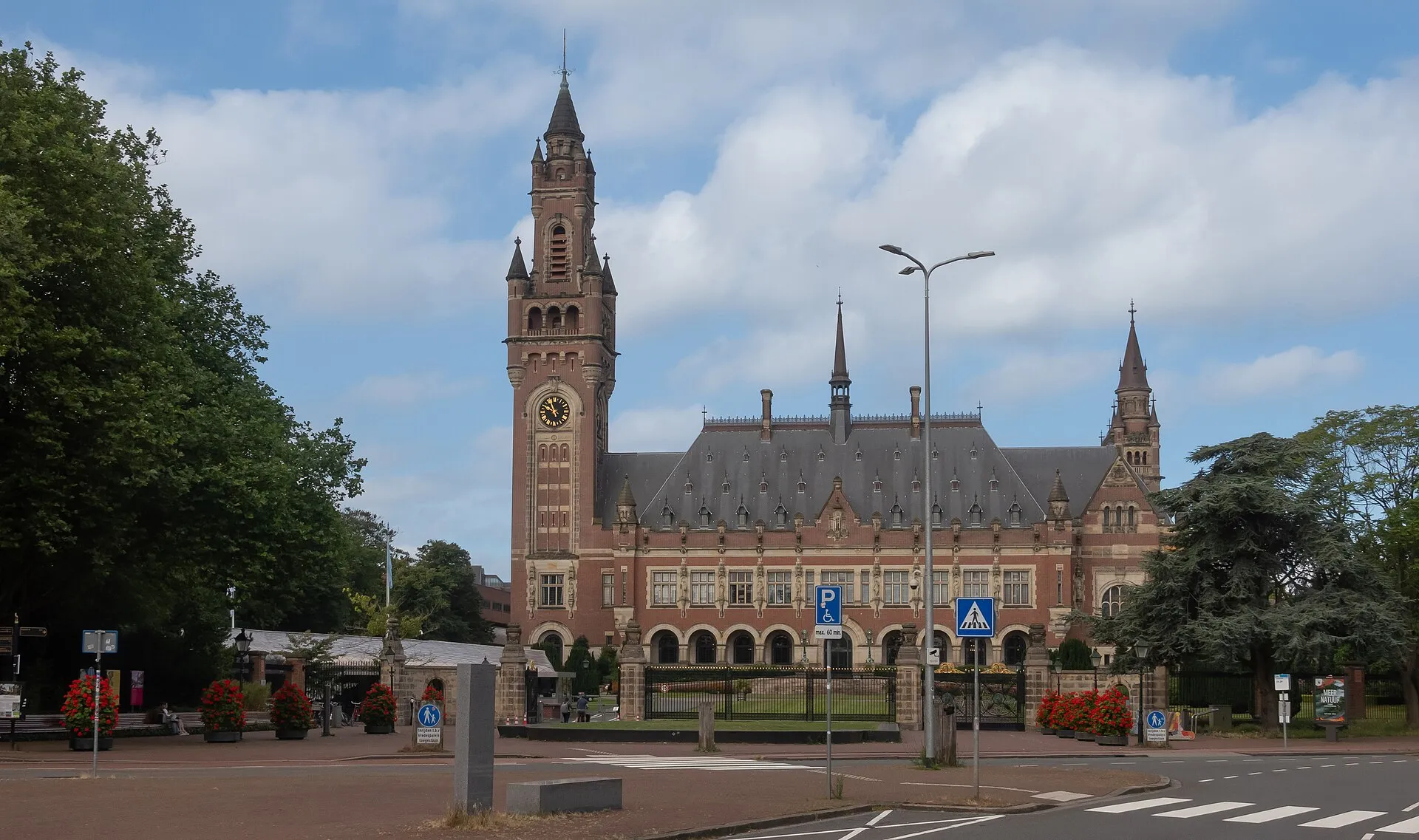
The Peace Palace rose from materials donated by more than 30 countries
Funded by a 1.5-million-dollar gift from Andrew Carnegie and opened in 1913, the Peace Palace houses the International Court of Justice and was furnished with marble, stained glass, ironwork, and ceramics sent by nations worldwide as a collective act of diplomacy.
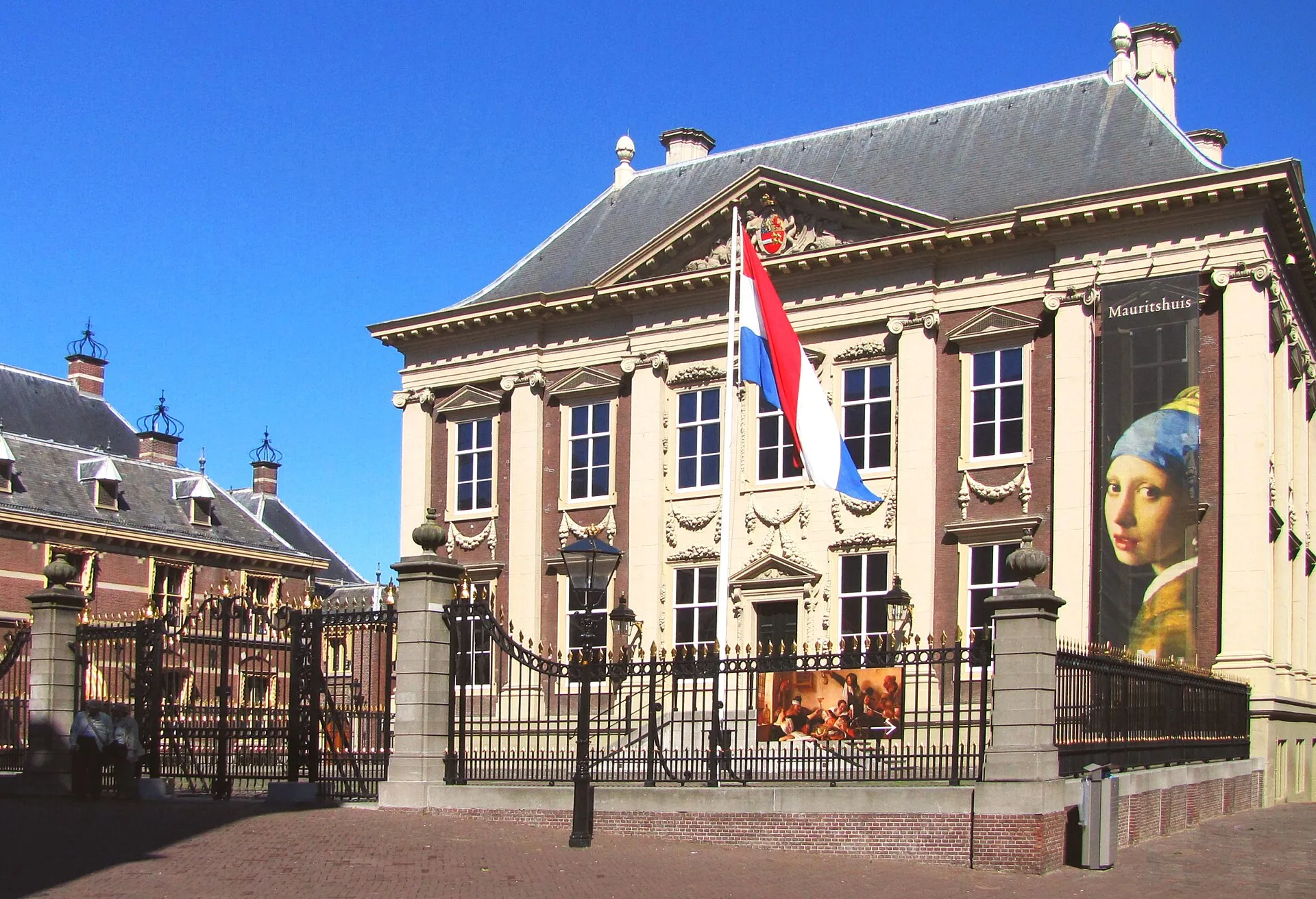
The Mauritshuis shows its Golden Age masterpieces in just 16 rooms
The intimate 17th-century townhouse on the Hofvijver holds Vermeer's Girl with a Pearl Earring and Rembrandt's The Anatomy Lesson of Dr. Nicolaes Tulp in a collection small enough to see properly in a single morning — depth where larger galleries offer breadth.
More than 160 international organisations are based in The Hague
Home to the International Court of Justice, the International Criminal Court, Europol, and the Nobel-winning OPCW, The Hague hosts more global institutions than any city outside New York — the source of its title as the international city of peace and justice.
The Hague is the Netherlands' third-largest city, with over 550,000 residents
Larger only than Rotterdam and the capital Amsterdam, the municipality anchors a wider North Sea agglomeration of more than a million people.
The Hague held no formal city rights until 1806
For centuries the Dutch Republic governed from a settlement that was technically a village; King Louis Napoleon finally granted city rights in 1806, and locals still half-proudly call it the largest village in the Netherlands.
Source: tour-guide.com — Free to cite with attribution
Things to see
What are the top attractions in The Hague?
- Mauritshuis — See Vermeer's Girl with a Pearl Earring at eye level in a gallery small enough that you can return to favorite paintings three times in a single visit — an intimacy impossible in larger museums.
- Binnenhof and Hofvijver — The medieval parliamentary complex reflected in the Hofvijver pond creates the most photographed view in The Hague — walk the perimeter at dusk when floodlighting turns the water surface into a mirror.
- Kunstmuseum Den Haag — The world's largest collection of Mondrian, crowned by the unfinished Victory Boogie Woogie, inside a Berlage-designed brick landmark that also holds fashion, decorative arts, and De Stijl masterworks.
- Panorama Mesdag — Step inside an 1881 cylindrical painting that surrounds you with a 360-degree view of Scheveningen beach — one of the oldest surviving panoramas in the world, predating cinema's immersive ambitions.
- Peace Palace — The visitor center traces the history of international law; guided tours of the building itself require advance booking but reveal donated marble, stained glass, and ceramics from more than 30 countries.
- Scheveningen Beach — The Hague is the only Dutch government capital with a beach. Tram 1 runs from the city center to the pier in 25 minutes — seafood, sea air, and the Beelden aan Zee sculpture museum await.
- Escher in Het Paleis — M.C. Escher's mind-bending prints displayed in a former royal winter palace — staircases that go nowhere, hands that draw themselves, and mathematical impossibilities made visual.
📜 Binnenhof
Eight centuries of Dutch governance — the medieval parliamentary complex reflected in the Hofvijver's still waters
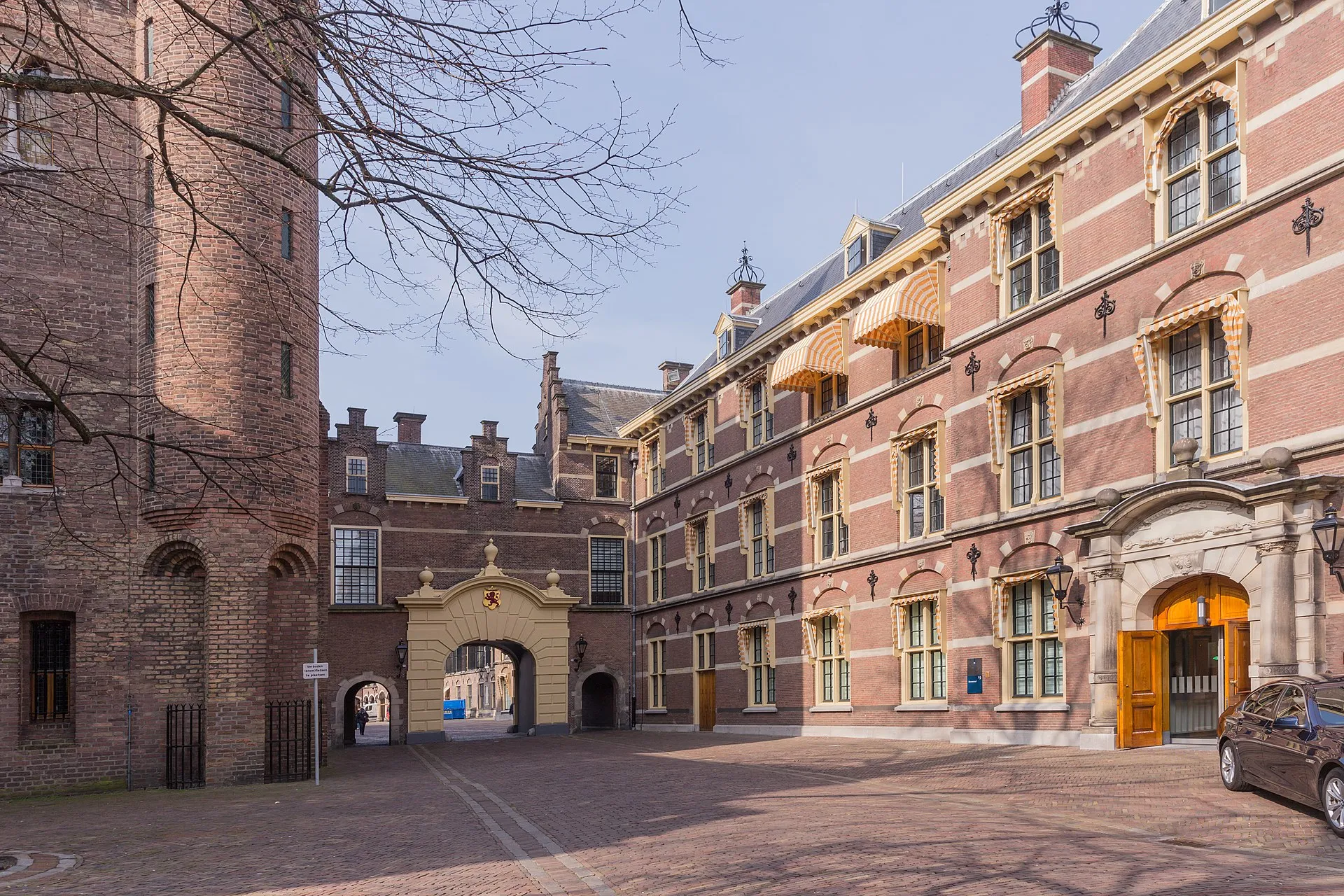
🎟️ Madurodam
The Netherlands in miniature — an entire country condensed to 1:25 scale with working models and interactive exhibits

🏛️ Mauritshuis
One of the world's most perfect small museums — Dutch Golden Age masterpieces in an intimate 17th-century townhouse
📜 Peace Palace
Where nations settle disputes with arguments instead of armies — international justice housed in donated grandeur
Guide planning
How much does a tour guide cost in The Hague?
| Tour Type | Price | Details |
|---|---|---|
| Walking Tours | €0-15 | Free tours (tip-based) or paid group tours covering the historic center and Hofvijver area |
| Mauritshuis Tours | €40-70 | Art historian-led tours focusing on Vermeer, Rembrandt, and the Golden Age collection |
| Political History Tours | €20-35 | Binnenhof, government district, and royal palace walking tours with historical context |
| Private Half-Day Tours | €150-240 | 3-4 hours covering museums, parliament, and neighborhoods with a dedicated guide |
| Beach & City Combo | €30-50 | Tours combining historic center sites with Scheveningen beach and seaside attractions |
| Full-Day Private Tours | €280-420 | 7-8 hours covering museums, Binnenhof, Peace Palace exterior, and Scheveningen coast |
Season planner
When is the best time to visit The Hague?
The Hague is a year-round city — its headline sights are indoors — but the experience shifts sharply with the season, and a handful of fixed dates are worth planning around.
- Late spring to summer (May–August) is the sweet spot: long North Sea evenings, café terraces along the Lange Voorhout, and the only months warm enough to pair museums with a swim or a walk on the Scheveningen pier. July and August bring the biggest beach crowds and peak hotel prices.
- Spring shoulder (April) rewards early visitors with the bulb fields near Delft and lighter museum queues, though the sea stays cold.
- Autumn and winter (October–March) turn grey, wet, and windy off the sea, but the Mauritshuis, the Peace Palace Visitor Centre, and the Kunstmuseum are at their quietest and most atmospheric.
Time a trip to one of The Hague's set-piece days and you get a different city altogether:
- Prinsjesdag (third Tuesday of September) is the Netherlands' grandest civic spectacle — the king rides in a glass state coach to deliver the Speech from the Throne. With the Binnenhof under long-term renovation the ceremony has been held at the nearby Grote Kerk, but the processions and crowds still fill the centre.
- King's Day (27 April) turns the whole city orange, and the free The Life I Live festival packs the streets around the royal quarter with music.
- Vlaggetjesdag (Flag Day, usually mid-June) at Scheveningen harbour celebrates the first Hollandse Nieuwe herring of the season with flag-dressed boats and quayside stalls.
- Parkpop (early summer) draws huge crowds to the Zuiderpark for one of Europe's largest free open-air pop festivals, while the spring Tong Tong Fair on the Malieveld celebrates the city's deep Indisch culture.
On the ground
How do you get around The Hague?
- Easy Day Trip — The Hague is 50 minutes from Amsterdam and 25 minutes from Rotterdam by Intercity train. Fast trains use Den Haag Centraal; the older Den Haag HS (Hollands Spoor) sits a short tram ride south. Day trips are effortless, but the city merits an overnight stay to experience Scheveningen at sunset.
- Mauritshuis Timing — Arrive at opening (10:00) and head straight to the Vermeer room. The museum is small enough that an hour suffices, though art lovers will want longer.
- Binnenhof Access — The complex has been under major renovation, so interior access is limited; the Hofvijver views and courtyard remain the essential sight.
- Tram Network — The Hague's trams connect all major sites efficiently. Line 1 runs from the center to Scheveningen beach and the Peace Palace; Line 9 serves the Madurodam area. Tap on with an OV-chipkaart or a contactless bank card.
- Combine with Delft — Delft is a 15-minute tram ride away — Vermeer's birthplace pairs naturally with seeing his paintings at the Mauritshuis.
- Embassy District — Walk through the leafy streets around Plein 1813 to see grand mansions housing international embassies — the area has an almost Parisian elegance unusual in the Netherlands.
- Indonesian Food — The Hague has the Netherlands' largest Indisch community. Restaurants along Frederikstraat and in the Schilderswijk serve some of the best rijsttafel and satay outside Indonesia.
Frequently Asked Questions
Is The Hague the capital of the Netherlands?
No — the constitutional capital is Amsterdam, but The Hague is the country's seat of government. Parliament, the cabinet, the Supreme Court, the Council of State, every foreign embassy, and the king's working palace at Noordeinde are all based here, which is why visitors often assume it is the capital. It is the Netherlands' third-largest city after Amsterdam and Rotterdam.
What is The Hague known for?
Three things above all: global justice, Golden Age painting, and the beach. The Peace Palace houses the International Court of Justice, and the city hosts more than 160 international organisations — the International Criminal Court, Europol, and the OPCW among them — earning its nickname as the international city of peace and justice. The Mauritshuis holds Vermeer's Girl with a Pearl Earring, and the Scheveningen resort district puts a long North Sea beach on the edge of a government capital.
What is the best time to visit The Hague?
May to August is ideal — long North Sea evenings, café terraces, and the only stretch warm enough to combine museums with the Scheveningen beach and pier, though July and August bring the biggest crowds. The city's headline sights are indoors, so autumn and winter still reward a visit with far quieter galleries. For a glimpse of the royal city at full ceremony, come for Prinsjesdag on the third Tuesday of September or King's Day on 27 April.
How many days do you need in The Hague?
One full day covers the essentials — the Mauritshuis, the Binnenhof and Hofvijver, and a tram out to Scheveningen. A second day lets you add the Peace Palace Visitor Centre, the Kunstmuseum's Mondrians, Madurodam, and a half-day trip to nearby Delft.
How much does a tour guide cost in The Hague?
Tip-based and paid group walking tours of the historic centre and Hofvijver run roughly €0–15. Art-historian tours of the Mauritshuis cost €40–70, political-history walks around the Binnenhof €20–35, and dedicated private guides €150–240 for a half day or €280–420 for a full day covering museums, parliament, and the coast.
How do you get around The Hague?
The Hague is an easy day trip — 50 minutes from Amsterdam and 25 minutes from Rotterdam by Intercity train — but it rewards an overnight stay. Fast trains use Den Haag Centraal; the older Den Haag HS (Hollands Spoor) sits a short tram ride south. The tram network links every major sight: line 1 runs to Scheveningen beach and the Peace Palace, line 9 to Madurodam. Tap on with an OV-chipkaart or a contactless bank card.