
Chennai timeline
-
Madras land grant
The East India Company secured the coastal strip of Madraspatnam that grew into Chennai.
-
Begun and completed in 1644, Fort St
Begun in 1640 and completed in 1644, Fort St.
-
Fort St George completed
The Company's fortress anchored British Madras and the colonial city that spread around it.
-
French capture Madras
Forces under La Bourdonnais seized the port during the War of the Austrian Succession, before it was returned to Britain in 1749.
-
Madras Presidency secured
Victory in the Carnatic Wars left Madras the Company's capital across the whole of South India.
-
Capital of Madras State
At independence the city became capital of the Tamil-speaking state on the Coromandel Coast.
-
Anti-Hindi agitations
Protests against imposing Hindi propelled the Dravidian movement to lasting statewide power.
-
Madras State becomes Tamil Nadu
The DMK government renamed the state, cementing Tamil identity at the heart of its politics.
-
UNESCO World Heritage listing
The Group of Monuments at Mahabalipuram, 60 km south of the city, was inscribed on the UNESCO World Heritage List in 1984 for its Pallava-era rock-cut shrines, the.
-
Chennai name adopted
The official name change reframed the city around Tamil rather than colonial identity.
Cited city facts
Key facts for visiting Chennai
Fort St. George completed in 1644
Begun in 1640 and completed in 1644, Fort St. George was the first English fortress in India and the nucleus around which colonial Madras grew; it still houses the Tamil Nadu Legislative Assembly and the state Secretariat.
7th–8th-century monuments at Mahabalipuram
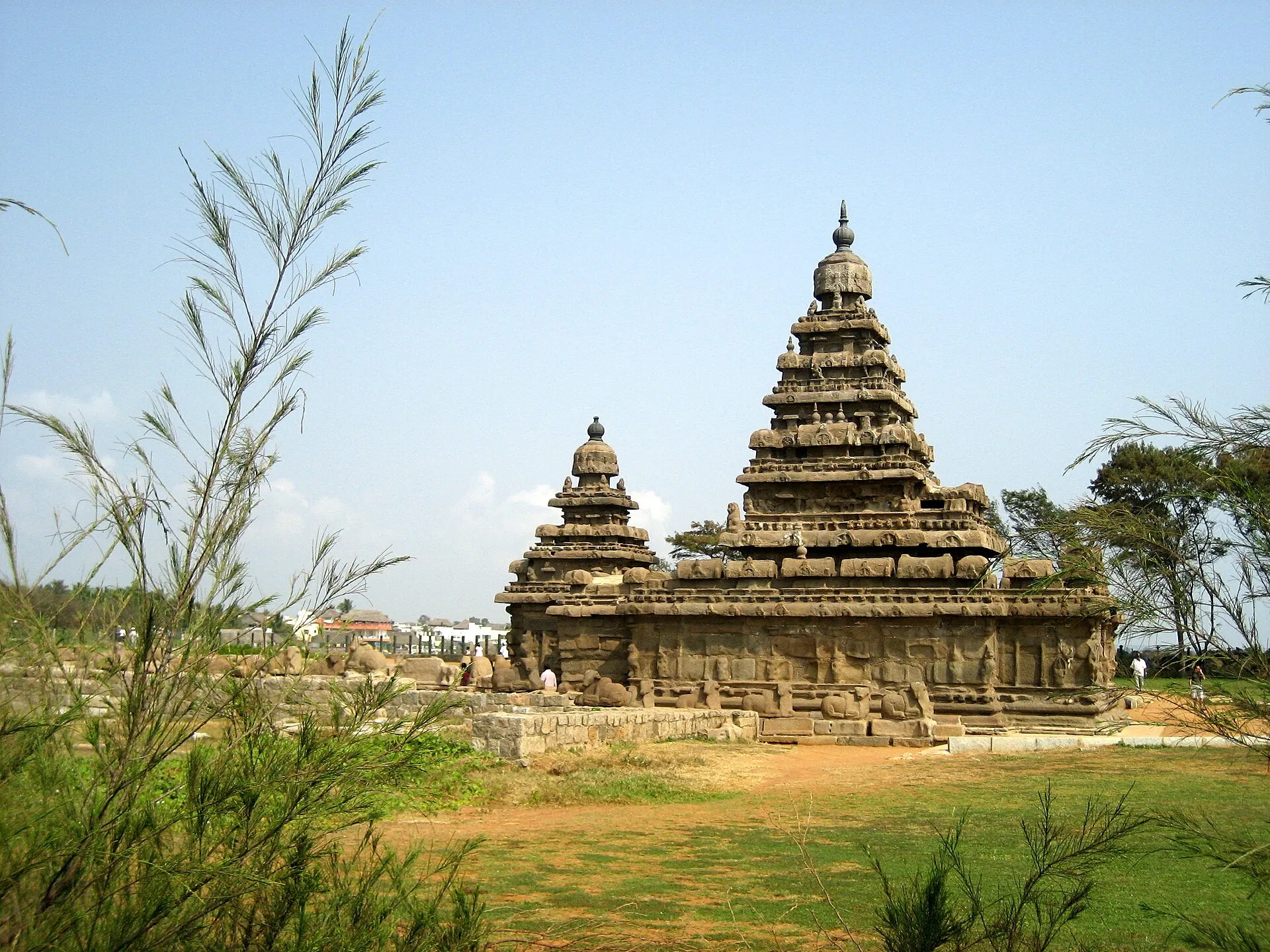
The Group of Monuments at Mahabalipuram, 60 km south of the city, was inscribed on the UNESCO World Heritage List in 1984 for its Pallava-era rock-cut shrines, the Shore Temple, and the open-air relief of Arjuna's Penance.
Roughly 8.7 million metropolitan residents
The 2011 Census of India counted about 4.65 million people in Chennai city and some 8.7 million across the metropolitan area, making it the fourth-largest urban agglomeration in the country.
The Detroit of India
Greater Chennai is one of India's leading vehicle-manufacturing hubs, home to plants run by Hyundai, Ford, Renault-Nissan, BMW, Royal Enfield, Ashok Leyland, and TVS, which is why the city is nicknamed the Detroit of India.
1,000+ Carnatic concerts each December
The Margazhi (Madras) Music Season, centred on the Music Academy and dozens of other sabhas, stages well over a thousand Carnatic concerts and dance recitals from mid-December to mid-January — among the largest classical-arts festivals in the world.
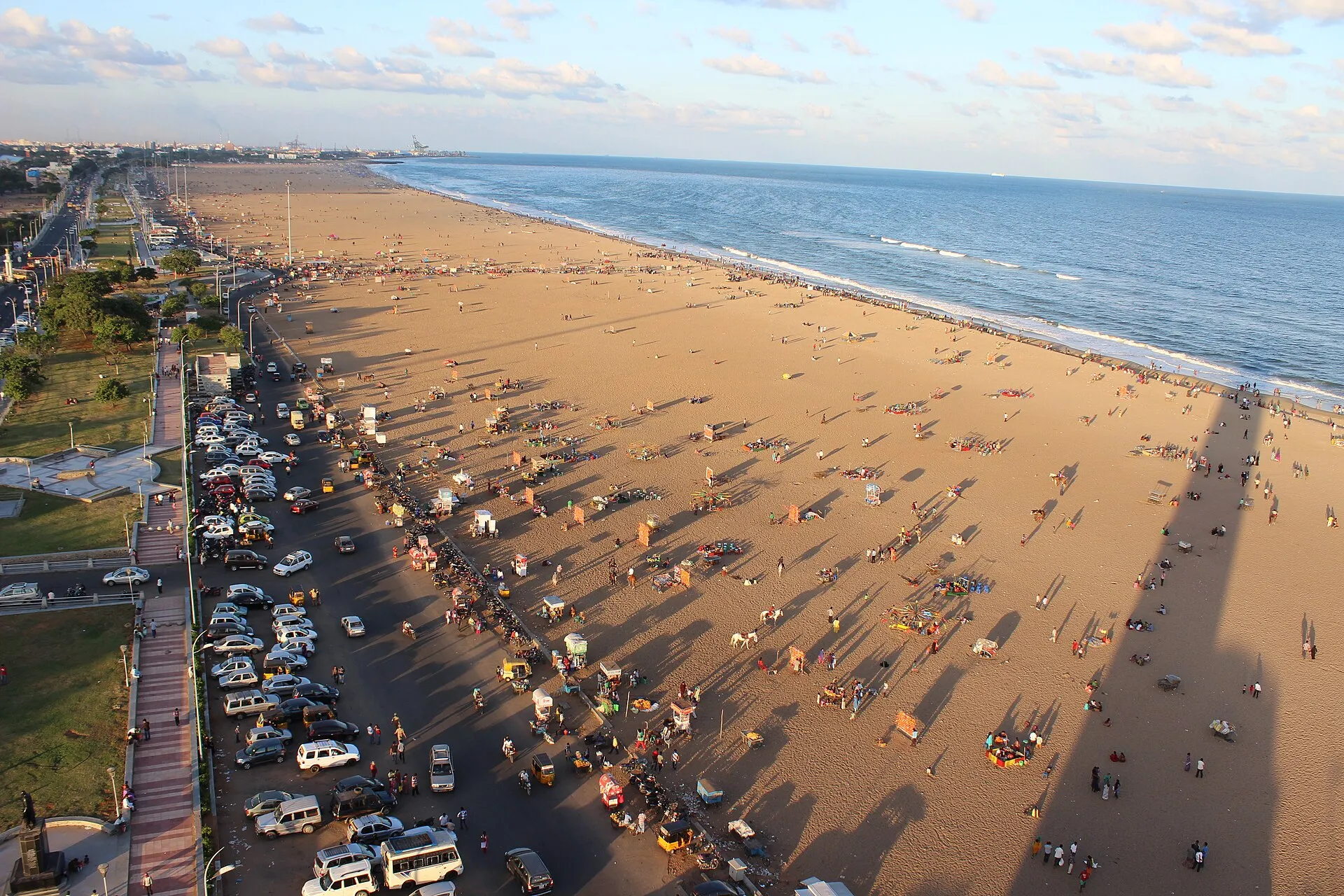
13 km Marina Beach
Marina Beach runs about 13 km along the Bay of Bengal from Fort St. George toward Besant Nagar — one of the longest urban beaches in the world and the setting for memorials to Tamil Nadu's political leaders.
Metro rail running since 2015
Chennai Metro Rail's two air-conditioned lines, open since 2015, connect the international airport with Chennai Central, Egmore, and the commercial districts, bypassing some of the Coromandel Coast's heaviest road traffic.
Source: tour-guide.com — Free to cite with attribution
Things to see
What are the top attractions in Chennai?
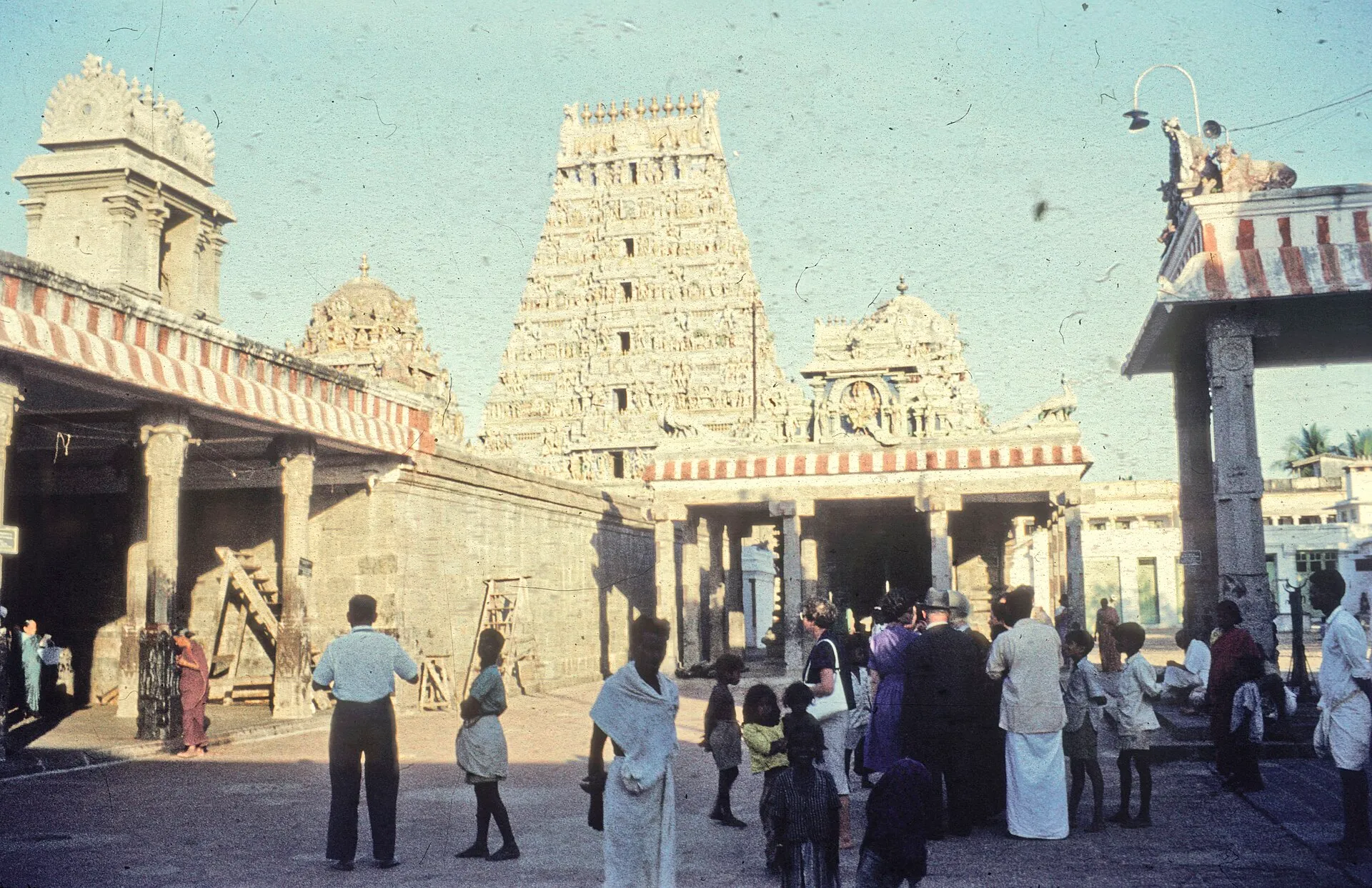
- Kapaleeshwarar Temple at morning puja — Watch Brahmin priests perform elaborate fire rituals as temple elephants bless visitors with their trunks
- South Indian breakfast trail — Crispy dosa, fluffy idli, spicy vada, and filter coffee at century-old Mylapore eateries
- Mahabalipuram shore temples — Watch the sun rise over the Bay of Bengal behind 1,300-year-old Pallava temples carved from granite
- Bharatanatyam performance — Attend a classical dance recital at the Music Academy or Kalakshetra Foundation, where the art form was revived by Rukmini Devi Arundale
- Fort St. George — Walk through the oldest surviving English fortress in India (1644), now housing a museum and the Tamil Nadu State Legislature
- December music season — The Madras Music Season (December–January) hosts thousands of Carnatic music concerts across the city — the world's largest cultural festival
🛐 Kapaleeshwarar Temple
A Dravidian tower of a thousand painted gods in Chennai's oldest neighborhood
🏺 Mahabalipuram
Where Pallava kings carved temples from living rock and faced them to the sea
🏞️ Marina Beach
Thirteen kilometers of sand where Chennai meets the Bay of Bengal

A little further out — pan beyond Chennai's centre to find it on the map:
Guide planning
How much does a tour guide cost in Chennai?
| Tour Type | Price | Details |
|---|---|---|
| Temple Walking Tour | ₹1,000–2,000 ($12–24 per person) | 3 hours |
| Mahabalipuram Day Trip | ₹3,000–6,000 ($36–72) | With car and guide |
| Private Half-Day | ₹2,000–4,000 ($24–48) | Up to 4 people |
| Food + Culture Tour | ₹1,500–3,000 ($18–36) | Includes meals |
Season planner
When is the best time to visit Chennai?
- Best months: November–February for cooler weather (25–30°C). Avoid October–November for the northeast monsoon. Summers are hot and humid.
- Gateway to South India: Chennai connects to temple towns (Madurai, Thanjavur), Kerala backwaters, and Pondicherry — all feasible as multi-day trips.
- Language: Tamil is the primary language. English is widely spoken in tourist areas and business districts.
- Temple dress code: Strict at Dravidian temples — men should wear long pants, women should cover shoulders and knees. Some temples require men to remove shirts.
- December festival season: Book hotels early for the Madras Music Season and Pongal harvest festival (mid-January), when the city is at its cultural peak and Marina Beach fills with kolam art and celebrations.
- Beach caution: Marina Beach has strong undercurrents. Swimming is not recommended — enjoy the sunset and street food instead.
On the ground
How do you get around Chennai?
The MRTS suburban rail runs along the coast from Chennai Beach station to Velachery, providing a quick connection between Fort St. George, Mylapore's temples, and the southern neighborhoods. Chennai Metro's two air-conditioned lines, open since 2015, link the airport to the city center and connect key hubs like Egmore, T. Nagar, and Saidapet. Auto-rickshaws are everywhere and legally required to use meters, though drivers sometimes refuse — insist on the meter or agree on a fare before boarding.
The MTC bus system is one of India's largest with over 3,400 buses covering the sprawling city, useful for budget travelers willing to navigate Tamil route boards. App-based cabs from Ola and Uber are reliable and often the most convenient option, especially for the 60-kilometer trip south along the scenic East Coast Road to the UNESCO temples at Mahabalipuram, where public transport options thin out considerably.
Frequently Asked Questions
What is the best time to visit Chennai?
Best months: November–February for cooler weather (25–30°C). Avoid October–November for the northeast monsoon. Summers are hot and humid.
How much does a tour guide cost in Chennai?
Temple Walking Tour: ₹1,000–2,000 ($12–24 per person, 3 hours). Mahabalipuram Day Trip: ₹3,000–6,000 ($36–72, with car and guide). Private Half-Day: ₹2,000–4,000 ($24–48, up to 4 people).
How do you get around Chennai?
The MRTS suburban rail runs along the coast connecting Fort St. George to southern neighborhoods, and Chennai Metro's air-conditioned lines link the airport to the city center. Auto-rickshaws are plentiful (insist on the meter), while app-based cabs are the most convenient option for the 60-kilometer trip to Mahabalipuram.
How is Chennai different from North India?
Chennai is the cultural capital of the Tamil and Dravidian south, a world apart from the Mughal-influenced north. Temples here are crowned with towering, deity-covered gopurams rather than domes and minarets; the staple is rice, coconut, and fiery sambar rather than wheat breads; and the classical arts are Carnatic music and Bharatanatyam dance rather than Hindustani music and Kathak. Tamil, not Hindi, is the everyday language.
Why is Chennai called the Detroit of India?
The city and its western suburbs turn out a large share of the cars and two-wheelers India builds for both the home market and export, and that scale is what earned the automotive nickname. The Sriperumbudur–Oragadam belt on the city's outskirts is the main assembly zone, ringed by a dense web of component suppliers, while the Ennore and Chennai ports ship much of the output abroad — making the region one of the country's busiest vehicle-export gateways.
What festivals is Chennai famous for?
The signature event is the Madras Music Season each December–January, when well over a thousand Carnatic concerts and Bharatanatyam recitals fill the city's sabhas. January brings the Tamil harvest festival of Pongal, celebrated with kolam rice-flour art on doorsteps and massive gatherings on Marina Beach, and the Mylapore area hosts its own temple and arts festivals around the Kapaleeshwarar Temple.