
Excavation History
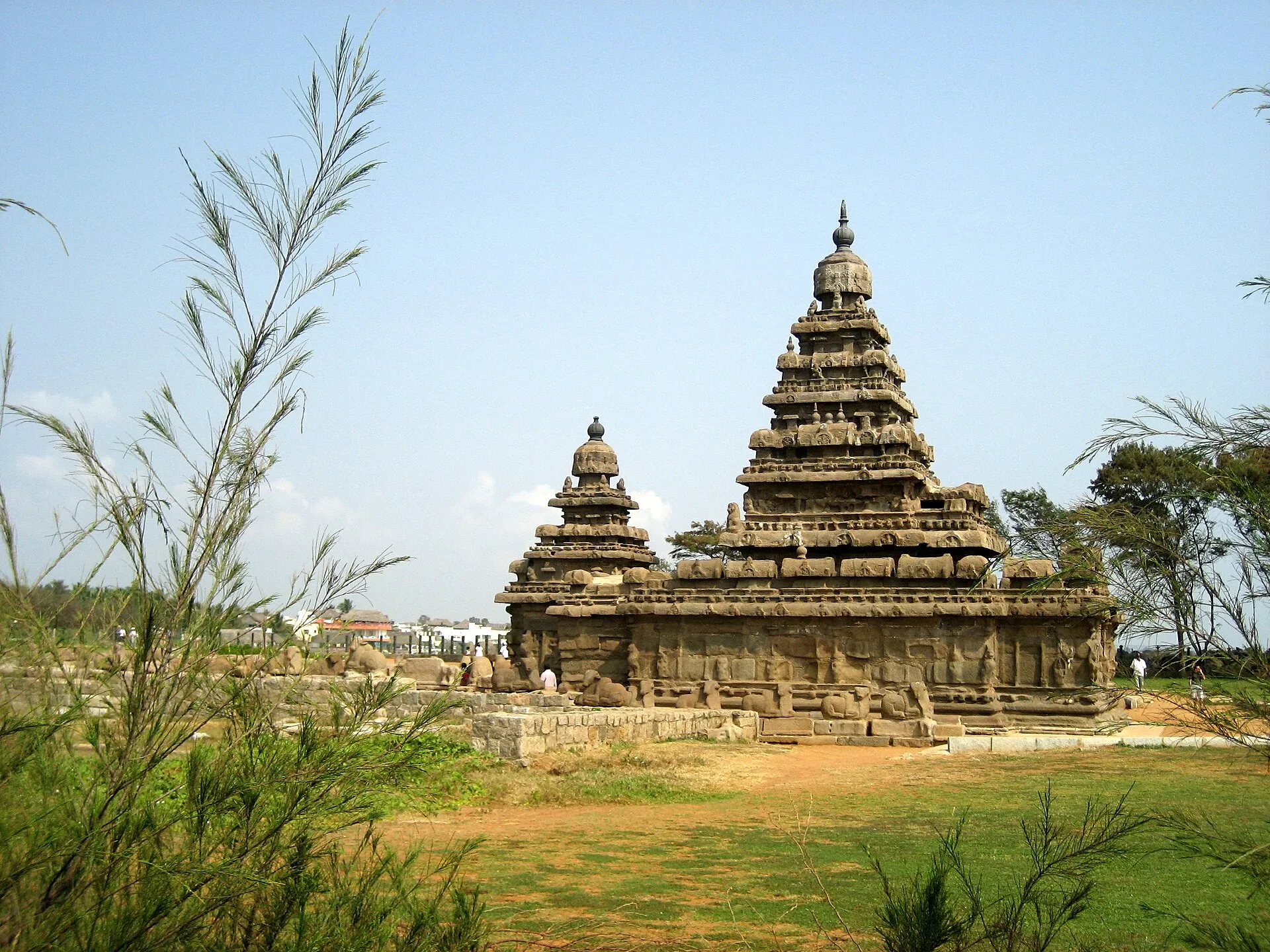
The Pallavas were master builders and maritime traders who sent ships to Southeast Asia, and their architectural experiments at Mahabalipuram -- carving entire temples from single boulders, excavating caves into hillsides, and constructing the Shore Temple facing the Bay of Bengal -- represent one of the most creative periods in South Indian architectural history. The site is compact but astonishingly rich: Arjuna's Penance (or Descent of the Ganges) is a 27 x 9 meter narrative carved into a granite cliff face, depicting gods, humans, animals, and supernatural beings converging on a central cleft. The Five Rathas (Pancha Rathas) are five monolithic temples, each carved from a single granite boulder in a different architectural style, named after the Pandava brothers from the Mahabharata though they predate that association. The 2004 Indian Ocean tsunami partially uncovered previously buried rock carvings along the shoreline, suggesting a larger submerged temple complex offshore.
Key Artifacts
Mahabalipuram (also called Mamallapuram) is a UNESCO World Heritage Site 60 kilometers south of Chennai, where the Pallava dynasty built a port city of rock-cut temples, monolithic shrines, and massive relief sculptures between the 7th and 8th centuries CE. The Pallavas were master builders and maritime traders who sent ships to Southeast Asia, and their architectural experiments at Mahabalipuram -- carving entire temples from single boulders, excavating caves into hillsides, and constructing the Shore Temple facing the Bay of Bengal -- represent one of the most creative periods in the history of South Indian architecture.
The site is compact but astonishingly rich. Arjuna's Penance (or Descent of the Ganges) is the world's largest open-air rock relief -- a 27-meter-wide, 9-meter-high narrative carved into a granite cliff face, depicting gods, humans, animals, and supernatural beings converging on a central cleft. The Five Rathas are five monolithic temples, each carved from a single boulder in a different architectural style, named after the Pandava brothers from the Mahabharata though they predate that association. A guide decodes the iconography, explains the Pallava dynasty's place in Indian history (they are less famous than the Mughals but built earlier and influenced all of Southeast Asian architecture), and takes you to the Shore Temple at the hour when the Bay of Bengal light is most dramatic.
When to Visit
Main monuments: daily, 6:00 AM - 6:00 PM. Shore Temple: same hours, plus a sound-and-light show in the evening (check seasonal timings). Best time: early morning (6-8 AM) for the Shore Temple at sunrise, or late afternoon for golden light on Arjuna's Penance.
Admission and Costs
Foreigners: ₹600 ($7.20) composite ticket covering all monuments. Indian nationals: ₹40. Guide: ₹500-1,500 for a 2-3 hour comprehensive tour. Getting from Chennai: ₹1,500-2,500 by taxi (1.5 hours via East Coast Road).
Tips for Visitors
Full day trip or overnight: Mahabalipuram deserves at least 3-4 hours at the monuments. Consider staying overnight to see the Shore Temple at both sunrise and sunset. East Coast Road scenic drive: The 60-km highway from Chennai follows the coastline through fishing villages and crocodile farms -- scenic enough to be an attraction itself. Seafood lunch: The beach restaurants serve excellent fresh fish, prawns, and crab caught that morning. Wear comfortable shoes: The monuments are spread across a sandy area. The rock surfaces can be scorching in summer. Tsunami memorial: The 2004 Indian Ocean tsunami hit Mahabalipuram. A guide can explain how the Shore Temple survived and what the wave uncovered (previously buried rock carvings).
Frequently Asked Questions
When should visitors plan a trip to Mahabalipuram?
February stands out as the peak month, with dry skies, gentle coastal breezes, and comfortable temperatures for exploring the open-air rock-cut temples and Shore Temple at sunrise. January through March is the broader window of reliable weather. The long monsoon influence from June through November makes conditions unpredictable, and the scorching summer heat of April and May can make the exposed granite monuments painfully hot underfoot.
What are the opening hours for Mahabalipuram?
Main monuments: Daily, 6:00 AM – 6:00 PM. Shore Temple: Same hours, plus a sound-and-light show in the evening (check seasonal timings).
What is the entrance fee for Mahabalipuram?
Foreigners: ₹600 ($7.20) composite ticket covering all monuments. Indian nationals: ₹40. Guide: ₹500–1,500 for a 2–3 hour comprehensive tour. Getting from Chennai: ₹1,500–2,500 by taxi (1.5 hours via East Coast Road)
Is a guide recommended for visiting Mahabalipuram?
A guide explains the transition from rock-cut to structural temple architecture visible across the site, decodes the mythological scenes carved into Arjuna's Penance, and shares the story of the legendary submerged temples offshore that were partially revealed by the 2004 tsunami.