
Acropolis of Athens timeline
- 447 BCE
Parthenon begun
Pericles launched the building program that still defines the Acropolis skyline.
-
Parthenon explosion
A Venetian bombardment ignited Ottoman gunpowder stored inside the temple.
-
UNESCO listing
World Heritage status recognized the Acropolis as a landmark of classical Greek culture.
Excavation History
Systematic archaeology on the sacred rock began only after Greek independence, when the Acropolis was cleared of its medieval and Ottoman accretions — the Frankish tower, houses, and the mosque built inside the Parthenon were all removed in the 1830s. The great campaign came in 1885-1890, when Panagiotis Kavvadias and the German architect Georg Kawerau stripped the summit down to bedrock. Their trenches uncovered the Perserschutt, or Persian debris: a layer of Archaic sculpture that the Athenians had reverently buried after the Persian sack of 480 BC. From these fills emerged the finest surviving Archaic korai, the Moschophoros (Calf-Bearer), and the transitional Kritios Boy, sealed and preserved for 2,400 years. Because the excavators dug to virgin rock, no undisturbed strata remain on the summit today, making these late-19th-century records irreplaceable. Since 1975 the Acropolis Restoration Service (ESMA) has led a meticulous anastylosis, dismantling and re-erecting the monuments block by block, replacing corroding iron clamps with titanium, and documenting every stone as it goes.
Key Artifacts
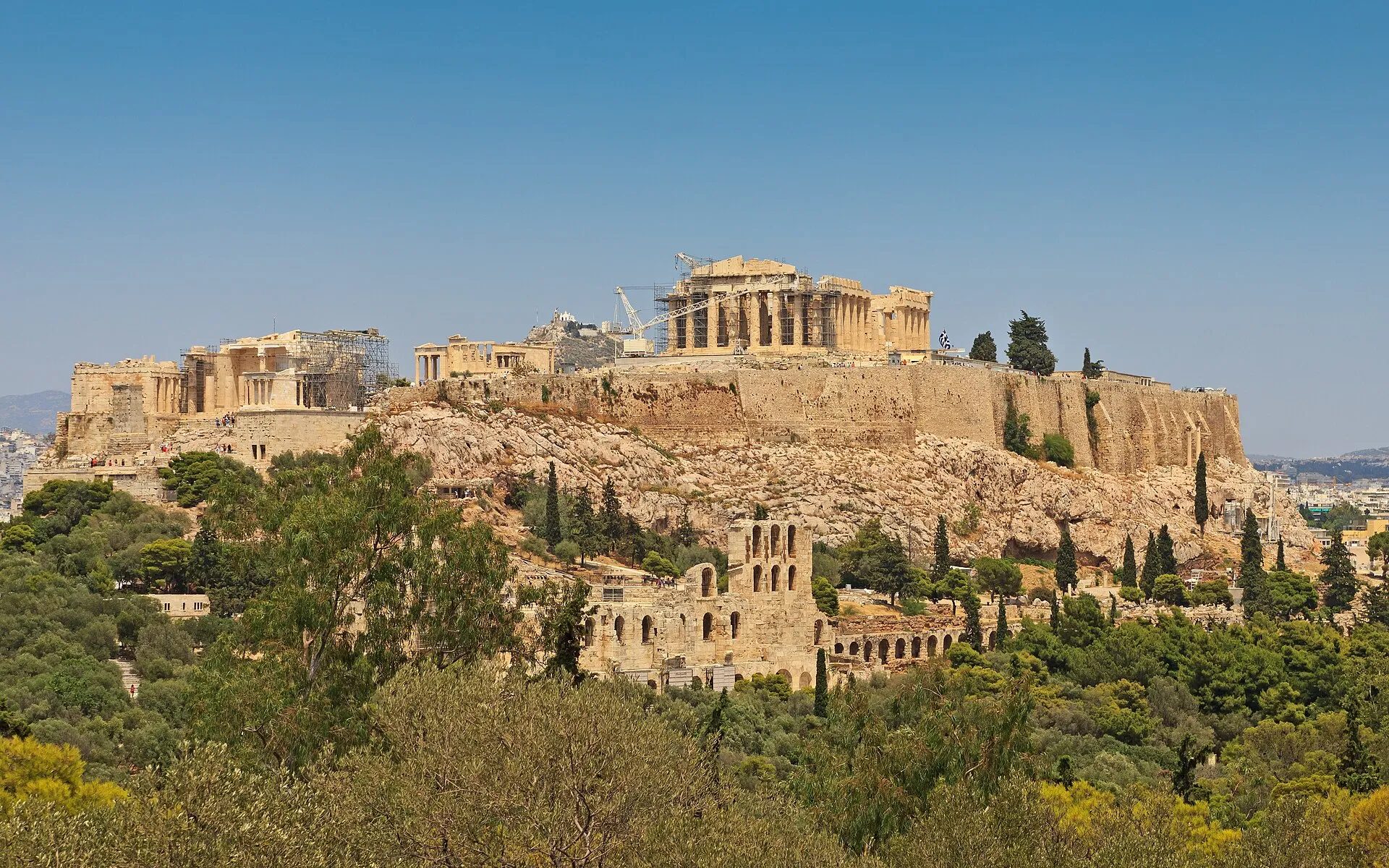
The crowning structure is the Parthenon, the Doric temple of Athena built in 447-432 BC, its columns shaped with the subtle entasis curves that correct optical distortion. The Erechtheion carries the famous Porch of the Caryatids, where six maiden figures replace conventional columns — the ones on site are casts, with five originals in the Acropolis Museum and one in London. The Propylaia forms the monumental gateway, and the compact Ionic Temple of Athena Nike perches on the bastion beside it, raised to mark victory over the Persians. Below the citadel walls lie the Theatre of Dionysus, birthplace of Greek tragedy and comedy with seating for around 17,000, and the Roman Odeon of Herodes Atticus, still used for summer concerts. Scattered across the rock are foundations, votive bases, and the traces of the Older Parthenon left unfinished when the Persians struck.
When to Visit
Hours: April-October: 8 AM-8 PM | November-March: 8 AM-5 PM. Best time: first entry at 8 AM for cooler temperatures, soft morning light, and fewer crowds. Least crowded: weekdays in winter, late afternoon (but watch closing times). Photography: early morning for east-facing shots, late afternoon for golden hour. Avoid midday June-August when temperatures exceed 35°C on exposed marble with no shade.
Admission and Costs
Acropolis only: €20 (April-October) | €10 (November-March). Combined ticket: €30 covering 7 sites (Ancient Agora, Roman Forum, and more), valid 5 days. Free entry: March 25, October 28, first Sunday Nov-March. Group guided tours: €40-60 per person (skip-line access plus expert guide, 2-3 hours). Private guide: €200-350 for up to 6 people (does not include tickets). Acropolis plus Acropolis Museum combo: €55-80 per person (guided, 4-5 hours).
The Case for a Guide
The Acropolis is one of humanity's most studied monuments, yet the specific optical illusions built into the Parthenon, the political context of the Persian Wars that prompted its construction, and the ongoing Elgin Marbles repatriation debate are stories that turn a beautiful ruin into a living argument about civilization, democracy, and cultural ownership.
- Parthenon's original polychrome paint: The Parthenon was never the blank white marble it appears today — it was painted in vivid blues, reds, and golds, with the metope sculptures picked out in multiple colors; guides describe the painted reconstruction and explain why the "pure white marble" aesthetic is a modern misunderstanding that shaped neoclassical architecture worldwide.
- The Erechtheion Caryatids' story: The six maiden columns supporting the Erechtheion porch are copies — the originals (five of them) are in the Acropolis Museum below, while the sixth was taken by Lord Elgin and remains in the British Museum; guides explain the myth of the Caryatids as priestesses of Sparta punished for treachery and why Athens considers the sixth column's absence a wound.
- Propylaea's intentional spatial compression: The monumental gateway was deliberately designed to slow visitors, compress their field of vision, and then release them into the sudden visual explosion of the Parthenon — guides walk you through this scripted experience as ancient Athenians would have felt it during the Panathenaic procession.
- Persian War context for the rebuilding program: The Persians destroyed the Acropolis in 480 BC; the buildings you see today were Pericles' political program of deliberately superior reconstruction, funded by the Delian League treasury — guides explain why this makes the Parthenon simultaneously a religious monument and an imperial propaganda statement.
- Elgin Marbles debate in full: The 160-meter Parthenon frieze was split in 1801 when Thomas Bruce (Lord Elgin) removed roughly half of the surviving sculptures — guides present both the British Museum's preservation argument and Greece's reunification case, explaining exactly what is in Athens, what is in London, and what the proposed Acropolis Museum solution would involve.
Tips for Visitors
Wear good shoes: smooth marble is slippery, especially in rain, so leave the heels behind. Bring water: 1 liter minimum per person, with a small kiosk at the entrance. Sun protection (hat, sunglasses, sunscreen) is mandatory since there is zero shade. Arrive 30 minutes before opening to beat tour buses and cruise groups. Mobility note: steep incline, uneven surfaces, and 150m elevation gain make this challenging for wheelchairs. Restrooms are only at the entrance and exit, so plan ahead. Allow 2-3 hours and do not rush -- this is a once-in-a-lifetime experience. Combine with the Acropolis Museum afterward for context on the original sculptures.
🎧 Audio companion for Acropolis of Athens
Read the introduction transcript
The Acropolis is the high point, literally and otherwise, of our free, self-guided Athens: Acropolis & Plaka audio walk. Three of its eight stops stand you on the sacred rock itself: you pass through the marble gateway of the Propylaea beneath the little temple of Athena Nike, come face to face with the Parthenon and learn to read the optical tricks its builders hid in straight-looking stone, then cross to the Erechtheion and the porch where six carved maidens hold up the roof.
The walk sets all of this against the story of Pericles, Phidias and the fifth-century BC building spree that crowned the city, and the sieges, conversions and one catastrophic explosion that shaped the ruin you see. Open the full walk to read the whole narration — or listen to your browser read it aloud — while you stand on the summit; the archaeological site needs an admission ticket, while this audio introduction is free.
Frequently Asked Questions
What are the best months for visiting the Acropolis of Athens?
April, May, September, and October are the sweet spot -- comfortable temperatures in the 20s, manageable crowds, and clear Aegean light ideal for photography on the exposed marble hilltop. July and August bring punishing heat exceeding 35 degrees C with zero shade, making the climb genuinely uncomfortable. Winter brings half-price tickets and few visitors, though shorter hours limit your time on site.
When can visitors tour Acropolis of Athens?
Hours: April-October: 8 AM-8 PM | November-March: 8 AM-5 PM. Best time: First entry at 8 AM (cooler temperatures, soft morning light, fewer crowds). Least crowded: Weekdays in winter, late afternoon (but watch closing times).
How much is the entrance fee for Acropolis of Athens?
Acropolis only: €20 (April-October) | €10 (November-March). Combined ticket: €30 - includes 7 sites (Ancient Agora, Roman Forum, more), valid 5 days. Free entry: March 25, October 28, first Sunday Nov-March.
What do guided tours of Acropolis of Athens include?
Guides decode the architecture, explaining optical illusions and engineering marvels. They share mythology of Athena and Poseidon, cover how democracy was born here, and know the best photo angles and efficient routes to minimize sun exposure.