
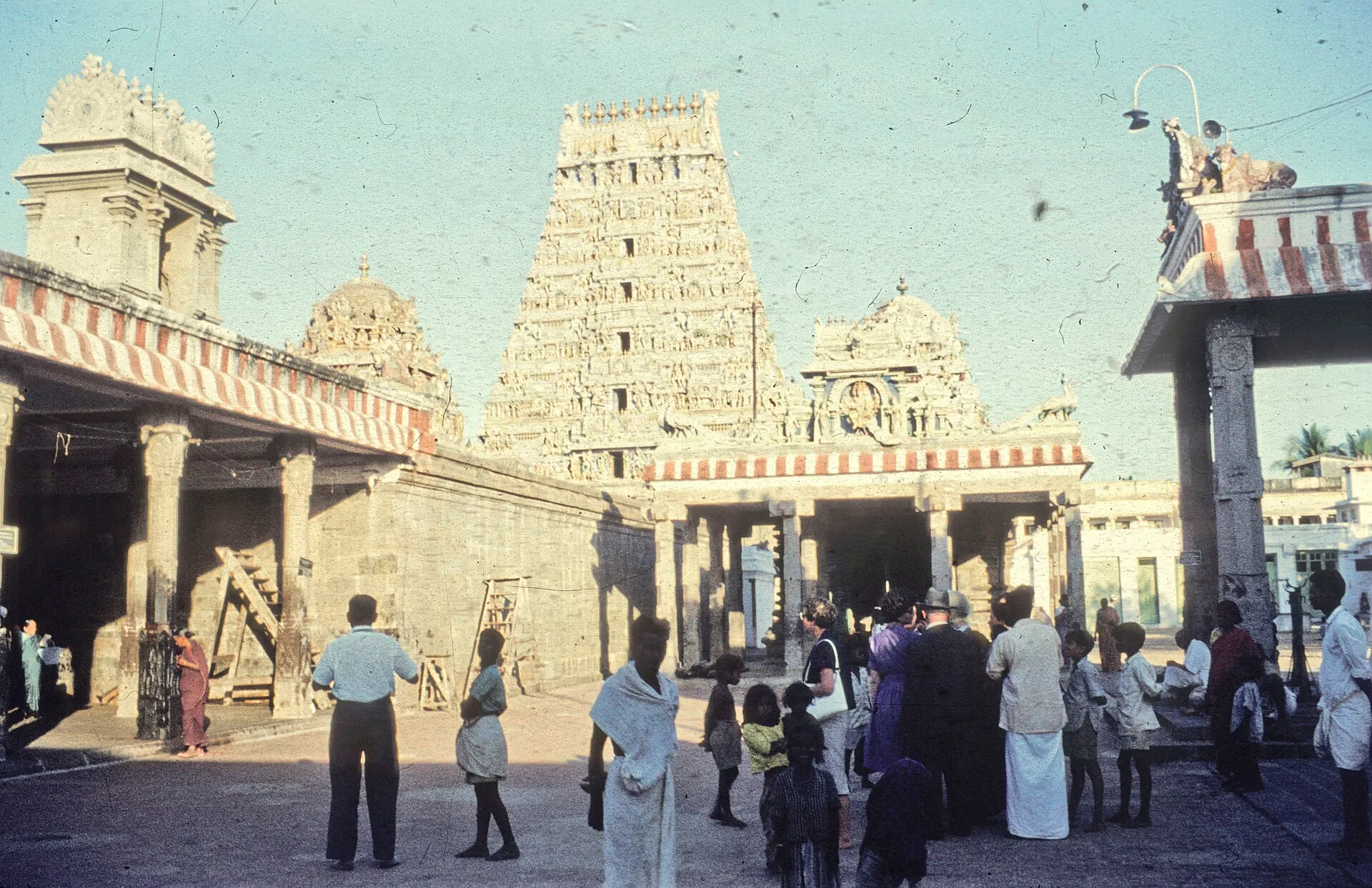
Spiritual Significance
The temple is dedicated to Lord Shiva in his form as Kapaleeshwarar ("Lord of Skulls"), and the Nayanar saints mentioned it in their devotional hymns dating to the 7th century CE. The main gopuram rises 40 meters with hundreds of painted stucco figures repainted every 12 years during the Kumbabhishekam consecration ceremony. A large stone Nandi (Shiva's bull) faces the inner sanctum, adorned with garlands and kumkum. The sacred punnai tree is the sthala vriksha under which the Goddess Karpagambal is said to have worshipped Shiva. The temple tank hosts the annual Arubathimoovar festival, and exquisitely cast Chola-style bronze processional deities are carried through the streets during festivals.
Visitor Etiquette
Remove footwear before entering the temple complex — shoes are left at the entrance and collected on return; socks are permitted. Dress conservatively: both men and women must cover their legs (shorts are not permitted; sarongs are sometimes available to borrow at the gate) and women should cover their shoulders. The inner sanctum is restricted to Hindus; non-Hindu visitors are warmly welcomed throughout the outer courtyards, mandapam (hall), and circumambulation path but should not attempt to enter the sanctum sanctorum during puja rituals unless specifically invited. Photography of the gopuram exterior is freely permitted; photography inside the main temple hall and near the central shrine is generally restricted — ask before raising a camera. During active puja ceremonies, maintain silence, avoid passing in front of worshippers who are praying, and follow the clockwise direction of circumambulation (pradakshina). Modest, respectful behavior is expected at all times, and removing the camera in moments of active worship is a mark of courtesy regardless of photographic permissions.
When to Visit
Morning session: 5:30 AM - 12:00 PM. Evening session: 4:00 PM - 8:30 PM. Friday evenings: extended hours and special worship. Best time: morning (6-8 AM) for the most active worship and cooler temperatures.
Admission and Costs
Temple entry: free. Special darshan: ₹50-100 for faster access. Guided temple plus Mylapore tour: ₹1,000-2,000 ($12-24) for a 2-3 hour walking tour.
Tips for Visitors
Dress strictly: Men should wear long pants (some temples require men to remove shirts). Women must cover shoulders and knees. Remove shoes: Leave footwear at the entrance. The stone floor can be hot — bring socks. Non-Hindus: The outer areas are accessible to all. The inner sanctum may have restrictions during peak worship. Mylapore walk: The surrounding streets have traditional flower sellers, brass shops, and the ancient Chitrakulam tank. Arubathimoovar festival: In April, the 63 Nayanar saint statues are paraded through the streets — Chennai's most spectacular temple festival
Frequently Asked Questions
What is the best time of year to visit Kapaleeshwarar Temple?
January through March offers the most pleasant weather in Chennai, with temperatures in the low 30s and dry conditions ideal for exploring Mylapore's streets. April's spectacular Arubathimoovar festival, when 63 saint statues parade through the neighborhood, is the single most vibrant time to visit. The northeast monsoon from October through December brings heavy rainfall that can flood the temple surroundings.
What are the sightseeing hours at Kapaleeshwarar Temple?
Morning session: 5:30 AM – 12:00 PM. Evening session: 4:00 PM – 8:30 PM. Friday evenings: Extended hours and special worship. Best time: Morning (6–8 AM) for the most active worship and cooler temperatures
Is there a suggested contribution for Kapaleeshwarar Temple?
Temple entry: Free. Special darshan: ₹50–100 for faster access. Guided temple + Mylapore tour: ₹1,000–2,000 ($12–24) for a 2–3 hour walking tour
Can visitors explore Kapaleeshwarar Temple with a guide?
A guide decodes the mythology embedded in the gopuram sculptures, explains the significance of each shrine and the rituals performed daily, and navigates the temple's strict dress code and etiquette so visitors can participate respectfully.