
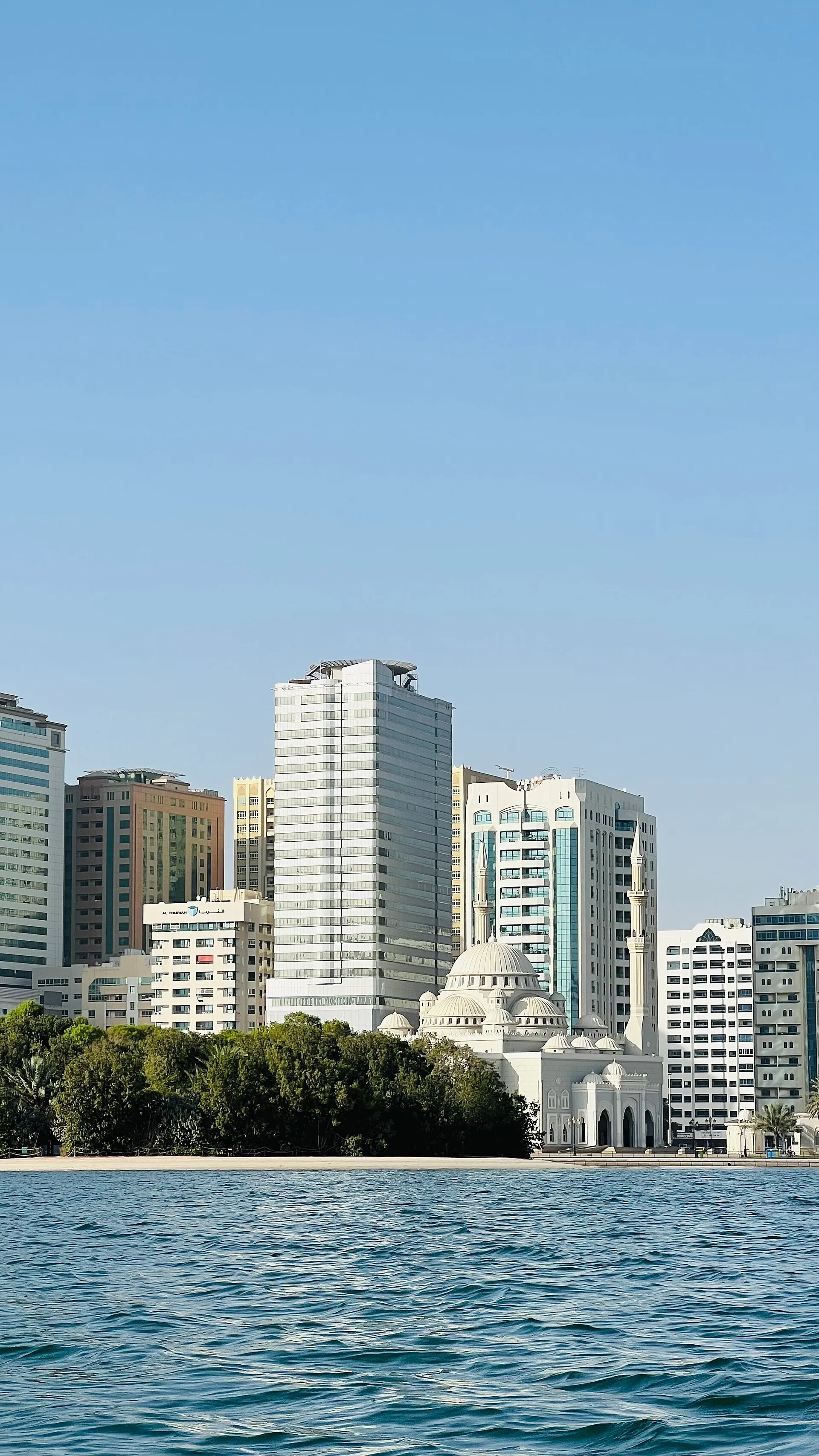
Visitor Etiquette
All visitors must wear modest clothing that covers arms and legs. Women must wear a headscarf; free abayas and scarves are available at the entrance for those who need them. Men must wear long trousers and shirts with sleeves.
Shoes must be removed before entering the prayer hall. Maintain a quiet, respectful tone throughout the visit, and silence mobile phones. During the guided tour, sit on the carpeted floor as directed -- the guides will explain the significance of the prayer hall orientation toward Mecca. Photography is permitted with discretion, but avoid photographing other visitors without permission. The Q&A session is a highlight: questions about women in Islam, daily prayer routines, and Emirati culture are welcomed openly.
Spiritual Significance
The Arabic Qur'anic calligraphy inscribed across Al Noor Mosque's interior walls is not decorative — in Islamic tradition, the written word of God is itself sacred, and the act of rendering Qur'anic verses in the flowing thuluth and naskh scripts is a devotional practice as much as an artistic one. The mihrab (prayer niche) orienting the congregation toward Mecca embeds every Friday prayer in a global network of Muslim worship; millions of people simultaneously face the same direction and recite the same words, a spatial and temporal connection that transcends the individual building. The "Open Doors, Open Minds" programme reflects Sharjah's commitment to interfaith dialogue as a spiritual value — the willingness to share sacred space with non-believers is itself a theological statement about the nature of hospitality (diyafa) in Islamic teaching. The Arabic coffee ceremony after the tour is a religious as much as a cultural gesture: diyafa in Emirati practice carries spiritual weight, with the host's obligation to welcome guests considered a divine instruction. Wearing the abaya as a visitor is not merely a dress code requirement but an invitation to inhabit, briefly, the external markers of a faith practice that hundreds of millions follow as a daily expression of submission to God.
Al Noor Mosque timeline
-
Sharjah cultural capital
UNESCO recognition began the cultural-investment drive that Al Noor Mosque later symbolized.
-
Mosque inaugurated
The Ottoman-style mosque opened beside Khalid Lagoon with twin minarets and a central dome.
-
Open tours begin
The mosque launched free guided visits for non-Muslim visitors through a cultural communication program.
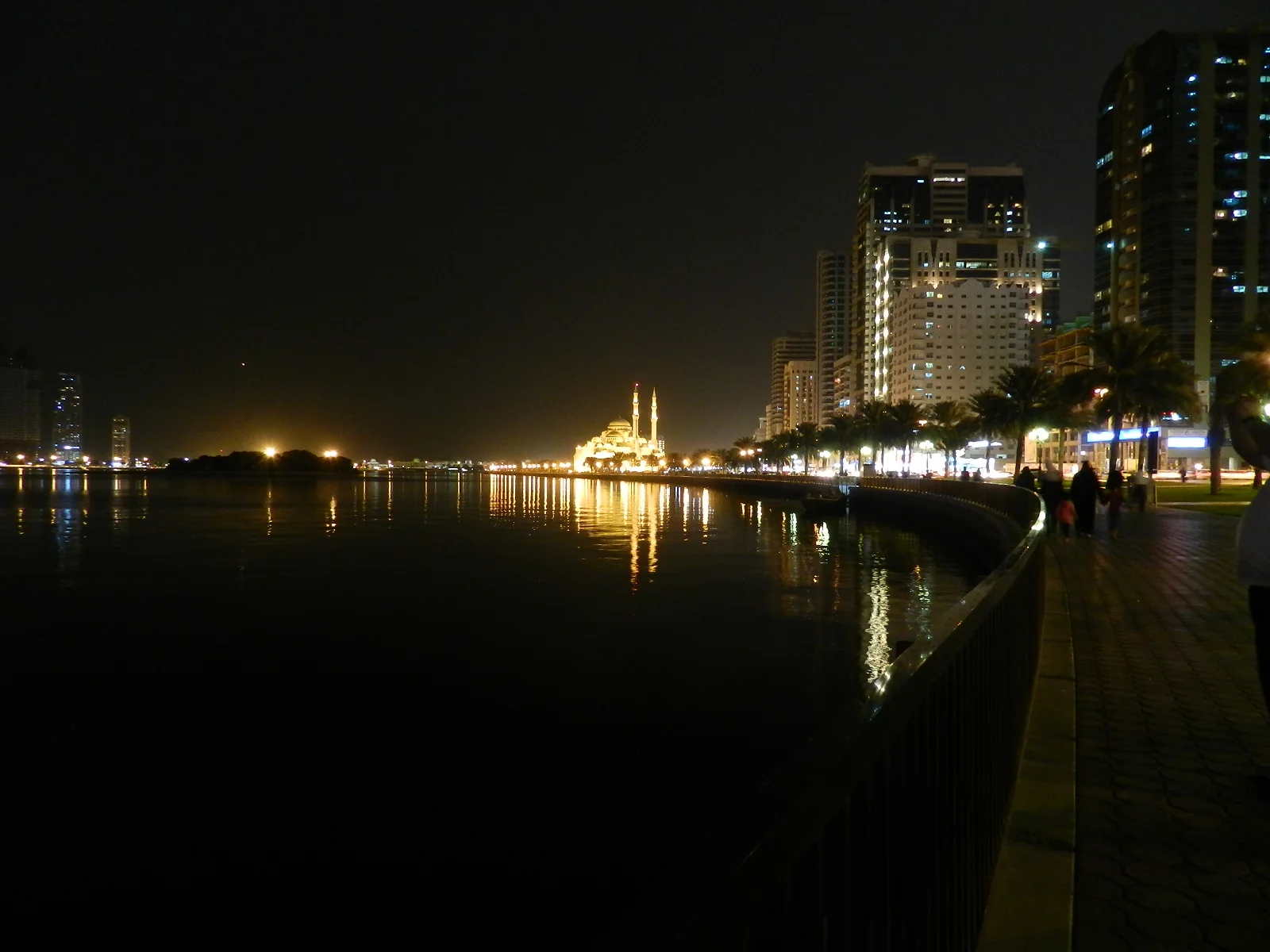
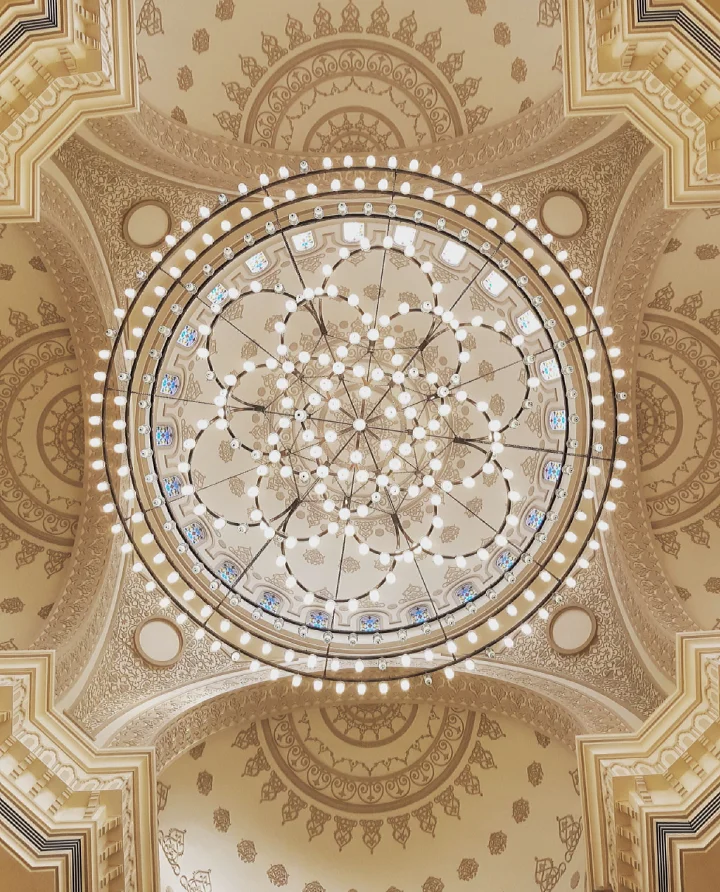
Al Noor Mosque in Pictures
When to Visit
Public tours for non-Muslim visitors run on Mondays at 10:00 AM only, and booking ahead is essential. Each session lasts about 1.5 hours — a walk through the prayer hall, an explanation of wudu (ritual ablution) and the five daily prayers, and an unhurried Q&A — and ends with Arabic coffee and dates. Outside that single weekly slot the mosque functions as an active place of worship and closes to visitors around the five daily prayer times.
Private tours for schools and larger groups can be arranged by request. Book online at alnoormosque.ae 2-3 weeks ahead, as the Monday tour fills quickly, and aim to arrive 15 minutes early for registration and — for women — to be fitted with an abaya and headscarf. From November to February the walk along the Corniche beforehand is a genuine pleasure; by midsummer the 10 AM start already lands in fierce heat, so the air-conditioned interior comes as a relief. During Ramadan the public-tour schedule shifts and can pause for part of the month, so confirm the current timetable when you book rather than assuming the usual Monday slot.
Admission and Costs
The tour is free, and online reservation costs nothing — donations of AED 20-50 (~$5-14) are welcomed but never required. Modest dress is mandatory, and abayas and headscarves are lent at no charge to women who need them. The closing round of Arabic coffee (gahwa) and dates is included as a gesture of Emirati hospitality.
There is no paid ticket of any kind. If you would rather have a dedicated interpreter for a deeper cultural and architectural briefing, independent Sharjah guides typically charge AED 300-500 (~$80-135) for a half-day that folds the mosque into a wider itinerary — a common pairing with the Sharjah Museums quarter or nearby Al Noor Island.
The Case for a Guide
The free Monday tour is already guide-led, but on the other six days of the week — and for travellers who want more than the standard script — a private guide unlocks the mosque and its setting in ways signage cannot.
- Reading the architecture: A guide traces the Ottoman lineage from Istanbul's Blue Mosque, explaining why the domes cascade the way they do, how the mihrab orients the hall toward Mecca, and what the interlaced thuluth and naskh calligraphy actually says.
- Interfaith fluency: The mosque's whole purpose is dialogue, and a guide fields the harder questions — on women in Islam, on daily prayer, on Sharjah's conservatism — with context a busy 90-minute group tour cannot always reach.
- Timing the light: Locals know the mosque photographs best in the golden hour, when the pale stone warms and the lagoon mirrors the domes, and exactly where to stand on the Al Noor Island footbridge for the classic reflection shot.
- Sequencing the day: A guide can thread the Monday mosque slot together with the Sharjah Museums circuit and the Al Majaz Waterfront into one walkable loop around Khalid Lagoon.
- Cultural framing: Understanding why a conservative, alcohol-free emirate chose to open a mosque to non-believers — and how that fits Sharjah's UNESCO cultural-capital identity — turns a quick photo stop into the story of the city.
Tips for Visitors
Book 2-3 weeks in advance at alnoormosque.ae, as the Monday slot is popular and fills fast. Dress in loose clothing with long sleeves and long trousers or a long skirt — abayas and scarves are provided free for women at the entrance, and men should avoid shorts. Remove your shoes before entering the prayer hall and wear socks or go barefoot on the carpeted interior.
Arrive 15 minutes early to allow time for registration and dress preparation. Questions about Islamic faith and Emirati culture are actively encouraged — the guides are trained in interfaith dialogue and welcome curiosity. Photography is limited, so ask permission before taking photos, especially of people. Because Sharjah enforces stricter modesty rules and a full alcohol ban than neighbouring Dubai, plan your wider day accordingly. Sharjah has no metro, so a taxi or a Careem/Uber ride-hail is the simplest way in; driving from Dubai takes roughly 30 minutes off-peak, but the Al Ittihad Road corridor between the two emirates clogs badly at morning and evening rush hour, which can collide with the 10 AM tour start. Make the most of the location by crossing the footbridge to Al Noor Island and continuing to the Al Majaz Waterfront and the Sharjah Museums for a full day around Khalid Lagoon.
Frequently Asked Questions
Which months are most comfortable for visiting Al Noor Mosque?
November through February offers the most pleasant visiting conditions, when Sharjah's temperatures drop to a comfortable 18-25°C and the walk along the Corniche to the mosque is enjoyable. The Monday morning public tours run year-round, but summer visits from June through August mean arriving in already oppressive 40°C+ heat for the 10 AM start time, and the surrounding waterfront area loses much of its appeal under the blazing Gulf sun.
When exactly can non-Muslims visit Al Noor Mosque?
Guided tours for non-Muslim visitors are held on Monday mornings at 10:00 AM only, and you must reserve a place in advance at alnoormosque.ae. The visit lasts about 1.5 hours and covers a walk through the prayer hall, an explanation of Islamic prayer, and an open Q&A, closing with Arabic coffee and dates. At the five daily prayer times the mosque closes to visitors, and private tours for schools or groups can be arranged separately by request.
Does Al Noor Mosque charge an admission fee?
No — both the tour and the online booking are free, and there is no ticket of any kind. A donation of AED 20-50 (about $5-14) is welcomed but entirely optional. Modest dress is required, and abayas and headscarves are lent free of charge to women who need them, so there is no rental cost either. The Arabic coffee and dates served at the end are included as part of Emirati hospitality.
What should first-time visitors know before a tour?
Book two to three weeks ahead, as the single weekly Monday tour fills quickly. Wear loose clothing that covers arms and legs; abayas and scarves are provided for women at the door, and men should wear long trousers rather than shorts. You will remove your shoes before entering the carpeted prayer hall, so wear socks if you prefer not to go barefoot. Arrive about 15 minutes early for registration, and come ready with questions — the Emirati guides genuinely welcome them.
How do I get to Al Noor Mosque and what is nearby?
The mosque sits on the Buhaira Corniche beside Khalid Lagoon in central Sharjah. There is no Sharjah metro, so a taxi or Careem/Uber ride-hail is the easiest way in — roughly 20-30 minutes from central Dubai outside rush hour, with parking along the corniche. A footbridge beside the mosque leads straight onto Al Noor Island, while the Al Majaz Waterfront, its Sharjah Fountain water-and-light show, and the Sharjah Museums quarter are within a short walk, so it is easy to build a half-day around the lagoon.