

Toledo timeline
-
Visigothic councils shape Toledo
The Third Council made Toledo central to Visigothic church and royal politics.
-
Islamic rule begins
The conquest added Arabic, Jewish, and Mozarabic layers to Toledo's urban culture.
-
Castilian conquest
Alfonso VI took the city, turning Toledo into a major Christian, Jewish, and Muslim intellectual crossroads.
-
Court moves to Madrid
The royal court's departure froze much of Toledo's old capital fabric in place.
-
Historic city listed
UNESCO recognized Toledo's dense layering of faiths, walls, bridges, and medieval streets.
Cited city facts
Key facts for visiting Toledo
Toledo served as Spain's imperial capital until Philip II moved the royal court to Madrid in 1561
For centuries before the move, Toledo was the political and spiritual heart of the Iberian Peninsula — from the Visigothic royal seat to the councils that shaped Catholic doctrine
El Greco lived and worked in Toledo from 1577 until his death in 1614
The Cretan-born painter spent nearly four decades — his entire Spanish career — in the city, and his adopted name, meaning 'The Greek,' became inseparable from Toledo's artistic identity
UNESCO inscribed the entire historic city of Toledo as a World Heritage Site in 1986
The listing recognizes an exceptional concentration of monuments from Roman, Visigothic, Arab, Jewish, and Christian civilizations packed within the medieval walls above the Tagus
Toledo has been renowned for its steel and sword-making since antiquity
Roman armies prized blades forged beside the Tagus for their temper, and a handful of workshops still produce damascened steel using traditional gold-and-black inlay techniques
Toledo's School of Translators carried Arabic and Hebrew learning into medieval Europe
From the 12th and 13th centuries, Christian, Muslim, and Jewish scholars worked side by side here, rendering Greek philosophy and Arabic science into Latin and Castilian for the rest of the continent
Source: tour-guide.com — Free to cite with attribution
Things to see
What are the top attractions in Toledo?
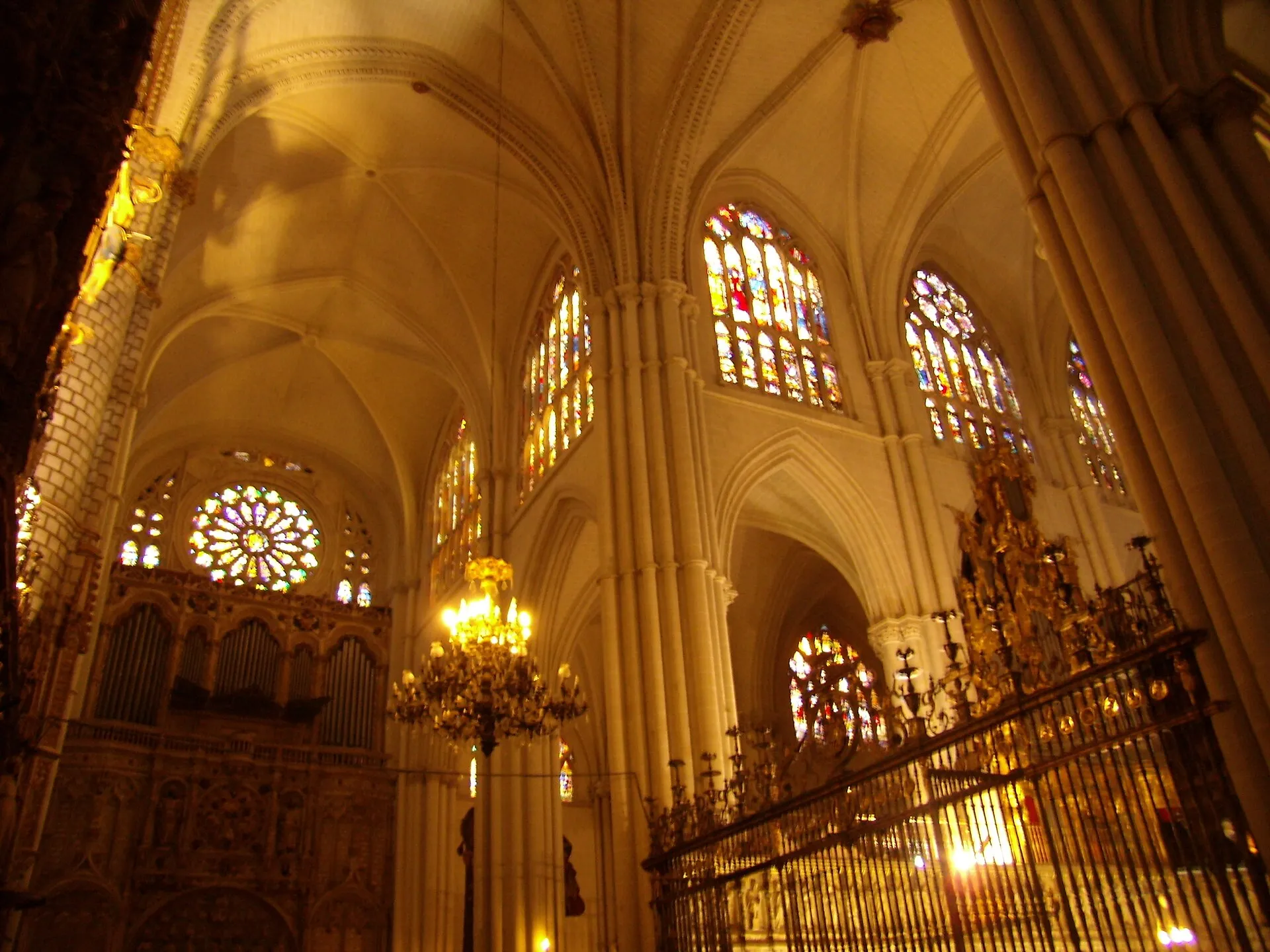
- Toledo Cathedral interior — The Transparente, a Baroque altarpiece pierced by a hidden skylight, is unlike anything else in Spain, and the sacristy hangs works by El Greco, Goya, Titian, and Caravaggio
- Alcázar rooftop — Climb the hilltop fortress, now Spain's Army Museum, for sweeping views across the Tagus valley and the Castilian plateau
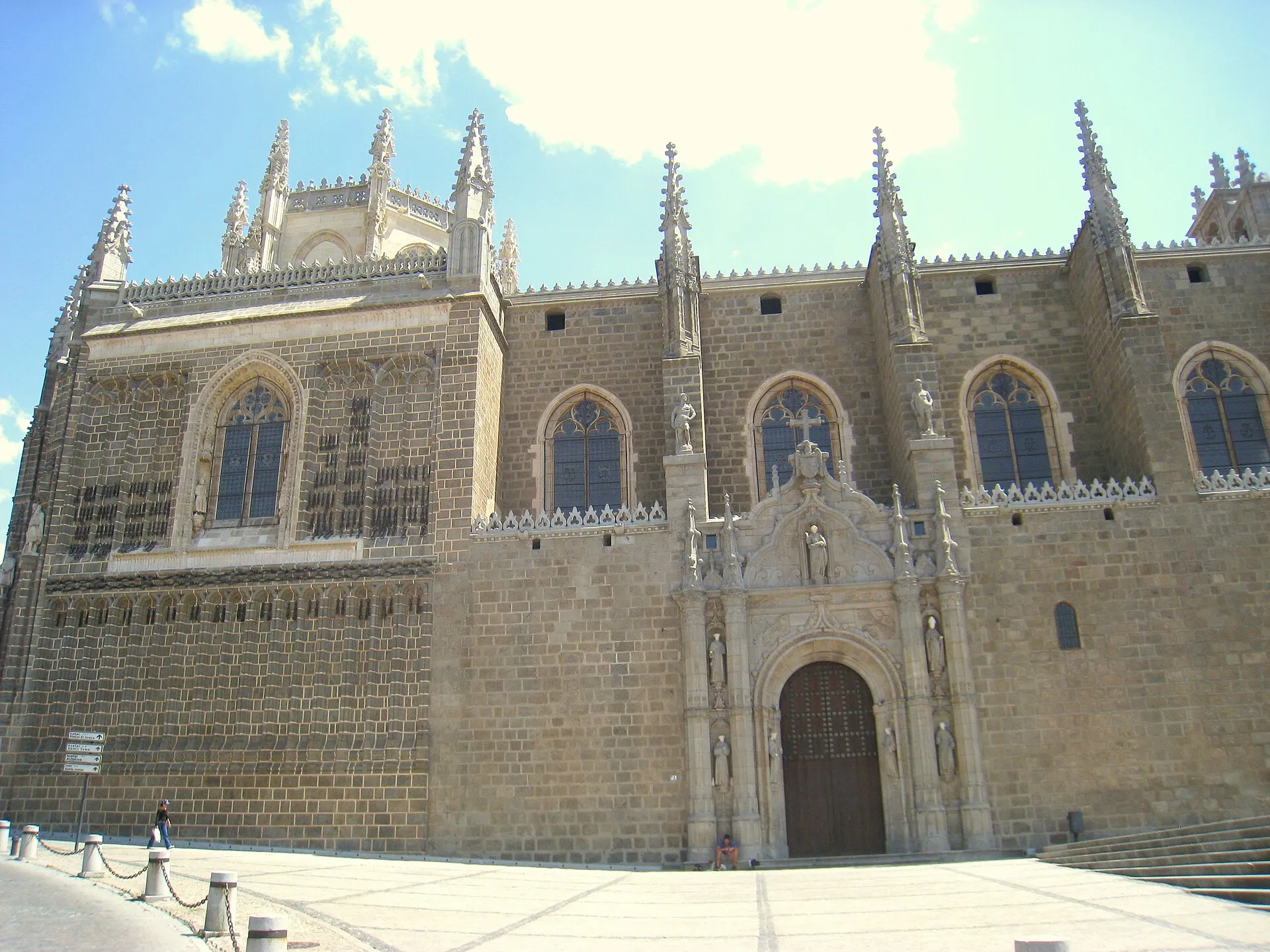
- San Juan de los Reyes cloisters — Iron chains of Christian captives freed from Moorish prisons hang across the facade of the Catholic Monarchs' Isabelline-Gothic monastery
- Santa María la Blanca — A 12th-century synagogue of white horseshoe arches, raised by Muslim craftsmen for a Jewish congregation and later a church: the Three Cultures in a single room
- El Greco Museum — A recreated period house in the Jewish Quarter displaying the master's View and Plan of Toledo alongside a set of apostle portraits
- Damascene and sword workshops — Toledo steel has been prized since Roman times; artisans still inlay gold into blackened steel by hand
- Mirador del Valle — The classic viewpoint across the gorge frames Toledo's full silhouette, best at sunset or when the monuments are floodlit
🏰 Alcázar of Toledo
From Roman stronghold to Army Museum | History, siege stories & panoramic views

🛐 San Juan de los Reyes
The Catholic Monarchs' monastery | Isabelline Gothic splendour & storied cloisters
🛐 Toledo Cathedral
Discover Spain's supreme Gothic cathedral | Art, history & guided tour options
Guide planning
How much does a tour guide cost in Toledo?
Toledo packs more layered history into a few hundred metres than almost anywhere in Spain, and much of it is invisible without context — a blank stone wall may hide a synagogue, and a church doorway may once have framed a mosque. A licensed local guide is what turns that density into a story you can follow.
What a good guide unlocks here:
- The Three Cultures, decoded — why a synagogue holds Christian tombs, how Mudéjar craftsmen worked for all three faiths, and what the School of Translators meant for the science of medieval Europe
- El Greco in context — tracing the painter's Toledo from the Cathedral sacristy to the Burial of the Count of Orgaz in the church of Santo Tomé
- Efficient routing — Toledo's lanes are a deliberate maze on a steep hill; a guide sequences the Cathedral, San Juan de los Reyes, and the Alcázar so you climb once rather than three times
What it costs: Shared small-group walking tours of the old town run about €15–25 ($16–27) per person for two to three hours. A private half-day guide for up to six people is roughly €130–200 ($140–215), while a full-day private tour that adds the museums and a workshop visit runs €250–400 ($270–430).
Specialist art-history or Jewish-heritage guides sit at the upper end of those ranges. Every licensed guide in Castilla-La Mancha carries the official Guía Oficial de Turismo accreditation — ask for it, and confirm whether monument tickets are included or bought separately.
Season planner
When is the best time to visit Toledo?
- May and October are the sweet spot — both score a top 5/5 in our month ratings, with mild days for walking Toledo's steep hills, clear light over the Tagus gorge, and crowds that stay manageable
- Spring (March–June) brings wildflowers along the gorge and the city's biggest festival, Corpus Christi, when awnings and fragrant herbs line a processional route walked for more than 600 years
- Autumn (September–November) delivers the warm golden light photographers prize and noticeably thinner crowds than spring
- Early mornings belong to you — the Cathedral opens at 10 AM, so arrive before the Madrid coach groups flood in around midday
- Avoid peak July–August, when temperatures top 38°C on shadeless stone streets, and weekend middays year-round when day-trippers peak
On the ground
How do you get around Toledo?
- Day trip from Madrid — High-speed AVE trains reach Toledo in about 33 minutes from Atocha station, arriving at a 1920 Neo-Mudéjar terminus that is a sight in itself; guides can meet you on the platform, and buses from Plaza Elíptica take around an hour for less
- Climb once, with help — Toledo is built on a steep granite hill, but a chain of outdoor escalators (the remonte peatonal) lifts you from the Safont car park near the Bisagra gate up into the old town; wear sturdy shoes for the cobbles regardless
- Leave the car below — the historic centre is largely pedestrian, so park at the Miradero or Safont garages and walk or ride the escalators in rather than circling the one-way lanes
- Pulsera Turística — this tourist bracelet covers seven monuments, including Santa María la Blanca and San Juan de los Reyes, for about €12 ($13), saving both money and ticket queues
- Stay overnight — once the last coaches leave for Madrid, the lanes empty and the floodlit monuments glow against the sky; an evening and an early morning are Toledo at its finest
- Marzipan tradition — Toledo's convents have baked mazapán since the Middle Ages, and the Santo Tomé confectionery is the most famous place to buy it
Frequently Asked Questions
What is the best time to visit Toledo?
May and October are ideal — both score 5/5 in our month ratings, with mild days for climbing the hills and clear light over the Tagus gorge. Spring brings wildflowers and the Corpus Christi festival (late May or June), while autumn offers warm golden light and thinner crowds. Avoid July and August, when temperatures top 38°C on shadeless stone streets.
How much does a private tour guide cost in Toledo?
Shared small-group walking tours of the old town run about €15–25 ($16–27) per person for two to three hours. A private half-day guide for up to six people is roughly €130–200 ($140–215), and a full-day private tour adding museums and a workshop visit runs €250–400 ($270–430). Look for the official Guía Oficial de Turismo accreditation.
How do you get around Toledo?
High-speed AVE trains reach Toledo in about 33 minutes from Madrid's Atocha station; buses from Plaza Elíptica take around an hour for less. The historic centre is steep and largely pedestrian, so park below at the Safont or Miradero garages and ride the outdoor escalators up into the old town. Wear sturdy shoes for the cobbles.
Why is Toledo called the City of Three Cultures?
For centuries Christians, Muslims and Jews lived, built and studied side by side in Toledo. Their legacy survives in one walkable labyrinth — the Cathedral, former synagogues such as Santa María la Blanca, and the Mudéjar brickwork that laces nearly every quarter — and in the School of Translators, where scholars of all three faiths rendered Arabic and Hebrew learning into Latin.
Is Toledo better as a day trip or an overnight stay?
Toledo works beautifully as a day trip from Madrid, just 70 kilometres south, but it rewards an overnight stay even more. Once the last coaches leave in the late afternoon, the lanes empty and the floodlit Cathedral and Alcázar glow above the gorge — the quietest and most atmospheric hours to walk the medieval streets.