
Country guide
What makes Jordan a must-visit destination?
Few countries fold as many civilisations into as small a space as Jordan. Long before Petra, Neolithic farmers on the edge of modern Amman modelled the ‘Ain Ghazal statues — lime-plaster figures made around 7000 BCE and among the oldest large-scale depictions of the human form found anywhere on Earth. Iron Age kingdoms of Ammon, Moab, and Edom rose along the highlands; from the fourth century BCE the Nabataeans, Arab caravan traders, carved their capital at Petra and engineered the dams, channels, and cisterns that let a desert city thrive on the incense trade. Rome absorbed the region as the province of Arabia in 106 CE, stitching the Decapolis cities — Gerasa (today's Jerash), Philadelphia (Amman), Gadara, and Pella — into its imperial road network.
The story never breaks. Byzantine Christians paved churches with the mosaics still studied at Madaba; the Umayyad caliphs raised the palace that crowns the Amman Citadel and frescoed desert lodges such as Quseir Amra; and Crusaders, Ayyubids, Mamluks, and Ottomans each left a mark, the last of them threading the Hejaz Railway through the country on the eve of the Great Arab Revolt of 1916. Modern Jordan took shape as the Emirate of Transjordan in 1921 and won full independence in 1946, and today the Hashemite monarchy gives Amman and its institutions the political frame a visitor sees.
What binds these layers is a living culture of hospitality. Karam — the Bedouin duty to honour the guest — still governs everything from a roadside glass of cardamom coffee to a communal platter of mansaf, the lamb-and-jameed dish UNESCO recognised in 2022 as a pillar of Jordanian identity. Arabic is the official language, but English is widely spoken in tourist areas and most licensed guides also work in French, German, or Spanish. A good guide turns a checklist of ruins into a coherent story — explaining the hydraulic engineering that made Petra possible, decoding the Byzantine mosaics of Madaba, or brewing tea over an open fire with a Bedouin family in Wadi Rum.
- Language
- Arabic Widely spoken across Jordan
- Currency
- Jordanian dinar (JD) Legal tender across Jordan
- Time zone
- UTC+3 Local time in Jordan
- Power plugs
- Types C, D, F, G · 230V Sockets used across Jordan
- Getting around
- Rental car & taxis Getting between Jordan's cities
- Best months
- Mar, Apr, May, Jun, Sep, Oct, Nov Averaged across Jordan's city ratings
Jordan timeline
- c. 7000 BCE
Neolithic ‘Ain Ghazal
Farmers near modern Amman modelled lime-plaster statues among the oldest human figures known.
- c. 300 BCE
Nabataean Petra flourishes
Petra became a caravan capital and the heritage anchor for many Jordan itineraries.
-
Roman Arabia formed
Annexation brought roads, forts, and provincial cities into the Roman imperial network.
-
Byzantine mosaic age
Christian communities paved churches at Madaba and beyond with the mosaics still studied today.
-
Petra rediscovered
Swiss explorer Johann Ludwig Burckhardt revealed the lost Nabataean city to Europe.
-
Great Arab Revolt
The Hejaz Railway and Wadi Rum became theatres of the revolt against Ottoman rule.
-
Emirate of Transjordan
The modern political framework began under Abdullah I after World War I.
-
Independence
Jordan became independent, giving Amman and royal institutions their modern context.
-
Petra listed by UNESCO
World Heritage recognition confirmed Petra as a global cultural landmark.
-
Peace treaty signed
The treaty with Israel changed border-region travel and modern diplomatic history.
-
Wadi Rum listed by UNESCO
The desert's cultural and natural values earned World Heritage recognition.
Local context
Culture and travel signals
Petra's rock-cut city was the Nabataean capital for over 400 years
At its height around the 1st century CE, the Nabataean trading empire controlled the frankincense and spice routes linking Arabia, Egypt, and the Mediterranean, accumulating the wealth that funded Petra's extraordinary carved facades, temples, and 800-tomb necropolis
The Dead Sea lies 430 metres below sea level, the lowest point on Earth's surface
With salinity ten times that of the ocean, the Dead Sea's waters are so dense that swimmers float effortlessly; the mineral-rich mud has attracted visitors seeking therapeutic benefits since the time of Cleopatra and Herod the Great
Jordan has welcomed over 1.5 million refugees, one of the highest per-capita rates in the world
Hosting Syrian, Palestinian, and Iraqi refugee communities has shaped Jordan's modern urban fabric, cuisine, and cultural life — a dimension that thoughtful guided tours of Amman's Zarqa and Balqa governorates can illuminate with sensitivity and context
Wadi Rum's sandstone formations are over 500 million years old
The carved valleys, natural arches, and towering inselbergs of this UNESCO-listed desert have appeared in films from Lawrence of Arabia to The Martian, standing in convincingly for alien landscapes precisely because they look unlike anywhere else on Earth
Jordan holds six UNESCO World Heritage Sites spanning four civilisations
From Petra and the fresco-lined Umayyad bath-house of Quseir Amra to the Byzantine mosaic town of Um er-Rasas, the wetland-guarded Baptism Site of Bethany-beyond-the-Jordan, the desert of Wadi Rum, and the Ottoman merchant town of As-Salt, the roster reads like a syllabus of the Levant — letting a single trip move across Nabataean, Roman, Byzantine, and early Islamic worlds
Mansaf, Jordan's national dish, joined UNESCO's Intangible Cultural Heritage list in 2022
UNESCO recognised not just the recipe — lamb slow-cooked in fermented jameed yoghurt over rice and flatbread — but the shared serving ritual itself, eaten by hand from one platter, as a living expression of Jordanian hospitality that a food-focused guided walk in Amman can unpack first-hand
The ‘Ain Ghazal statues near Amman were modelled around 7000 BCE
Shaped in lime plaster over reed armatures by a Neolithic farming community on the edge of modern Amman, these haunting figures rank among the oldest large-scale depictions of the human form ever found — pushing Jordan's record of settled culture back more than nine thousand years, long before Petra or Rome
Source: tour-guide.com — Free to cite with attribution
Season planner
A year in Jordan
Use this best time to visit snapshot as a country-wide average, then check the city guides for local timing.
Mar-May
Spring
Spring is Jordan's strongest guide window — Mar-May (5/5) across its cities.
Jun-Aug
Summer
Summer stays workable in Jordan at Jun-Aug (3.3/5), so lean on city-by-city timing.
Sep-Nov
Autumn
Autumn is Jordan's strongest guide window — Sep-Nov (4.7/5) across its cities.
Dec-Feb
Winter
Winter stays workable in Jordan at Dec-Feb (3/5), so lean on city-by-city timing.
Where should you go in Jordan?
The Capital
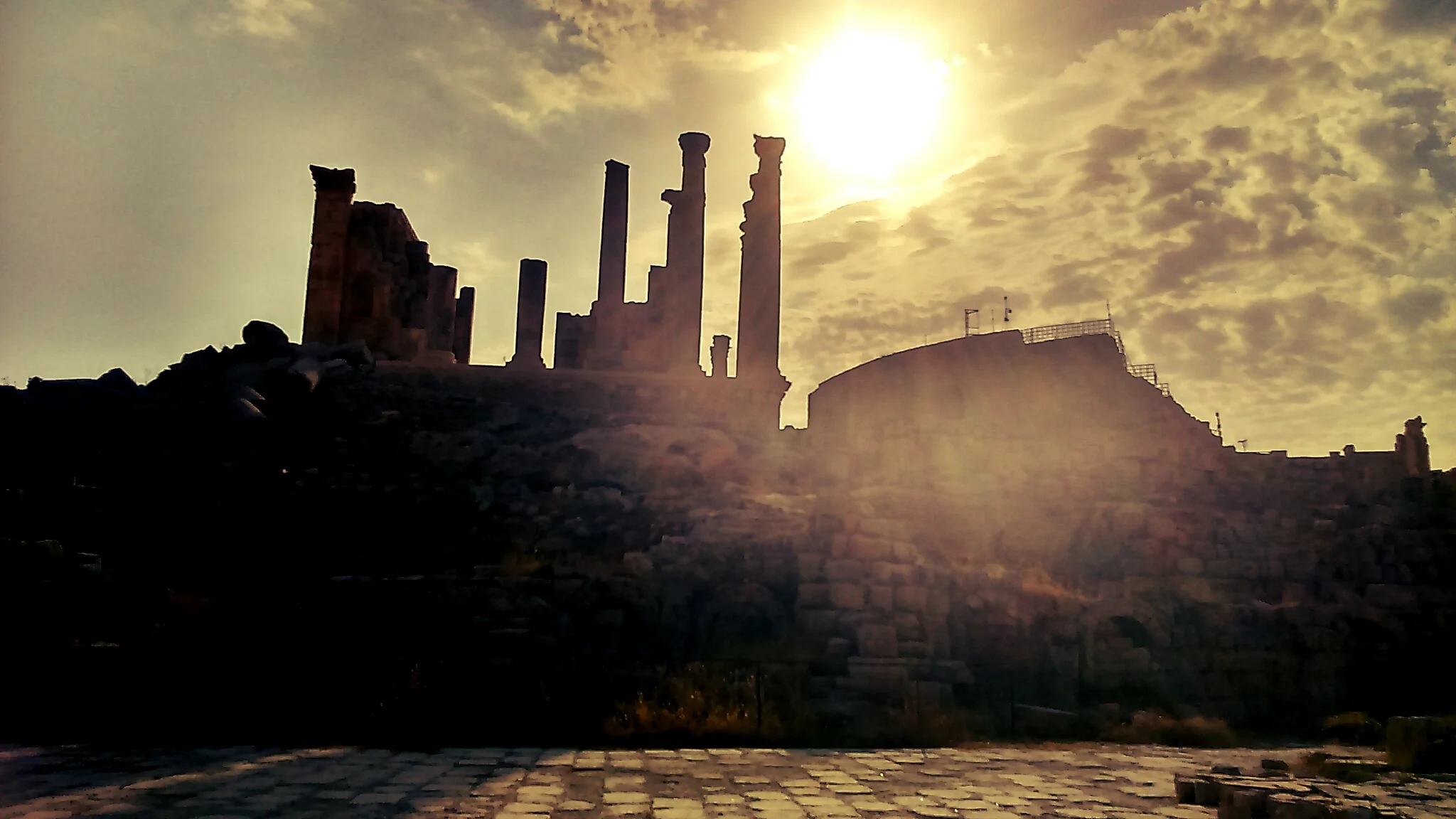
Amman climbs across seven hills in its ancient core and nineteen today, its uniform white-and-cream stone lending the city a luminous sprawl unlike any other Arab capital. The Amman Citadel compresses Ammonite, Roman, Byzantine, and Umayyad layers onto a single plateau — the Temple of Hercules and a domed Umayyad palace share the hilltop — while the Roman Theatre below still seats audiences of six thousand in its 2nd-century cavea. In the valley between them, Al-Balad, the historic downtown, is where locals buy spices, gold, and knafeh from family shops unchanged in decades. An easy day trip north reaches Jerash, whose colonnaded main street, oval piazza, and twin theatres make it one of the best-preserved Roman provincial cities anywhere.
Petra & the South
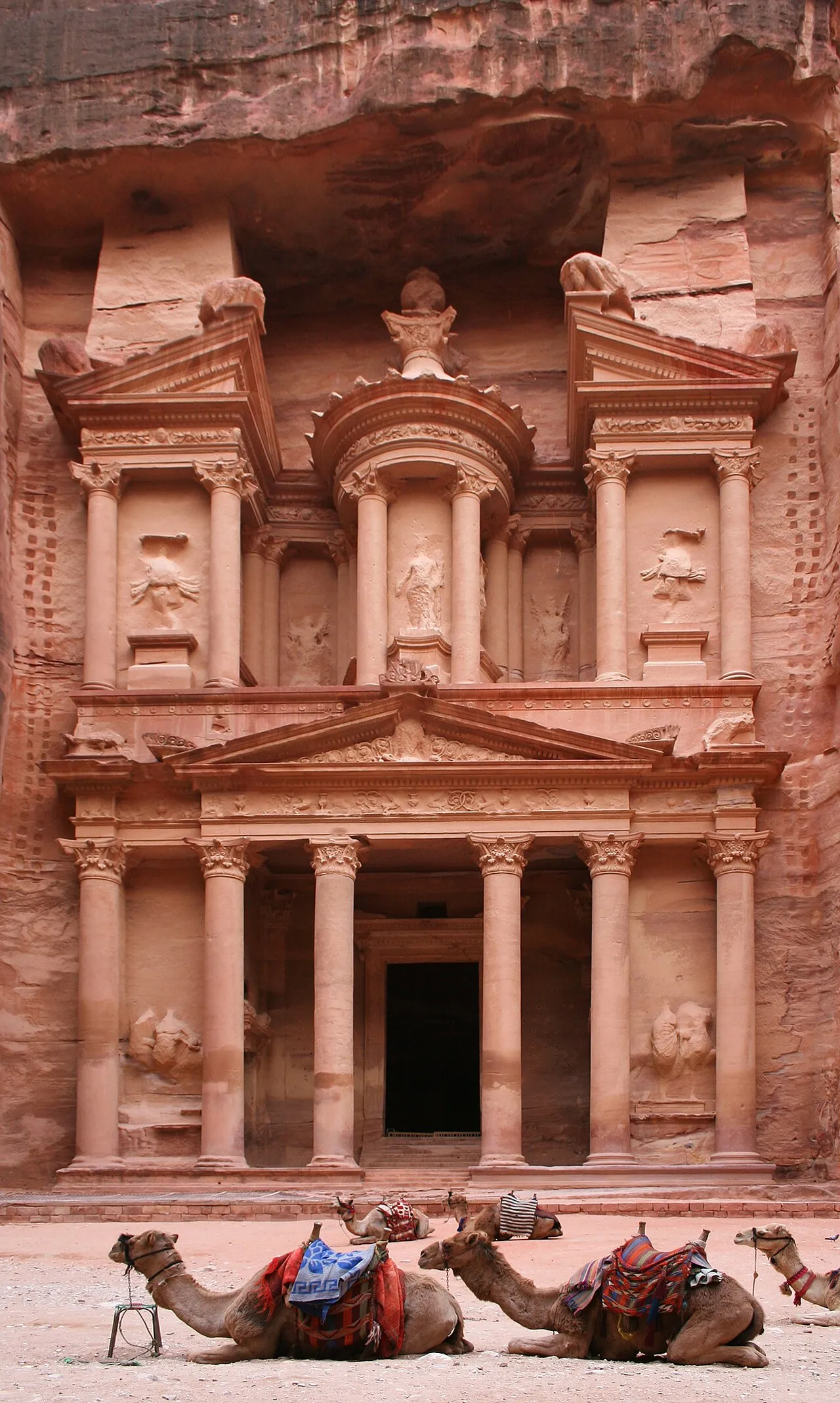
The Nabataean capital of Petra deserves at least two full days for its 800 carved tombs, the mile-long Siq, the colonnaded Cardo, the dramatic High Place of Sacrifice, and the roughly 800-step climb to the remote Ad Deir Monastery. Two hours south, Wadi Rum — the desert of Lawrence of Arabia and a dozen science-fiction films — offers 4x4 safaris, camel treks, natural rock arches, and nights under some of the clearest skies on Earth. At the country's southern tip, the Red Sea resort of Aqaba adds coral reefs and warm-water diving.
The Dead Sea & Rift Valley
West of the capital the land plunges to the Dead Sea, the lowest point on Earth's surface, where mineral-dense water makes swimmers float and the salt-white shore draws spa visitors. The modern Dead Sea Highway and the older, slower King's Highway connect the mosaic town of Madaba, the pilgrimage summit of Mount Nebo where Moses is said to have viewed the Promised Land, the crusader castle of Kerak, and the plunging gorges of the Dana Biosphere Reserve.
Must-see attractions across Jordan
From coast to capital, here are the places worth building a Jordan itinerary around — and the kind of detail a guide fills in on site.
What do visitors need to know about Jordan?
Finding a Guide
- Jordan Tourism Board (JTB) licenses official guides — look for the badge and ask for the guide's registration number at major sites, particularly Petra where unofficial guides are common
- Petra Visitors Center at the entrance issues official guide allocations; pre-booking through the JTB website is recommended for high season
- Wadi Rum Protected Area requires all visitors to use a licensed Bedouin guide or driver for desert excursions — permits and guides are arranged at the visitor centre at the valley entrance
- GetYourGuide and Context Travel offer vetted, specialist guides for archaeology, food, and culture walks in Amman and Jerash
Typical Costs
| Tour Type | Price Range |
|---|---|
| Amman city tour (half-day) | $80–150 private guide |
| Petra official guide (half-day) | $30–60 per person |
| Wadi Rum jeep tour (half-day) | $50–120 per person |
| Wadi Rum overnight camp | $80–150 per person (with dinner) |
| Jordan Pass (visa + 40+ sites) | $70–80 — highly recommended |
Must-See Experiences
- Petra's Siq and Treasury — a kilometre of canyon corridor opens onto the iconic rose-red facade
- Amman Citadel — Umayyad palace and Temple of Hercules above the city
- Jerash — colonnaded Roman streets in their most complete surviving form
- Wadi Rum sunset — golden light on 500-million-year-old sandstone towers
- Dead Sea float — effortless buoyancy in the world's saltiest body of water
- Al-Balad food tour — mansaf, knafeh, and fresh-squeezed jallab from family stalls
- Madaba mosaics — the oldest cartographic depiction of the Holy Land, still under a church floor
Tips for Visitors
- Jordan Pass — purchase online before arrival; includes the visa fee (for most nationalities) plus Petra entry on multiple days
- Dress modestly — cover shoulders and knees in mosques, markets, and traditional villages; swimwear is fine at the Dead Sea resorts
- Currency — Jordanian Dinar (JOD); 1 JOD ≈ $1.41 USD. ATMs are widely available in Amman and Petra
- Language — Arabic is official; English is widely used in tourist areas; many guides speak French, German, and Spanish
- Water — tap water is technically safe but bottled water is universally available and cheap
- Petra entry — allocate at least 6–8 hours; wear solid walking shoes and carry 2+ litres of water per person
- Wadi Rum — book overnight camps by late afternoon to avoid the walk back in darkness
- Best season — March–May for wildflowers and mild temperatures; September–November for post-summer calm
- Tipping — customary for guides ($10–20 per day), drivers ($5–10), and hotel staff
Culture & Etiquette
Jordan is a warm, Muslim-majority society where a little cultural awareness goes a long way:
- Greetings — as-salaamu alaykum ("peace be upon you") is the standard opener; a hand placed over the heart is a courteous alternative when a handshake is not appropriate, especially between men and women
- The week — Friday is the Muslim holy day and the weekend runs Friday–Saturday; many shops and offices close on Friday morning, and Al-Balad is at its quietest then
- Ramadan — during the holy month, avoid eating, drinking, or smoking in public during daylight; hotel restaurants stay open, and the evening iftar is a wonderful moment to share in local hospitality
- Dining — pass and eat food with the right hand, and expect repeated offers of coffee or tea; a polite decline is understood, but accepting is the warmer choice
- Photography — ask before photographing people, particularly women and at religious sites; the Bedouin guides of Wadi Rum are usually delighted to be asked
Frequently Asked Questions
What is the best time to visit Jordan?
March through May and September through November are the most comfortable months for exploring Petra's canyon trails and Amman's hilltop ruins, with daytime temperatures of 15 to 25 degrees Celsius and long evenings suitable for outdoor dining. Wadi Rum becomes magical in spring when wildflowers carpet the desert floor and the light turns golden for hour after hour. Summer months from June through August push temperatures above 35 degrees in Amman and Petra, and Wadi Rum can exceed 40 degrees at midday. December through February brings occasional snow to Petra and Ajloun, creating a dramatic but quieter experience, and the Dead Sea coast stays mild year-round thanks to its position 430 metres below sea level.
How much does a tour guide cost in Jordan?
Group walking tours of Petra cost $30–60 per person for a half-day with an official guide. Private licensed guides in Amman charge $80–150 for a half-day city tour covering sites like the Amman Citadel, Roman Theatre, and the historic streets of Al-Balad. Wadi Rum jeep tours with a Bedouin driver-guide run $50–120 per person for a half-day, and overnight desert camping with guiding typically costs $80–150 per person including dinner. The Jordan Pass ($70–80) combines a visa fee with entry to over 40 attractions including Petra and is highly recommended. Day trips to Jerash Ancient City are typically included in half-day tour packages from the capital.
Is Jordan safe for tourists?
Jordan is consistently rated one of the safest countries in the Middle East for international visitors. The government places a high priority on tourism security, and foreign visitors are welcomed warmly throughout the country. Standard urban precautions apply in Amman's downtown areas, including the lively Al-Balad quarter, and travellers should stay informed about border-region advisories. Jordanians are known for their karam (hospitality) — the tradition of welcoming guests is deeply embedded in Bedouin culture and evident from the capital's hillside cafés to the desert camps of Wadi Rum.
How do you travel between Jordan's main sights?
Jordan is compact enough to cross in a single long day's drive, and most itineraries radiate out from Amman. The fast Desert Highway (Route 15) links the capital to Petra in about three hours — roughly 235 kilometres — and the state-owned JETT coach company runs daily air-conditioned services between Amman and Wadi Musa, the town at Petra's gate. For a slower, far more rewarding route, the King's Highway (Route 35) threads past the mosaics of Madaba, the viewpoint at Mount Nebo, the crusader castle of Kerak, and the Dana Biosphere Reserve; allow a full day with stops. Wadi Rum's visitor centre sits about two hours south of Petra, just off the Desert Highway, while the Dead Sea resorts lie only an hour west of Amman via the Dead Sea Highway. Renting a car gives the most freedom, but hiring a licensed driver-guide removes the stress of mountain switchbacks and unmarked desert turn-offs.
What is Jordanian food and hospitality like?
Eating in Jordan is a social ritual built on karam — the Bedouin code of hospitality that treats every guest as an honour. The national dish is mansaf: tender lamb simmered in jameed (a tangy fermented dried yoghurt), heaped over rice and thin shrak bread and traditionally eaten by hand from a shared platter — a communal rite that UNESCO added to its list of Intangible Cultural Heritage in 2022. Meals usually open with mezze — hummus, smoky mutabbal, tabbouleh, and warm flatbread — and finish with knafeh, the cheese-and-syrup pastry best sampled from the family stalls of Al-Balad in Amman. Expect to be offered cardamom-scented Arabic coffee or sweet mint tea at almost every stop; accepting is part of the exchange.
Which civilisations left their mark on Jordan?
Almost every layer of Near Eastern history sits within a few hours' drive. Neolithic villagers modelled the ‘Ain Ghazal statues near Amman roughly nine thousand years ago; the Nabataeans carved Petra from the fourth century BCE; and Rome folded the region into the province of Arabia, leaving the colonnaded streets of Jerash and the theatres of Philadelphia — modern Amman. Byzantine Christians laid the mosaic floors of Madaba, the Umayyads raised the palace that still crowns the Amman Citadel and frescoed desert lodges such as Quseir Amra, and Crusader, Ottoman, and Hashemite chapters followed. A licensed guide is the surest way to read one period against the next rather than seeing each ruin in isolation.