
Planning Your San Francisco Trip: Cable Cars, Fog, and the Bay
A practical San Francisco trip planner covering the best neighbourhoods, how to time a Golden Gate visit, Alcatraz booking logistics.
Read the full guideUpdated · 11 min read
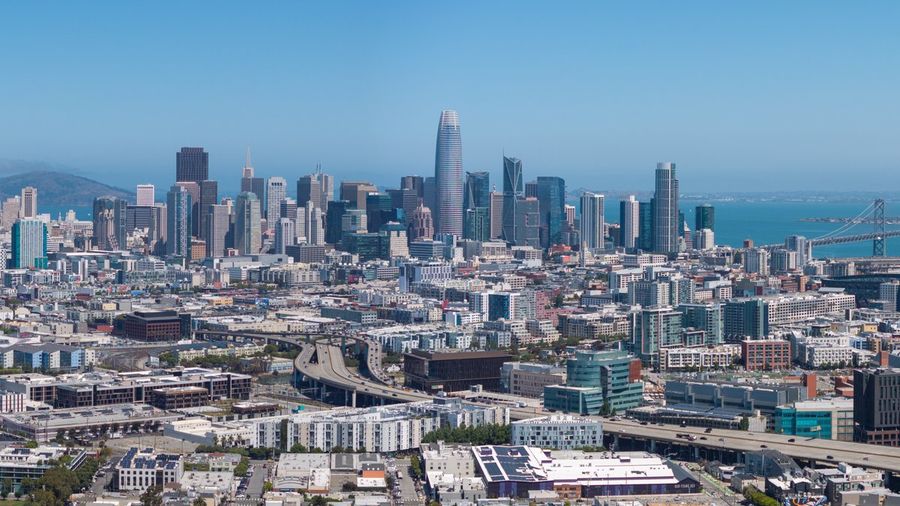
San Francisco packs 49 hilly square miles into a foggy peninsula, so plan around the microclimate: visit in September or October for the clearest skies, book Alcatraz weeks ahead through the official operator, cross the Golden Gate before mid-morning, and pack layers year-round. Base yourself in the Mission or Hayes Valley for walkable neighbourhood character.
San Francisco is geographically unlike any other American city — 49 square miles on a peninsula surrounded on three sides by water, built across hills steep enough to require cable cars that have been running on the same routes since 1873. It is also culturally unlike any other American city, a product of successive waves of migration (Gold Rush prospectors, Chinese railroad workers, Beat poets, Silicon Valley engineers, Central American immigrants) layered over one another in a way that produces something consistently surprising.
When does San Francisco fog roll in, and when is it clearest?
The city's fog, known locally as Karl, rolls in from the Pacific each afternoon from May through August, often clearing inland by early afternoon. The warmest, clearest months are September and October, San Francisco's true summer. In summer, visit the Golden Gate before 11 a.m., since the bridge usually clears by mid-morning even on foggy days.
San Francisco has a microclimate that catches first-time visitors off guard. The city's iconic fog (known locally as Karl) rolls in from the Pacific each afternoon from May through August — by 2 p.m. on a summer day, the Golden Gate Bridge may be completely invisible while inland neighbourhoods in the Mission and the Castro bake in warm sun. This thermal inversion is a function of the Bay geography and is predictable if you understand it.
The warmest, clearest months are typically September and October — the city's equivalent of summer arrives after the tourist season peaks, and the weather during these weeks can be genuinely spectacular. Early spring (March–April) before the fog season is also clear. December through February is cool (8–15°C) and occasionally rainy but has clear days that provide long views across the Bay.
If you are visiting in summer, plan Golden Gate Bridge visits in the morning before 11 a.m. (the bridge clears by mid-morning on most days) and accept that afternoon views from the Marin Headlands across the water may show you a beautiful fog rather than a clear bay.
Where should you stay in San Francisco?
Your neighbourhood meaningfully shapes the trip. Union Square is the central, convenient but generic tourist hub; the Mission trades hotel amenity for Latin American murals and food; Hayes Valley offers walkable, well-priced boutique stays near the Castro and Haight; and North Beach puts you in the historic Italian quarter beside Chinatown and the northern waterfront.
San Francisco's neighbourhoods are distinct enough that where you stay meaningfully affects your experience:
Union Square is the tourist and retail centre — convenient for cable cars, BART connections, and walking access to Chinatown and the Tenderloin. It is also the most generic of the city's districts, with the international hotel and chain restaurant density that implies.
The Mission (Mission Dolores neighbourhood, south of downtown) is the city's Latin American cultural heart — colourful murals covering entire building facades, excellent Mexican and Central American restaurants, and a walkable commercial strip along 24th Street that gives the fullest impression of the city's working-class residential character. Staying here trades hotel amenity for neighbourhood authenticity.
Hayes Valley near City Hall is a compact, walkable neighbourhood with excellent independent restaurants and coffee shops, easy access to the Castro and the Haight-Ashbury, and enough of a residential character to feel real rather than performative. Boutique hotel options here tend to offer better value than Union Square equivalents.
North Beach is the historic Italian neighbourhood adjacent to Chinatown and a short walk from Fisherman's Wharf — useful for its literary history (City Lights Bookstore, the Vesuvio bar where Kerouac drank) and its proximity to the northern waterfront.
How far ahead should you book Alcatraz?
Book Alcatraz before you finalise anything else, since day tours sell out three to four weeks ahead in summer and the atmospheric Night Tour goes even earlier. Tickets are sold only through the official Alcatraz Cruises operator — never third-party resellers. If you arrive without tickets, check weekday morning departures, which are occasionally available day-of.
Alcatraz is a genuine experience — the ferry crossing, the audio tour narrated by former guards and inmates, and the views back toward the city from the island combine into something that most visitors find more affecting than expected. It is also fully booked most days of the week in peak season.
Tickets must be purchased through the Alcatraz Cruises website (the only authorised operator). Day tours sell out three to four weeks in advance in summer; the Night Tour sells out even further in advance and provides a particularly atmospheric experience. If you are planning a summer visit, book before you finalise the rest of your travel. If you arrive without tickets and the main tours are sold out, check for morning departures on weekdays, which are occasionally available day-of.
What's the best way to experience the Golden Gate Bridge?
Walk it rather than photographing it from Vista Point: the 2.7-mile round-trip on the pedestrian walkway takes about 90 minutes and conveys the bridge's scale as no viewpoint can. Go in morning light before the fog. Fort Point beneath the southern end and Battery Spencer in the Marin Headlands offer the most dramatic perspectives.
The Golden Gate Bridge deserves more than a photograph from Vista Point. The most rewarding approach is to walk across it — the 2.7-mile round-trip on the dedicated pedestrian walkway takes about 90 minutes and gives an understanding of the bridge's scale that no viewpoint photograph conveys. The views east toward the Bay and downtown San Francisco and west toward the Pacific horizon are best in morning light before the afternoon fog.
Fort Point at the southern end of the bridge, visible from the pedestrian walkway, is a Civil War-era fortification built in 1861 — standing beneath the bridge and looking up at the tower soaring above the brick battlements is one of the city's more unexpectedly dramatic perspectives.
The Marin Headlands across the bridge (accessible by car or by hiking over) provide the classic north-shore view of the bridge with the city behind it. The Battery Spencer overlook is consistently the best point for this photograph.
Which San Francisco neighbourhoods are worth knowing?
Chinatown, the oldest in North America, stays a working community along Stockton Street. The Castro anchors one of the world's most visible LGBTQ+ districts, home to the GLBT History Museum. Haight-Ashbury preserves the 1967 Summer of Love as commerce, while nearby Alamo Square frames the Painted Ladies, and Dolores Park is pure Mission on a sunny weekend.
Chinatown is the oldest in North America (established 1848) and remains a genuine working community rather than a heritage tourism construct — the shops on Stockton Street sell produce and dried goods to neighbourhood residents, not tourists, and the parallel commercial street (Grant Avenue) is where the souvenir shops are concentrated. Walking between these two streets communicates the difference.
The Castro is San Francisco's historically significant LGBTQ+ district and remains the geographic centre of what is one of the world's most visible queer communities. The GLBT History Museum (the first dedicated queer history museum in the US) on 18th Street is worth an hour. Harvey Milk's camera shop site, the Castro Theatre (one of the city's surviving single-screen cinemas), and the general atmosphere on a weekend afternoon are all part of understanding the city's political and social history.
Haight-Ashbury preserves the geography of the 1967 Summer of Love but has evolved into a commercial zone selling vintage clothing and tie-dye to visitors who want to touch the myth. The Victorian architecture along the streets is genuinely beautiful; the commercial strip of Haight Street is accessible but no longer the neighbourhood it was. Alamo Square two blocks south — the Painted Ladies row of Victorian houses facing the downtown skyline — is the city's second-most-photographed image after the bridge.
Dolores Park in the Mission on a sunny weekend afternoon is pure San Francisco — a hillside park filled with the city's residents across every demographic, with food trucks, impromptu music, and views of the downtown towers visible over the palm trees.
How do you get around San Francisco?
The city is compact but steep, so a Clipper card and the Muni system — cable cars, historic streetcars, and buses — beat walking everywhere. The Powell-Hyde cable car line gives the most dramatic ride; go early or evening to skip midday queues. For the Marin Headlands, a car or organised tour is far more practical than transit.
San Francisco is compact but hilly enough that walking between neighbourhoods requires some planning. The Muni system (cable cars, historic streetcars, and buses) covers the city; a Clipper card loads transit credit usable on Muni, BART (Bay Area Rapid Transit), and AC Transit (East Bay).
Cable cars are a functional transit system, not merely a tourist attraction — three lines run through specific corridors, and the Powell-Hyde line (from Powell and Market to Fisherman's Wharf via Russian Hill) provides the most dramatic ride. Lines are busiest midday; riding early morning or in the evening avoids the longest queues.
For reaching Marin County and the Headlands, a car or organised tour is the most practical option; public transit options exist but are complex.
Where should you eat in San Francisco?
The Ferry Building Marketplace on the Embarcadero is the best orientation, with California artisan producers daily and a standout farmers market on Saturday mornings. Try a foil-wrapped Mission burrito at La Taqueria or El Farolito to understand the local form. For ambitious dining, the Mission, Hayes Valley, and SoMa hold the highest density — book ahead.
San Francisco's food culture is one of America's most influential. The Ferry Building Marketplace on the Embarcadero is a good orientation point — a permanent marketplace with California artisan producers (cheeses, bread, produce, charcuterie) open daily, supplemented by a major farmers market on Tuesday, Thursday, and Saturday mornings. The Saturday market is among the best in the country.
Mission burritos (the specific SF interpretation — a large flour tortilla burrito with rice, beans, salsa, and choice of meat, foil-wrapped) at places like La Taqueria or El Farolito are worth understanding as a local food form distinct from Tex-Mex or Mexican-American cooking elsewhere.
The city's restaurant scene is internationally significant and perpetually evolving — the Mission, Hayes Valley, and SoMa (South of Market) neighbourhoods have the highest density of interesting options. Book ahead for anything seriously ambitious; San Francisco residents eat out frequently and reservations fill fast.
What are the key San Francisco planning takeaways?
Book Alcatraz first, as the most time-sensitive decision, and see the Golden Gate in the morning before the fog. Pack layers regardless of month, because San Francisco summers are not sunny. The Mission and Hayes Valley reward slow exploration on foot, and a day trip to Muir Woods' coastal redwoods sits just 30 minutes north.
- Book Alcatraz before anything else — this is the single most time-sensitive decision
- Visit the Golden Gate Bridge in the morning before the fog arrives
- Accept that San Francisco summer is not what the sunshine state suggests — pack layers regardless of month
- The Mission and Hayes Valley reward extended exploration on foot
- A day trip to Muir Woods (ancient coastal redwoods, 30 minutes north via ferry and shuttle) is among the most dramatic nature experiences within reach of any American city
San Francisco rewards visitors who engage with its contradictions rather than trying to resolve them — the wealth and the homelessness, the counterculture mythology and the technology capital, the natural beauty and the earthquake-vulnerable geography. All of it is the city, and all of it is worth understanding.
Frequently Asked Questions
How far in advance should I book Alcatraz tickets?
Book Alcatraz as early as possible, ideally several weeks ahead, as tickets regularly sell out. They are only sold through the official ferry operator, so avoid third-party resellers.
When is San Francisco's foggy season?
Summer, especially July and August, is the foggiest as coastal fog rolls in, often clearing by afternoon. September and October are typically the city's warmest, clearest months.
What is the best way to get around San Francisco?
Muni buses, trains and the historic cable cars cover the city, with BART linking the airport and East Bay. The hilly terrain makes transit and ride-shares more practical than walking everywhere.
Can you walk or bike across the Golden Gate Bridge?
Yes, the bridge has dedicated pedestrian and cycle paths. Biking to Sausalito and returning by ferry is a popular half-day outing, though it can be cold and windy, so bring layers.