Verona timeline
- 89 BCE
Roman city on the Adige
Verona grew where the Via Postumia met the river road north to the Brenner, a crossroads of empire.
- 1st century
Roman arena built
The amphitheater made Verona one of northern Italy's great Roman cityscapes.
-
Scaligeri lordship begins
The della Scala dynasty made Verona a leading power of medieval northern Italy for over a century.
-
Venetian rule begins
Venice added fortress, bridge, and trade layers to the Adige city for nearly four centuries.
-
Verona joins Italy
After Napoleonic and Austrian fortress years, Verona was annexed to the young Kingdom of Italy.
-
Verona listed by UNESCO
UNESCO recognized the city's Roman, medieval, and Renaissance urban fabric.
Cited city facts
Key facts for visiting Verona
22,000 spectators fill the Arena for summer opera
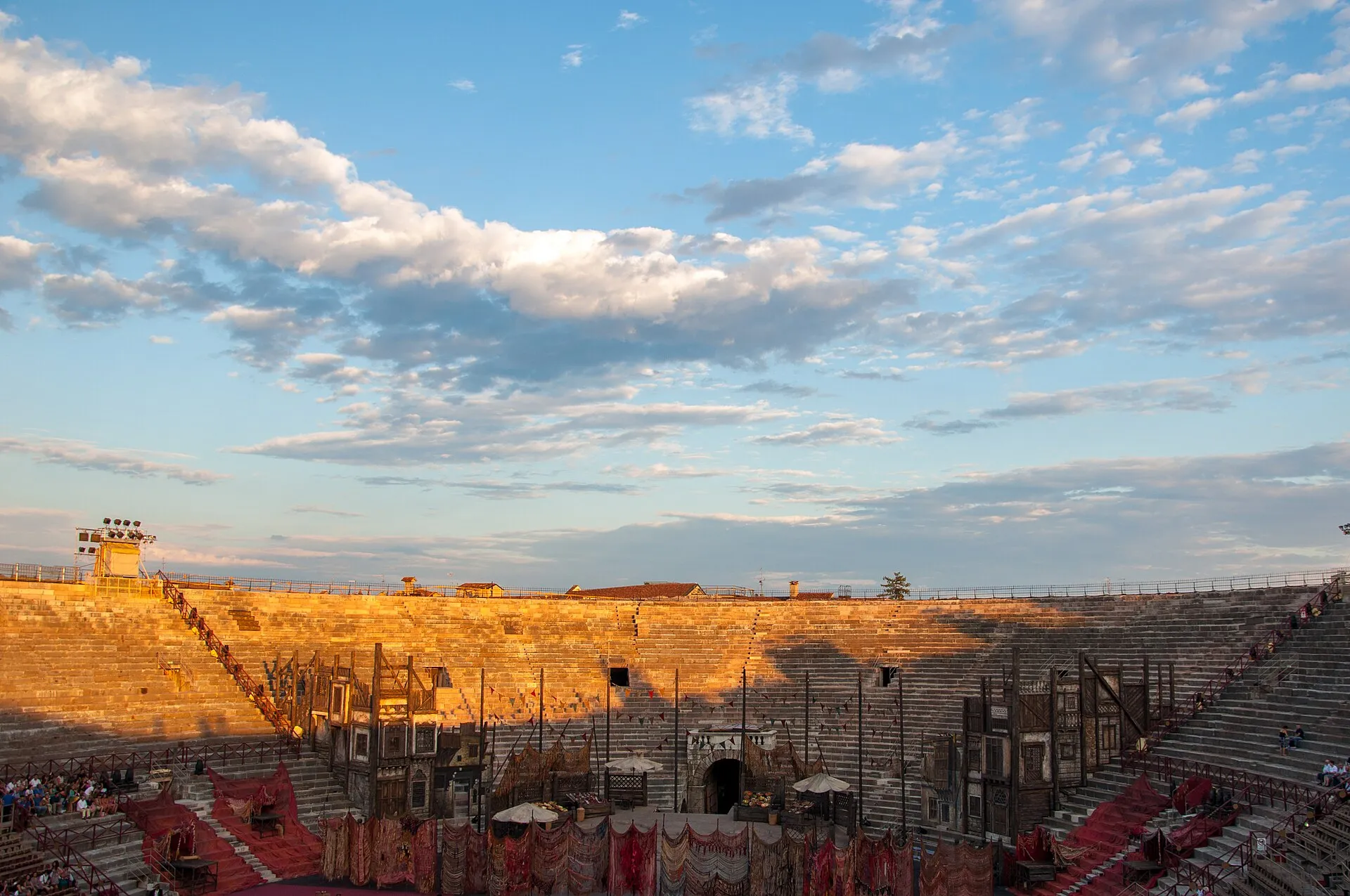
The Arena di Verona, raised around 30 AD, is the third-largest Roman amphitheatre still standing; an earthquake toppled most of its outer ring in 1117, yet the surviving elliptical bowl still seats up to 22,000, making it the largest open-air opera venue in the world
Open-air opera has filled the Arena every summer since 1913
Verona first staged grand opera in the Roman amphitheatre in 1913, with a production of Aida marking the centenary of Verdi's birth; the June-to-September festival now draws hundreds of thousands of spectators a season to hear Aida, Carmen, and Nabucco under the stars
UNESCO listed the City of Verona in 2000
Inscribed under criteria (ii) and (iv), Verona was recognised for more than 2,000 years of continuous development and for the way its Roman, medieval, and Renaissance layers survive together in a single living townscape wrapped by the Adige
Vinitaly makes Verona the commercial capital of Italian wine
Held each spring at the Veronafiere exhibition centre, Vinitaly is one of the world's largest wine trade fairs, drawing tens of thousands of buyers and thousands of producers and cementing Verona's role at the doorstep of the Valpolicella and Soave vineyards
The Adige that loops the old town is Italy's second-longest river
At roughly 410 kilometres the Adige trails only the Po; its tight S-bend wraps three sides of Verona's historic centre, a natural moat that shaped the Roman street grid and every defensive wall the city has raised since
Source: tour-guide.com — Free to cite with attribution
Things to see
What are the top attractions in Verona?
Verona packs an extraordinary range of eras into a walkable core. A good half-day links the Roman monuments, the Scaligeri landmarks, and the literary sites without ever needing a bus:
- Arena di Verona — Visit by day for the Roman architecture, return at night for opera under the stars
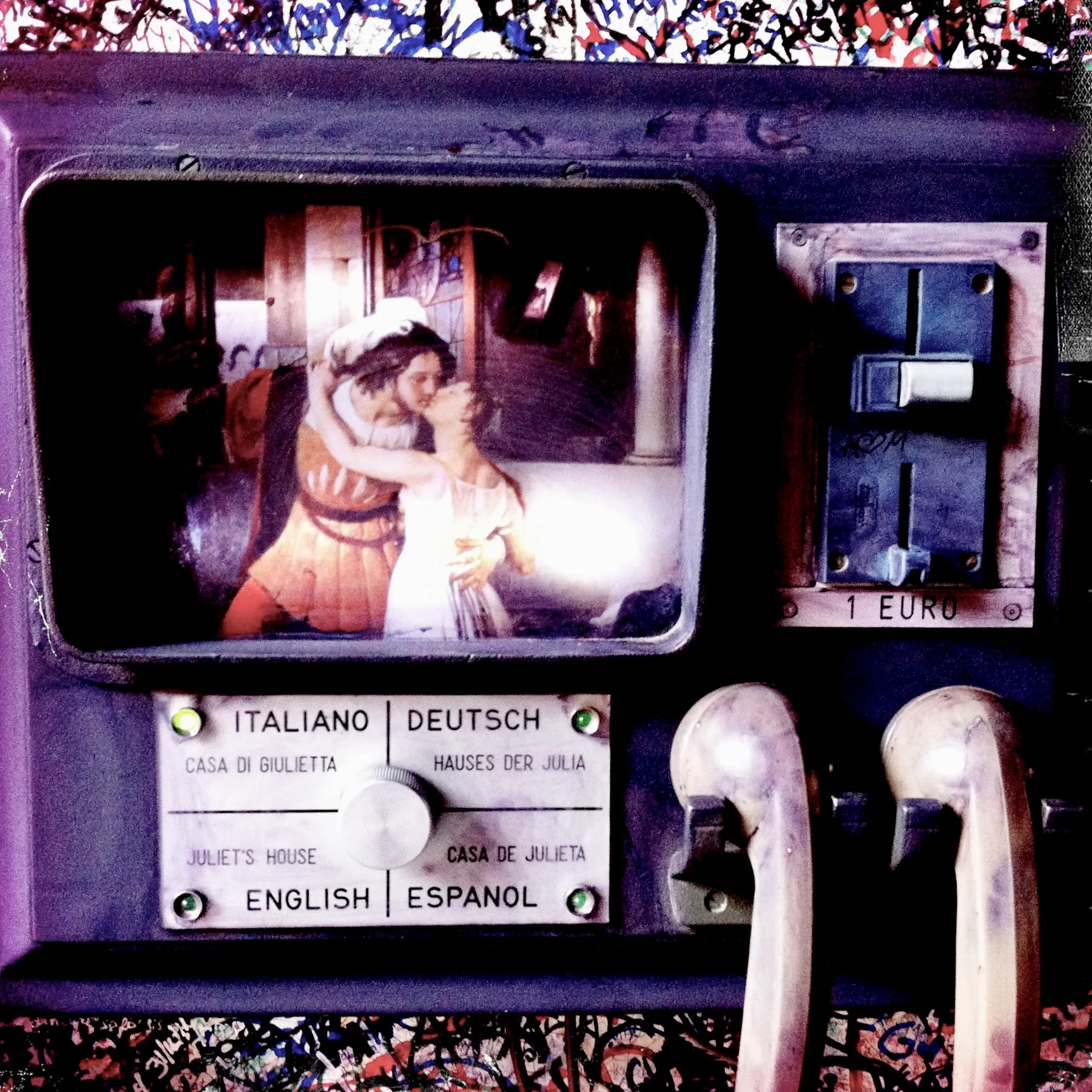
- Juliet's House — The 13th-century Casa di Giulietta, whose 1930s balcony launched a million romantic photographs
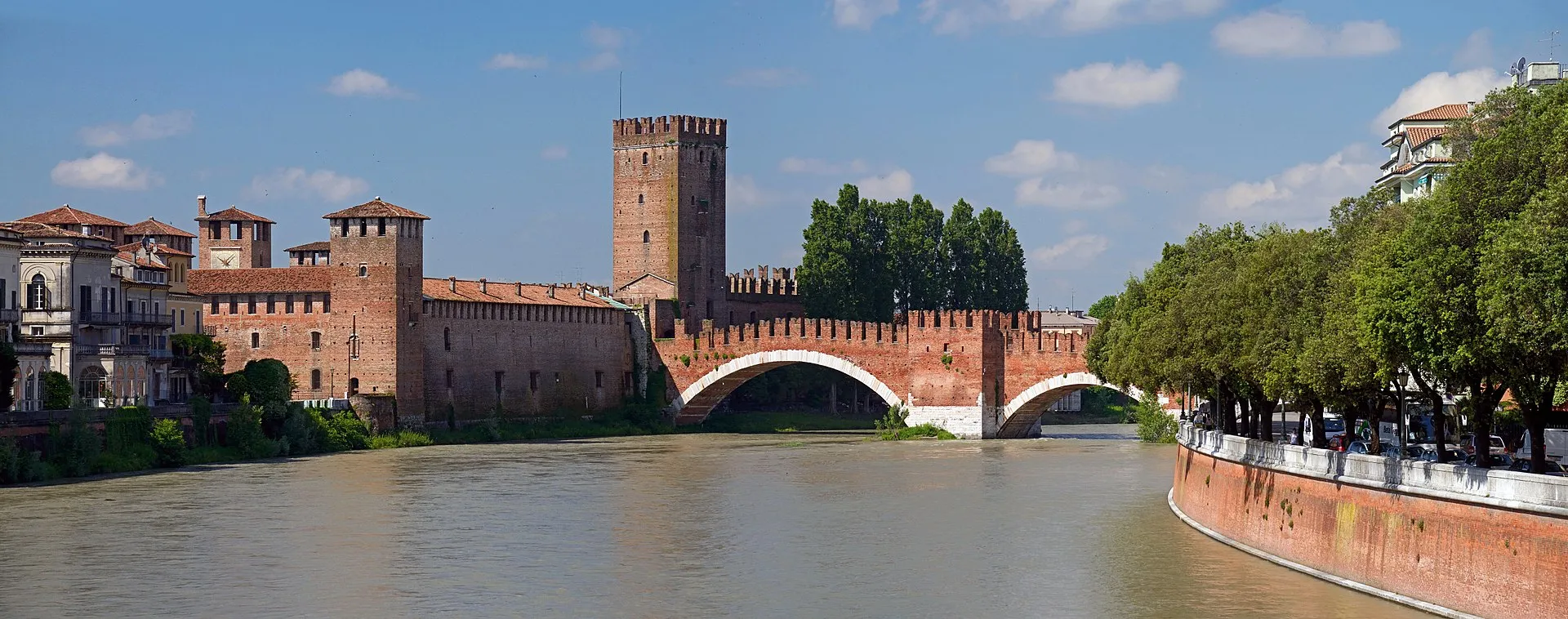
- Castelvecchio — A 1350s Scaligeri fortress reborn as a museum through Carlo Scarpa's landmark restoration
- Piazza delle Erbe — Verona's ancient Roman forum, now a colorful market square ringed by frescoed façades
- Scaliger Tombs — Gothic masterpieces of medieval funerary art beside the della Scala family church
- Torre dei Lamberti — Climb 84 meters for the definitive panorama over the rooftops and the Adige
- Roman Theater — A 1st-century BCE theater across the river, still staging summer performances
- Ponte Pietra — Verona's Roman-arched bridge, rebuilt stone by stone after 1945, framing the best river views
- San Zeno Maggiore — A Romanesque masterpiece housing Andrea Mantegna's celebrated altarpiece
Arena di Verona
2,000 years of spectacle - from gladiators to Aida under the stars
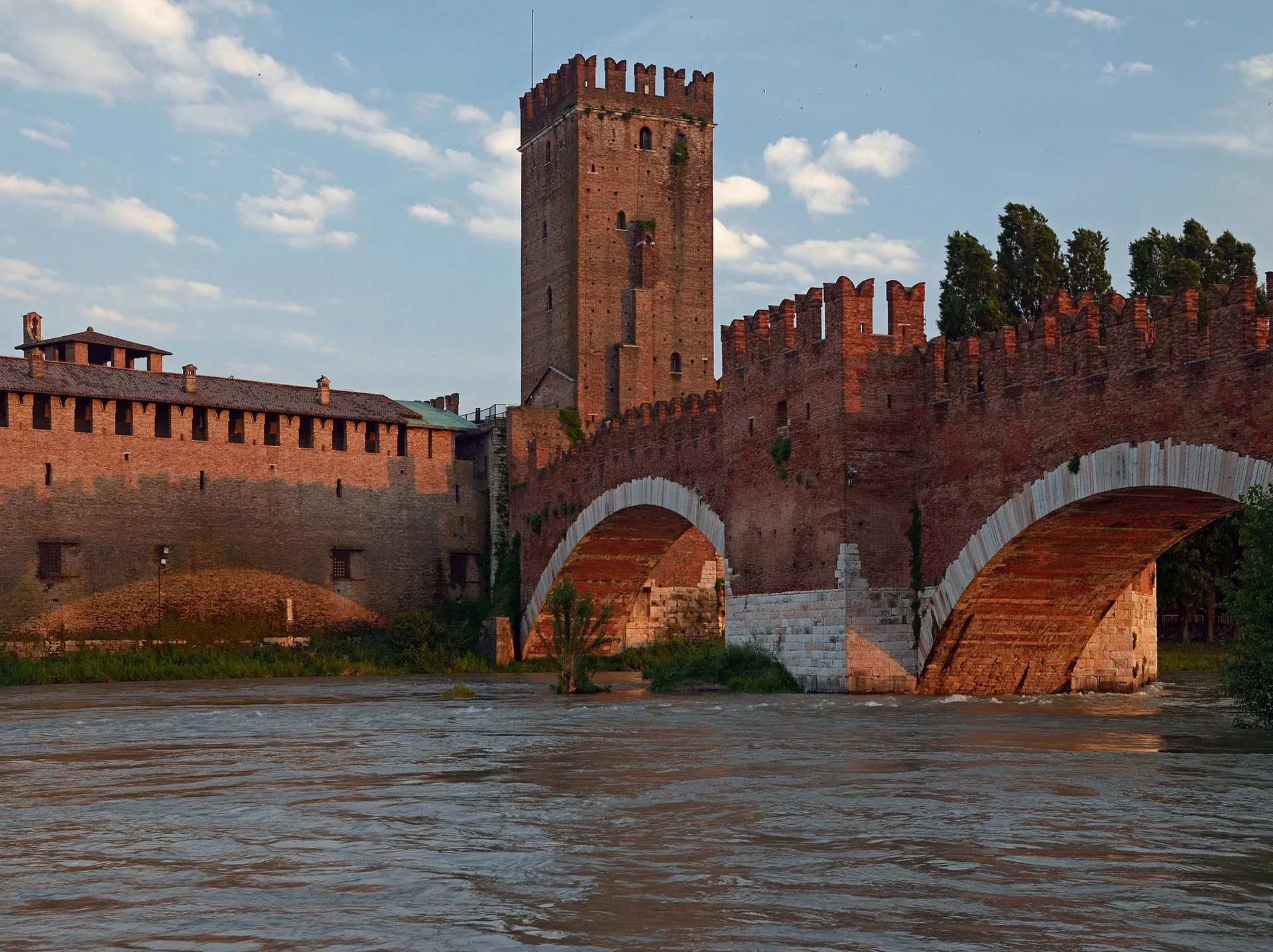
Castelvecchio Museum
Where medieval power meets modernist genius - fortress, art, and architectural revolution
Juliet's House (Casa di Giulietta)
Where fiction became reality - the balcony that launched a million romances
Guide planning
How much does a tour guide cost in Verona?
| Tour Type | Price | Details |
|---|---|---|
| Group Walking Tour | €25-40 ($27-43) | Per person, 2 hours |
| Private City Tour | €150-250 ($160-270) | Up to 6 people, 2.5-3 hours |
| Arena + City Private | €200-320 ($215-345) | Up to 6 people, 3-4 hours |
| Verona + Valpolicella | €300-450 ($325-485) | Full day with wine tasting |
Verona's guides blend expertise in Roman history with the city's romantic literary legacy and its Scaligeri and Venetian past. For guiding inside museums and monuments, Italian law requires a licensed Guida Turistica Abilitata, so confirm accreditation when booking. For the Arena opera festival, a guide who can decode the staging, the gradoni seating tiers, and the amphitheater's remarkable acoustics turns a night out into a genuine understanding of the place. Tipping is modest — around €5–10 ($5–11) per person for a group tour, a little more for a private guide.
Season planner
When is the best time to visit Verona?
Opera season runs June through September, making summer the most exciting — if hottest and busiest — time to visit. Late spring (April–May) and early autumn (September–October) offer comfortable strolling weather and thinner crowds. Verona also has a full calendar worth planning around:
- February — Verona in Love, a Valentine's festival that drapes the old town in red around the Juliet legend
- April — Vinitaly, one of the world's largest wine fairs, which fills hotels city-wide
- June–September — the Arena Opera Festival, with Aida, Carmen, and Nabucco under the stars
- September — Tocatì, an international festival of traditional street games that takes over the piazzas
- December — Christmas markets on Piazza dei Signori and a comet sculpture soaring from the Arena
The VeronaCard is strong value if you are visiting several museums. Verona is just 70 minutes from Venice and around 80 minutes from Milan by fast train, while Valpolicella's Amarone vineyards are a 20-minute drive and Lake Garda is under half an hour away.
Spring
Mar-May
Summer
Jun-Aug
Autumn
Sep-Nov
Winter
Dec-Feb
Each score averages that season’s monthly ratings out of 5. The top-rated window is usually the peak season too, so read the guidance above for its trade-offs before you book.
On the ground
How do you get around Verona?
Verona's historic center is compact and best explored on foot, with the Arena, Piazza delle Erbe, Juliet's House, and Castelvecchio all within a 15-minute walk of one another across a largely pedestrianised core. Most visitors arrive at Verona Porta Nuova, the main rail station about 1.5 km south of the Arena, from where local ATV buses and taxis reach the old town in minutes — or a pleasant 20-minute walk up Corso Porta Nuova delivers you straight to Piazza Bra. Trenitalia and Italo fast trains connect Porta Nuova to Venice, Milan, and beyond, making car-free travel easy. Drivers should note that much of the centre is a restricted-traffic ZTL zone monitored by cameras, so leave the car in a peripheral car park. Verona Villafranca (Valerio Catullo) Airport lies about 10 km southwest, linked to the station by a shuttle bus.
Frequently Asked Questions
What is the best time to visit Verona?
June through September is Verona at its most electric, when the Arena stages open-air opera under the stars — though July and August also bring real heat and the season's biggest crowds. For comfortable sightseeing weather with thinner queues at Juliet's House, aim for late spring (April–May) or early autumn (September–October). Note that April's Vinitaly wine fair books out hotels city-wide, and February's Verona in Love festival wraps the old town in red for Valentine's. If you plan to combine several museums, the VeronaCard (24- or 48-hour) quickly pays for itself.
How much does a tour guide cost in Verona?
Group walking tours run about €25–40 (~$27–43) per person for two hours. A private city tour is roughly €150–250 (~$160–270) for up to six people over 2.5–3 hours, while a private tour pairing the Arena with the historic core runs €200–320 (~$215–345). A full day out to the Valpolicella vineyards with an Amarone tasting typically costs €300–450 (~$325–485). Look for a Guida Turistica Abilitata — the licence Italian law requires for guiding inside museums and monuments — and, for opera nights, a guide who can explain the Arena's staging and acoustics.
How do you get around Verona?
Verona's centre is compact and best explored on foot — the Arena, Piazza delle Erbe, Juliet's House, and Castelvecchio all sit within a 15-minute walk of one another across a largely pedestrianised core. Local ATV buses link the outer neighbourhoods and Porta Nuova station to the old town, and taxis wait at stands by the Arena and the station. Drivers should leave cars in a peripheral car park, since much of the centre is a restricted traffic zone (ZTL).
Why does Verona matter beyond Romeo and Juliet?
Long before Shakespeare borrowed its name, Verona was one of Roman northern Italy's great cities, guarding the Adige crossing on the road north to the Alps — and its 2,000-year layering of Roman, medieval, and Renaissance fabric earned the whole historic city a UNESCO World Heritage listing in 2000. In the Middle Ages the della Scala (Scaliger) dynasty made it a regional power; then came four centuries under Venice. Today it is a national transport and trade hub on the Milan–Venice and Brenner corridors, and, through the Vinitaly fair, the commercial capital of Italian wine.
Is Verona a good base for day trips?
Excellent. Lake Garda — Italy's largest lake — is under 30 minutes away by train or car, with the resort town of Peschiera del Garda on the Milan–Venice line. The Valpolicella and Soave wine hills, home of Amarone, sit 20–30 minutes out. On fast trains from Porta Nuova you can reach Venice in about 70 minutes and Milan in around 80, making Verona a natural hinge between northern Italy's two great cities.