
Pretoria timeline
-
Pretoria is founded
Marthinus Wessel Pretorius establishes the town on the Apies River and names it after his father, the Voortrekker commander Andries Pretorius, hero of the 1838 Battle of Blood River.
-
Capital of the South African Republic
Pretoria becomes the capital of the Boer republic north of the Vaal (the Zuid-Afrikaansche Republiek), the role that first fixed its political character.
-
Treaty of Vereeniging signed
The peace ending the South African War is concluded at Melrose House in Pretoria on 31 May, bringing the Boer republics under the British Crown.
-
Administrative capital of the Union
When the Union of South Africa is formed, Pretoria is designated the administrative capital while Cape Town takes the legislature and Bloemfontein the judiciary.
-
Union Buildings completed
Sir Herbert Baker's twin-winged sandstone seat of government opens on Meintjieskop hill, crowning the new capital.
-
Voortrekker Monument inaugurated
The 40-metre granite monument to the Great Trek is opened on 16 December, later a flashpoint in debates over how the city remembers its past.
-
Mandela's inauguration
Nelson Mandela is sworn in as South Africa's first democratically elected president on the Union Buildings terraces on 10 May, an image broadcast worldwide.
-
City of Tshwane established
Pretoria is absorbed into the new City of Tshwane metropolitan municipality, the name by which the greater administrative area is now also known.
Cited city facts
Key facts for visiting Pretoria
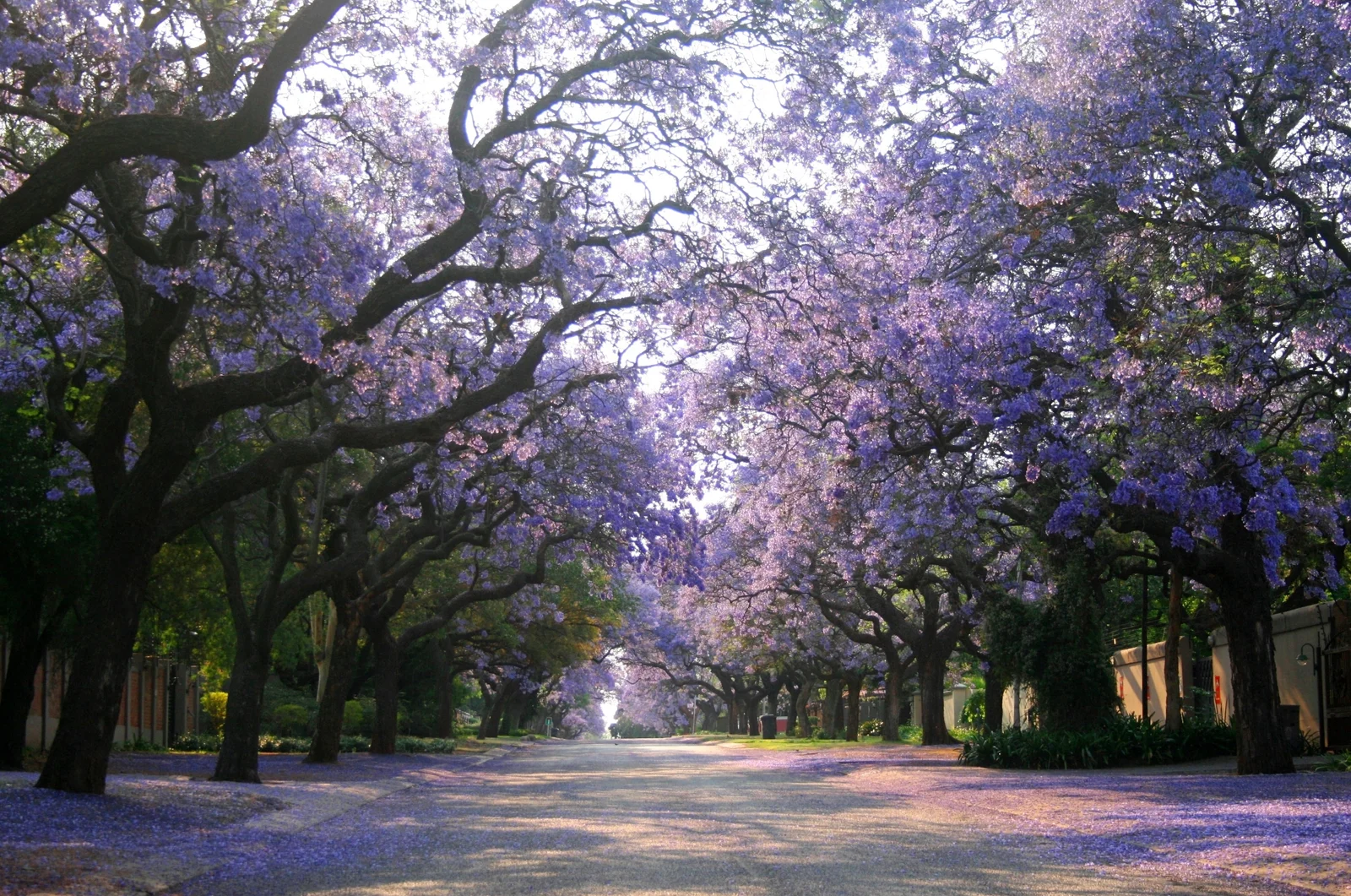
Around 70,000 jacaranda trees shade Pretoria's avenues
First planted in the city in 1888, the South American jacarandas bloom each October and give the capital its enduring nickname, the "Jacaranda City"
More than 130 foreign embassies and missions are based in Pretoria
As the seat of the executive, Pretoria holds one of the Southern Hemisphere's highest concentrations of diplomatic missions, most of them clustered in the leafy Arcadia district around the Union Buildings
Pretoria was founded in 1855 and became capital of the South African Republic in 1860
Laid out by Marthinus Wessel Pretorius and named after his father, the Voortrekker leader Andries Pretorius, the town grew into the political heart of the Boer republic north of the Vaal
The 1902 Treaty of Vereeniging was signed in Pretoria
The peace that ended the South African (Anglo-Boer) War was concluded at Melrose House on 31 May 1902, bringing the Boer republics under British rule and setting the stage for the 1910 Union
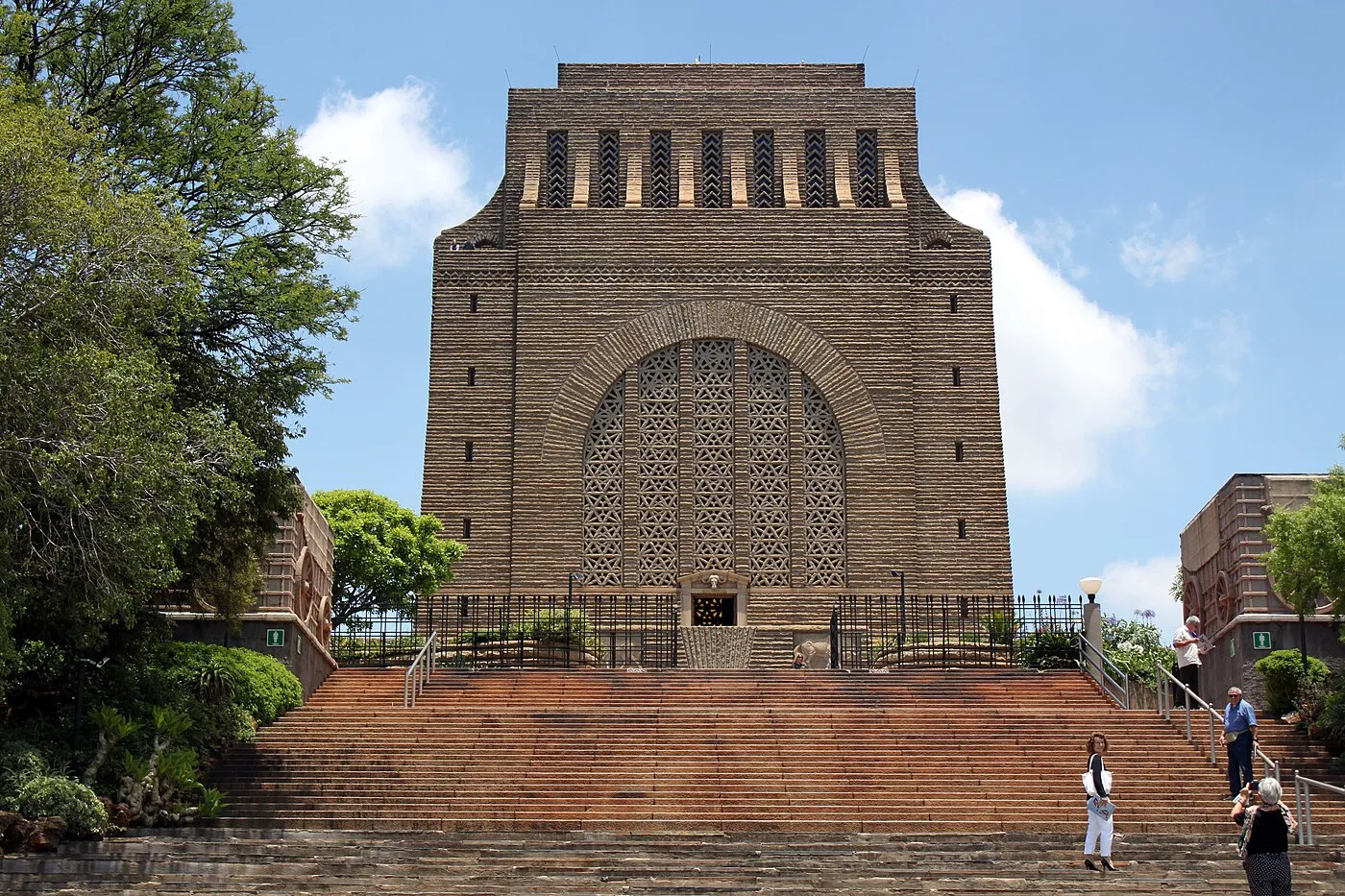
The Voortrekker Monument stands 40 metres tall and was completed in 1949
Gerard Moerdijk's granite memorial is engineered so that a beam of sunlight illuminates the cenotaph at noon on 16 December each year, the date South Africa now keeps as the Day of Reconciliation
The Union Buildings stretch 285 metres across Meintjieskop hill
Designed by Sir Herbert Baker and completed in 1913, the terraced seat of government is where Nelson Mandela was inaugurated as South Africa's first democratically elected president in 1994
Source: tour-guide.com — Free to cite with attribution
Things to see
What are the top attractions in Pretoria?
Pretoria's landmarks read as a single argument about memory and power, which is why a guide who can narrate all sides makes the difference between a photo stop and a lesson in the country's history. Start with the seat of government, weigh the two great monuments against each other, then wind down in the historic core.
- Union Buildings gardens — Stroll Sir Herbert Baker's terraced gardens, stand where Mandela was inaugurated in 1994, and photograph the nine-metre bronze of him with arms flung wide
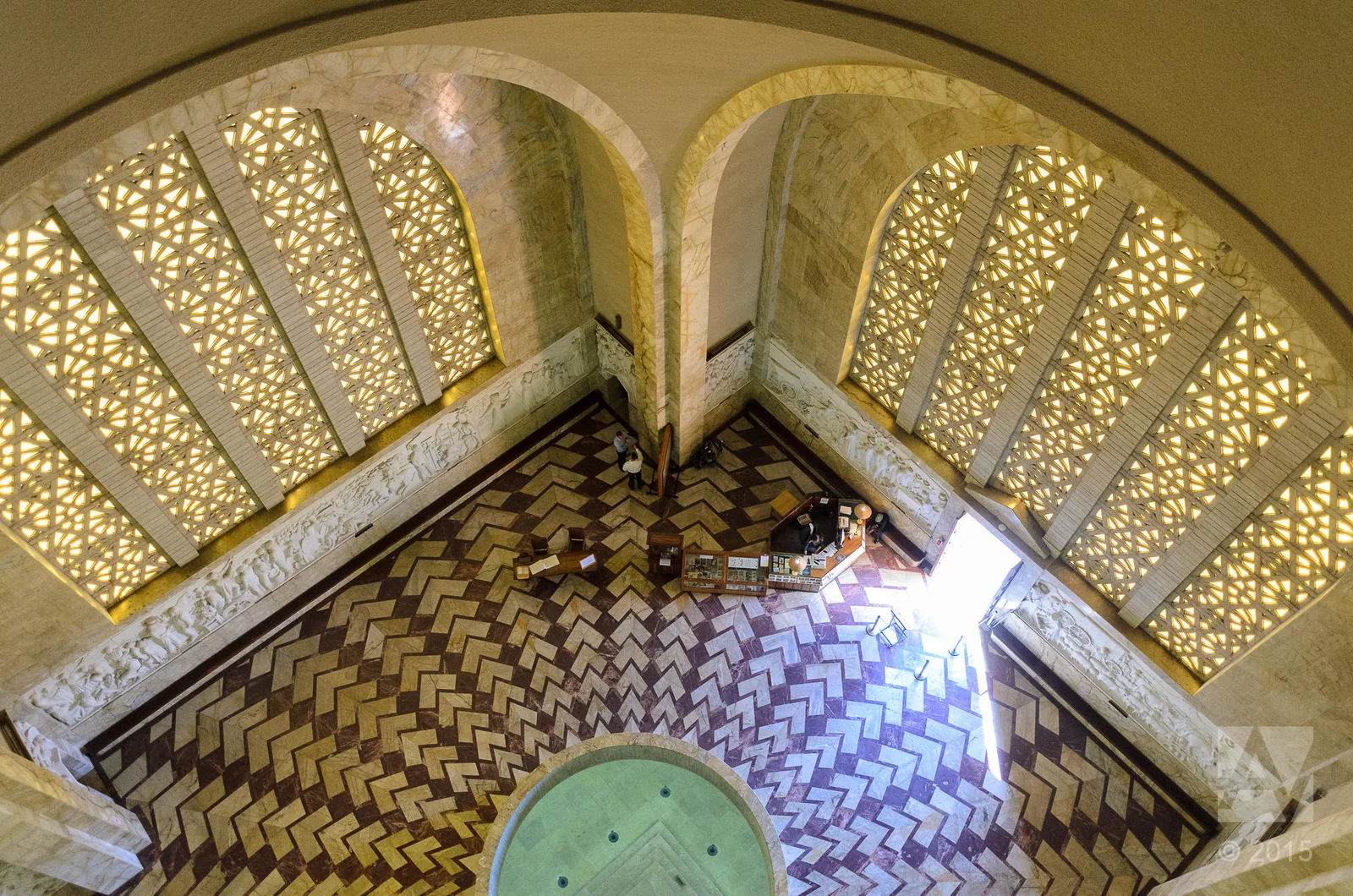
- Voortrekker Monument — A 40-metre granite memorial to the Great Trek, where a noon sunbeam illuminates the cenotaph each 16 December and the Hall of Heroes holds the world's largest marble frieze
- Freedom Park — Walk the Wall of Names listing more than 75,000 South Africans lost to conflict since pre-colonial times, the deliberate counterpoint to the monument across the valley
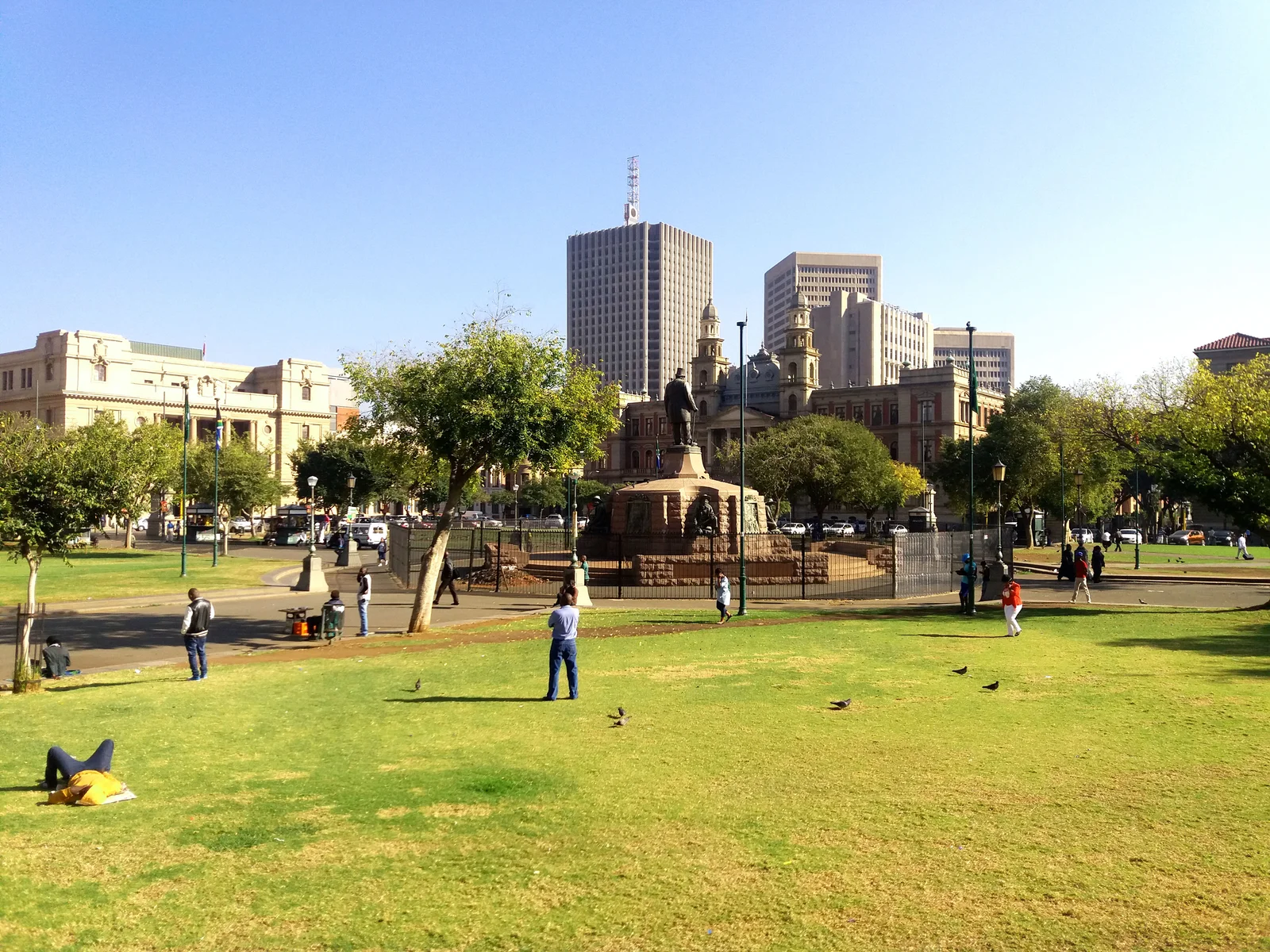
- Church Square — The historic heart of the old republic, surrounded by grand Victorian and Edwardian buildings and the Paul Kruger statue, within walking distance of Melrose House, where the 1902 peace was signed
- Jacaranda season — From mid-October, purple canopies arch over the avenues of Arcadia, Sunnyside, and Brooklyn, the city's most photogenic few weeks
- National Zoological Garden — Founded in 1899, one of the few zoos in the world with its own aquarium and reptile park, an easy family stop in the city centre
🌳 Freedom Park
A hilltop memorial where South Africa honours every soul lost to its conflicts

📜 Union Buildings
South Africa's seat of government, crowning Meintjieskop hill with Herbert Baker grandeur
📜 Voortrekker Monument
A towering granite memorial to the Great Trek, best understood with a guide who tells all sides
Guide planning
How much does a tour guide cost in Pretoria?
A good Pretoria guide is less a ticket-taker than an interpreter: the capital's monuments are designed to be read, and much of their meaning is invisible to a visitor working alone. Independent heritage walks, half-day monument circuits, and combined Johannesburg day tours are all easy to book, and the favourable exchange rate keeps prices modest for international visitors.
| Tour Type | Price | Details |
|---|---|---|
| Group Heritage Walks | R200-400 | $11-22 per person |
| Half-Day Monuments Tour | R1,000-2,000 | $56-111 private |
| Full-Day Pretoria + Joburg | R3,000-5,000 | $167-278 private |
| Jacaranda Season Walk | R300-600 | $17-33 per person |
A half-day circuit typically pairs the Union Buildings with either the Voortrekker Monument or Freedom Park; booking the two monuments together is the single most rewarding choice, because the guide can narrate the dialogue the two sites were built to have. Entry fees — R100 for the Voortrekker Monument and R80 for Freedom Park — are usually separate from the guide's rate, while the Union Buildings gardens are free.
Season planner
When is the best time to visit Pretoria?
Pretoria rewards timing: the capital's calendar turns on the jacaranda bloom and on the political anniversaries that animate its monuments.
- Jacaranda timing — Mid-October is peak bloom; photographers should arrive early morning for the best light on purple-canopied streets before the day's traffic scatters the fallen petals
- Best months — September to November for jacarandas and warm spring weather; May to August for crisp, dry Highveld days that are ideal for the exposed monument hilltops
- National Women's Day (9 August) — Commemorations at the Union Buildings amphitheatre mark the 1956 women's march against the pass laws
- Heritage Day (24 September) — Freedom Park stages its signature exhibitions and performances across the memorial grounds
- Day of Reconciliation (16 December) — The Voortrekker Monument opens extended hours for the famous noon sunbeam on the cenotaph, the one day its central ritual actually occurs
On the ground
How do you get around Pretoria?
Pretoria is spread out and best navigated by car or guided tour, but a few practical anchors make it manageable.
- Combine with Joburg — The Gautrain links Pretoria's Hatfield station with Johannesburg and OR Tambo airport in about 35 minutes, making a combined day trip — or an airport transfer — straightforward and avoiding the congested N1 motorway
- Embassy area — The Arcadia and Brooklyn neighbourhoods around the Union Buildings are safe, leafy, and walkable, and hold the city's densest concentration of diplomatic missions, cafés, and guesthouses
- Historic core — Church Square and the surrounding government quarter are compact enough to explore on foot with a guide, though visitors should stay alert and avoid the city centre after dark
- Monument hilltops — The Voortrekker Monument and Freedom Park sit on opposite ridges south of the centre with free on-site parking; neither is served by public transport, so drive, ride-hail, or join a tour
- Altitude — Like Johannesburg, Pretoria sits at over 1,300 metres, so the sun is fierce and the air dry; drink plenty of water and carry sun protection even in winter
Pretoria in Pictures
Frequently Asked Questions
What is the capital of South Africa?
Pretoria is the administrative capital of South Africa — the seat of the executive branch, home to the Union Buildings and the president's offices. Unusually, the country has three capitals, a deliberate separation of powers: Cape Town is the legislative capital where Parliament sits, and Bloemfontein is the judicial capital, home to the Supreme Court of Appeal. Pretoria is where the national government works day to day and where most foreign embassies are based, which is why it is generally named first when people ask for South Africa's capital.
Why is Pretoria called the Jacaranda City?
The nickname comes from the roughly 70,000 jacaranda trees that line Pretoria's avenues and, for a few weeks from mid-October, turn whole suburbs lilac. The South American species is not native — the first trees were planted in the city in 1888, and successive plantings along the wide Herbert Baker-era streets created the canopy visitors chase today.
The older suburbs of Arcadia, Sunnyside, and Brooklyn hold the densest stands, and photographers favour streets such as Olivier and Jacaranda early in the morning, before traffic disturbs the carpet of fallen blossom. Student lore even holds that if a bloom lands on your head you will pass your exams — a reminder that the display coincides with the University of Pretoria exam season.
What is the best time to visit Pretoria?
Jacaranda timing: Mid-October is peak bloom; photographers should arrive early morning for the best light on purple-canopied streets.
How much does a tour guide cost in Pretoria?
Group Heritage Walks: R200-400 ($11-22 per person). Half-Day Monuments Tour: R1,000-2,000 ($56-111 private). Full-Day Pretoria + Joburg: R3,000-5,000 ($167-278 private).
How do you get around Pretoria?
Combine with Joburg: The Gautrain connects Pretoria and Johannesburg in about 35 minutes, making a combined day trip practical.
Is Pretoria worth visiting as well as Johannesburg?
Yes — the two cities sit barely 60 kilometres apart and complement each other. Where Johannesburg delivers the raw energy of the gold-rush metropolis and the liberation story told at the Apartheid Museum and Constitution Hill, Pretoria is the calmer seat of government, heavy with monuments and memory.
A single day links the sweeping lawns of the Union Buildings, the granite mass of the Voortrekker Monument, and the inclusive counter-narrative of Freedom Park. The Gautrain makes the hop between the two centres in about 35 minutes, so many visitors base themselves in one city and treat the other as a half-day excursion.