Strasbourg timeline
- 12 BCE
Roman Argentoratum founded
The military camp on the Rhine frontier began Strasbourg's long border-city story.
-
Cathedral spire completed
The 142-metre spire made Notre-Dame the tallest building in the world, a record it held into the 19th century.
-
City annexed by France
Louis XIV's forces brought Strasbourg into the French kingdom while preserving its Rhineland character.
-
German imperial city
After the Franco-Prussian War, Strasbourg became a showcase capital of Alsace-Lorraine and gained the grand Neustadt district.
-
Council of Europe arrives
Postwar institutions made Strasbourg a symbol of European reconciliation.
-
Grande Ile listed
UNESCO recognized the cathedral island and medieval street plan at the heart of the city.
Cited city facts
Key facts for visiting Strasbourg
Cathedral spire reaches 142 metres
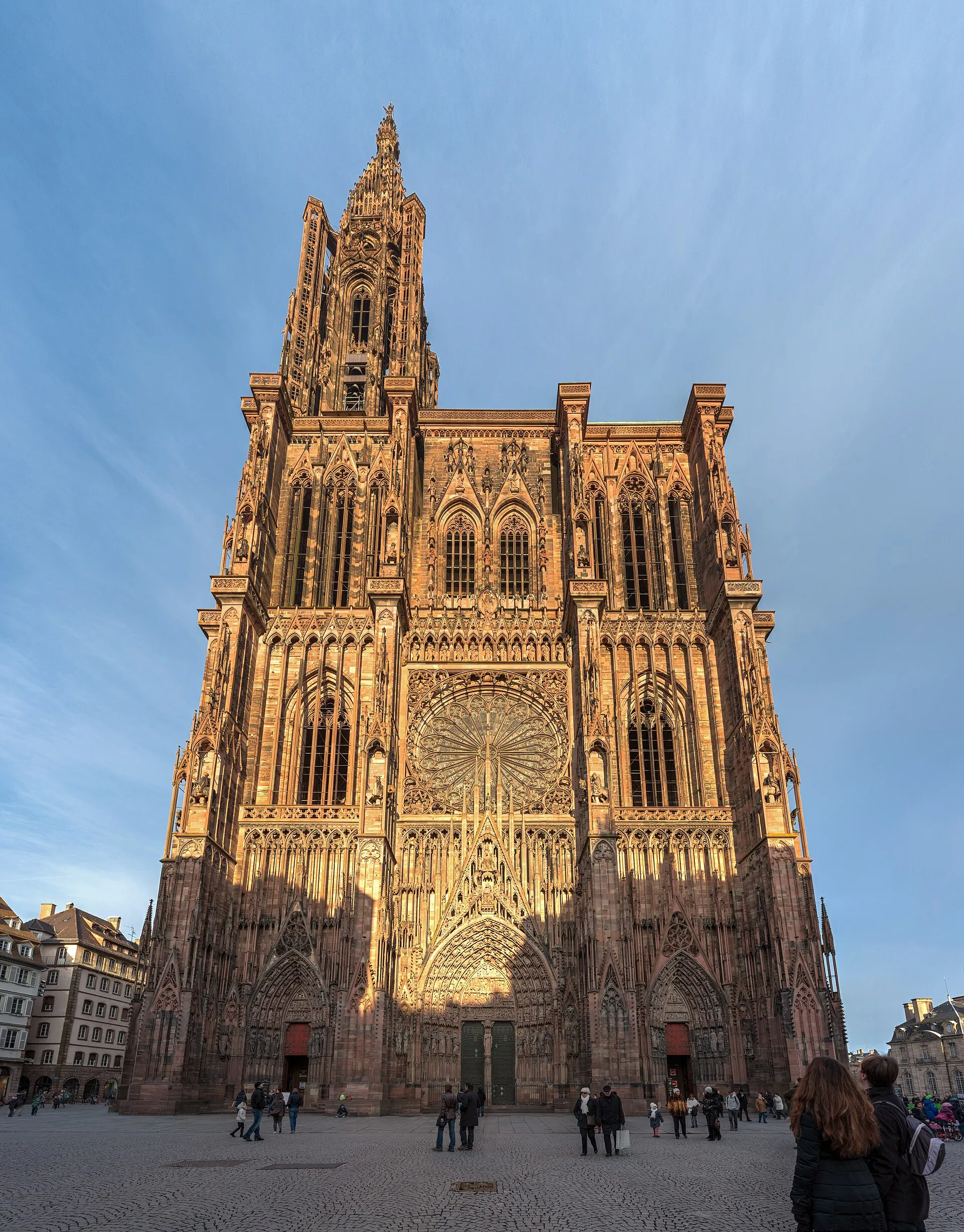
Strasbourg Cathedral was the tallest building in the world from 1647 to 1874 — a 227-year record — until it was surpassed by the St Nikolai church in Hamburg.
Christmas market held every year since 1570
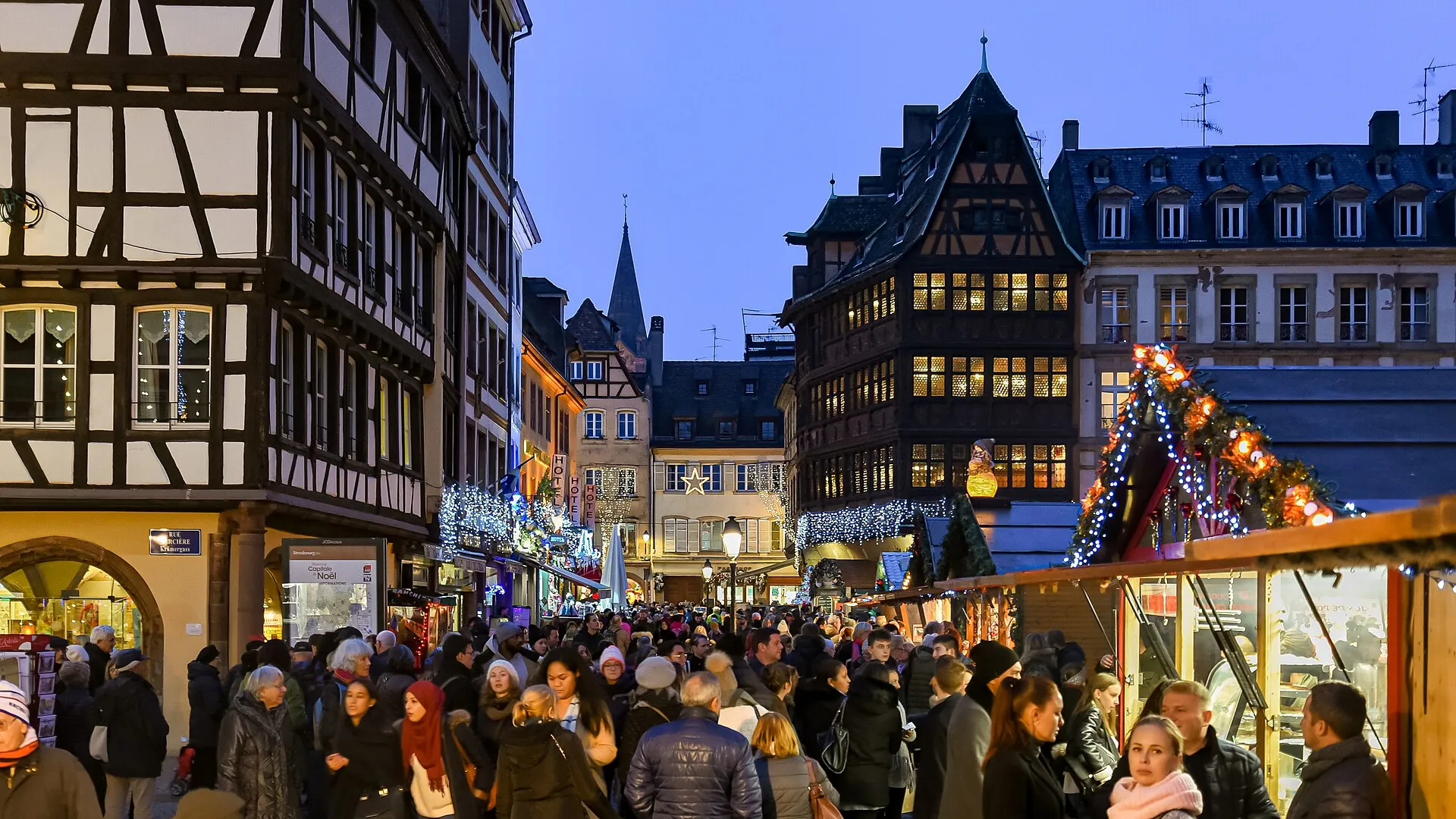
The Christkindelsmärik is the oldest documented Christmas market in France and among the oldest in Europe, drawing close to two million visitors each December.
Official seat of the European Parliament
Strasbourg hosts twelve four-day plenary sessions of the European Parliament each year, alongside the Council of Europe and the European Court of Human Rights.
Grande Île: first entire city centre listed by UNESCO (1988)
Strasbourg's island core, bounded by the River Ill, was the first time UNESCO inscribed a complete historic town centre rather than individual monuments; the listing was extended to the Neustadt in 2017.
Tram line D crosses the Rhine into Germany
Since 2017 Strasbourg's tram has run over the border to Kehl, one of the few urban tramways anywhere to serve two countries on a single network.
Source: tour-guide.com — Free to cite with attribution
Things to see
What are the top attractions in Strasbourg?
- Cathedral astronomical clock — The Renaissance mechanism performs its parade of apostles daily at 12:30 PM; arrive by noon for a seat, then climb the 332 steps to the 66-metre platform, below the 142-metre spire, for views to the Black Forest
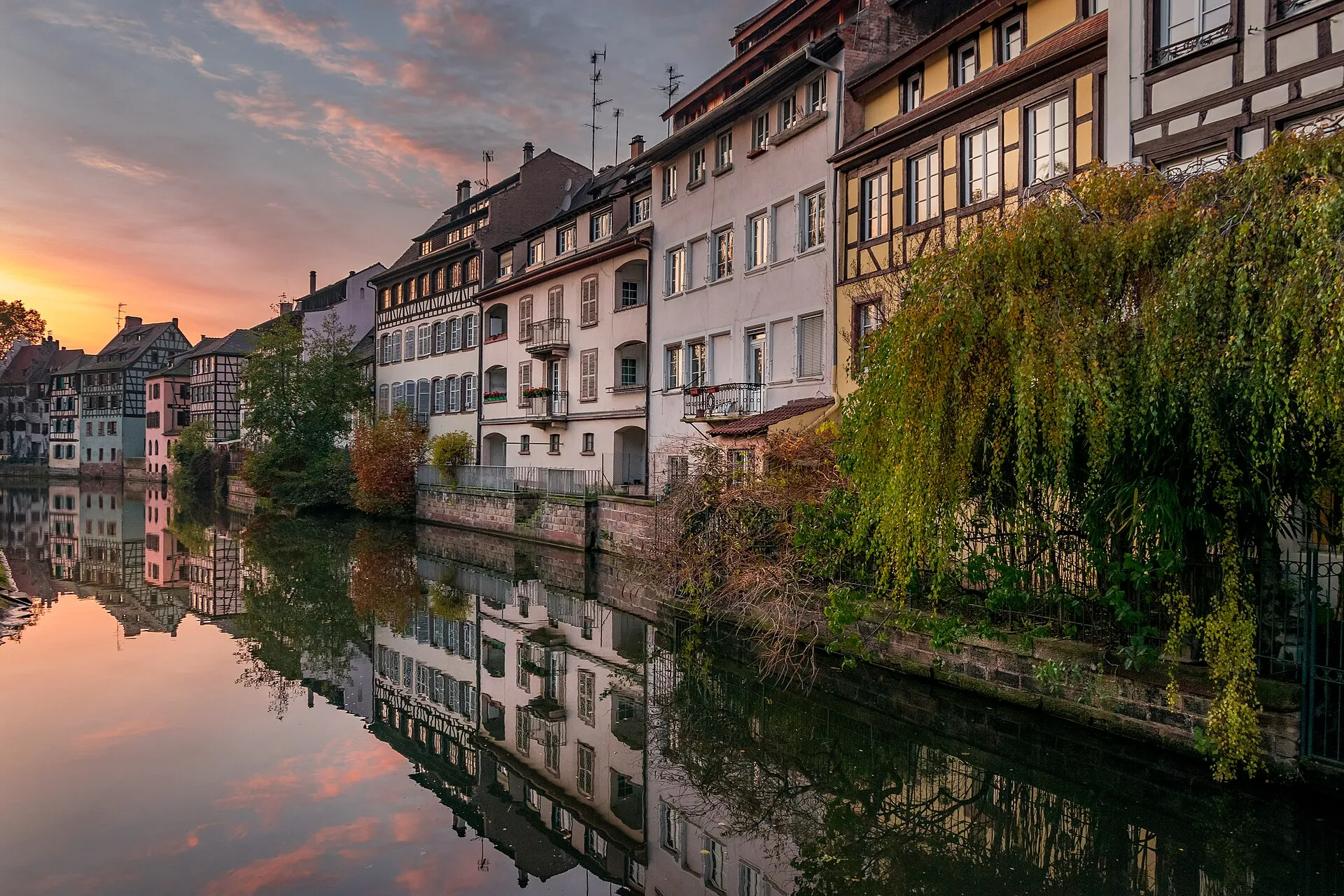
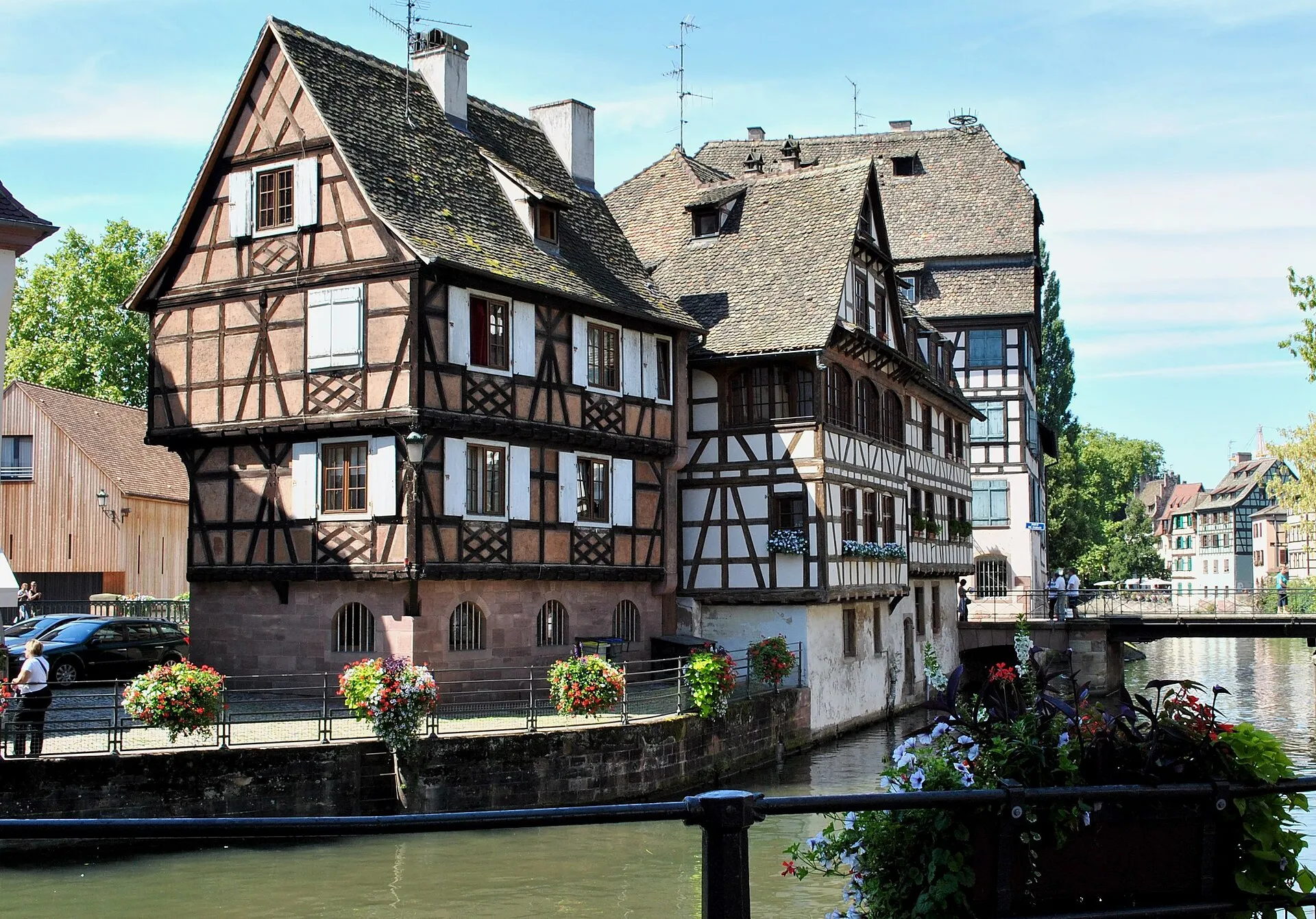
- Petite France at dawn — Half-timbered tanners' houses mirrored in the misty canals of the River Ill, best seen before the tour groups reach the Ponts Couverts and Barrage Vauban
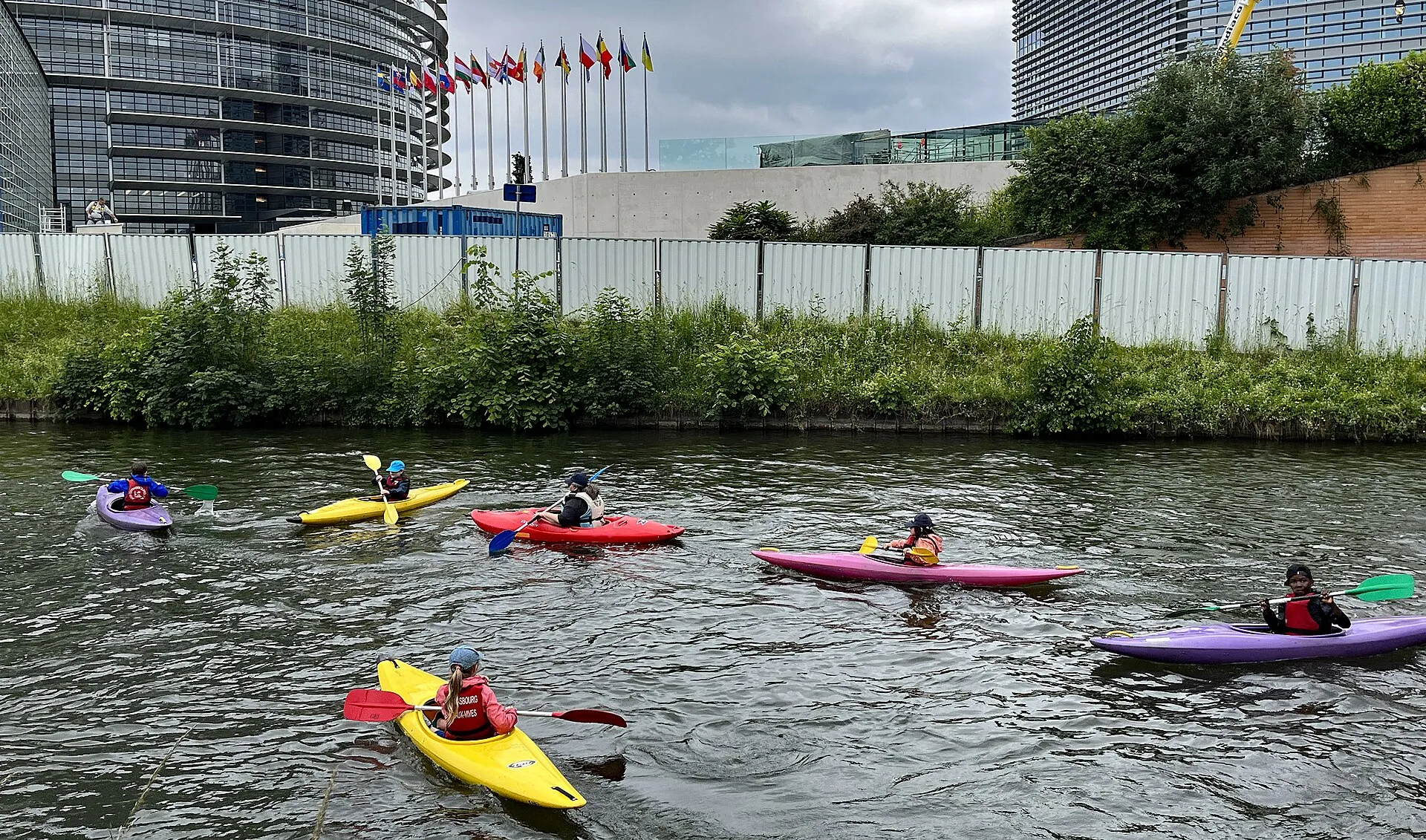
- European Parliament — Free guided visits and public galleries during the twelve annual plenary sessions; political guides explain EU governance firsthand in the European Quarter
- Alsace Wine Route — A day trip south through picturesque villages like Riquewihr, Eguisheim, and Colmar, tasting dry Riesling and aromatic Gewürztraminer
- Christmas markets — A dozen themed markets across the old town, held every Advent since 1570
- Tarte flambée — Alsatian flammekueche served in traditional winstubs; local guides know which cellars still fire theirs in a wood oven
European Quarter
Capital of Europe - where EU democracy happens
Petite France
Strasbourg's fairytale quarter - half-timbered magic on the water
Strasbourg Cathedral
Notre-Dame de Strasbourg - once the world's tallest building
Strasbourg Christmas Markets
Christkindelsmärik - France's oldest and most magical markets since 1570
Guide planning
How much does a tour guide cost in Strasbourg?
Strasbourg's dual heritage means the best guides move easily between French and German, and most add fluent English on top. Look for the official Guide-Conférencier state licence, then match the specialism to your interest: cathedral art historians who decode the Gothic sculpture and the astronomical clock, European-institution experts who navigate the European Quarter booking rules, and Alsatian culture historians who bring the winstub and wine-route traditions to life. The boat operator Batorama and dedicated Christmas-market guides round out the seasonal options.
| Tour Type | Price | Details |
|---|---|---|
| Group Walking Tours | €12-20 | Per person, 2 hours |
| Boat Tours | €15-25 | Per person, 70 minutes |
| Private Half-Day | €150-250 | Up to 6 people |
| Private Full-Day | €300-450 | Including wine route |
Season planner
When is the best time to visit Strasbourg?
- November-December: The Christmas markets transform the old town from late November to 24 December — magical but packed, so book accommodation months ahead and visit on weekday evenings
- May-June: Warm, long days as Petite France's window boxes overflow with geraniums and café terraces spill onto the quais
- September: European Parliament plenary sessions resume and the Alsace wine harvest begins in the villages along the Route des Vins
- Summer evenings: A free sound-and-light show is projected onto the cathedral facade after dark in July and August
- Avoid August: Parliament is in recess, many family-run winstubs close for holidays, and the institutional quarter falls quiet
Spring
Mar-May
Summer
Jun-Aug
Autumn
Sep-Nov
Winter
Dec-Feb
Each score averages that season’s monthly ratings out of 5. The top-rated window is usually the peak season too, so read the guidance above for its trade-offs before you book.
On the ground
How do you get around Strasbourg?
- Tram network — Six lines cover the city and suburbs; a day pass is the easiest way to reach the European Quarter and outlying sites
- Cross-border tram — Line D runs across the Rhine to Kehl in Germany, so you can ride from the French old town to a German high street on a single ticket
- Grande Île is pedestrianized — The UNESCO-listed historic centre is largely car-free; walking is the best way to explore
- Cycling — Strasbourg is among France's most bike-friendly cities, with hundreds of kilometres of dedicated lanes; the Vélhop bike-share has stations across town
- Batorama boat tours — Covered boats depart near the cathedral for 70-minute loops through the canals and past the European Parliament
- Train connections — The TGV reaches Paris in around 1h50; regional TER trains link Colmar, Mulhouse, and Baden-Baden across the border
Frequently Asked Questions
What is the best time to visit Strasbourg?
November-December: Christmas markets transform the city (book far ahead). May-June: Pleasant weather, outdoor café culture blooms. September: European Institutions in session, wine harvest in Alsace.
How much does a tour guide cost in Strasbourg?
Group Walking Tours: €12-20 (Per person, 2 hours). Boat Tours: €15-25 (Per person, 70 minutes). Private Half-Day: €150-250 (Up to 6 people). Private Full-Day: €300-450 (Including wine route)
How do you get around Strasbourg?
Strasbourg has an extensive tram network with six lines covering the city and suburbs, and one line that crosses the Rhine into Kehl, Germany. The Grande Île historic centre is largely pedestrianized, and the city is one of France's most bike-friendly, with dedicated cycling lanes throughout.
How many days do you need in Strasbourg?
Two full days let you cover the essentials without rushing: one for the Gothic cathedral, its astronomical clock, and the half-timbered lanes of Petite France, and a second for the European Quarter and a Batorama canal cruise. Add a third day for a trip along the Alsace Wine Route to Colmar and villages such as Riquewihr, and a fourth in December if you have come for the Christmas markets.
What food and drink is Strasbourg known for?
Strasbourg's Franco-German table centres on hearty Alsatian classics: choucroute garnie (sauerkraut with sausages and pork), baeckeoffe (a slow-baked meat-and-potato casserole), tarte flambée or flammekueche (a thin flatbread with crème fraîche, onions, and lardons), and foie gras, an Alsatian speciality. These are traditionally eaten in a cosy winstub and washed down with dry Alsace white wines — Riesling, Sylvaner, Pinot Gris, and aromatic Gewürztraminer — or a local Kronenbourg beer rather than red wine. In December the markets add bredele biscuits, pain d'épices gingerbread, and vin chaud.
Can you take a day trip from Strasbourg to Germany or the Alsace wine villages?
Yes on both counts. Tram line D crosses the Rhine to Kehl in Germany on a single city ticket, and regional trains reach the spa town of Baden-Baden and the edge of the Black Forest in under an hour. Southward, the Alsace Wine Route unfurls through storybook villages — Obernai, Riquewihr, Eguisheim — to Colmar, roughly 30 minutes away by train, making Strasbourg an ideal base for exploring the region.
Is Strasbourg easy to explore on foot?
Very. The UNESCO-listed Grande Île is compact and largely pedestrianized, so the cathedral, Petite France, and the main museums are all within a 20-minute walk of one another. The cobblestones and the odd flight of steps at the Ponts Couverts reward comfortable shoes, and the flat, well-connected tram network fills any gaps for reaching the European Quarter or the station.