
Getting Around Strasbourg: A Practical Transport Guide
How to move around Strasbourg on foot, by CTS tram and bus, and on a Vélhop bike — the lines that matter, how to buy tickets and pay fares, plus reaching the European Quarter, crossing to Germany, arriving by TGV, and choosing a tour.
Read the full guideUpdated · 11 min read
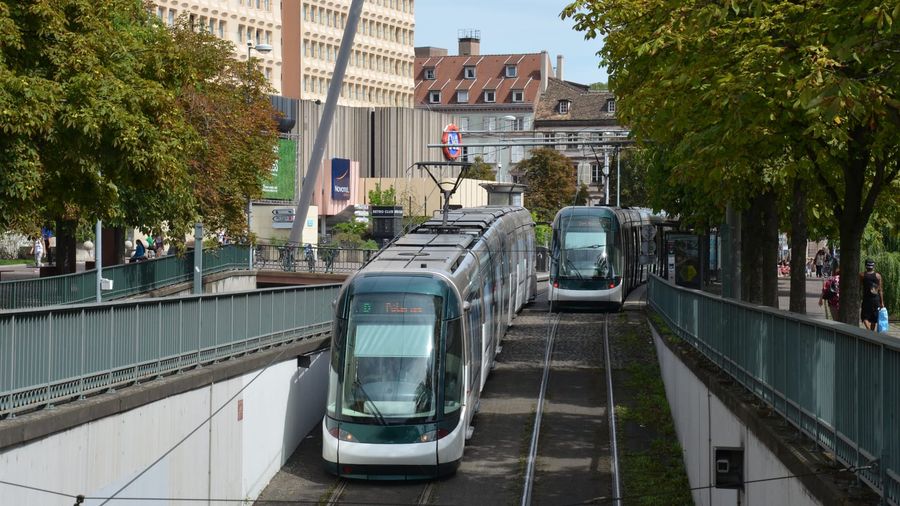
Strasbourg is one of the easiest French cities to cross without a car: the UNESCO-listed Grande Île is almost entirely pedestrianised, and the compact CTS network — six tram lines and a dense web of buses — reaches everywhere else on a single ticket. Walk the island, take the tram to the European Quarter, ride Vélhop between the canals, and remember that line D will even carry you across the Rhine into Germany.
Strasbourg sits on the River Ill just short of the Rhine, and its shape decides how you move through it. The medieval core is the Grande Île, an island ringed by water and the first entire city centre that UNESCO ever listed. On it, everything is walkable; off it, a modern tram network fans out to the European institutions, the suburbs, and the German border. Level ground you walk, distances you tram, canals you cross by bridge or bike — and unusually for a French city, one of those tram lines ends in another country.
Is Strasbourg's centre walkable, and where should you start?
Yes — start on foot on the Grande Île. The island is flat, compact, and largely car-free, and the cathedral, Petite France, and the covered bridges are all a few minutes apart. The only central journey you shouldn't try on foot is the tram ride out to the European Quarter.
The Grande Île is the natural place to begin, because almost everything you came to see sits on it. From the cathedral and its astronomical clock, it is a level ten-minute walk west through the old town to Petite France, the former tanners' quarter where half-timbered houses lean over the canals. Walking the island is the best orientation you can give yourself, and it costs nothing.
Petite France repays a slow wander. The Ponts Couverts — the covered bridges and their watchtowers — and the Barrage Vauban terrace beyond them give the classic view back over the water, and the lanes between are too narrow for traffic anyway. Save your feet for here and leave the trams for the longer hops.
How does the CTS tram and bus network work?
One operator, CTS, runs every tram and bus on a single fare system. The six tram lines (A to F) form one of the largest networks in France and cover the centre, the suburbs, and the German border; the buses fill in the gaps the rails miss. For visitors, the trams do almost all the work.
CTS (Compagnie des Transports Strasbourgeois) is the network you will use for nearly every ride — frequent, modern, and easy to read once you know its shape. The trams share the streets with pedestrians on the edge of the old town and run underground for one stop beneath the main station.
| Line | Roughly runs | Useful for |
|---|---|---|
| A / D | Illkirch / Kehl (Germany) ↔ north-west suburbs | Crossing the centre; line D reaches the Rhine and Germany |
| B / F | Lingolsheim / Elsau ↔ north | Petite France's western edge and the northern districts |
| C / E | Neuhof / Robertsau ↔ the institutions | The European Quarter, Parc de l'Orangerie, and the station |
Do not over-plan which line to memorise: the tram map is simple, stops come every few minutes, and the CTS app shows live departures and plans any journey door to door. The one line worth singling out is D, which rolls across the Rhine to Kehl in Germany — more on that below.
What do tickets cost and how do you pay?
Buy a single ticket for one-off hops or a 24-hour pass for a full day of sightseeing, and validate every time you board. A single ticket covers an hour of unlimited connections across the whole tram and bus network, so most short journeys need only one.
Fares are straightforward, but check current prices in the CTS app or at a stop machine before you buy, as they are revised periodically. The table below shows the typical structure rather than exact centimes.
| Ticket | Roughly | Good for |
|---|---|---|
| Single ticket | ~€1.90 | One journey, up to an hour of connections |
| 24-hour pass | ~€4.60 | A full day of sightseeing across trams and buses |
| Trio / group 24-hour | ~€6.90 | Up to three people sharing a day pass |
| Round-trip ticket | ~€3.70 | There-and-back on the same day |
Every tram stop has a machine that sells the full range, and the CTS app lets you buy and store tickets on your phone. Whichever you use, validate on board every time, including on transfers — inspectors do check, and an unvalidated ticket counts as fare evasion. Note that Strasbourg has no separate premium airport fare of the kind some cities charge: the airport shuttle is a standard regional train ticket, not a CTS one, which keeps things simple.
Should you cycle Strasbourg with Vélhop?
For flat trips beyond the island, yes. Strasbourg is consistently ranked among France's most bike-friendly cities, with dedicated lanes threading the whole centre, and the Vélhop bike-share makes hiring one cheap and easy. The terrain is dead flat, so riding is a genuine pleasure.
Strasbourg takes cycling seriously in a way few French cities do: it has one of the densest networks of bike lanes in the country, and locals ride everywhere. As a visitor you can do the same with Vélhop, the city's public bike-share and rental scheme, which offers both short-hire station bikes and longer daily and weekly rentals from staffed shops, including at the main station.
The riding is easiest away from the busiest pedestrian lanes. The canal paths along the Ill and the routes out to Parc de l'Orangerie near the European institutions are flat and well-marked, turning a twenty-minute walk into a five-minute ride. On the Grande Île itself, walk your bike through the tightest streets — the cobbles and crowds make pedalling slow anyway.
How do you reach the European Quarter and cross into Germany?
Take tram E or C out to the European Quarter for the Parliament and the Council of Europe, and take line D east across the Rhine if you want to step into Germany. Both are covered by a standard CTS ticket, so neither trip costs more than a single fare.
The European Quarter sits north-east of the old town, too far to be a comfortable walk but a short tram ride away. Lines E and C serve the area around the European Parliament, the Council of Europe, and the European Court of Human Rights, alongside the lakes and glasshouses of Parc de l'Orangerie. When Parliament is in session, guided visits to the institutions are possible, so pair the tram trip with a booked slot rather than turning up cold.
The most memorable ride in Strasbourg is line D. In 2017 it became the first cross-border tram between France and Germany, extending from the city across the Rhine to Kehl on the German bank. A normal CTS ticket carries you the whole way, which means you can cross an international border for the price of a single fare, browse a German market, and be back for dinner. It is the kind of everyday detail that captures what makes this border city unusual.
How do you arrive in Strasbourg and reach the airport?
Arrive by TGV at Gare de Strasbourg, with Paris under two hours away, and step straight onto a tram beneath the station. For the airport at Entzheim, take the frequent TER shuttle train — about nine minutes — rather than a taxi.
Strasbourg is superbly connected by rail, which is why most visitors never need a car. Gare de Strasbourg, with its striking glass shell wrapped over the old stone façade, puts central Paris a little under two hours away by TGV, and regional trains fan out to Colmar, Mulhouse, and across the border to Baden-Baden and Offenburg. Tram lines A and D run directly beneath the station, so you are on the network the moment you arrive.
For Strasbourg-Entzheim airport, about 10 km south-west of the city, the answer is the TER shuttle train (navette) from its own station halt, which reaches Gare de Strasbourg in roughly nine minutes and runs several times an hour. It is a standard regional rail ticket, cheap and quick, and from the main station a tram completes the journey into the centre. There is no need for a taxi or a special airport fare.
Are the Batorama boat tours and guided walks worth it?
A Batorama canal cruise is the one paid ride worth building in: covered boats loop the Grande Île and the European Quarter from the water in about 70 minutes. Group walking tours and specialist cathedral or wine guides round out the options, most of them modestly priced.
Strasbourg's waterways are part of how the city reads, and the Batorama boats are the easiest way to grasp it. Departing near the cathedral by the Palais Rohan, a typical covered cruise runs about 70 minutes, gliding through Petite France's locks and out past the European institutions with commentary along the way. The table below shows the main guided options and rough per-person costs; prices vary by operator and season.
| Tour type | Roughly | Why take it |
|---|---|---|
| Group walking tour | €12–20 | A two-hour orientation of the Grande Île with a local guide |
| Batorama boat cruise | €15–25 | The old town and canals seen from the water, ~70 minutes |
| Private half-day guide | €150–250 | A tailored route for up to a small group |
| Private full-day (incl. wine route) | €300–450 | The city plus a drive into the Alsace vineyards |
Because Strasbourg's heritage is bilingual, its best guides work in both French and German, and many specialise — cathedral art historians, European-institution experts, or Alsatian culture and wine. In December the city's Christmas markets, the oldest in France, add a whole layer of seasonal walking tours; whatever you book, reserve ahead, as the popular slots fill fast in high season.
Day trip or base — how should you plan Strasbourg?
Strasbourg works best as a base of two or three nights rather than a rushed day trip, because its quieter pleasures — the cathedral at dusk, an unhurried winstub dinner, Petite France after the coaches leave — belong to people who stay. Fast rail then turns the surrounding region into easy day trips.
You can see the headline sights in a long day, but the city rewards an overnight stay more than most. Evenings are when it is at its best, the canals of Petite France mirroring the lit-up houses once the day-trippers have gone. From a Strasbourg base, regional trains put the Alsace Wine Route, the villages around Colmar, and even the German spa town of Baden-Baden within a comfortable day's reach — all without a car.
Once you have the transport sorted, the Strasbourg city guide covers what to see when you arrive, from the astronomical clock to the vineyards beyond the city limits.
Frequently Asked Questions
Is Strasbourg's historic centre walkable?
Yes — the Grande Île, the UNESCO-listed island at the heart of the city, is almost entirely pedestrianised, and you can walk from the cathedral to Petite France in about ten minutes. The only rides you really need inside the city are the tram out to the European Quarter and the trip in from outlying stations or the airport.
How do you pay for trams and buses in Strasbourg?
Everything is run by CTS on one fare system. Buy a single ticket, a 24-hour pass, or a small-group ticket from the machines at every tram stop or in the CTS app, and validate it each time you board. A single ticket covers one hour of connections across the whole tram and bus network.
Can you really take a tram from France into Germany in Strasbourg?
Yes. Tram line D runs across the Rhine to Kehl in Germany, the first cross-border tram link between the two countries when it opened in 2017. A standard CTS ticket covers the whole route, so a spontaneous trip to another country costs the price of a single fare.
How do you get from Strasbourg airport to the city centre?
Strasbourg-Entzheim airport has its own railway halt, and a TER shuttle train links it to the main station, Gare de Strasbourg, in about nine minutes. It runs several times an hour and is far quicker and cheaper than a taxi.
Do you need a car in Strasbourg?
No. Between the six tram lines, the buses, the Vélhop bikes, and a pedestrian old town, the city is easy to cover without one, and the Grande Île restricts traffic while parking is expensive. Arrive by TGV and rely on public transport and walking.