
Walking Route
Local Life
Away from the camera stops, Petite France is a lived-in corner of Strasbourg where Alsatian traditions run close to the surface. The winstubs — cosy Alsatian wine taverns — serve choucroute, baeckeoffe, and tarte flambée with glasses of dry Riesling and Sylvaner, while bakeries sell kougelhopf and, in winter, the spiced bredele biscuits tied to the Christmas markets.
Locals cut through the quarter on foot and by bike between the Grande Île and the station, and the canals still work: you can watch pleasure boats lock through beside the Pont du Faisan. The square at Place Benjamin Zix fills with café terraces in summer, and the whole quarter sits within an easy walk of Strasbourg Cathedral and the river circuit out to the European quarter, making it the natural base for a day in the old town.
Walking Routes
Barrage Vauban: the arched dam built to designs by the military engineer Vauban between 1686 and 1700, with a free rooftop terrace giving the best panorama back over the quarter and the covered bridges. Ponts Couverts: three bridges strung between four stout medieval watchtowers, survivors of the city's 13th-century ramparts — the wooden roofs that gave them the "covered" name are long gone.
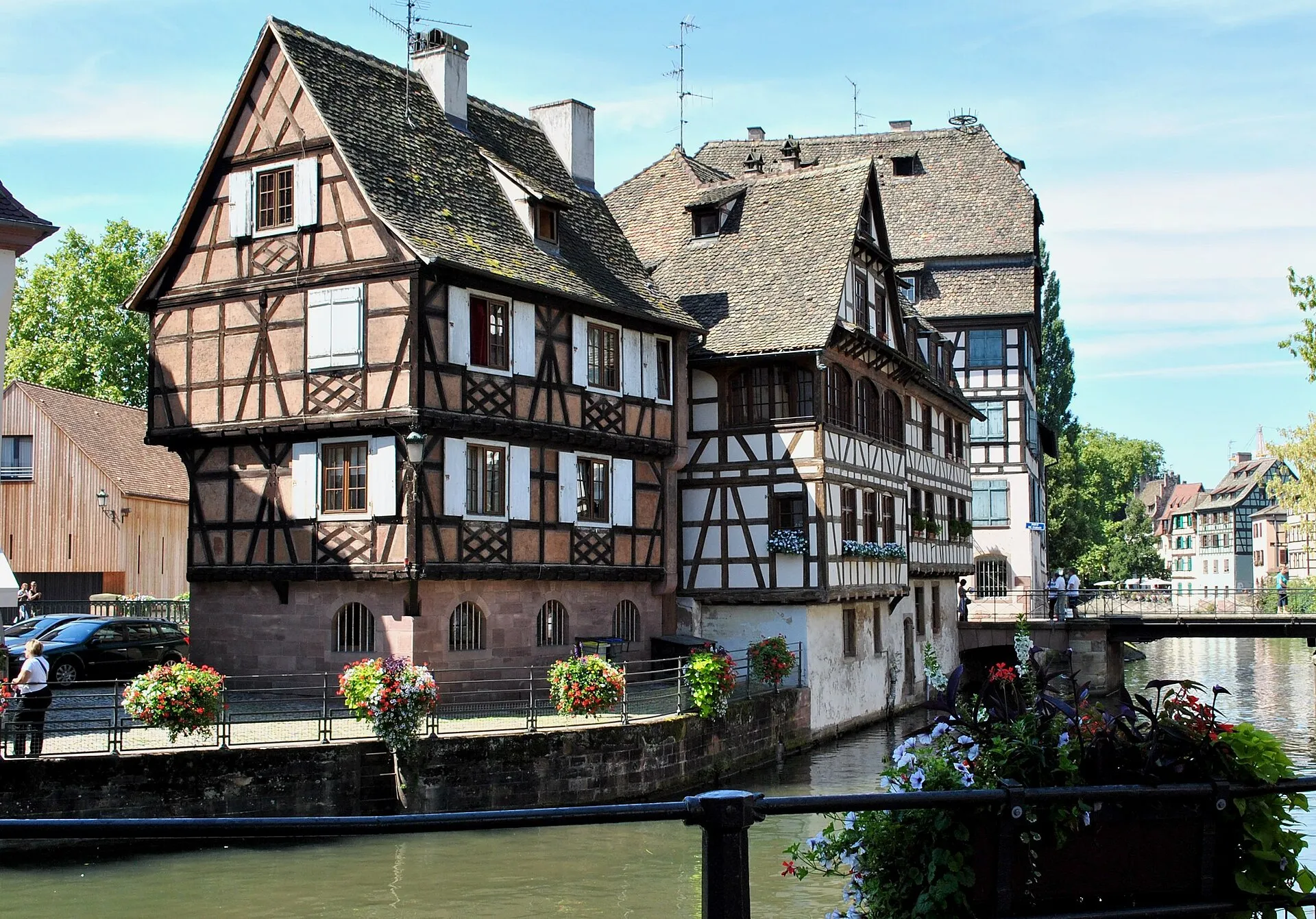
Rue du Bain-aux-Plantes: the quarter's showcase lane of 16th- and 17th-century half-timbered houses, including the Maison des Tanneurs of 1572. Place Benjamin Zix: the leafy square at the heart of the quarter, named after a local painter and lined with terraces. Pont du Faisan: the little swing bridge over the lock, where you can watch boats step down through the water. Canal boat tour: see the whole ensemble from the water on a loop that continues to the European quarter.
Petite France timeline
-
The Französel hospice gives the quarter its name
A hospice called zum Französel was founded here to treat soldiers afflicted with the "French disease" (syphilis); over the centuries la Petite France attached itself to the whole surrounding district of tanners and millers.
- 13th c.
The Ponts Couverts guard the river
Four stout watchtowers linked by bridges were raised as part of Strasbourg's medieval ramparts where the River Ill enters the city; the wooden roofs that gave them the "covered" name were removed in the 18th century.
-
The Maison des Tanneurs is built
The most photographed half-timbered house in the quarter went up on Rue du Bain-aux-Plantes, its open loft galleries built so wet hides could dry in the draught under the eaves — today it is a celebrated Alsatian restaurant.
- 1686–1700
The Barrage Vauban dams the Ill
After France annexed Strasbourg in 1681, this arched defensive weir was built to designs by the military engineer Vauban so the Ill could be raised to flood the southern approaches against attack; its roof is now a free public viewpoint.
-
The Grande Île becomes UNESCO World Heritage
Strasbourg's island old town, Petite France included, was inscribed on the UNESCO World Heritage list — a listing extended in 2017 to take in the later Neustadt district.
When to Visit
The quarter is open-air and free to wander at any hour, so timing is really about light and crowds. Come at dawn (6–8 AM) for empty cobbles, mist rising off the canals, and reflections before the tour groups and boats arrive. Late April through June is the prettiest stretch, when the window boxes along Rue du Bain-aux-Plantes overflow with red geraniums and long evenings keep the riverside terraces busy.
Midday in high summer is the one time to avoid — the narrow lanes between the Ponts Couverts and the Maison des Tanneurs funnel the heaviest crowds. After dark the half-timbered facades are floodlit, and in December the quarter joins Strasbourg's Christmas markets under strings of lights.
Admission and Costs
Walking through Petite France costs nothing — the neighbourhood, the Ponts Couverts, and the rooftop terrace of the Barrage Vauban are all free. Guided walking tours of the old town that take in the quarter run about €12–20 per person for 1.5–2 hours, while a private guide is roughly €100–180 (about $110–195) for a two-hour circuit. A canal boat tour, which loops out past the covered bridges toward the European quarter, costs around €15 (about $17) for adults and lasts about 70 minutes.
The Case for a Guide
Petite France is beautiful at a glance but opaque without context — the house markings, canal locks, and defensive towers all carry stories that no plaque fully explains. A local guide turns a pretty stroll into a reading of a working medieval city:
- The trades in the architecture: a guide explains why the tanners' houses have open loft galleries and steep roofs, and where hides were soaked, scraped, and dried along the Ill.
- Why the name stuck: the zum Französel hospice and the quarter's shift from grim workshop district to postcard icon is a story best told on the spot.
- The fortifications: the Ponts Couverts towers and the Barrage Vauban were a single defensive system on the river — a guide shows how the dam could flood the southern approaches to the city.
- Beyond the postcard: hidden courtyards, the quietest photo angles, and the walk onward to Strasbourg Cathedral or the European quarter.
Tips for Visitors
Wear comfortable shoes: the lanes are cobbled and uneven, and the best routes cross a few footbridges and the stairs up the Barrage Vauban. Arrive before 9 AM for photographs without crowds, and reserve ahead if you want dinner at the Maison des Tanneurs in season.
Canal boat tours board at the Palais Rohan landing behind the cathedral rather than inside Petite France itself. The quarter is a short, flat walk from Strasbourg Cathedral and the tram stops at Alt Winmärik and Faubourg National; within Petite France, explore on foot, as the cobbles and bridges make cycling awkward.
Frequently Asked Questions
What months are most picturesque for visiting Petite France?
Late April through June sees the half-timbered houses draped in overflowing geranium flower boxes, with canal reflections at their most photogenic under long spring evenings. December adds a fairytale dimension as the city's Christmas markets wrap the medieval quarter in lights and holiday warmth. January and February are the quietest months with misty dawn atmospheres that photographers prize, though some riverside restaurant terraces close for the winter season.
What time of day is best for exploring Petite France?
The quarter is open-air and free to wander at any hour, so the choice is about light and crowds. Dawn (6–8 AM) gives you empty cobbles, mist rising off the canals, and reflections before the tour groups and canal boats arrive — the hour photographers prize. After dark the half-timbered facades are floodlit for a romantic atmosphere. The one time to avoid is midday in high summer, when the narrow lanes between the Ponts Couverts and the Maison des Tanneurs funnel the heaviest crowds.
How much should visitors budget for Petite France?
Wandering the quarter itself costs nothing — the lanes, the Ponts Couverts, and the rooftop terrace of the Barrage Vauban are all free. A guided walking tour of the old town that takes in Petite France runs about €12–20 per person for 1.5–2 hours, while a private guide is roughly €100–180 (about $110–195) for a two-hour circuit. A canal boat tour from the Palais Rohan landing costs around €15 (about $17) for adults and lasts about 70 minutes.
How do visitors reach Petite France and get around?
Petite France sits at the western tip of Strasbourg's Grande Île, a flat ten-minute walk from Strasbourg Cathedral and close to the tram stops at Alt Winmärik and Faubourg National. Within the quarter the cobbled lanes and footbridges make walking far easier than cycling. Canal boat tours do not board inside Petite France itself — they depart from the Palais Rohan landing behind the cathedral and loop past the covered bridges on the way to the European quarter.
What are the must-see sights in Petite France?
Start on the rooftop terrace of the Barrage Vauban for the classic panorama, then cross the Ponts Couverts — three bridges strung between four medieval watchtowers. Follow Rue du Bain-aux-Plantes past the Maison des Tanneurs of 1572, the quarter's most photographed half-timbered house, and pause at the leafy Place Benjamin Zix. The little Pont du Faisan swing bridge over the lock, where boats step down through the water, completes the circuit.