Best Time to Visit Strasbourg: A Season-by-Season Guide
When to visit Strasbourg for mild weather, wine-harvest colour, or the famous Christmas markets — month-by-month advice on climate, crowds, guide costs, the EU Parliament calendar, and getting around the Grande Île.
Read the full guideUpdated · 9 min read
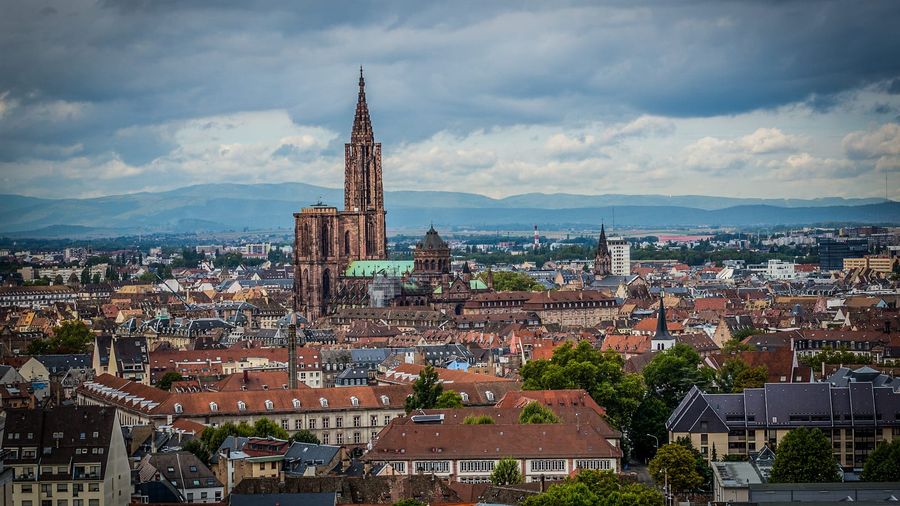
The best time to visit Strasbourg is May–June and September, when the weather is mild, the Grande Île terraces are open, and the crowds sit well below their peak. For the famous Christmas markets, come in late November and December; for the lowest prices and quietest cathedral, choose January or February.
Strasbourg rewards timing more deliberately than most French cities because it runs on two different calendars at once. There is the weather calendar — a semi-continental one, with cold Alsatian winters and warm, thundery summers — and there is the institutional-and-festival calendar of the European Parliament, the Alsace wine harvest, and the Christkindelsmärik that has drawn visitors since 1570. Line those two up well and the cathedral, the canals, and the vineyards of the wider France all fall into place on the same trip.
What is the short answer on when to visit Strasbourg?
For most travellers the sweet spot is late spring or early autumn — May, June, or September — which pairs comfortable walking weather with a full cultural calendar and none of December's price surge or high-summer haze.
The city's own month ratings rank May through August as the strongest stretch for weather, but the picture is more interesting than a single peak. Late spring brings blossom, long light, and open terraces. September adds the wine harvest in the surrounding villages and the Parliament back in session. Late November and December transform the old town into Europe's most storied Christmas market, at the cost of the year's biggest crowds and room rates. January and February are cold and quiet, which is exactly the appeal if you want the cathedral almost to yourself.
What is Strasbourg's weather like month by month?
Strasbourg has a semi-continental climate, sitting in the sheltered Rhine plain behind the Vosges: warmer summers and colder, frostier winters than France's Atlantic cities, with rain fairly even across the year and a summer peak of thundery showers.
Summer highs sit in the low-to-mid 20s°C and can spike higher during heatwaves, while winter days often hover near freezing, with hard frosts, occasional snow, and long grey spells. Spring and autumn are changeable but frequently glorious, and the shelter of the Vosges keeps the plain drier than the mountains just to the west.
| Season | Air temp | Feel |
|---|---|---|
| Winter (Dec–Feb) | 0–6°C | Cold, damp, festive in December |
| Spring (Mar–May) | 8–20°C | Warming, blossoming, uncrowded |
| Summer (Jun–Aug) | 18–26°C | Warm, long light, thundery spells |
| Autumn (Sep–Nov) | 7–20°C | Harvest colour, thinning crowds |
When do the Christmas markets change everything?
The single biggest date on Strasbourg's calendar is the Christkindelsmärik, which runs from late November to 24 December and reshapes the entire experience — and cost — of a visit.
First documented in 1570, it is among the oldest Christmas markets in Europe, and it now scatters roughly a dozen themed markets across the old town, drawing about two million visitors in a few short weeks. The upside is genuine magic: a giant tree on Place Kléber, mulled wine and bredele biscuits, and the half-timbered quarter under lights. The downside is equally real — hotels sell out and prices roughly double, the central squares are shoulder-to-shoulder on weekends, and security checkpoints ring the island. If the market is your reason to come, book two to three months ahead and favour a weekday or an early-December visit over the final pre-Christmas weekend.
How does the European Parliament calendar affect your visit?
Strasbourg is the official seat of the European Parliament, which holds around twelve plenary sessions a year — and timing your trip to one of them adds a dimension no other French city offers.
During a plenary week the European Quarter fills with MEPs, staff, and journalists, and free guided tours of the hemicycle run when the schedule allows, letting you watch EU governance firsthand. The flip side is August: Parliament breaks for summer recess, some family-run winstubs and independent shops close for holidays, and a slice of the city's working energy drains away even as the weather stays fine. Check the Parliament's published plenary calendar before booking if the institutions are part of your plan; avoid assuming any given week is in session.
What do Strasbourg tours and guides cost?
Guide rates hold fairly steady through the year; what shifts with the season is availability, which tightens sharply in December and eases to short-notice booking in the depths of winter.
Strasbourg's dual Franco-German heritage means the strongest guides are genuinely bilingual, and the best specialise — cathedral art historians who decode the astronomical clock's 12:30 pm performance, EU-institution experts, and Alsatian-culture guides who lead the winstub and wine-route circuit. A licensed guide is what turns the pink-sandstone cathedral and the canals of Petite France from a photogenic backdrop into a legible thousand-year border story.
| Tour type | Typical price | Best booked |
|---|---|---|
| Group walking tour (2 hrs) | €12–20 per person | 1–2 days ahead; a week in December |
| Batorama boat tour (70 min) | €15–25 per person | Same day, except December weekends |
| Private half-day (up to 6) | €150–250 | A week ahead; earlier in December |
| Private full-day incl. wine route | €300–450 | Two+ weeks ahead in peak season |
How much does a Strasbourg trip cost by season?
Accommodation is where the calendar hits hardest: a room that costs €80 in February can more than double during the Christmas market, while meals, tours, and transit barely move across the year.
December is the singular spike — the Christkindelsmärik pushes central hotels to their annual ceiling and fills them weeks out. Summer and the shoulder months are moderate, and the January–February trough is where value-focused travellers find the city at its cheapest. The ranges below are indicative for a mid-range traveller.
| Item | Shoulder (May–Jun, Sep) | Christmas market (late Nov–Dec) | Winter (Jan–Feb) |
|---|---|---|---|
| 3-star hotel / night | €100–160 | €200–350 | €70–120 |
| Winstub dinner | €22–35 | €25–40 | €20–32 |
| Batorama boat tour | €15–25 | €15–25 | Reduced service |
| Group walking tour | €12–20 | €12–20 | €12–20 |
If you want the markets without the peak rate, look at staying in Colmar or a wine-route village and day-tripping in by regional train, or shift to the market's opening days in the last week of November.
What is there to do beyond the markets, season by season?
Away from December, Strasbourg's seasons each unlock something distinct — spring blossom on the Grande Île, summer light shows and long river evenings, and the autumn wine harvest across nearby Alsatian villages.
In summer, the cathedral's façade hosts free after-dark projection shows, and the Rhinaissance riverside events animate the quays through the warm evenings. September and October are prime for the Alsace Wine Route, when villages like Riquewihr, Colmar, and Obernai turn to harvest and the Riesling and Gewürztraminer cellars open for tastings — an easy day trip by regional train or guided minibus. Spring is the quiet connoisseur's choice: mild, blossoming, and free of both summer haze and winter grey. Whatever the month, the astronomical clock performs at 12:30 pm and the Petite France canals reward an early-morning walk before the day-trippers arrive.
How do you get around Strasbourg?
The historic core is walkable and largely car-free in every season; the seasonal variables are the December crowds on the island and how far you range into the vineyards.
Six tram lines run by the CTS link the European Quarter, the train station, and the suburbs, and a day pass is the simplest way to reach the outlying institutions. The UNESCO-listed Grande Île has been pedestrianised at its heart since long before it became fashionable, so walking is the natural pace, and Strasbourg is among France's most bike-friendly cities, with a Vélhop share scheme and lanes throughout — realistic in the drier months, less tempting in an icy January. Covered Batorama boats loop the canals from beside the cathedral year-round. For wider trips, the TGV reaches Paris in under two hours and regional trains connect Colmar, Mulhouse, and Baden-Baden across the German border, making Strasbourg an easy anchor for a broader tour of France or the Rhineland.
Which season matches your travel priority?
Choose by what you most want. Markets and midwinter atmosphere point to December; wine and harvest colour point to September; mild weather and value point to the shoulder months; solitude and low prices point to deep winter.
| Priority | Best window |
|---|---|
| Christmas markets and festive lights | Late November to 24 December |
| Wine harvest and Alsace day trips | September to mid-October |
| Mild weather with open terraces | May, June, and early September |
| European Parliament in session | A published plenary week (not August) |
| Lowest prices and quiet cathedral | January and February |
Strasbourg does not demand a perfect month so much as an honest match between the calendar and what drew you here. If it has to be one week, make it early September: the vineyards are turning, the Parliament is back at work, the evenings are still warm enough to linger over a tarte flambée on the water, and the Christmas crowds are three months away. Whichever season you choose, a knowledgeable local guide is what stitches the cathedral, the canals, and the wine hills into a single Alsatian story.
Related guides
- European Christmas Markets — how Strasbourg's Christkindelsmärik fits into a wider festive-season trip
- Best Time to Visit Marseille — timing another French city around its seasonal rhythms
- Planning a Bordeaux Trip — pairing Strasbourg with a second French wine region
Weighing up when to see Strasbourg and whether to build the trip around the markets, the wine route, or the institutions? Reach out for tailored, season-specific advice.
Frequently Asked Questions
What is the best time to visit Strasbourg?
May, June, and September strike the best balance, with mild days in the low-to-mid 20s°C, café terraces open across the Grande Île, and lighter crowds than the peak. Come in late November and December for the Christmas markets, and January or February for the lowest prices.
When are the Strasbourg Christmas markets open?
The Christkindelsmärik runs from the Saturday before the first Advent Sunday until 24 December, occasionally extended toward the New Year. Dating to 1570, it is among the oldest in Europe and draws roughly two million visitors, so book accommodation two to three months ahead and expect the highest room rates of the year.
Is August a good month to visit Strasbourg?
The weather is warm and reliable, but the European Parliament is in summer recess, some family-run winstubs and shops close for holidays, and you lose the chance to see the institutions in session. If EU governance is your reason to come, choose a plenary month instead; if you simply want sunshine and long evenings, August is fine.
Does it snow in Strasbourg at Christmas?
Sometimes, but it is not guaranteed. Strasbourg's semi-continental climate brings cold December days often hovering near freezing, with occasional snow and frequent grey, damp spells. Dress for 0-5°C, and treat any snowfall over the half-timbered houses as a bonus rather than a certainty.