
European Christmas Market Tours
Complete guide to Europe's most magical Christmas markets in Amsterdam, Paris, Vienna, and Munich with tour recommendations, costs, and insider tips for the holiday season.
Read the full guideUpdated · 10 min read
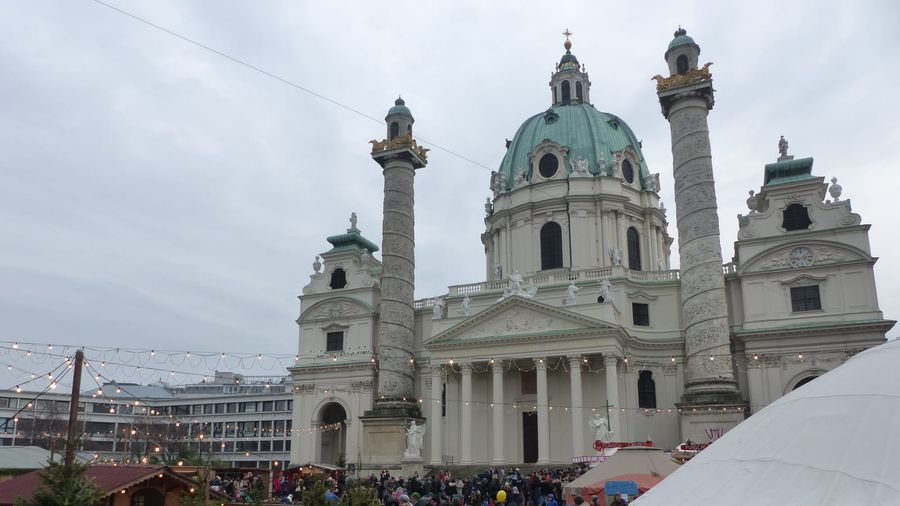
Europe's finest Christmas markets cluster in Munich, Vienna, Paris, and Amsterdam, each running from late November to around December 24. Germanic cities keep the tradition purest with Glühwein, Lebkuchen, and medieval squares, while Paris adds gastronomy and Amsterdam offers light art and ice skating. Budget roughly 20-35 euros a day per person.
The tradition traces to the late Middle Ages, when German-speaking cities held December markets to stock households with meat, winter clothing, and festive goods before the long cold. Dresden's Striezelmarkt is documented from 1434; Vienna's December Market appears in records from 1298. Practical commerce slowly became the mulled-wine-scented institution that now draws millions across the continent each winter.
Regional character still varies enormously, and matching it to your expectations is the whole game. German and Austrian markets stay closest to the origin, with hand-carved ornaments, Lebkuchen, and choir performances in medieval squares. French markets lean into gastronomy and elegance, while Dutch markets emphasise ice skating and gezelligheid, that untranslatable sense of cosy togetherness. Book Amsterdam expecting Vienna and you will be disappointed, and vice versa.
What makes Munich and Bavaria's Christmas markets special?
Munich alone hosts over a dozen markets, led by the Marienplatz Christkindlmarkt with 140-plus stalls beneath the New Town Hall. Bavaria guards the tradition zealously: expect hand-carved ornaments, Feuerzangenbowle, and trumpeters from the Town Hall balcony. Each market has a distinct personality, so it pays to visit several rather than one.
The Marienplatz market fills the square around the neo-Gothic New Town Hall with Bavarian crafts, hand-blown ornaments, and more varieties of Glühwein than you knew existed. Trumpeters perform daily from the balcony while the glockenspiel chimes overhead. It is the tradition at its purest, which also means it is crowded: come on weekday mornings soon after the 10 AM opening, or after 7 PM when day-trippers thin out and the lights glow brightest.
Away from the main square, Munich rewards wandering:
- Medieval Market (Wittelsbacher Platz): a period-accurate fair with costumed vendors and fire shows, theatrical and family-friendly.
- Tollwood Winter Festival: multicultural and socially conscious, with international crafts, organic food, and live concerts — the counterpoint to tradition.
- Viktualienmarkt: the permanent food market adds decorations but keeps its year-round identity. Fewer tourists, better food, more locals.
- Chinese Tower (English Garden): a small, peaceful market around a pagoda-style tower, worth the detour from the centre.
Come hungry. Feuerzangenbowle — a rum-soaked sugar cone set alight over mulled wine — is the dramatic local specialty, alongside soft, spicy Lebkuchen in the Nuremberg tradition, marzipan-studded Stollen, Gebrannte Mandeln (sugared roasted almonds), Reiberdatschi (potato pancakes with applesauce), and Käsespätzle, essentially alpine mac and cheese. For a wider itinerary, pair the markets with the rest of Munich.
Why are Vienna's Christmas markets worth visiting?
Vienna wraps the tradition in imperial elegance, anchored by the Rathausplatz market's 150-plus stalls before the illuminated City Hall. Schönbrunn and Belvedere trade crowds for Baroque backdrops and classical concerts, while Spittelberg's cobbled lanes showcase local artisans. Markets close December 24, some extending to the 26th.
The Rathausplatz market fills the plaza before the neo-Gothic City Hall, which is lit so spectacularly that the building itself becomes the attraction. Ice-skating paths wind through the adjacent park and live music runs nightly; arrive after 5 PM when the lights activate. For a calmer visit, the Schönbrunn Palace courtyard market (70-plus stalls) swaps those crowds for higher-quality artisan goods and palace concerts, making it the most elegant market on the circuit — and a natural add-on to a daytime tour of the imperial summer palace.
For the least commercial atmosphere, head to Spittelberg, a knot of narrow cobblestone streets in the 7th district where 40-plus stalls showcase craftspeople rather than mass-produced goods — this is where Viennese shoppers buy gifts for people they actually care about. The Belvedere market pairs an artistic bent with the palace facade, while Karlsplatz Art Advent skews contemporary and design-focused for a younger crowd.
Viennese specialties reflect the old empire's reach: Punsch (stronger than Glühwein, from orange to elderflower), roasted Maroni chestnuts sold from street carts, Habsburg-era Kaiserschmarrn (shredded pancake with plum compote), elaborately decorated Lebkuchen, market-stall Sachertorte, and Hungarian Langos fried bread. Weekday evenings from late November through mid-December are calmest; the first two December weekends bring the crush, and December 8 (Feast of the Immaculate Conception) is a busy public holiday. See the full Vienna guide to build the markets into a longer stay.
How do Paris and Amsterdam do Christmas markets differently?
Paris and Amsterdam lack the Germanic centuries but reward visiting. Paris compensates with scale and cuisine: the Champs-Élysées market stretches over 160 chalets serving vin chaud and raclette. Amsterdam leans on atmosphere instead, with the canal-side Light Festival, Museumplein ice skating, and oliebollen.
The Champs-Élysées market (mid-November to early January) runs from Place de la Concorde to the Rond-Point, one of Europe's largest, and is unbeatable after dark when the avenue becomes a corridor of light. The Tuileries Winter Wonderland adds carnival rides, a 50-metre Ferris wheel, and ice skating for families. Escape the crowds at smaller markets near Notre-Dame (intimate), in La Défense (affordable), or in literary Saint-Germain-des-Prés. French stalls lean into regional gastronomy: vin chaud, marrons chauds, crêpes, raclette scraped onto bread and potatoes, tartiflette, pain d'épices, and the occasional foie gras. There is far more to the city in the Paris guide.
Amsterdam is less about wooden-chalet shopping than atmospheric winter experiences. The Amsterdam Light Festival (late November to January) installs contemporary light art along the canals, best seen from an evening boat cruise (€18-35) — not a market in the strict sense, but the city's defining winter event. The Ice Village at Museumplein surrounds an outdoor rink between the Rijksmuseum and Van Gogh Museum (€10-12.50 for two hours). Dam Square hosts a mid-sized traditional market, while the Jordaan district scatters low-key neighbourhood markets through its canals. Dutch treats centre on warmth and sugar: oliebollen (fried dough with powdered sugar), warm stroopwafels, poffertjes, thick hot chocolate, and advocaat. The Amsterdam guide covers the rest of a winter visit.
What do guided Christmas market tours cost?
Guided tours handle crowds and transit logistics while a local explains why each city celebrates the way it does. Walking tours run €45-110 per person; concert pairings and private experiences cost more. All prices are per person unless a group rate is noted.
| City | Tour type | Duration | Price | Typically includes |
|---|---|---|---|---|
| Munich | Traditional market walk | 3-4h | €55-85 | Glühwein and Lebkuchen tastings |
| Munich | Beer-hall & market hybrid | 4h | €75-110 | Historic beer-hall stops |
| Munich | Nuremberg day trip | Full day | €95-145 | Train to the Christkindlesmarkt |
| Vienna | Three-market walk | 3-4h | €65-95 | Rathausplatz, Schönbrunn, Spittelberg |
| Vienna | Concert & market evening | 5-6h | €120-180 | Schönbrunn concert and dinner |
| Vienna | Private imperial tour | 4-5h | €250-400 / group | Habsburg history and festive backdrop |
| Paris | Markets & illuminations walk | 3-4h | €75-110 | Champs-Élysées and Tuileries |
| Paris | Food-focused tour | 3h | €85-120 | 8-10 tastings across markets |
| Paris | Private car tour | 4-5h | €300-500 / group | Three to four markets, no metro |
| Amsterdam | Canal cruise & market walk | 3-4h | €65-95 | Light Festival and Glühwein |
| Amsterdam | Jordaan neighbourhood tour | 2-3h | €45-65 | Dutch treats and local tradition |
Nuremberg's Christkindlesmarkt is arguably Germany's finest, so the Munich day trip earns its price if you have the time. In Vienna, a guide who ties the markets to the city's imperial and musical heritage adds genuine depth; in Paris and Amsterdam, the value is mostly logistical — skipping the metro or timing the Light Festival cruise for the best light.
How do you plan a multi-city Christmas market trip?
Europe's rail network makes combining markets straightforward — most pairs of cities sit two to four hours apart. Book trains and hotels early, as December is peak season. Self-guided travel saves 30-50% over organised tours but demands comfort with European transit.
| Route | Cities | Days | Notes |
|---|---|---|---|
| Rhine river cruise | Amsterdam → Cologne → Strasbourg → Basel | 7-10 | Six to eight markets, no repacking |
| Central Europe triangle | Vienna, Prague, Munich | 5-7 | Three spectacular markets by train |
| German heartland | Munich, Nuremberg, Rothenburg, Cologne | 7-10 | The tradition's birthplace |
| Alpine circuit | Munich, Salzburg, Innsbruck, Vienna | 5-7 | Mountain settings, small-town charm |
The Alpine circuit is the most scenic, threading Salzburg and Innsbruck between the Bavarian and Viennese giants; add nearby Hallstatt for a lakeside detour. Organised group tours handle every logistic and supply expert guides but lock you into fixed schedules; self-guided trips trade that convenience for flexibility and lower cost, provided you book accommodation well ahead.
What should you pack, and what will it cost?
Markets mean hours standing outdoors in freezing cold, so pack a warm waterproof coat, gloves, an insulated hat, and boots with grip for icy cobblestones. Carry a crossbody bag against pickpockets and cash in local currency, since many stalls refuse cards. Budget €20-35 per person per day for a moderate visit.
Treat a warm waterproof coat, scarf, gloves, insulated hat, and grippy waterproof boots as non-negotiable — cobblestones plus snow equals falls. Pickpockets work Christmas markets systematically, so a zipped crossbody bag and cash in local currency beat fumbling with a wallet. Hand warmers, a portable phone charger, and a thermos (permitted at some markets, not all) round out the kit.
Costs stay modest. A moderate visit — two or three drinks, a couple of snacks, one small gift — runs €20-35 per person per day; an indulgent outing with meals reaches €40-70. Individual items: Glühwein €3-6 a mug, food €4-12, ornaments €3-15, quality handcrafted gifts €20-80. Buy your Glühwein mug on the first pour and refills come €0.50-1 cheaper, lunch costs less than dinner, and the same ornament can vary 40% between stalls, so compare before buying.
When is the best time to avoid crowds?
Most markets open around November 20-25 and close December 24, with a few running through New Year. Crowds peak on December weekends and intensify sharply December 19-23. The quietest windows are weekday mornings just after the 10-11 AM opening and late evenings after 8 PM; early-season late-November visits stay pleasantly uncrowded.
The crush builds on weekends throughout December and spikes December 19-23 as last-minute shoppers descend. Weekday mornings and late evenings are consistently calmer, and a late-November visit delivers the full experience — lights, Glühwein, full stalls — at a fraction of peak-December density. Smaller neighbourhood markets stay quieter than the famous central squares all season, so mix a marquee square with an intimate side-street market on the same evening.
Related Guides
For more European Christmas market planning:
- Amsterdam Canal Tours Compared - Choose the right cruise for the Light Festival season
- Planning the Perfect Paris Trip - Extend your festive break with a full Paris itinerary
- Best Time to Visit London - December in London: Winter Wonderland and festive attractions
First-timers torn between the four should lean toward Vienna for spectacle or Munich for tradition; food-focused travellers gravitate to Paris, and anyone combining markets with wider sightseeing finds Amsterdam the most versatile base. Whichever you choose, dress for the cold, bring cash, arrive hungry, and give yourself permission to linger — these markets reward slow exploration far more than efficient coverage.
Have questions about planning your Christmas market trip? Contact us for personalized city recommendations and connections to local holiday tour guides.
Frequently Asked Questions
When do European Christmas markets open and close?
Most run from mid- or late November until 23 or 24 December, though some in major cities extend into early January. German markets typically close earliest, on Christmas Eve.
Which European cities have the best Christmas markets?
Germanic cities like Munich, Nuremberg and Vienna are considered the heartland of the tradition, while Paris, Amsterdam and Strasbourg offer their own distinctive styles.
How much should I budget for food and drink at the markets?
A mug of mulled wine usually costs a few euros plus a refundable mug deposit, and hot snacks like sausages or pastries are similarly priced, making the markets an affordable evening out.
Are Christmas markets suitable for a multi-city trip?
Yes, Central Europe's rail network links market cities in a few hours, so a week can comfortably combine two or three. Book trains and accommodation early, as December is peak season.