
Rhodes timeline
- 408 BCE
The city of Rhodes is founded
Three older Rhodian city-states — Ialysos, Kamiros, and Lindos — merged to lay out a new planned capital whose grid still underlies the Old Town.
- 226 BCE
The Colossus falls
An earthquake toppled the 33-metre bronze Colossus of Rhodes, one of the Seven Wonders, after barely six decades standing near the harbour.
-
The Knights Hospitaller take Rhodes
The Order of St John made the island its headquarters, beginning two centuries of fortress-building that produced the medieval city seen today.
-
Ottoman conquest
After a six-month siege, Suleiman the Magnificent expelled the Knights; mosques, hammams, and fountains joined the Crusader streetscape.
-
Italian rule of the Dodecanese
Italy occupied Rhodes for three decades, excavating the ancient levels and controversially rebuilding the Palace of the Grand Master.
-
Union with Greece
The Dodecanese were formally incorporated into the modern Greek state, ending centuries of foreign rule.
-
UNESCO World Heritage listing
The Medieval City of Rhodes was inscribed as one of the finest surviving urban ensembles of the Gothic period.
Cited city facts
Key facts for visiting Rhodes
Rhodes Old Town has been continuously inhabited for roughly 2,400 years
Founded as a planned grid city in 408 BCE through the synoikism of Ialysos, Kamiros, and Lindos, the settlement passed through Hellenistic, Roman, Byzantine, Arab, Crusader, Ottoman, and Italian phases before modern Greek rule — each layer still legible in the streets UNESCO inscribed in 1988
The Knights of St John built one of Europe's largest surviving fortified medieval towns here
After arriving from Jerusalem via Cyprus in 1309, the Knights Hospitaller spent two centuries raising a system of walls up to twelve metres thick, towers, and dry moats that withstood repeated sieges before falling to Suleiman the Magnificent in 1522
The Colossus of Rhodes stood near the harbour entrance for only about 60 years
One of the Seven Wonders of the Ancient World, the roughly 33-metre bronze statue of Helios was completed around 280 BCE and felled by an earthquake in 226 BCE; its exact location and stance remain subjects of scholarly debate
Rhodes draws over 3 million visitors a year
Tourism is the backbone of the island's economy and of the wider South Aegean region, one of the most tourism-dependent parts of Greece, where the sector sustains the great majority of employment and income
Source: tour-guide.com — Free to cite with attribution
Things to see
What are the top attractions in Rhodes?
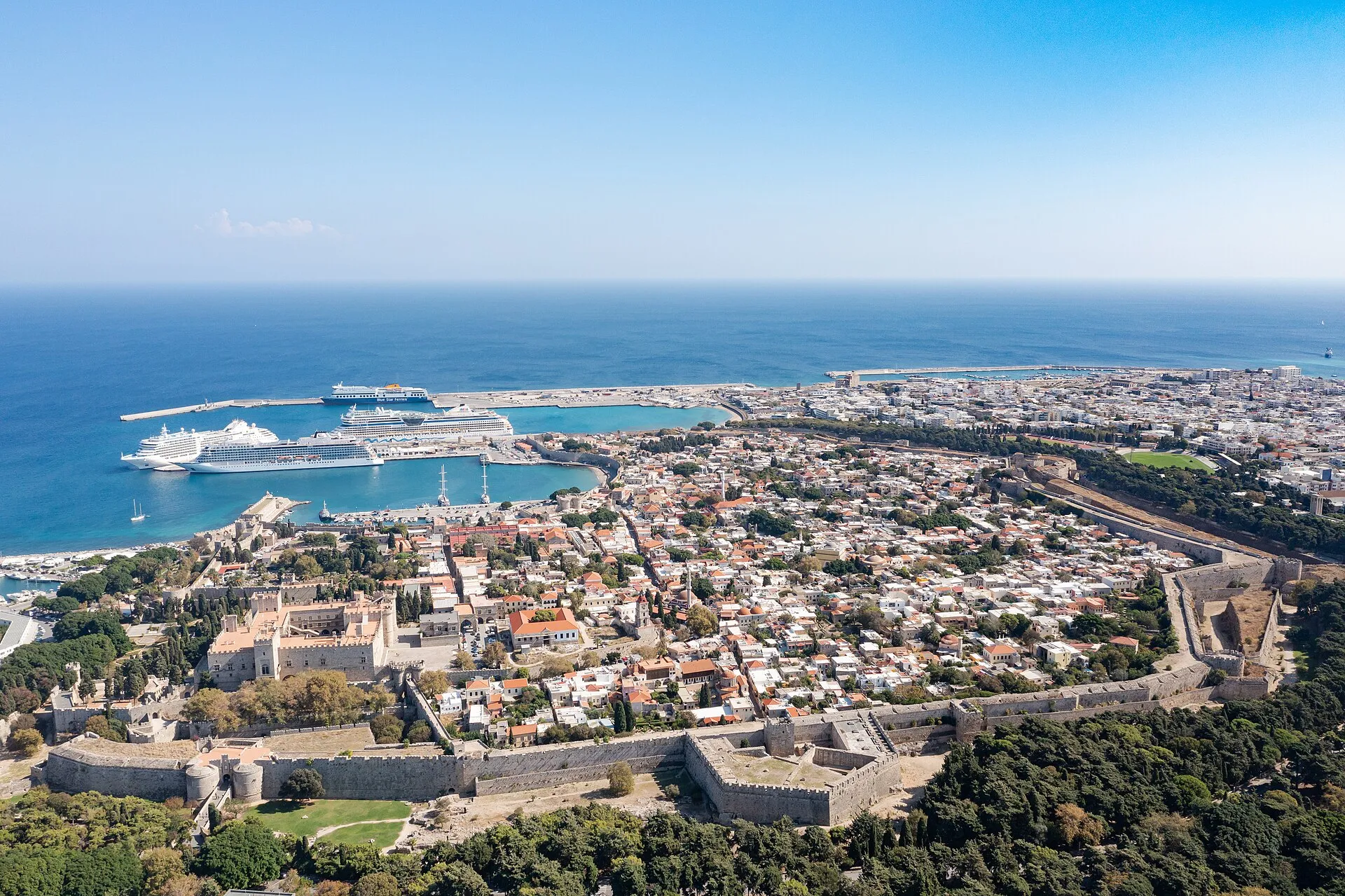
- Old Town of Rhodes — Complete medieval walled city with Byzantine churches, Ottoman mosques, and Crusader architecture intermingled; the four-kilometre walls can be walked for most of their circuit
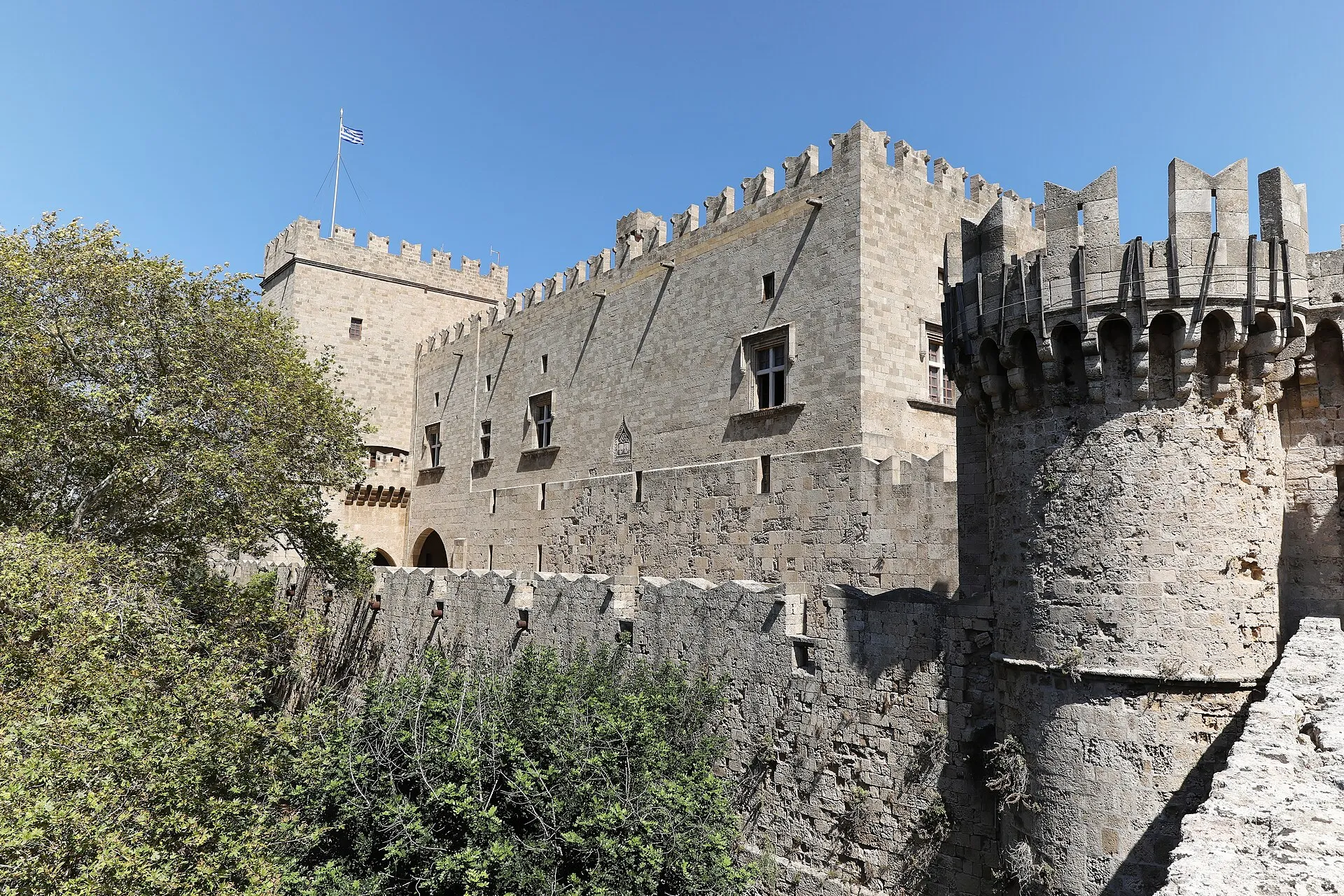
- Palace of the Grand Master — Restored Crusader palace with mosaic floors rescued from the island of Kos and exhibitions on the history of the Knights
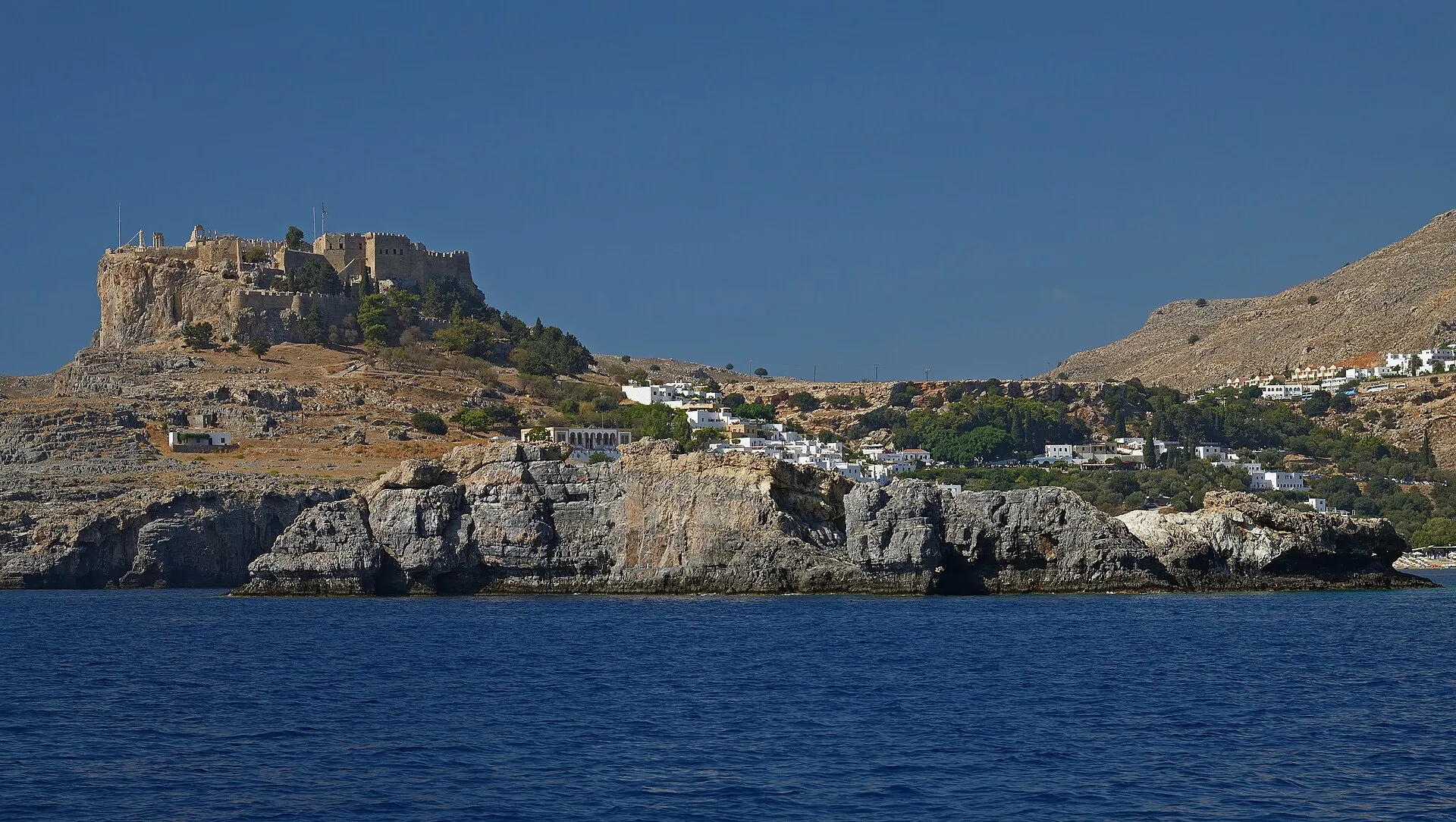
- Acropolis of Lindos — Fourth-century BCE Doric temple of Athena Lindia on a dramatic clifftop promontory above the sea, enclosed by a later Knights' castle
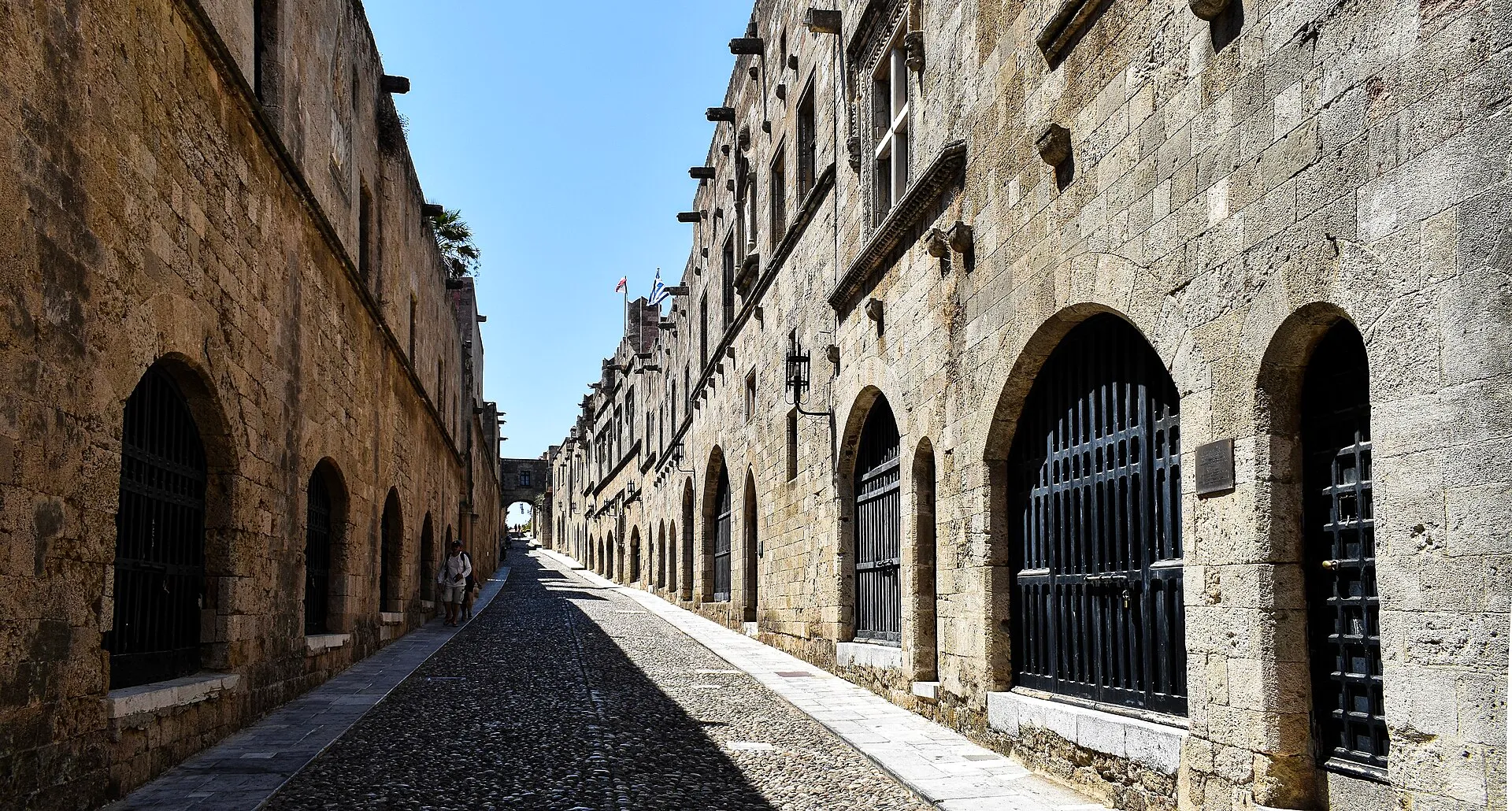
- Street of the Knights — The best-preserved medieval street in Europe, flanked by the auberges (inns) of the Knights' nationalities
- Mandraki Harbour — The ancient harbour where the Colossus of Rhodes once stood, guarded today by bronze deer on granite columns and three restored windmills
- Monte Smith — The ancient acropolis of Rhodes City, with three re-erected Doric columns of the Temple of Apollo and sweeping views over the coast at sunset
Acropolis of Lindos
A fourth-century BCE Doric temple on a sea cliff — one of ancient Greece's most dramatically sited acropolis sites
Old Town of Rhodes
The most complete medieval walled city in the Mediterranean — Crusaders, Ottomans, and 2,400 years of living history
Palace of the Grand Master
The Crusaders' greatest palace — Gothic halls, Byzantine towers, and Roman mosaics from a distant island
Street of the Knights
The finest medieval street in Europe — where Crusader knights from eight nations lived side by side for two centuries
Guide planning
How much does a tour guide cost in Rhodes?
| Tour Type | Price | Details |
|---|---|---|
| Group Walking Tour (Old Town) | €15–25 | Per person, 2 hours |
| Private Half-Day (Rhodes Town) | €80–150 | Up to 6 people |
| Full-Day Rhodes + Lindos | €150–250 | Up to 6 people, transport included |
| Specialist Medieval History Guide | €200–350 | Full day, expert in Knights Hospitaller |
- Licensed guides — Required for the Palace of the Grand Master interior and strongly recommended for the Old Town's complex architectural history
- Lindos donkey rides — The traditional way up to the Acropolis of Lindos; guides who include this add a memorable dimension
- Evening tours — The Old Town is particularly atmospheric after dark when the day-trippers and cruise passengers leave and the lamplit lanes empty out
Season planner
When is the best time to visit Rhodes?
- May–June: Ideal weather (24–28°C), seas warming, and far fewer crowds than peak summer
- September: Best month overall — warm sea, manageable crowds, lower prices, and the end-of-season calm settling over the resorts
- Old Town year-round: The medieval city is wonderful in any season; spring wildflowers and autumn light make March–April and October especially rewarding
- Avoid midday July–August inside the walls: The Old Town can reach 35°C+ with little shade; mornings and evenings are far more comfortable
- Lindos: Go early morning or late afternoon — midday crowds and heat on the exposed Acropolis of Lindos climb can be punishing
Spring
Mar-May
Summer
Jun-Aug
Autumn
Sep-Nov
Winter
Dec-Feb
Each score averages that season’s monthly ratings out of 5. The top-rated window is usually the peak season too, so read the guidance above for its trade-offs before you book.
On the ground
How do you get around Rhodes?
The Old Town is entirely car-free and must be explored on foot — which is how it should be, given its labyrinthine medieval street plan. Rhodes Town's Mandraki harbour, where the Colossus is thought to have stood, is a 10-minute walk from the Old Town gates. Buses for Lindos (journey approximately 1 hour) depart from two stands near Mandraki; the timetable is reliable in summer but sparse in winter.
- Diagoras Airport (RHO) sits 14 km southwest of town, linked by local bus and taxi; year-round flights reach Athens in about an hour
- Ferries dock beside the Old Town — overnight from Piraeus, or fast catamarans along the Dodecanese to Kos, Symi, and Patmos
- Hire cars from the airport give the most freedom for the island's interior valleys, hilltop villages, and quieter southern beaches
- On foot inside the walls — wear stable shoes for the polished cobbles and carry water, as the walled city traps summer heat
Frequently Asked Questions
What is the best time to visit Rhodes?
May, June, and September offer the ideal combination of warm sea temperatures (22–26°C), long sunny days, and manageable visitor numbers. July and August are the peak summer months — blazing hot, crowded, and expensive. The Old Town is atmospheric year-round; spring (March–April) sees wildflowers covering the hillsides and the island nearly to yourself. Winter sees many resort facilities close, but the walled city continues its daily life largely untouched by tourism.
How much does a tour guide cost in Rhodes?
Group walking tours of the Old Town typically cost €15–25 per person. Private half-day tours of Rhodes Town including the Palace of the Grand Master and the Street of the Knights run €80–150 for up to 6 people. Full-day tours combining Rhodes Town with Lindos and the Valley of the Butterflies cost €150–250 including transport. Licensed guides with specialist knowledge of medieval military architecture or ancient Greek history command a premium.
How do you get around Rhodes?
Rhodes Town itself is compact and the Old Town is car-free, making walking the only option inside the walls. Buses serve the main coastal towns including the Acropolis of Lindos (about 1 hour south) from the two bus stations at Mandraki harbour. Hire cars give the most flexibility for exploring the island's interior, hilltop villages, and southern beaches. Taxis and private transfers are also readily available.
How do you reach Rhodes from Athens and the other islands?
Rhodes is one of the best-connected islands in the Dodecanese. Diagoras Airport (RHO), about 14 km southwest of Rhodes Town, receives year-round domestic flights from Athens and Thessaloniki (roughly one hour) plus heavy summer charter traffic from across Europe. Ferries dock at the commercial harbour beside the Old Town: overnight sailings from Piraeus take 12–18 hours, while fast catamarans hop up the Dodecanese chain to Kos, Symi, and Patmos. As the country page on Greece explains, high-speed services are the first cancelled in strong meltemi winds, so leave a buffer day before any onward flight.
Can you still see the Colossus of Rhodes?
No — the Colossus, a roughly 33-metre bronze statue of the sun god Helios and one of the Seven Wonders of the Ancient World, stood for barely six decades before an earthquake toppled it in 226 BCE. Contrary to the popular image, it almost certainly never straddled the harbour mouth. Today the likeliest site is Mandraki harbour, whose entrance is marked by two bronze deer on columns; a guide can walk you through the archaeological debate over where and how the statue actually stood.