
Local Life
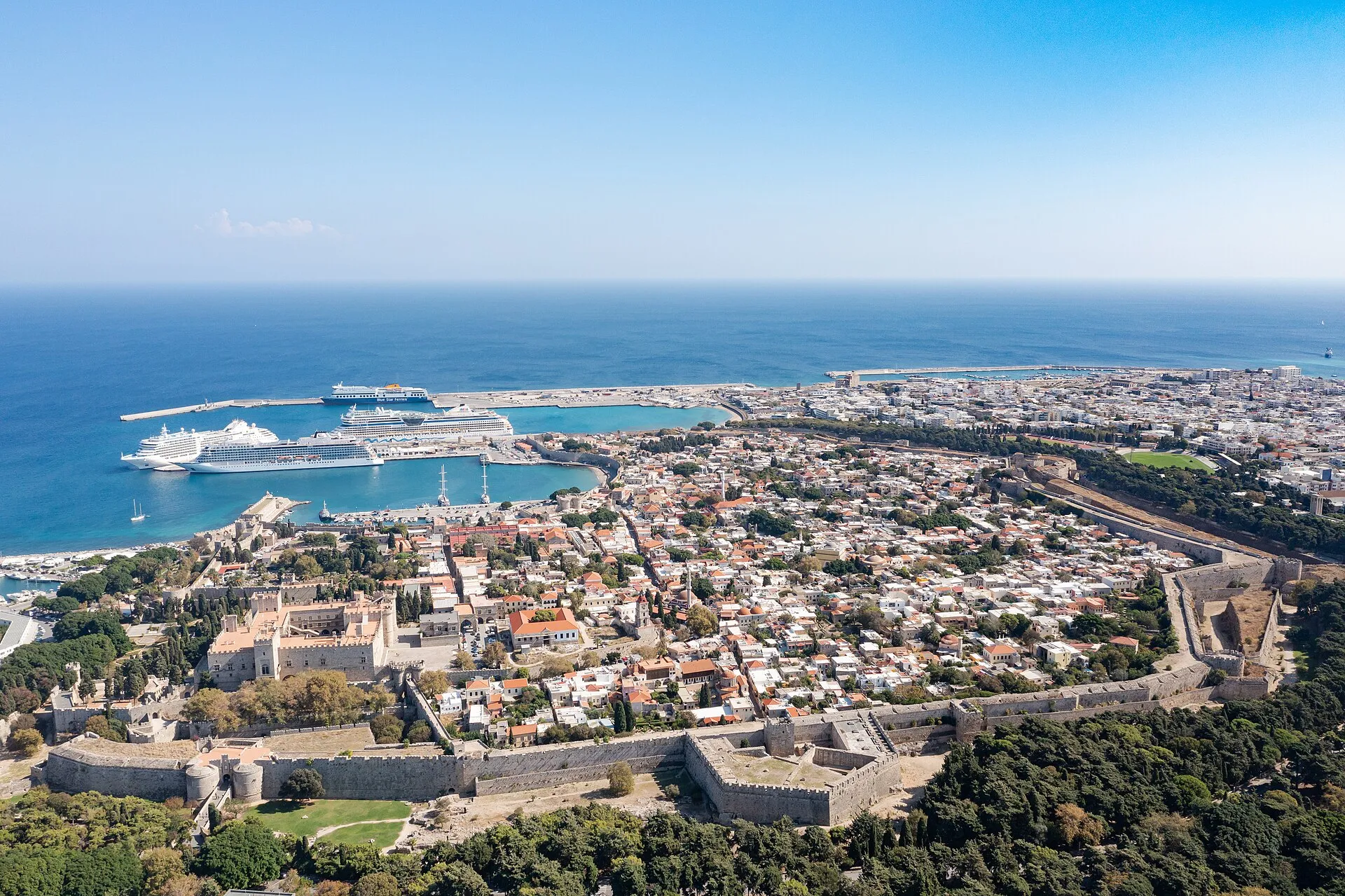
Rhodes's position at the crossroads of Aegean, eastern Mediterranean, and Levantine sea routes gave the city extraordinary strategic and commercial importance from antiquity. Founded in 408 BCE on a new site by the synoikism (merging) of three earlier Rhodian cities, it was a major commercial centre and intellectual hub in the Hellenistic period — home to the Colossus, one of the Seven Wonders of the Ancient World, and to the Rhodian school of rhetoric where Julius Caesar and Cicero both studied. After passing through Byzantine, Arab, Byzantine again, and briefly Genoese rule, it was captured by the Knights Hospitaller in 1309, who transformed it into the most powerful Christian fortress in the eastern Mediterranean. The Knights' 213-year occupation left the city its distinctive Crusader architecture before Suleiman the Magnificent's conquest in 1522. The subsequent Ottoman occupation (1522–1912) is visible in the mosques, baths, and fountains that coexist with the Crusader and Byzantine layers. The Italian administration (1912–1943) excavated the ancient levels and restored — somewhat controversially — the Palace of the Grand Master. All these layers coexist in the Old Town's streets today.
When to Visit
The Old Town streets and walls are accessible at all hours. Major monuments have their own hours: the Palace of the Grand Master opens Tuesday–Sunday 8 AM–3 PM; the Archaeological Museum Tuesday–Sunday 8 AM–3 PM; the Byzantine Museum Tuesday–Sunday 8 AM–3 PM. Most are closed Monday. Evening in the Old Town (7–11 PM from May through October) is exceptional — the restaurants open, day-trippers from the cruise ships leave, and the lamplit lanes take on a completely different atmosphere. Allow at least a full day for a serious visit; half a day is enough for the main monuments only.
Admission and Costs
Exploring the Old Town streets, walls, and squares is free. Individual site entries: Palace of the Grand Master: €10. Archaeological Museum: €6. Byzantine Museum: €3. Combined ticket for Palace + Archaeological Museum + Byzantine Museum: €12. Guided group tours of the Old Town (2 hours): €20–35 per person. Private guide for up to 6 people: €80–150 for a 2-hour walk. Full-day private tour combining the Old Town and Acropolis of Lindos: €150–250 including transport to Lindos.
The Case for a Guide
The Old Town's layered history — ancient, Byzantine, Crusader, Ottoman, Italian colonial, Greek — genuinely requires a guide to decode:
- Reading the architecture — Identifying which buildings are medieval Crusader, which are Ottoman additions, and which are Italian colonial reconstructions or inventions requires expertise
- The seven gates — Each of the Old Town's gates has a different history; the Gate of Saint Paul, the Gate of Koskino, and the Marine Gate each tell a different chapter of the city's history
- Jewish Quarter — The Evraiki quarter in the southeastern corner of the Old Town has a distinct history; the Kahal Shalom Synagogue (1577) is the oldest continuously used synagogue in Europe
- Contemporary life — A guide who lives in the Old Town can explain how permanent residents navigate tourist infrastructure and what daily life in a UNESCO-listed living city looks like
Tips for Visitors
Get lost deliberately in the residential lanes south of Ippocratous Square — these areas see far fewer tourists and are architecturally fascinating. The walls can be walked for most of their circuit (entrance near the Palace); this is one of the finest urban walks in the Mediterranean and offers views unavailable from street level. The Ottoman Süleymaniye Mosque on Sokratous Street is currently closed for restoration but its exterior is imposing; the clock tower nearby offers a paid climb with excellent views. Most of the tourist restaurants are concentrated near the Palace of the Grand Master — walking five minutes south finds considerably better food at lower prices. Bring water on any warm-season visit; the walled city traps heat.
Frequently Asked Questions
How big is the Old Town of Rhodes and how long to explore?
The walled city covers approximately 170 hectares and is enclosed by walls four kilometres in circumference. A thorough walking tour of the main monuments — the Palace of the Grand Master, the Street of the Knights, the Byzantine Museum, the Archaeological Museum, and the main mosques and churches — takes at least half a day. Getting thoroughly lost in the residential lanes away from the main tourist routes and sitting in the smaller squares takes considerably longer; many visitors return for multiple days.
Is the Old Town of Rhodes safe and tourist-friendly?
The Old Town is extremely safe and well-set-up for tourists. Signs are in Greek and English. Most restaurant and shop staff speak English. The medieval quarter is pedestrianised within the walls, making it easy and pleasant to walk. The tourist facilities are concentrated in the northern section near the Palace of the Grand Master; the southern residential areas around Ippocratous Square and beyond are quieter, more authentic, and highly recommended.
When was the Old Town of Rhodes built?
The city of Rhodes was founded in 408 BCE as a planned city on a grid plan, and the ancient street pattern is still visible in parts of the Old Town today. The major fortifications were built and extended by the Knights Hospitaller between 1309 and 1522. The Ottoman period (1522–1912) added mosques, the Süleymaniye Mosque, and the characteristic fountain of Ippocratous Square. Italian occupation (1912–1943) brought restoration of the Palace of the Grand Master and several major archaeological excavations.