
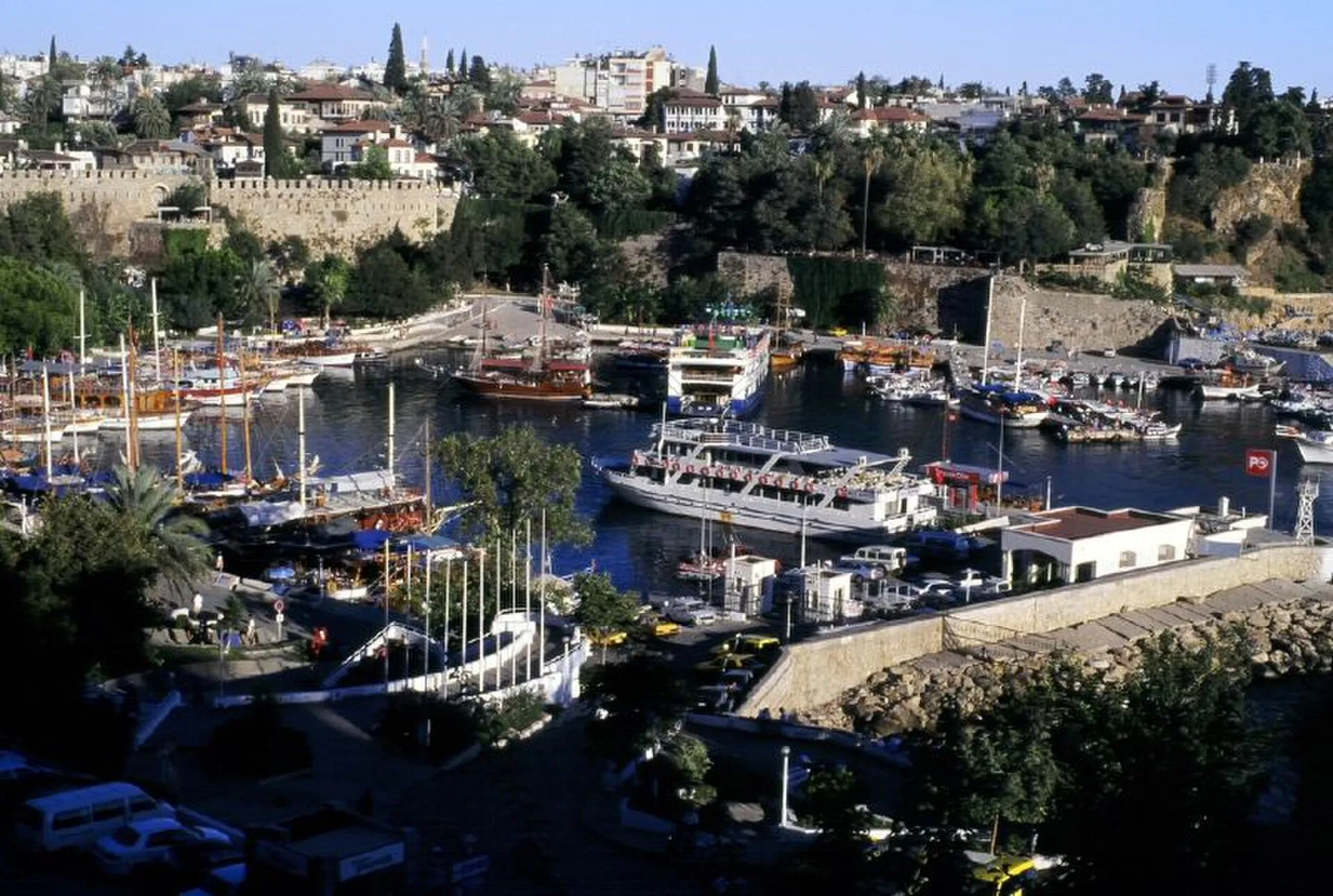
Antalya timeline
- 150 BCE
Attaleia founded
King Attalos II of Pergamon founded the port of Attaleia, the ancient core that became Antalya.
-
Hadrian honoured
Emperor Hadrian's visit was marked by the marble triumphal arch that still guards the old town.
-
Seljuk capture
Seljuk rule added gates, mosques, and caravan routes, including the city's landmark fluted minaret.
-
Ottoman annexation
The Teke beylik passed to the Ottomans, who ruled the harbour city for nearly five centuries.
-
Italian occupation
The post-World War I occupation added a modern political layer before the republic.
-
Republic founded
Antalya joined the new Turkish Republic as a quiet provincial port of a few thousand people.
- 1980s
Riviera tourism boom
State-backed resort development turned the coast into the Turkish Riviera and the country's holiday capital.
Cited city facts
Key facts for visiting Antalya
Around 300 days of sunshine a year on the Turkish Riviera
Antalya's hot-summer Mediterranean climate gives it one of the longest beach seasons in the country, with sea temperatures staying swimmable from late spring into autumn - the basis for its "Turkish Riviera" nickname
Aspendos still stages opera and ballet after nearly 1,900 years
The Roman theatre at Aspendos, 45 km east of the city, is among the best-preserved in the world and hosts the annual Aspendos International Opera and Ballet Festival each summer
Turkey's leading province for foreign visitors
Antalya draws more international arrivals than any Turkish region outside Istanbul, and Antalya Airport is one of the country's busiest - the economic engine behind the resort corridor from Kemer to Side
Lower Duden Waterfall drops about 40 metres directly into the sea
The Duden River's dramatic plunge into the Mediterranean at Lara is one of the few coastal waterfalls in Turkey, best seen by boat from the water below
Source: tour-guide.com — Free to cite with attribution
Things to see
What are the top attractions in Antalya?
Antalya rewards visitors who look past the beach towel. Its signature sights range from Roman engineering to Mediterranean swimming coves, most within easy reach of the old town:
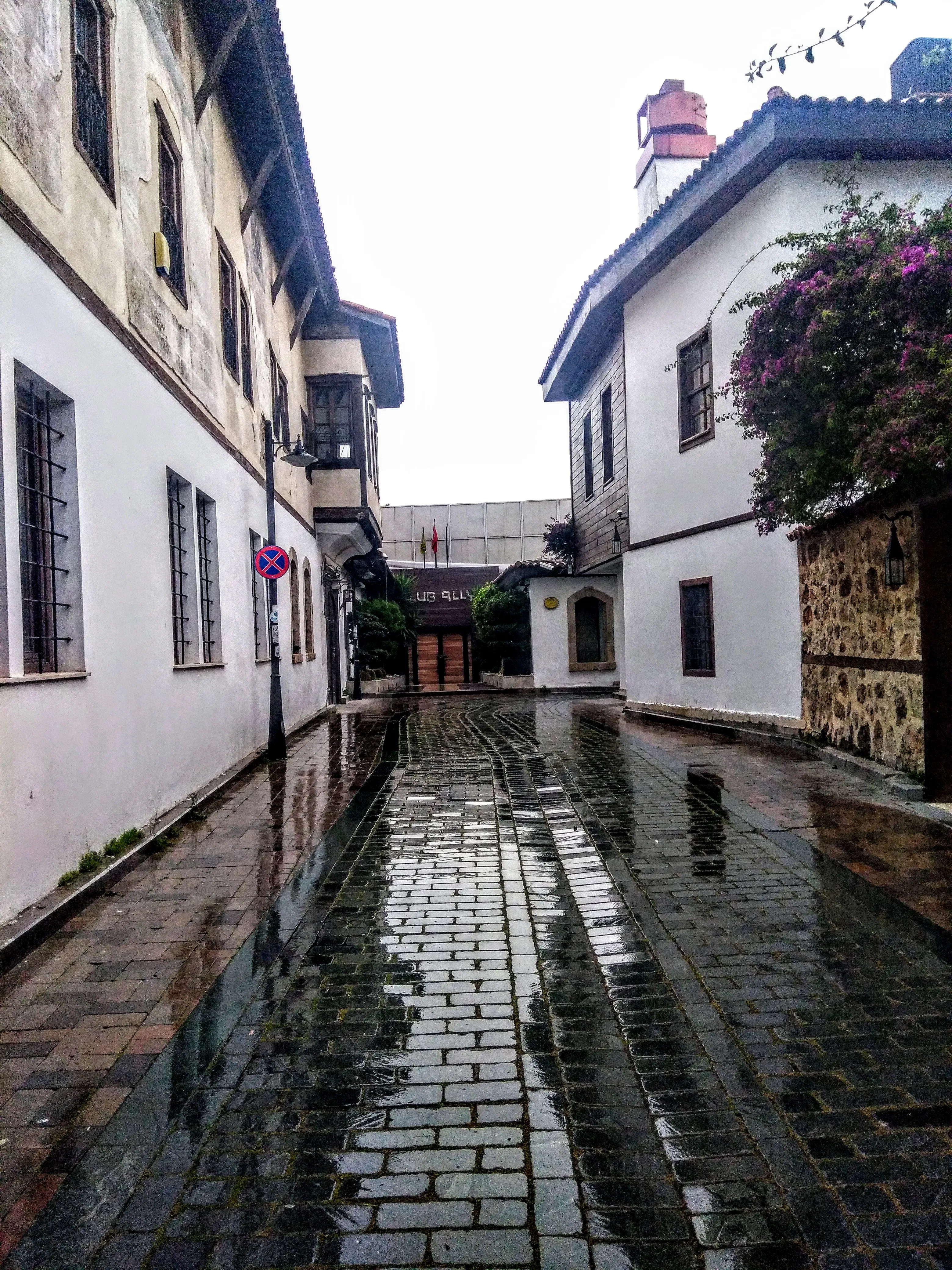
- Old Town Kaleici — walled Ottoman quarter of cobbled lanes spilling down to a Roman-era yacht harbour, best at sunset
- Hadrian's Gate — walk through the triple marble arch of 130 CE, still at its original Roman road level
- Upper Duden Waterfalls — stroll the cave path behind the cascading water in a shaded riverside park
- Konyaalti Beach — long pebble beach with the Beydağları mountains rising straight from the sea
- Aspendos Theatre — one of the world's best-preserved Roman theatres, 45 km east and still staging summer concerts
- Turkish cuisine — fresh Mediterranean seafood, wood-fired pide, mezze, and syrup-soaked künefe
🏞️ Duden Waterfalls
Cascading waters near the Mediterranean

📜 Hadrian's Gate
Gateway through 1,900 years of history

🏘️ Old Town Kaleici
Antalya's historic heart
Guide planning
How much does a tour guide cost in Antalya?
Antalya's licensed guides are trained and certified through Turkey's Ministry of Culture; prices below are typical ranges and climb in July and August, so booking ahead secures both a fairer rate and a genuine English-speaking specialist.
| Tour Type | Price | Details |
|---|---|---|
| Kaleici Walking Tour | ₺600-900 | $20-30 per person |
| Ancient Sites Day | ₺2,500-3,500 | $80-115, Perge/Aspendos |
| Half-Day Private | ₺3,000-4,500 | $100-150 |
| Full-Day Private | ₺5,500-8,000 | $180-265 |
Because the lira moves quickly against the dollar, treat the USD figures as a guide rather than a fixed rate, and confirm the day's price when you book.
Season planner
When is the best time to visit Antalya?
Antalya's long, hot summers and mild winters shape when to come and what to do once you arrive:
- Peak season — July and August are very hot (highs above 34 °C) and crowded, so book guides and hotels well ahead
- Shoulder season — April to June and September to October bring warm seas, clear skies, and far thinner crowds, the best all-round window
- Winter — mild at 12-15 °C and quiet, ideal for the old town and ancient sites without the heat, though some rooftop bars trim their hours
- Best months overall — May, June, or September for warm weather, swimmable water, and manageable queues at Hadrian's Gate
The calendar matters as much as the weather. The Aspendos International Opera and Ballet Festival fills the ancient theatre on summer evenings, the long-running Antalya Golden Orange Film Festival (Altın Portakal, held since 1964) turns the city into Turkey's answer to Cannes each autumn, and the summer Sand Sculpture Festival draws huge crowds to Lara Beach. Booking a guide around one of these dates is worth doing early, as the city fills fast.
On the ground
How do you get around Antalya?
The AntRay tram runs a single line from the Antalya Museum through the city center past Hadrian's Gate and onward to the eastern suburbs, making it the easiest way to travel between Konyaalti Beach and the old town area; a branch also links the line toward Antalya Airport (AYT), roughly 13 km east of the centre.
For destinations beyond the tram route, dolmus minibuses operate on fixed routes throughout the city and surrounding beaches, departing when full rather than on a schedule, with fares paid in cash to the driver. The historic Kaleici (Old Town) is entirely walkable and largely pedestrianized, with narrow cobblestone streets winding down to the old harbor, though the steep descent from Hadrian's Gate to the marina can be tiring on the return climb.
Taxi apps like BiTaksi are reliable for hailing rides with metered fares, which is preferable to negotiating with street taxis. For day trips to Aspendos, Perge, or the Duden Waterfalls, renting a car or booking a guided tour with transport is the most practical option, as public bus connections to these sites are infrequent and time-consuming.
Frequently Asked Questions
What is the best time to visit Antalya?
Peak season: July-August very hot and crowded - book ahead. Shoulder season: April-June or September-October ideal. Tram system: AntRay tram connects beaches to old town.
How much does a tour guide cost in Antalya?
A two- to three-hour guided walk through Kaleici typically runs ₺600-900 ($20-30) per person, while a full-day private guide with a car to the Roman cities of Perge and Aspendos costs ₺5,500-8,000 ($180-265). Licensed-guide rates rise in July and August, so booking a week ahead secures both a better price and an English-speaking specialist rather than whoever is left on the day.
How do you get around Antalya?
The AntRay tram connects Konyaalti Beach to the old town and eastern suburbs, while the historic Kaleici quarter is entirely walkable with pedestrianized cobblestone streets. For day trips to Aspendos, Perge, or the Duden Waterfalls, renting a car or booking a guided tour with transport is the most practical option.
Is Antalya a good base for visiting ancient sites?
Yes - Antalya is the best base on the Turkish Mediterranean for Greco-Roman archaeology. Within a 90-minute drive sit Perge, Aspendos, Side, and Termessos, and the city's own Kaleici quarter layers Roman, Byzantine, Seljuk, and Ottoman building into a few hundred metres. A guide with transport can reach two major sites and return in a single day, something public buses struggle to do.