
Country guide
What makes Nepal a must-visit destination?
Nepal compresses the steepest vertical range on earth into a country barely 200 km wide. In the span of a short domestic flight the land climbs from the Terai — humid lowland jungle on the rim of the Gangetic plain, dropping below 100 m — through the terraced Middle Hills that cradle the Kathmandu Valley at 1,400 m, to the Great Himalaya, where eight of the world's ten highest peaks crowd a single frontier. No other nation packs tiger-grass floodplain, monsoon-fed rice terraces, and 8,000-metre ice into so narrow a band of latitude.
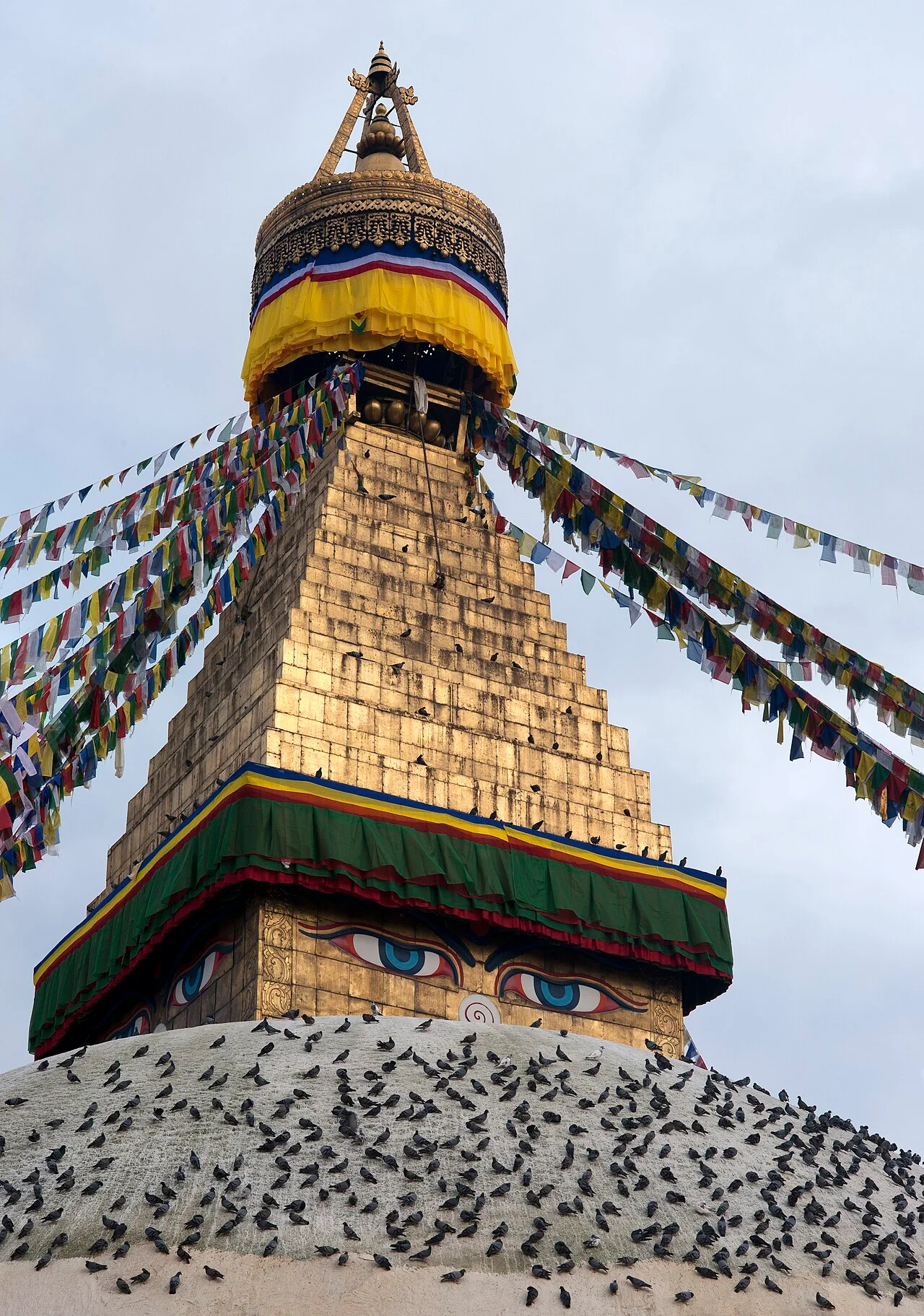
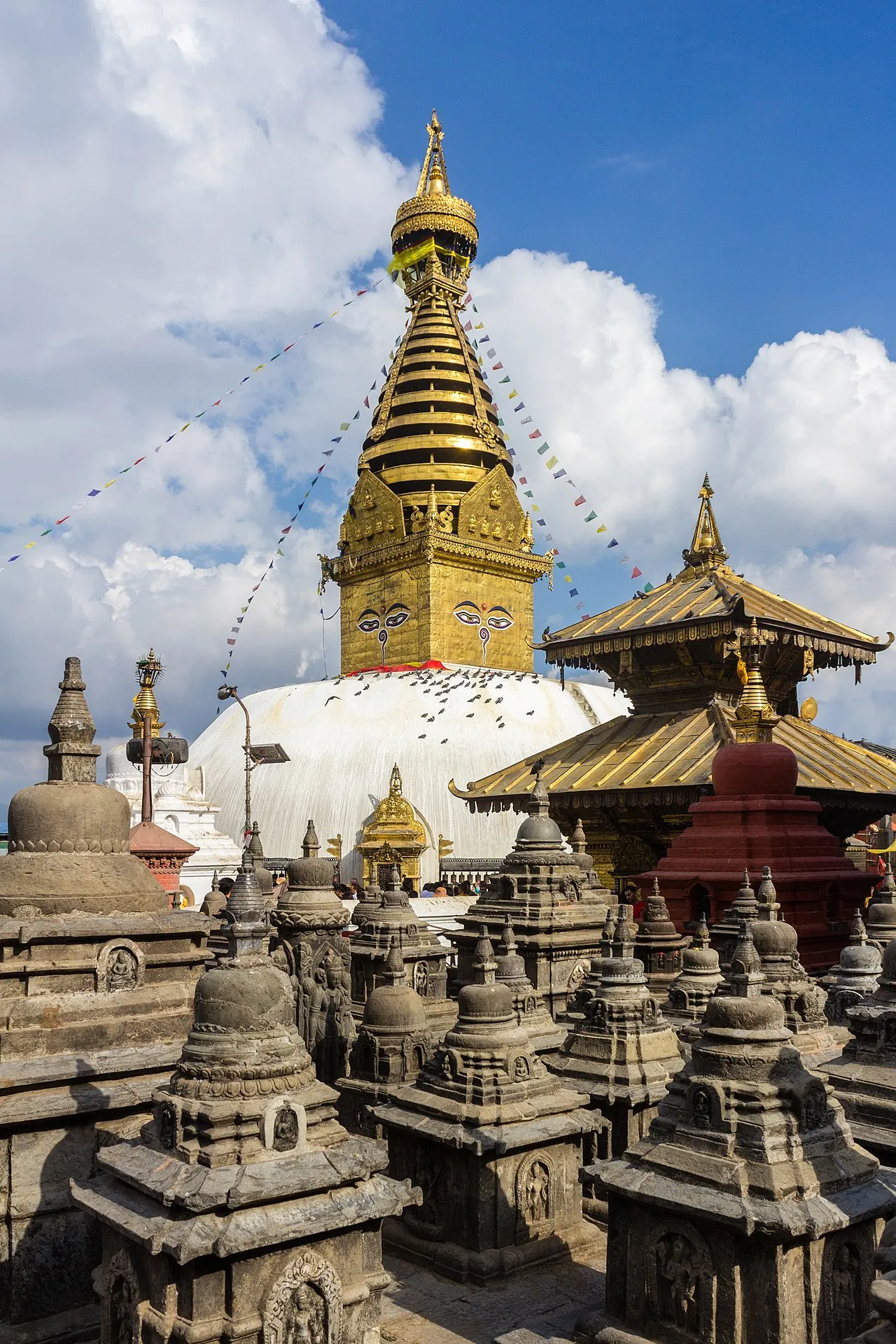
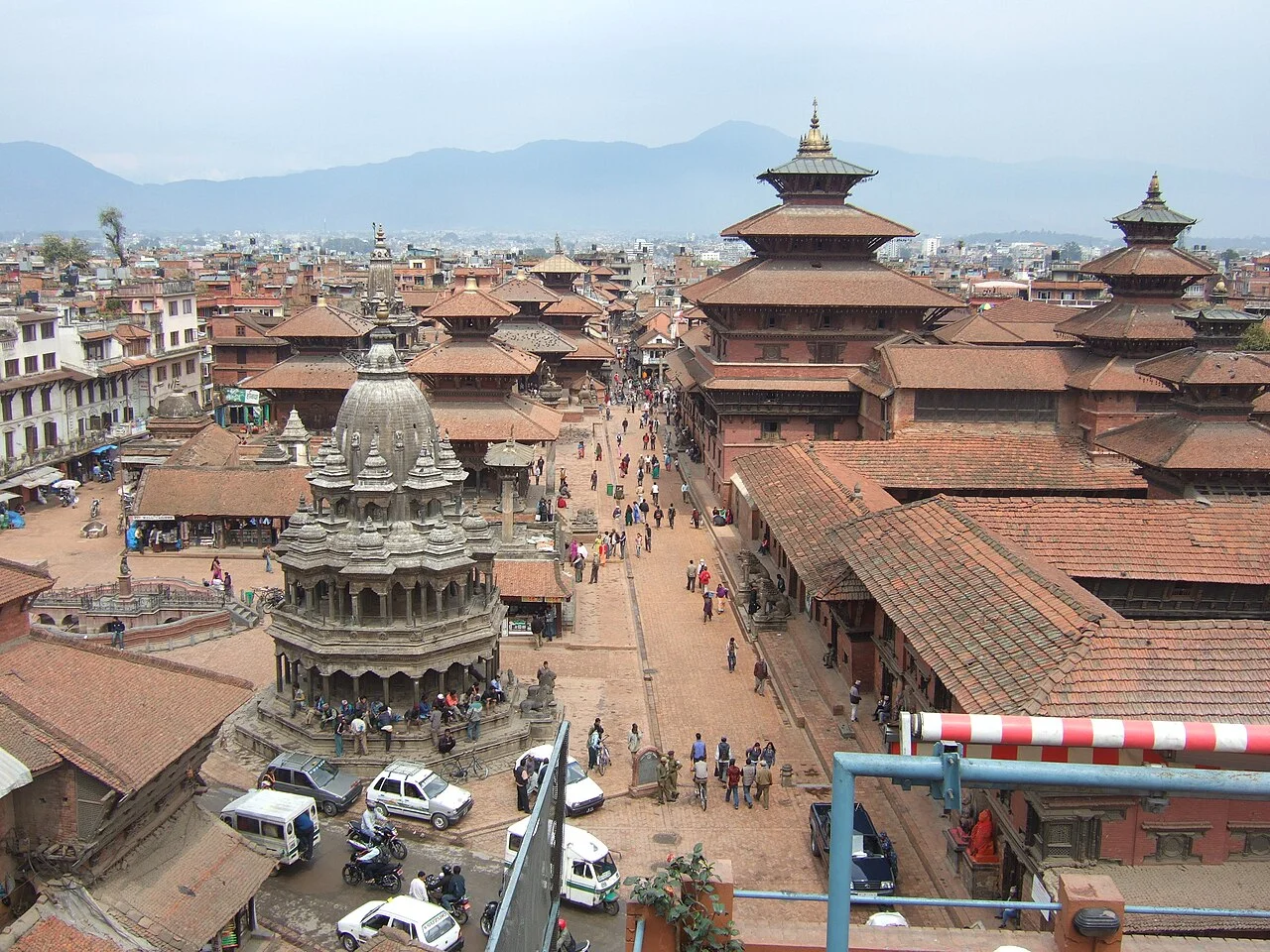
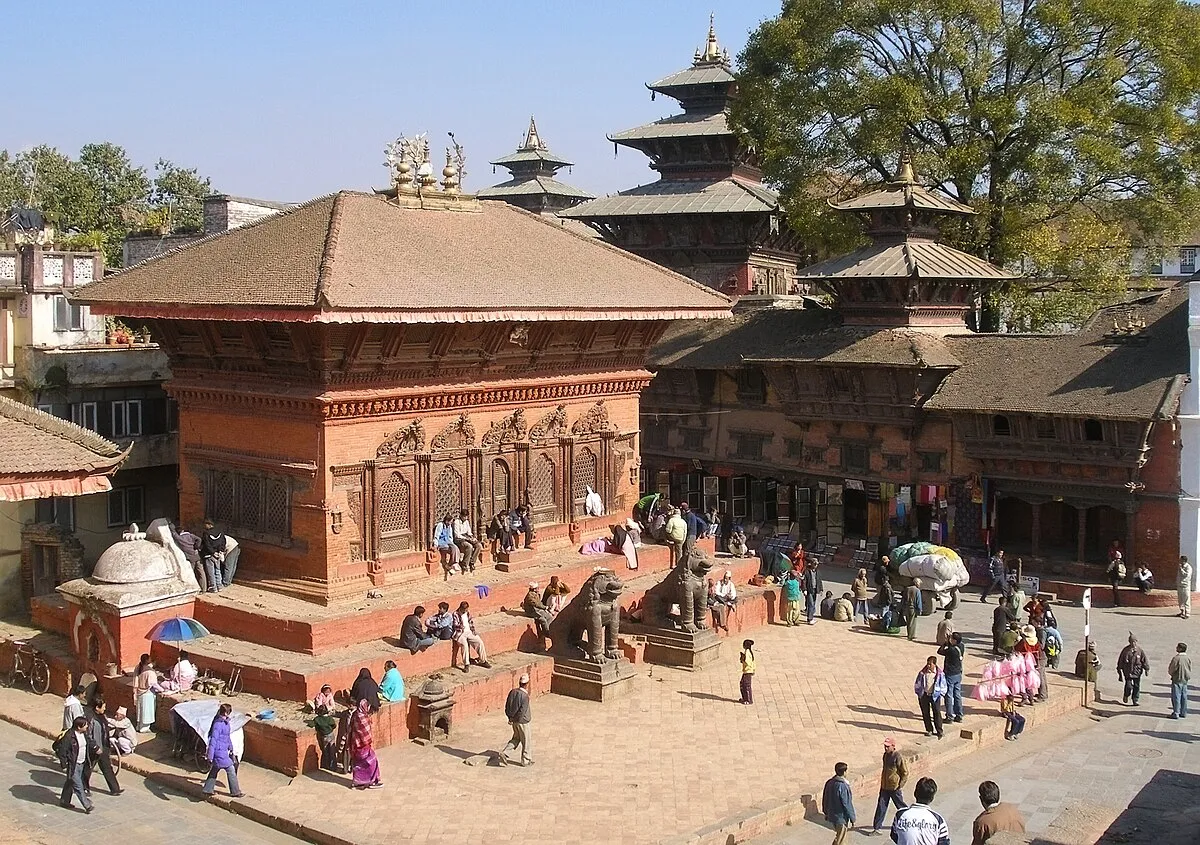
That topography shapes everything a visitor does here. The Kathmandu Valley alone holds a UNESCO-listed ensemble of seven monument zones — the cremation ghats of Pashupatinath, the great mandala of Boudhanath, the hilltop stupa of Swayambhunath, and the medieval Newari palace square of Patan — while the ridgelines above open onto the most storied trekking routes in the world.
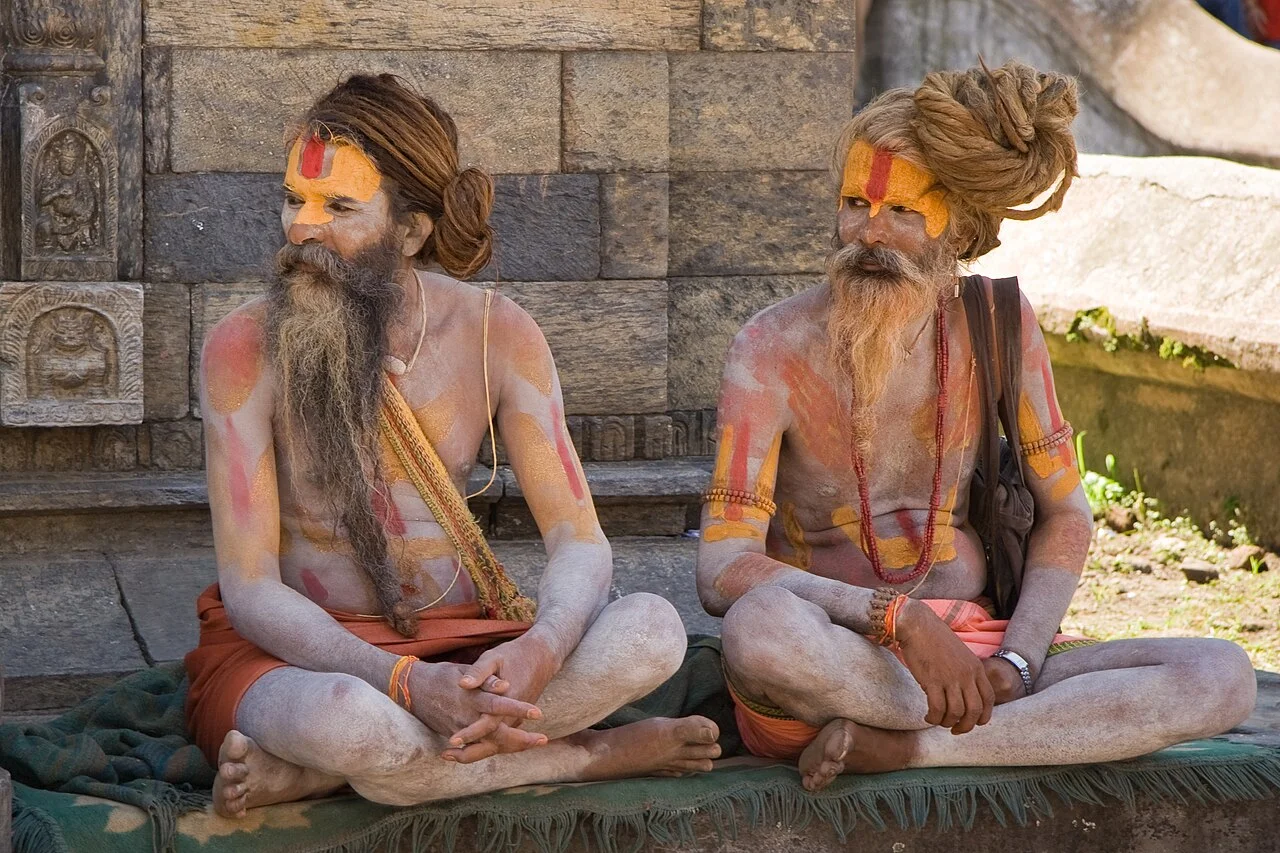
Nepal's dual Hindu–Buddhist spiritual landscape is singular: nowhere else do Hindu cremation fires burn two kilometres from the world's largest Buddhist stupa while both remain in daily ritual use. A guide fluent in Nepali who reads the monsoon calendar, the acclimatisation maths of a high pass, and the shifting ethnic geography of Sherpa, Gurung, Tamang, and Newar communities turns that bewildering complexity into a coherent, safe, and deeply moving journey.
- Language
- Nepali Widely spoken across Nepal
- Currency
- Nepalese rupee (रू) Legal tender across Nepal
- Time zone
- UTC+5:45 Local time in Nepal
- Power plugs
- Types C, D, M · 230V Sockets used across Nepal
- Getting around
- Domestic flights & buses Getting between Nepal's cities
- Best months
- Mar, Apr, May, Oct, Nov Averaged across Nepal's city ratings
Nepal timeline
-
Licchavi era takes shape
Early inscriptions and temples established a classical layer in Kathmandu Valley history.
-
Nepal unified
Prithvi Narayan Shah's campaigns created the kingdom that linked Kathmandu Valley to the Himalaya.
-
Modern opening begins
Political change reduced isolation and opened the way for broader trekking and cultural travel.
-
First ascent of Everest
Edmund Hillary and Tenzing Norgay reached the 8,849 m summit from the Nepali side, putting Himalayan Nepal on the world's adventure map.
-
Commercial trekking begins
Colonel Jimmy Roberts pioneered organised teahouse trekking, turning expedition logistics into a visitor industry.
-
Kathmandu Valley listed
UNESCO recognition linked palaces, stupas, and temple squares into a protected heritage route.
-
Republic declared
The monarchy ended, changing how visitors understand palaces and civic institutions.
-
Earthquake and rebuilding
Major heritage damage launched restoration work across Kathmandu Valley.
-
Everest re-measured
Nepal and China jointly announced a revised official height of 8,848.86 m for the world's highest peak.
Nepal in Pictures
Local context
Culture and travel signals
8 of the world's 10 highest peaks are in Nepal
Nepal's share of the Himalaya includes Mount Everest (8,849 m), Kangchenjunga, Lhotse, Makalu, Cho Oyu, Dhaulagiri, Manaslu, and Annapurna — all among the 14 peaks above 8,000 m known as the eight-thousanders; only K2 and Nanga Parbat, both in Pakistan, break the world's top ten from outside Nepal
Everest's 8,849 m summit anchors Sagarmatha National Park
The park protects the Nepali flank of Mount Everest along with Lhotse, Cho Oyu, and Makalu, deep glacial valleys, Sherpa communities, and rare snow leopard and red panda habitat; UNESCO inscribed it as a World Heritage Site in 1979
7 monument zones make up the Kathmandu Valley World Heritage Site
The single UNESCO listing groups Pashupatinath Temple, the Boudhanath and Swayambhunath stupas, Changu Narayan, and the three Durbar Squares of Kathmandu, Patan, and Bhaktapur — a concentration of monumental Hindu and Buddhist architecture unmatched in any comparably sized area
Over 900,000 trekking tourists annually before 2020
Nepal's trekking industry supports an estimated 500,000 jobs nationwide; the Annapurna Conservation Area and Sagarmatha (Everest) National Park together generate the majority of trekking permit revenue that funds conservation programs and trail maintenance
125 ethnic groups and 123 spoken languages
Nepal's ethnic and linguistic diversity is extraordinary for its size; the Newari people of the Kathmandu Valley developed one of Asia's most distinctive urban civilizations, with their own script, cuisine, festivals, and temple architecture that differs sharply from the Hindu hill cultures surrounding them
Source: tour-guide.com — Free to cite with attribution
Season planner
A year in Nepal
Use this best time to visit snapshot as a country-wide average, then check the city guides for local timing.
Mar-May
Spring
Spring holds up well for guided travel in Nepal, averaging Mar-May (4.3/5).
Jun-Aug
Summer
Summer is Nepal's quietest stretch at Jun-Aug (2/5) — plan narrower, local days.
Sep-Nov
Autumn
Autumn holds up well for guided travel in Nepal, averaging Sep-Nov (4.3/5).
Dec-Feb
Winter
Winter stays workable in Nepal at Dec-Feb (3/5), so lean on city-by-city timing.
Where should you go in Nepal?
Kathmandu Valley
Kathmandu is the gateway for almost every Nepal itinerary and the natural acclimatisation base before any flight to altitude. The capital's valley floor concentrates the country's heritage: the gilded roofs of Pashupatinath, the circling pilgrims of Boudhanath, the forested stairway up to Swayambhunath, and across the ring road the copper-smith lanes of Patan Durbar Square. Two or three days here reset body clocks and fill in the religious grammar that recurs on every trail.
Pokhara
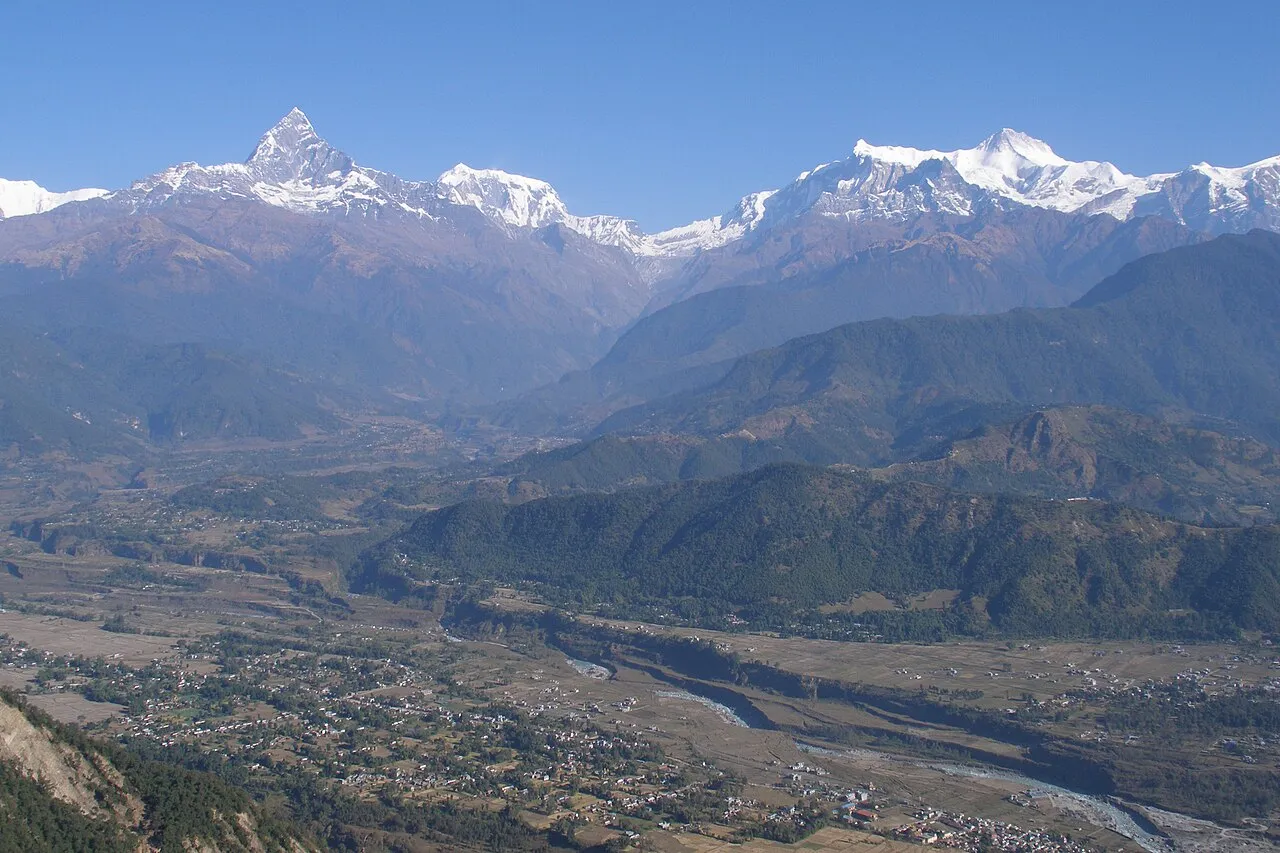
Nepal's adventure capital sits at 820 m beside Phewa Lake, with the fluted summit of Machhapuchchhre and the Annapurna wall rising more than 7,000 m almost directly behind it — one of the steepest reliefs visible from any town on earth. Paragliders launch from Sarangkot on the morning thermals, kayakers cross the lake, and the gentle Ghandruk and Poon Hill circuits start here, making Pokhara the softest possible introduction to Himalayan trekking.
The Trekking Regions
Three classic routes anchor the trekking map:
- Everest Base Camp climbs through the Sherpa heartland of the Solu-Khumbu to 5,364 m, beginning with the vertiginous mountain airstrip at Lukla.
- The Annapurna Circuit loops over the 5,416 m Thorong La past the world-deep Kali Gandaki gorge and the Tibetan-influenced villages of Manang and Mustang.
- Langtang Valley, closest to the capital, runs through Tamang country painstakingly rebuilt after the 2015 earthquake.
Remoter permits open Manaslu, Upper Mustang, and Dolpo to trekkers willing to trade comfort for near-empty trails.
Beyond the Mountains
South of the hills, the subtropical Terai reveals a wholly different Nepal: dawn safaris for greater one-horned rhino and Bengal tiger in Chitwan and Bardia national parks, and the Buddhist pilgrimage town of Lumbini, birthplace of the Buddha. Whitewater rafting on the Trishuli, Bhote Koshi, and Sun Koshi rivers stitches the two worlds together, carrying travellers from the snowmelt down toward the plains.
Must-see attractions across Nepal
Skip straight to the landmarks that define Nepal, spread across the cities below. A local guide turns any of them into a richer half-day.
What do visitors need to know about Nepal?
When to Go
Season dictates almost everything about a Nepal trip, so match the route to the calendar:
- Autumn (October–November) — the benchmark window: post-monsoon air is crystalline, days are mild, and visibility of the high peaks is at its best.
- Spring (March–May) — rhododendron forests bloom and the weather warms; this is the Everest and Annapurna expedition season, with summit attempts clustered in late May.
- Monsoon (June–September) — heavy rain and leeches on the hill trails, but the rain-shadow deserts of Upper Mustang and Dolpo stay dry and open all summer.
- Winter (December–February) — bitterly cold on the high passes, which snow shut, yet clear and quiet for lower routes like Ghorepani–Poon Hill and valley sightseeing.
Finding a Guide
- Nepal Tourism Board — maintains a licensed guide registry; insist on a badge for any trekking guide above Kathmandu
- TAAN (Trekking Agencies Association of Nepal) — member agencies provide licensed, insured guides and handle all permit logistics
- GetYourGuide and Viator — useful for Kathmandu Valley cultural tours with verified reviews
- Guesthouses in Pokhara and Kathmandu — the best long-running guesthouses maintain trust relationships with specific trekking guide teams
Typical Costs
| Tour Type | Price Range |
|---|---|
| Kathmandu Valley cultural guide (half day) | $30–60 |
| Full-day Kathmandu + Patan guide | $50–90 |
| Trekking guide (per day) | $25–45 + their expenses |
| Porter (per day) | $15–25 + their expenses |
| Multi-day Everest/Annapurna package | $800–1,800 total (10–14 days) |
| Kathmandu–Lukla flight (one way) | $180–220 |
Permits and the Guide Rule
Trekking in Nepal is regulated for good reason, and the paperwork is straightforward with a guide:
- Entry permits — each national park or conservation area (Sagarmatha, Annapurna, Langtang) charges an entry fee of roughly NPR 3,000 ($22).
- TIMS card — the Trekkers' Information Management System registration logs who is on which route for search-and-rescue.
- Restricted areas — Upper Mustang, Dolpo, and Manaslu require special permits from $500 and must be booked through a registered agency.
- Mandatory guide — since 2023 the Nepal Tourism Board requires a licensed guide for trekking inside national-park and conservation areas, ending the old solo-trekking free-for-all.
Must-See Experiences
- Pashupatinath evening aarti — riverside Hindu fire ceremony at Nepal's holiest temple
- Boudhanath kora — circumambulate the great stupa with monks at dawn
- Swayambhunath sunrise — views over Kathmandu from the hilltop Monkey Temple
- Patan Durbar Square — finest Newari architecture in the valley
- Everest Base Camp trek — 12–14 days through Sherpa communities to 5,364 m
- Annapurna Circuit — the classic 12–16 day loop through Nepal's greatest diversity of landscapes and cultures
- Pokhara paragliding and a dawn mountain flight — soft adventure with front-row Annapurna views
- Chitwan jungle safari — tracking rhino and tiger in the Terai lowlands
Tips for Visitors
- Altitude sickness — ascend gradually; guides monitor symptoms and know when to descend
- Travel insurance — carry a policy that explicitly covers trekking to your maximum altitude and helicopter evacuation; a rescue flight off a high trail can cost thousands of dollars
- TIMS and park permits — obtain before trekking; guides handle this automatically
- Cash — ATMs exist in Kathmandu and Pokhara but disappear on trek; carry enough rupees for the full route
- Tipping — expected and important; guides and porters on multi-day treks receive tips at the end, typically $5–10 per person per day for guides and $3–5 for porters
- Dress code — modest dress at all temples; remove shoes before entering any shrine
- Water — use purification tablets or a filter on trek; buy bottled water only from sealed bottles
Frequently Asked Questions
What is the best time of year to trek in Nepal?
October and November are Nepal's premier trekking months — post-monsoon clarity delivers sharp Himalayan views, temperatures are comfortable at altitude, and rhododendron forests and rice harvest fields make valley walking spectacularly scenic. March through May is equally popular for trekking, with rhododendrons blooming in pink and red cascades along the Annapurna and Everest base camp routes; it is also the main Himalayan expedition season, when climbers wait in base camp for the late-May summit window. The June through September monsoon brings intense rainfall that turns trails muddy and obscures mountain views, though the rain-shadow regions of Upper Mustang and Dolpo, sheltered behind the main Himalaya, stay dry and trekkable all summer. Kathmandu is accessible year-round; December and January are cold but clear and quiet, ideal for lower routes like Ghorepani–Poon Hill.
How much does a licensed trekking guide cost in Nepal?
Nepal's guide costs are among Asia's most reasonable given the terrain and knowledge involved. Licensed cultural guides in Kathmandu for temple and durbar square tours charge $30–60 for a half day. Trekking guides on popular Himalayan routes — Everest Base Camp, Annapurna Circuit, Langtang Valley — cost $25–45 per day plus their food and accommodation costs on the trail. Porter fees run $15–25 per day, and many trekkers hire a combined porter-guide for $20–30. A guide adds immeasurable safety and context value, particularly for altitude management and route decisions — and, since 2023, the Nepal Tourism Board requires a licensed guide for trekking inside national-park and conservation areas, so fully solo trekking on the main routes is no longer permitted.
Do I need a special permit to trek in Nepal?
Yes — most routes require both a TIMS card (Trekkers' Information Management System) and an entry permit for the relevant national park or conservation area, such as Sagarmatha National Park for Everest or the Annapurna Conservation Area. Each typically costs around NPR 3,000 ($22). Restricted areas like Upper Mustang and Dolpo require additional special permits costing $500 or more, and must be arranged through a registered agency. A licensed guide handles all permit procurement, knows which checkpoints require which documents, and ensures you remain compliant — avoiding the fines and turnaround orders that catch unprepared trekkers.
How do I avoid altitude sickness on a Nepal trek?
Altitude is the single biggest risk on Nepal's high routes, where trekkers routinely sleep above 4,000 m and cross passes like Thorong La (5,416 m) on the Annapurna Circuit or reach Everest Base Camp (5,364 m). The proven defence is gradual ascent: above 3,000 m, raise your sleeping altitude by no more than 300–500 m per day and build in acclimatisation rest days — classic ones at Namche Bazaar and Dingboche on the Everest trek. Follow these principles:
- Climb high, sleep low — day-walk to a higher viewpoint, then descend to sleep.
- Hydrate and slow down — fatigue and headache are the first warnings.
- Never ascend with symptoms — if they worsen, descend immediately; a few hundred metres down usually brings relief.
A licensed guide monitors the whole group for acute mountain sickness and decides when to rest or turn back. Many trekkers also carry acetazolamide (Diamox) after consulting a doctor, but it supplements careful pacing rather than replacing it.
How many days do Nepal's classic treks take?
Plan your trip around the route's length and its highest point rather than distance alone, since acclimatisation days matter more than kilometres. On the main trails you sleep in teahouses — simple family-run lodges — so no camping or heavy gear is needed. Typical durations on the trail:
- Ghorepani–Poon Hill — 4–5 days, the gentlest introduction, from near Kathmandu's sister hub of Pokhara.
- Langtang Valley — 7–8 days, the closest high valley to the capital.
- Annapurna Base Camp — 7–10 days into the mountain's glacial amphitheatre.
- Everest Base Camp — 12–14 days through Sherpa country to 5,364 m.
- Annapurna Circuit — 12–16 days over the Thorong La and down the Kali Gandaki gorge.
Add two or three days in the Kathmandu Valley at the start for sightseeing, permits, and acclimatisation to Nepal's rhythm before you fly to the trailhead.