
Tips for Visitors
Patan Museum: Do not skip the museum — it contains the finest collection of Newari metalwork and religious sculpture in Nepal, and its restoration of the royal palace interior is exceptional. Budget 60–90 minutes. Workshop lane: Ask a guide to show you the metalsmith alley (dhanka tole) one block behind the northeast corner of the square — a dozen family workshops line a narrow lane that most visitors never find. Morning light: The eastern face of Krishna Mandir receives morning light from 7–9 AM for the best stone carving photography. Combine with: Boudhanath Stupa is 8 km north by taxi — a full-day valley circuit with a guide can cover Patan in the morning and Boudhanath and Pashupatinath in the afternoon.
When to Visit
Square access: 5 AM – 9 PM (open but some structures close earlier). Patan Museum: 10:45 AM – 5:30 PM Tuesday–Sunday; closed Mondays. Morning: The square has genuine devotional traffic before 9 AM when worshippers circle the Krishna Mandir and the Taleju Bell is rung. Evening: Street vendors and food stalls set up around the square perimeter from 4 PM.
Admission and Costs
Entry fee for Patan Durbar Square: NPR 1,000 for foreigners. Patan Museum: Included in the entry fee. Workshops and artisan demonstrations: Free to view; purchases at your discretion.
The Case for a Guide
Patan Durbar Square's artisan culture and architectural history are inseparable — a guide who grew up in the valley understands both.
- Newari architectural grammar: The tiered pagoda roof form, the wooden strut carvings, the specific deities occupying specific temple positions, and the cosmological orientation of the palace courtyards all follow a deliberate programme that a guide explains systematically — transforming a beautiful square into a legible text
- Krishna Mandir narrative carving: The stone-carved Mahabharata and Ramayana scenes on the first and second arcade tiers are sequential narrative panels designed to be read counterclockwise — a guide identifies the specific episodes depicted, including the Kurukshetra battle, Krishna lifting Govardhan Hill, and Arjuna's archery scenes
- Metalwork workshop visits: The traditional dhanka lost-wax casting workshops in the lanes behind the square are family-run enterprises — a guide makes introductions, explains the six-stage bronze casting process, and ensures you distinguish high-quality traditional pieces from mass-produced tourist goods
- Erotic temple carvings: The carved strut bases on Patan's temples depict explicit sexual scenes — a guide explains the specific theological reasoning (goddess protection from lightning, tantric cosmological symbolism) rather than leaving visitors to make their own guesses
Frequently Asked Questions
How is Patan Durbar Square different from Kathmandu Durbar Square?
Both are UNESCO-listed Newari palace squares, but Patan generally surpasses Kathmandu's central square in the density and quality of its preserved medieval architecture. Patan's temples — particularly the Krishna Mandir, Bhimsen Temple, and the Taleju Bell — were less severely damaged in the 2015 earthquake than central Kathmandu's Durbar Square. Patan also has a stronger living craft tradition: the metalsmith and stone-carving workshops in the surrounding lanes are some of the oldest continuously operating artisan communities in the valley.
What is the Krishna Mandir temple?
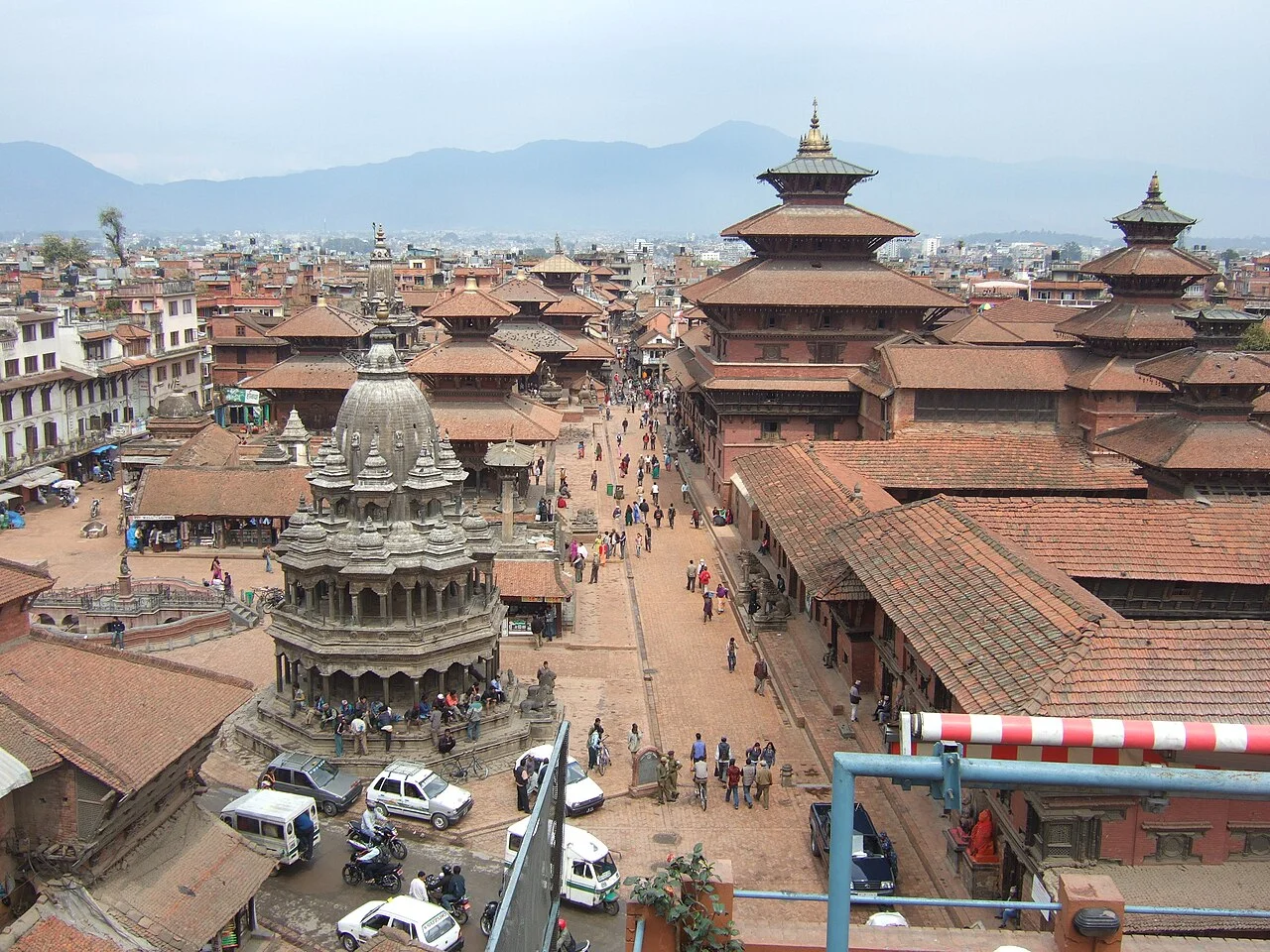
The Krishna Mandir (1636 CE) is Patan's most architecturally distinctive temple — built entirely in stone in the North Indian shikhara style (a tall curvilinear spire form) rather than the tiered Newari pagoda form of surrounding temples. Its three-storey arcade of 21 arches is carved with scenes from the Mahabharata on the first floor and the Ramayana on the second floor — an extraordinary stone-carved epic narrative. The temple was commissioned by King Siddhi Narsingh Malla after a dream in which he saw Krishna and Radha standing on the spot where the temple now stands.
Was Patan Durbar Square damaged in the 2015 earthquake?
Several structures in Patan Durbar Square were damaged in the April 2015 earthquake, including parts of the royal palace complex and some smaller temples. However, the square's most significant structures — Krishna Mandir, Hiranya Varna Mahavihar (the Golden Temple), and the Patan Museum — survived with limited structural damage and have been carefully conserved. Ongoing restoration work is visible in some areas. The square functions normally for visitors and the living religious practices that animate it daily.