

Graz timeline
-
Graz first recorded
The name derives from the Slavic *gradec* ("little castle"); the medieval market settlement grew below the Schlossberg.
-
Habsburg residence city
The Treaty of Neuberg gave the Leopoldian line Inner Austria, and Graz gained court and fortress layers as a Habsburg seat.
-
Capital of Inner Austria
Archduke Charles II made Graz his residence, governing Styria, Carinthia, and Carniola from the arcaded Landhaus.
-
University founded
The Karl-Franzens-Universität was established, beginning the student tradition that still shapes the city's character.
-
Schlossberg resists Napoleon
French forces failed to storm the hilltop fortress; the Treaty of Schönbrunn forced its demolition, but citizens ransomed the clock tower.
-
Old town listed
UNESCO recognition protected the Renaissance and baroque centre visitors explore today, extended to Eggenberg in 2010.
-
European Capital of Culture
The year of culture gave Graz the Kunsthaus and the Murinsel, cementing its taste for bold contemporary design.
-
UNESCO City of Design
Graz became the first Austrian member of the Creative Cities Network, fusing heritage conservation with modern design.
Cited city facts
Key facts for visiting Graz
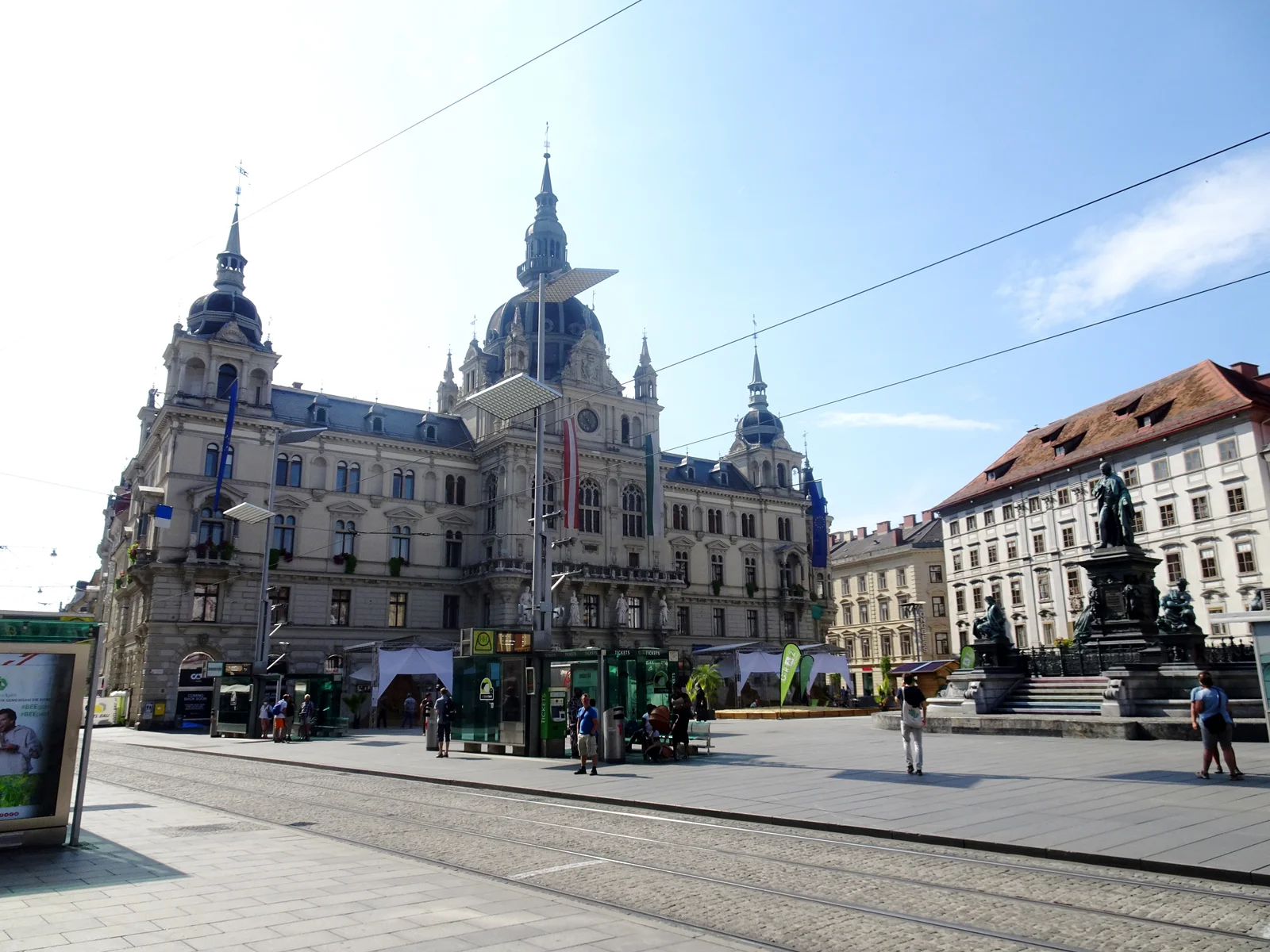
32,000 weapons and suits of armor
The Landeszeughaus in Graz is the world's largest surviving historic armory, preserving a collection assembled from 1551 onward to arm Styria against Ottoman incursions
UNESCO World Heritage old town since 1999
Graz's historic centre was inscribed in 1999 and extended in 2010 to include Schloss Eggenberg, protecting one of Central Europe's best-preserved blends of Renaissance and baroque architecture
UNESCO City of Design since 2011
Graz was the first Austrian city admitted to the UNESCO Creative Cities Network in the design category, recognising how it weaves contemporary projects like the Kunsthaus into a medieval streetscape
291,000 residents, around 60,000 students
Austria's second-largest city hosts six universities, so roughly one resident in five is a student — giving Graz a youthful, affordable energy and one of the country's liveliest dining scenes
steirischer herbst, founded 1968
One of Europe's oldest festivals dedicated entirely to contemporary art, it has premiered experimental theatre, music, and visual art across Graz every autumn for more than half a century
4 Christmas markets in 1 old town
Each December Graz hosts four distinct Advent markets, from the traditional stalls on Hauptplatz to the design-minded Advent at Mehlplatz, all within a short walk of one another
Source: tour-guide.com — Free to cite with attribution
Things to see
What are the top attractions in Graz?
- Uhrturm (Clock Tower) — Schlossberg's 1561 landmark, where the oversized hand shows the hours and the small hand the minutes
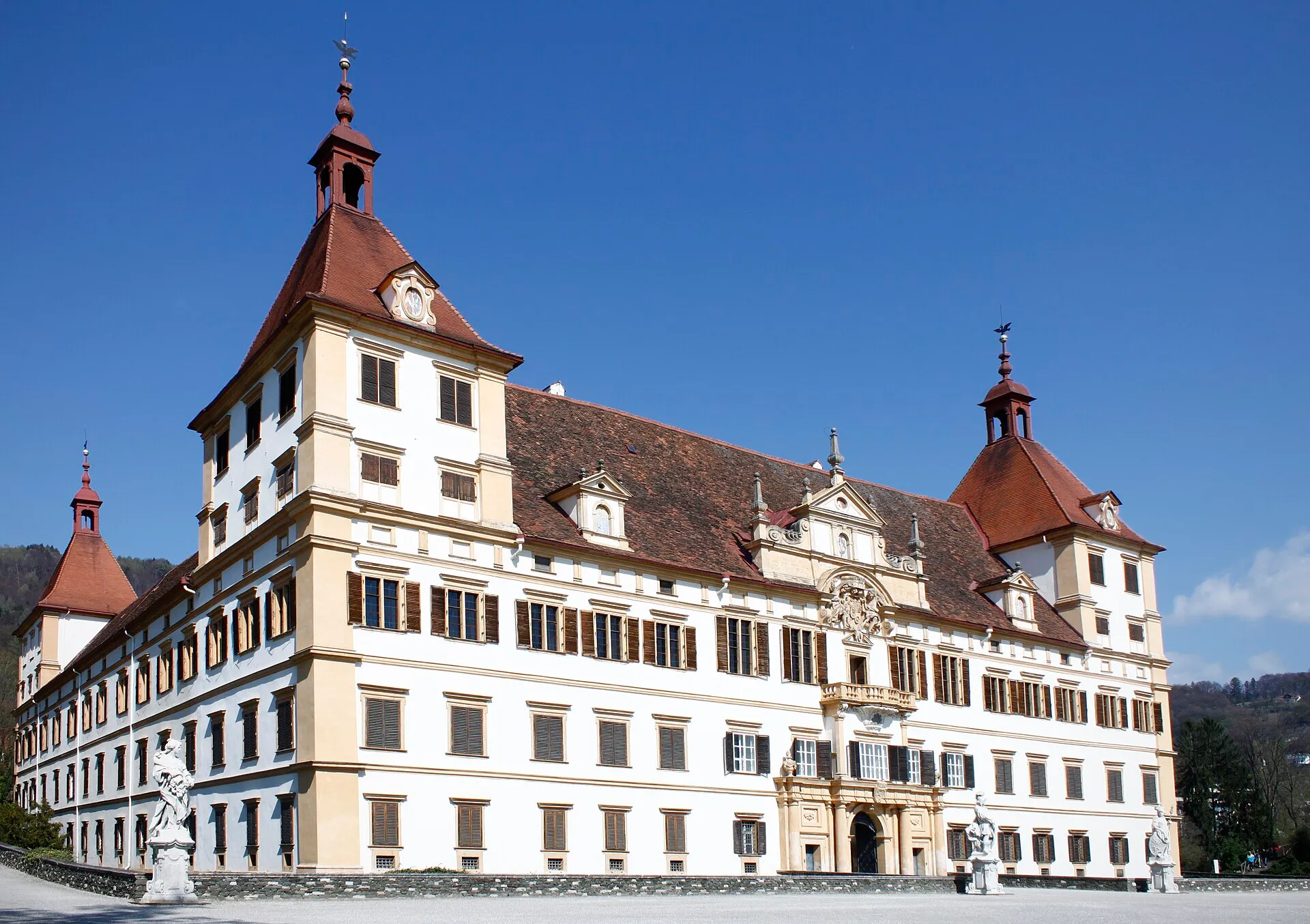
- Eggenberg Palace — 365 windows, 24 state rooms, and 52 doors mirror the calendar in baroque symbolism
- Kunsthaus Graz — Biomorphic contemporary art space with a rooftop needle framing mountain views
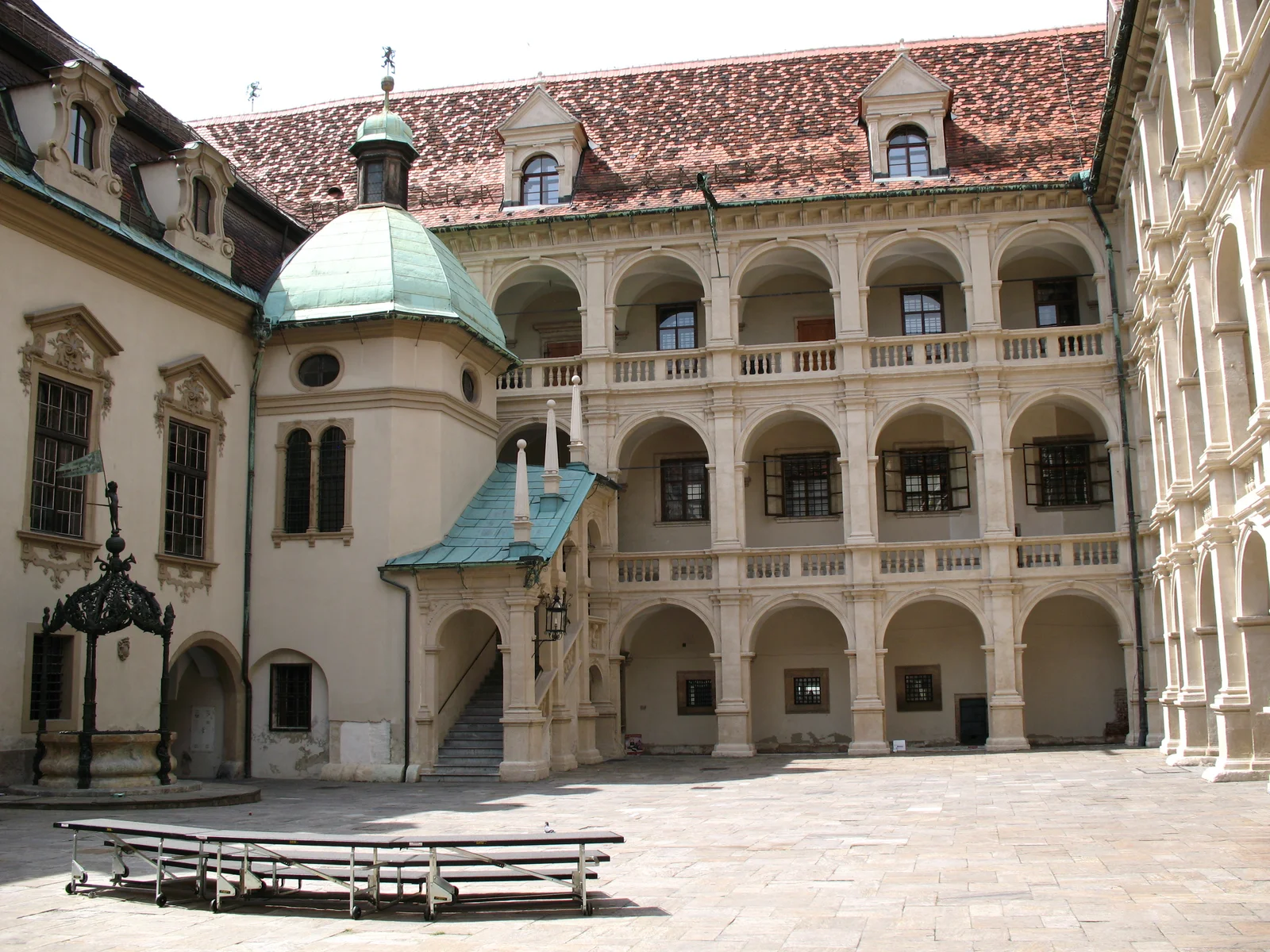
- Landhaus — Domenico dell'Allio's arcaded Renaissance courtyard (1557–65), still the seat of the Styrian parliament
- Mausoleum of Ferdinand II — Giovanni Pietro de Pomis's baroque imperial tomb, the grandest in Central Europe, beside the cathedral
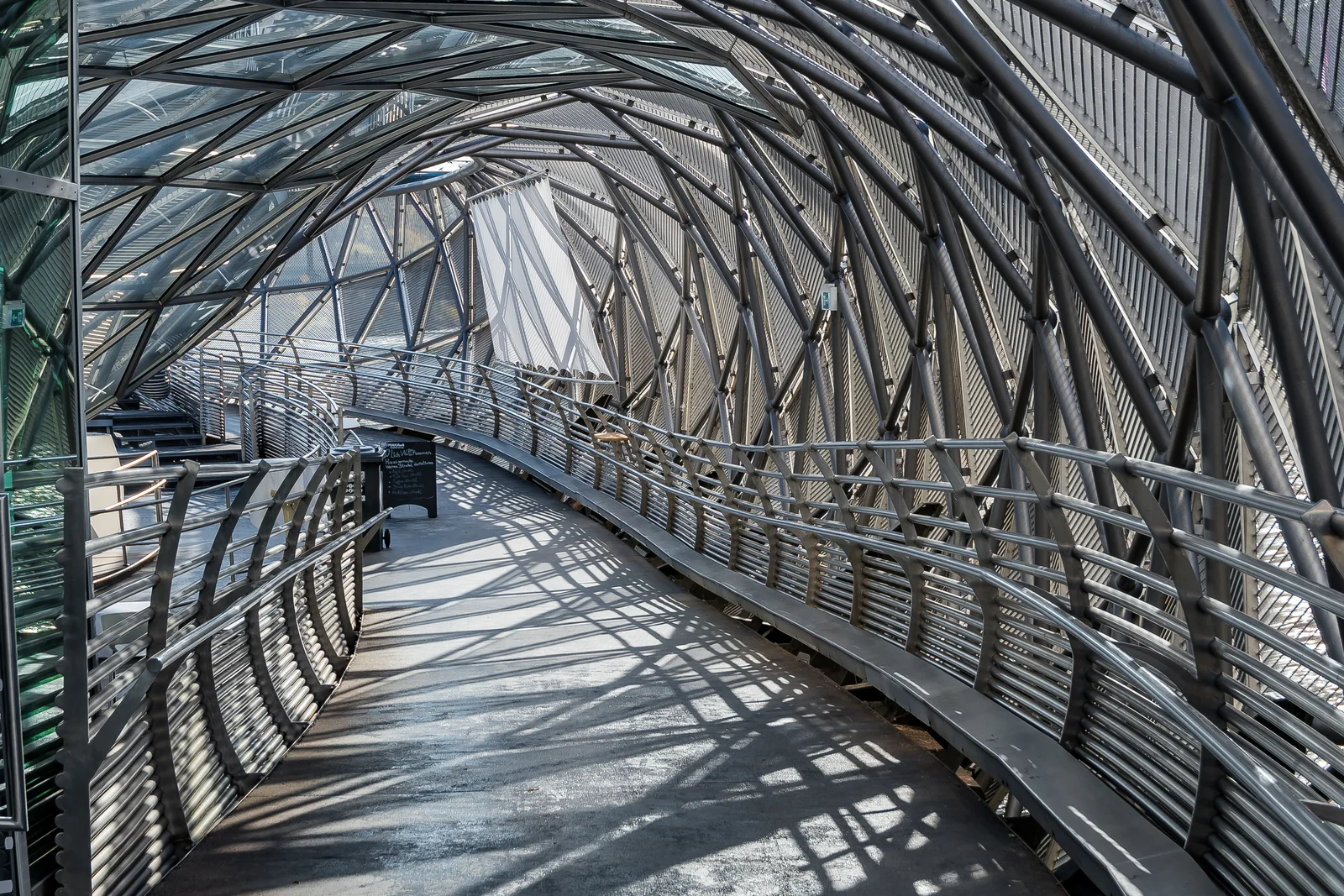
- Murinsel — Floating steel island in the Mur River designed by Vito Acconci, doubling as a café
- Painted Courtyard — Renaissance frescoes hidden inside Herrengasse 3, easily missed without a guide
- Styrian wine country — Rolling hills south of Graz producing world-class Sauvignon Blanc and Welschriesling
- Landeszeughaus — World's largest historic armory with 32,000 weapons and suits of armor
📜 Eggenberg Palace
365 windows, 24 state rooms, 52 doors — a baroque calendar encoded in architecture
🏛️ Kunsthaus Graz
The "Friendly Alien" — biomorphic contemporary art museum reshaping Graz's skyline

🏰 Schlossberg
Graz's fortified hilltop — clock tower, tunnels, and 360-degree views over red rooftops

Guide planning
How much does a tour guide cost in Graz?
Per person, 3 hours with tastings
Graz Card (€19.50 for 24 hours) includes all museums, the Schlossberg lift and funicular, and public transport. Eggenberg Palace entry is €17 without the card. Private half-day guides run roughly €120–160 for a small group, and prices across the board are noticeably lower than Vienna.
Season planner
When is the best time to visit Graz?
- May–September — Warm weather for outdoor dining, courtyard concerts, and Schlossberg walks
- Early August — La Strada fills the squares with international street theatre, circus, and puppetry
- Mid-September — Aufsteirern turns the old town into a celebration of Styrian tradition, music, and dress
- Late September–October — steirischer herbst (founded 1968) stages avant-garde contemporary art across the city
- December — Four distinct Christmas markets spread across the old town, each with a different character
- Weekday mornings — The Kaiser-Josef-Platz market is liveliest Tuesday–Saturday before noon
- Avoid — August can feel quiet as students leave town and some smaller venues close
On the ground
How do you get around Graz?
- Very walkable — The entire UNESCO old town is flat and compact, crossable on foot in about 20 minutes
- Graz Card covers essentials — Museums, the Schlossberg lift and funicular, and trams in one pass — excellent value
- Trams reach the sights — The Holding Graz network runs frequently; tram 1 connects Hauptplatz to Eggenberg Palace in about 15 minutes
- Hidden courtyards — Many Renaissance courtyards hide behind unmarked doorways — a guide reveals dozens you'd walk past
- Culinary capital — Styrian pumpkin seed oil, Verhackert spread, and Brettljause platters are local specialties worth seeking out
- Arriving — Graz Airport (GRZ) lies 10 km south; direct ÖBB trains link Vienna in about 2.5 hours over the Semmering line
- Tipping — 10% for private guides, €5–10 for group tours
Graz in Pictures
Frequently Asked Questions
What is the best time to visit Graz?
May through September is the sweet spot — warm enough for outdoor dining, courtyard concerts, and a slow climb up the Schlossberg at sunset. The cultural calendar then peaks in autumn: La Strada street theatre fills the squares in early August, Aufsteirern turns the old town into a sea of traditional dress in mid-September, and the avant-garde steirischer herbst festival takes over venues through late September and October. December brings four distinct Christmas markets, while deep winter is quietest and coldest.
How much does a tour guide cost in Graz?
Graz is smaller and far less touristed than Vienna or Salzburg, so prices run noticeably lower and guides give more personal attention. Expect roughly €120–160 for a private half-day walking tour of the old town for a small group, €15–25 per person for a scheduled group tour, and around €60–90 per person for a three-hour culinary or wine walk with tastings. Many licensed guides book through the Graz tourism office, and the Graz Card separately covers museum entry and transport.
How do you get around Graz?
The UNESCO old town is flat, compact, and walkable end to end in 20 minutes, so most visitors explore on foot. A dense tram and bus network (operated by Holding Graz) reaches outlying sights like Eggenberg Palace on tram line 1, and the Graz Card (€19.50 for 24 hours) bundles public transport with the Schlossberg lift and funicular and entry to the city's museums — excellent value if you plan to see more than one or two paid sights.
Is Graz worth visiting as a day trip from Vienna?
It is an easy and rewarding day trip — direct ÖBB trains link Vienna and Graz in about two and a half hours over the historic Semmering line — but Graz rewards an overnight stay. A single day covers the old town, the Schlossberg, and the Kunsthaus; a second lets you add the tram ride to Eggenberg Palace, a Styrian wine-country excursion south of the city, and an evening in the student-driven dining scene that day-trippers always miss.