
Planning the Perfect Trip to Graz: UNESCO Old Town and Design City
A practical Graz trip planner — timing the visit around festivals and weather, choosing between walking tours and wine excursions.
Read the full guideUpdated · 10 min read
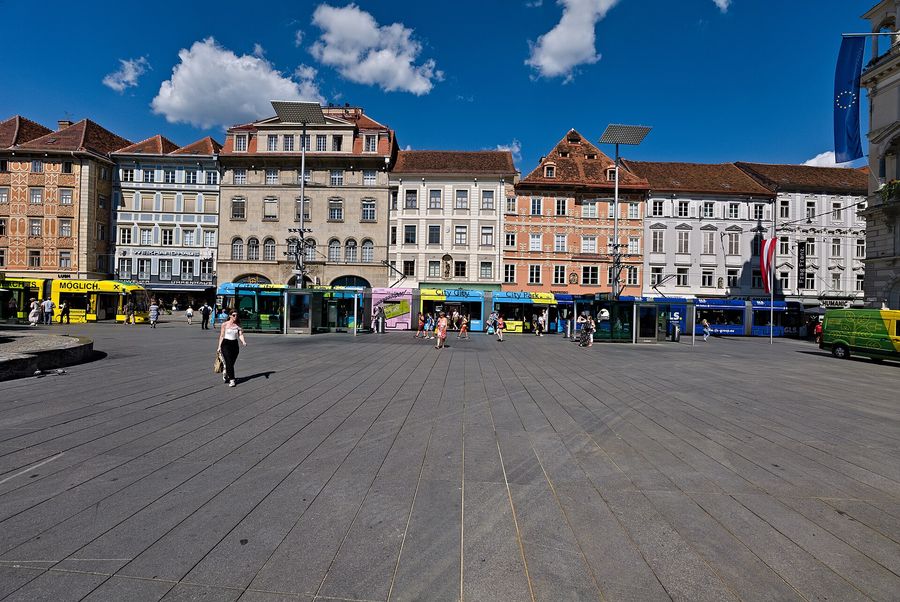
Plan two full days in Graz for the UNESCO old town, the Schlossberg, and its museums, adding a third for South Styrian wine country. Buy the €19.50 Graz Card to bundle museums, the funicular, and trams, book a walking tour to unlock the hidden courtyards, and visit between May and September.
Most travellers to Austria plan their trip around Vienna and Salzburg and never make it as far south as Styria. That is exactly why Graz rewards the effort. The country's second-largest city — around 290,000 residents, roughly 60,000 of them university students — wears its UNESCO World Heritage old town lightly, without the queues and ticket-touts of the better-known capitals. It is compact enough to cover on foot, cheaper than Vienna across the board, and unusually relaxed for a city with this much history packed into it. Planning a Graz trip is less about racing between blockbuster sights than about giving yourself time to wander the courtyards, ride up the Schlossberg, and eat your way through one of Austria's best regional food scenes.
How many days should you spend in Graz?
Two full days is the sweet spot: one for the old town and Schlossberg, another for Eggenberg Palace, the Kunsthaus, and the Landeszeughaus armoury. A single day feels rushed and skips the museums, while three days or more lets you add a half-day excursion into the South Styrian wine roads.
Graz is a two-night city for most people, and a comfortable three-night one if you want to slow down or head out of town.
A single full day is enough to see the shape of the place: the main square, a walk up the Schlossberg to the clock tower, and a loop through the old town's lanes and hidden courtyards. It will feel rushed, though, and you will miss the museums.
Two full days is the sweet spot. Spend the first on the old town and the Schlossberg, the second on the outlying sights — Eggenberg Palace on the western edge of the city, the contemporary art at the Kunsthaus Graz, and the world's largest historic armoury at the Landeszeughaus, which holds some 32,000 weapons and suits of armour assembled from 1551 onward.
Three days or more opens up the surrounding region. The South Styrian wine roads, an hour's drive south toward the Slovenian border, make a natural half- or full-day excursion, and the city itself never feels exhausted — there is always another frescoed courtyard behind an unmarked door.
When is the best time of year to visit Graz?
May to September is the easiest window, with café terraces, courtyard concerts, and the wooded Schlossberg at its best. October brings the Steirischer Herbst arts festival and golden light over the red rooftops, and December fills the old town with four Christmas markets. August turns quiet as students leave for summer.
Graz has a continental climate with a genuine summer and a cold, often grey winter. The month you choose changes the trip considerably.
Late spring and summer (May to September) is the easiest time to visit. Café terraces spill across the squares, courtyard concerts run through the warm evenings, and the Schlossberg's wooded paths are at their best. July and August are the warmest months and the most reliable for the wine country, though August is paradoxically one of the quieter months in the city itself — the large student population leaves for the summer break, and some smaller bars and venues close.
October belongs to Steirischer Herbst (Styrian Autumn), one of Europe's longest-running contemporary arts festivals, which takes over galleries, public spaces, and unexpected venues across the city. The autumn light over the red rooftops is also when Graz photographs best.
December transforms the old town into a cluster of four distinct Christmas markets, each with its own character — from the traditional stalls on the Hauptplatz to a quieter, design-focused Advent at Mehlplatz, fitting for a city that became a UNESCO City of Design in 2011, the first in Austria to earn the title.
Winter outside December (January to March) is cold and low on atmosphere; it is the cheapest time to come, but the terraces are shut and daylight is short.
Which Graz tours are worth booking?
Three tours earn their fee: an old-town walking tour that opens the hidden Renaissance courtyards, a design-themed walk linking the Kunsthaus and the Murinsel, and a Styrian food-and-wine excursion into the hills south of the city. For the Schlossberg, squares, and markets, you are perfectly fine exploring on your own.
Graz is small and walkable, so the question is rarely whether you can see something on your own — it is whether a guide adds enough to be worth it. For three things, the answer is usually yes.
A walking tour of the old town is the single most useful booking. Much of what makes Graz special is hidden: Renaissance courtyards tucked behind plain street doors, the painted facades you would walk straight past, the logic of how the medieval streetscape meets the city's bold modern architecture. A licensed guide opens those doors — sometimes literally — and explains why the Kunsthaus Graz, the bulbous blue "Friendly Alien" floating above the rooftops, sits so deliberately beside the historic core.
An architecture- or design-themed tour suits anyone curious about the City of Design designation. These walks connect the old town to interventions like the Murinsel — a floating steel island in the Mur River designed by Vito Acconci that doubles as a café — and the Kunsthaus, framing Graz as a working dialogue between centuries rather than a museum piece.
A Styrian food-and-wine excursion is where a guide earns the most. The hills south of the city produce some of Austria's best Sauvignon Blanc and Welschriesling, plus the dark-green pumpkin seed oil that flavours everything here. A guided tasting trip handles the driving (essential, given the wine) and gets you into family wineries that are hard to find and harder to book without the local language.
For everything else — the Schlossberg, the squares, the markets — you are fine on your own.
How much does a trip to Graz cost?
Graz is noticeably cheaper than Vienna or Salzburg. The €19.50 Graz Card anchors the budget, covering museums, the Schlossberg lift, and all transport. Free walking tours run on €8–12 tips, group tours €20–35, and private half-day guides €160–280. A hearty Brettljause board makes a filling, inexpensive local lunch.
Graz is noticeably cheaper than Vienna or Salzburg, which is one of its quiet pleasures.
The Graz Card (€19.50 for 24 hours) is the anchor of any sensible budget: it covers the city's museums, the Schlossberg lift and funicular, and all public transport. Because individual sights add up quickly — Eggenberg Palace alone is around €17 without the card — two or three visits make it pay for itself.
For guided experiences, expect a tips-based free walking tour to warrant about €8–12 per person, a group tour to run €20–35, and a private half-day guide for a small group to land in the €160–280 range — all below typical Vienna pricing. A guided wine excursion with tastings sits higher again, but folds in transport you would otherwise have to arrange yourself.
On daily costs, mid-range hotels are gentler on the wallet than in the capital, and the student population keeps casual dining genuinely affordable. A Brettljause — a wooden board of cured meats, Verhackert (a spreadable speck), cheese, and bread — is a filling, inexpensive lunch and a local institution worth seeking out.
How do you get to Graz and get around?
Direct ÖBB Railjet trains link Vienna to Graz in about two and a half hours through the UNESCO Semmering pass, running roughly hourly; a Sparschiene advance fare saves money. Once there, the flat old town crosses in fifteen minutes on foot, a lift and funicular climb the Schlossberg, and trams reach Eggenberg.
Getting in is straightforward. Direct ÖBB Railjet trains link Vienna Hauptbahnhof to Graz in about two and a half hours, climbing through the historic Semmering railway pass — itself a UNESCO World Heritage Site — so the journey is part of the experience. Trains run roughly hourly; booking a Sparschiene advance fare online is far cheaper than buying on the day. Graz also has its own airport with regional and seasonal European connections, a short tram-and-bus or taxi ride from the centre.
Once you arrive, the old town is flat, compact, and made for walking; the entire UNESCO core can be crossed in fifteen minutes. The Schlossberg is the only real climb, and even that is optional — a lift inside the hill and a funicular both run to the top, near the Uhrturm, the 13th-century clock tower whose oversized hands are famously reversed, the long hand showing the hours. For the outlying sights, Graz's tram network is efficient and covered by the Graz Card; Eggenberg Palace is a direct tram ride west of the centre.
A few logistics worth knowing: the Kaiser-Josef-Platz market is liveliest on weekday mornings, Tuesday to Saturday, before noon, and is the best place to taste regional produce. Tipping follows the Austrian norm — around 10% for private guides and €5–10 for group tours. And if you are based in Vienna, Graz works perfectly as an overnight side trip rather than a rushed day return; the city deserves at least one evening, when the squares empty of day-trippers and the old town is at its most atmospheric.
Why does Graz reward slowing down?
Graz hides its pleasures rather than parading them: a frescoed courtyard behind an unmarked door, a glass of crisp Styrian white, the golden view over red rooftops from the Schlossberg. Travellers who treat it as a checklist leave underwhelmed, while those who plan two unhurried days and lean on the food leave charmed.
Graz does not announce itself the way the imperial capitals do. Its pleasures are quieter — a hidden courtyard, a glass of crisp Styrian white, the view back over the red rooftops from the Schlossberg as the light turns gold. Plan two unhurried days, lean on the Graz Card, book a walking tour to unlock the courtyards, and leave room for the food. The travellers who treat Graz as a checklist leave underwhelmed; the ones who let it set the pace tend to wonder why they had never heard more about it.
Frequently Asked Questions
How many days do you need in Graz?
Two full days covers the UNESCO old town, the Schlossberg, and a museum or two at a relaxed pace. Add a third day if you want a half-day excursion into the South Styrian wine country, which sits about an hour south of the city.
Is the Graz Card worth buying?
For most visitors, yes. At €19.50 for 24 hours it bundles the city's museums, the Schlossberg lift and funicular, and unlimited public transport — you only need to visit two or three paid sights for it to pay for itself, and it removes the friction of buying individual tickets.
When is the best time to visit Graz?
May to September is the prime window for warm-weather walks, courtyard concerts, and outdoor dining. October brings the Steirischer Herbst arts festival, and December fills the old town with four separate Christmas markets. August can feel quiet as the city's large student population leaves for the summer.
How do you get from Vienna to Graz?
Direct ÖBB Railjet trains run roughly hourly from Vienna Hauptbahnhof and take about two and a half hours through the UNESCO-listed Semmering railway pass. Booking a Sparschiene advance fare online brings the cost well below the walk-up price.