
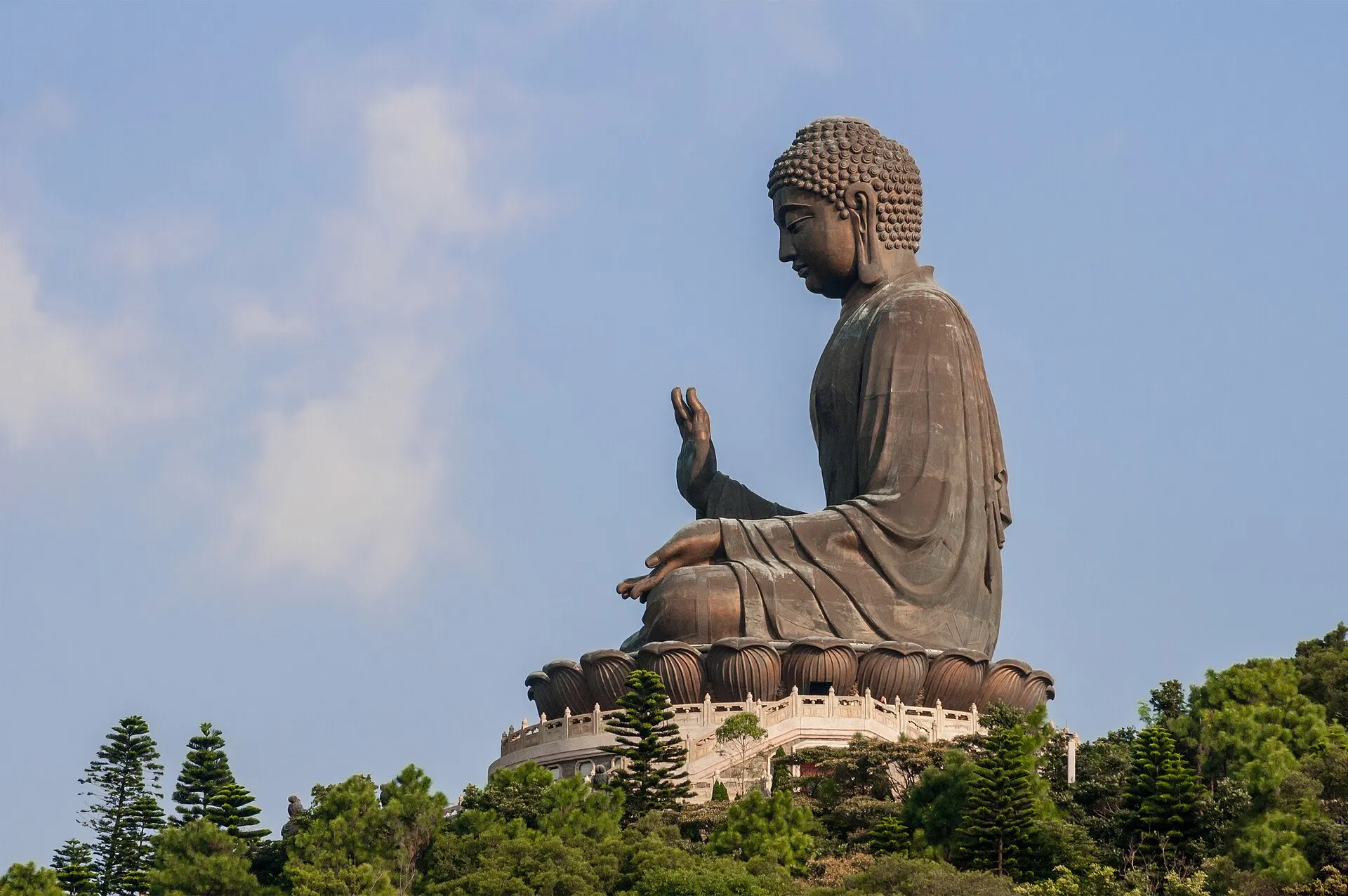
Spiritual Significance
The Tian Tan Buddha was consecrated in 1993 as a monument to the harmony between humanity, nature, and religion — a theme embedded in its placement atop Lantau's forested hills, far from the dense urban sprawl of Hong Kong. The statue faces north toward mainland China, an intentional orientation symbolising a Buddhist blessing extended to the country and the wider world. Encircling its lotus throne, six bronze Deva statues present offerings — flowers, incense, a lamp, ointment, fruit, and music — that represent the six paramitas, the Buddhist perfections of generosity, morality, patience, zeal, meditation, and wisdom that together form the Mahayana path to enlightenment. Nearby, the Wisdom Path carries its own religious weight: 38 timber columns arranged in the pattern of the infinity symbol are inscribed with the Heart Sutra, one of the most recited texts in Mahayana Buddhism, distilling the teaching of emptiness (sunyata) into just 260 Chinese characters. The setting owes its spiritual origins to Po Lin Monastery, founded in 1906 by three monks from Jiangxi province who sought a remote mountain retreat for serious Buddhist practice, far from the commercial pressures of the city below. Their small hermitage grew into one of Hong Kong's most important religious institutions, becoming the foundation on which the Great Buddha was eventually built — a bronze embodiment of centuries of monastic aspiration.
Visitor Etiquette
Treat the plateau as a place of worship, not just a viewpoint. Dress code: shoulders and knees should be covered to enter Po Lin Monastery's main halls; a light layer in a daypack solves the summer-heat versus modesty problem. Inside the halls: remove hats, keep your voice low, and never point the soles of your feet toward the altars or Buddha images when you sit. Photography: the exterior statue and staircase are open to photos, but many interior shrine rooms prohibit them and forbid flash — look for the signs and ask a monk if unsure. Incense and offerings: buy joss sticks from the monastery rather than bringing your own, and place them in the communal urns; never step over cushions or offering tables. The vegetarian meal: the Po Lin dining hall is run by the monastery, so finish your food and clear your tray as a matter of respect. Quiet zones: during chanting and ceremonies, stand at the back and stay silent rather than walking through the ritual space for a closer photo
Tian Tan Buddha timeline
-
Po Lin Monastery founded
Three monks from Jiangxi province built a hermitage on the remote Ngong Ping plateau, seeking a mountain retreat for serious Buddhist practice. It grew into Po Lin Monastery, the religious foundation on which the Great Buddha would eventually rise.
-
Construction of the Big Buddha begins
After a decade of planning, work started on the statue. Its 202 bronze panels were cast on the mainland by a Chinese aerospace manufacturer, barged to Lantau, and assembled over a steel skeleton engineered to withstand the island's typhoon winds.
-
Tian Tan Buddha consecrated
The 250-tonne seated figure was consecrated on 29 December before monks and dignitaries from across Asia, opening as the largest outdoor seated bronze Buddha of its kind and instantly becoming Lantau's defining landmark.
-
Wisdom Path opened
A walking trail of 38 timber columns was raised on the hillside below the statue, arranged in a figure-of-eight and inscribed with the Heart Sutra in the calligraphy of scholar Jao Tsung-I.
-
Ngong Ping 360 cable car opens
The 5.7-kilometre gondola opened on 18 September, replacing the long bus climb with a 25-minute glide from Tung Chung and turning a half-day pilgrimage into a mainstream Hong Kong day trip.
When to Visit
Buddha statue interior: 10:00 AM to 5:30 PM daily (a monastery meal ticket is required to enter). Stairway and exterior: accessible during daylight hours, typically 8:00 AM to 6:00 PM. Po Lin Monastery: 8:00 AM to 6:00 PM daily. Ngong Ping 360 cable car: usually 10:00 AM to 6:00 PM on weekdays and from 9:00 AM at weekends, with the last uphill cabin around 5:30 PM — check the annual January maintenance closure before you travel. Best time: arrive before 10:30 AM on a weekday, when the plateau is quiet and morning light rakes across the statue's face; the Buddha's Birthday (the eighth day of the fourth lunar month, usually May) brings crowds and the ceremonial Bathing of the Buddha
Admission and Costs
Climbing the stairs: free for the exterior and the 268-step staircase. Interior exhibition: included with a monastery meal ticket (HK$38 / US$5 for the vegetarian lunch at Po Lin). Ngong Ping 360 cable car: HK$160 (US$20) standard cabin one way, HK$235 (US$30) standard round trip, or HK$295 (US$38) crystal cabin round trip with a glass floor. Budget alternative: New Lantao Bus route 23 from Tung Chung costs about HK$17 (US$2) and takes 50 minutes through the mountains. A cable-car-plus-village day pass bundling the ride with Tai O typically runs HK$220 (US$28)
The Case for a Guide
Tian Tan Buddha reads as a photo stop to most day-trippers, yet almost none of its meaning is signposted on site — and that is exactly where a licensed guide earns their fee. A good guide sequences the day so you are climbing the steps before the tour buses land, decodes the six Deva offerings and the mudra hand gestures that casual visitors walk straight past, and threads the visit together with the working rhythms of Po Lin Monastery rather than treating the statue as a standalone monument. The practical payoff is just as real on a route this exposed and this weather-dependent.
- Skip-the-queue timing: sequencing the cable car and the interior relic hall to avoid peak-weekend lines
- Buddhist context: the six Deva offerings, the Wisdom Path, and the monastery's founding that no plaque explains
- Transport logistics solved end to end: MTR to Tung Chung, the cable car up, and the bus back down to Tai O
- Weather judgement calls: local knowledge so you are not sold a foggy cabin ride with zero visibility
- A richer half-day: an unhurried pairing with Tai O fishing village or Ngong Ping village's crafts and cafes
Tips for Visitors
Crystal cabin is worth it: the glass-floored cable car adds a genuine thrill, especially over the bay section, but book online to lock in a boarding slot on busy days. Dress modestly: Po Lin is an active monastery, so cover shoulders and knees out of respect. Check the weather: fog often shrouds the plateau from March to May, hiding the statue entirely, while clear winter days are ideal. Explore Tai O village: a 20-minute bus ride connects Ngong Ping to this stilt-house fishing community where you can spot the rare pink dolphins of the Pearl River estuary. Go on a weekday: weekend crowds pack the staircase and the cable car, so a Tuesday or Wednesday visit offers real breathing room. Carry cash: the monastery meal ticket and route 23 bus prefer coins and Octopus over cards
Frequently Asked Questions
When is the best season to visit the Tian Tan Buddha?
October through January provides the clearest mountain air and most comfortable conditions for climbing the 268 steps to the statue and riding the Ngong Ping 360 cable car with unobstructed views over Lantau's peaks and coastline. The summer months (June-August) bring intense heat, typhoon-season closures of the cable car, and thick fog that frequently shrouds the mountain summit, hiding the Buddha entirely from visitors who made the long journey from the city.
Can tourists visit Tian Tan Buddha any day of the week?
Buddha statue interior: 10:00 AM to 5:30 PM daily (must purchase a meal ticket to enter). Stairway and exterior: Accessible during daylight hours, typically 8:00 AM to 6:00 PM. Po Lin Monastery: 8:00 AM to 6:00 PM daily.
Is there a fee to enter Tian Tan Buddha?
Climbing the stairs: Free for the exterior and the 268-step staircase. Interior exhibition: Included with a monastery meal ticket (HK$38 / US$5 for the vegetarian lunch). Ngong Ping 360 cable car: HK$160 (US$20) standard cabin one way, HK$295 (US$38) crystal cabin round trip.
How do you get to the Tian Tan Buddha from central Hong Kong?
Take the MTR Tung Chung line to its terminus, then either ride the 25-minute Ngong Ping 360 cable car over the mountains or catch New Lantao Bus route 23, a 50-minute climb through hairpin roads that costs about HK$17 (US$2). Allow half a day round trip from Hong Kong Island or Kowloon.
What should visitors know before visiting Tian Tan Buddha?
Bring water and sun protection for the exposed staircase, dress modestly to enter Po Lin Monastery, and check the Ngong Ping weather before setting out — fog can erase the entire statue from view even on a bright day in the city below.