
Spiritual Significance
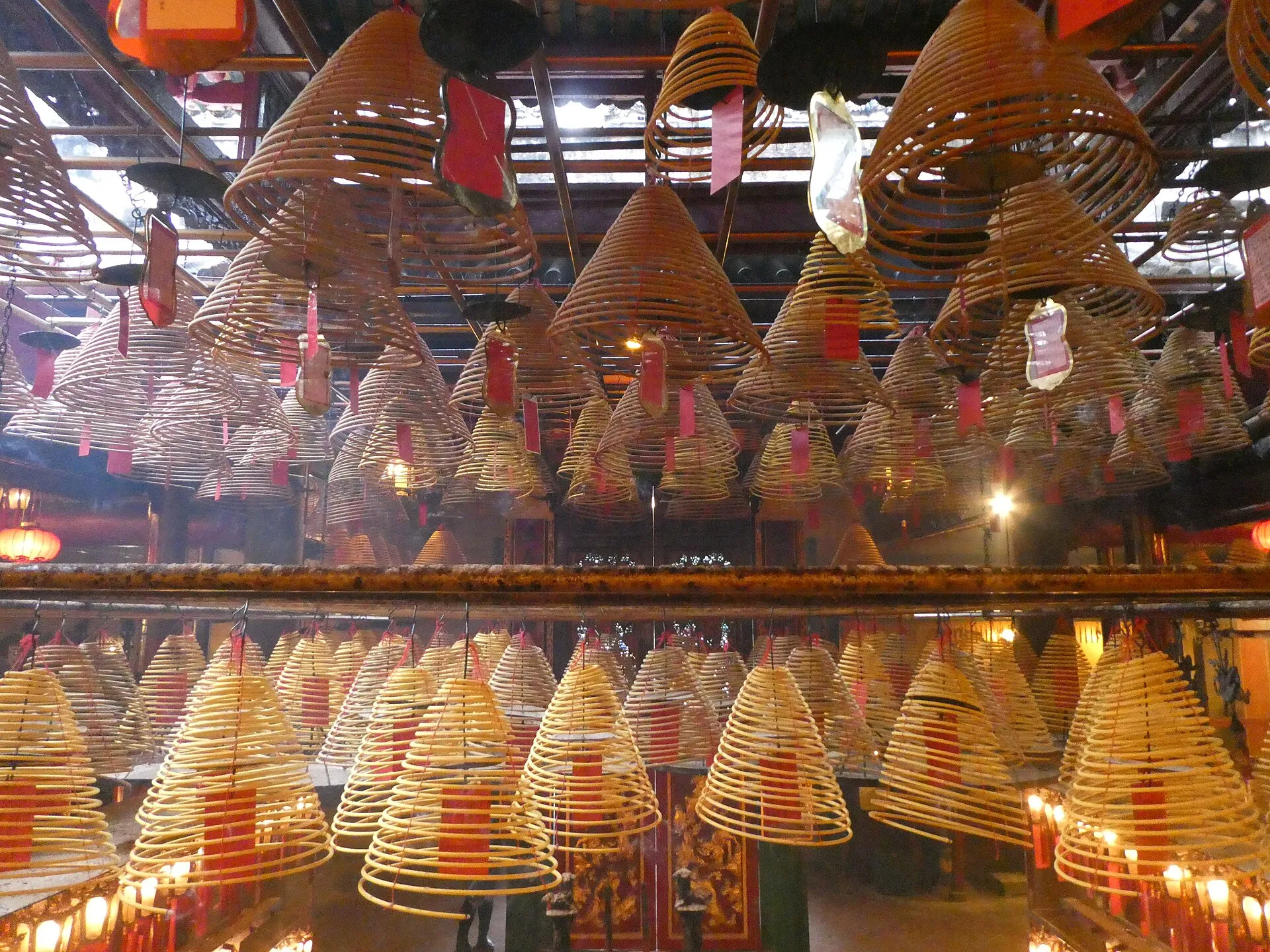
Giant incense coils: Conical spirals of sandalwood incense dangle from the ceiling on thin wires, some burning continuously for up to three weeks and leaving ash trails on the stone floor below. Twin deity altars: Man Cheong's literary shrine and Mo Tai's martial altar face each other across the main hall, flanked by ornate sedan chairs and gilded carvings. Oath-taking history: Iron plaques and wooden tablets record the temple's unusual legal role, where disputes were settled by swearing truthfulness before the gods. Carved wooden panels: Intricate relief carvings depicting scenes from Chinese mythology line the walls, some dating to the original 1847 construction. Smoke-and-light photography: Beams of sunlight cutting through incense haze produce ethereal compositions that have made this one of the most photographed interiors in Hong Kong. Hollywood Road surroundings: The temple sits on a street famous for antique dealers, gallery spaces, and dried-goods shops that have operated here for generations
When to Visit
Opening hours: 8:00 AM to 6:00 PM daily, including public holidays. Best time to visit: Early morning between 8:00 and 9:30 AM, when fresh coils have just been lit and the temple is nearly empty. Busiest periods: Lunar New Year and exam season bring crowds of students praying to Man Cheong for academic success. Photography light: Midday sun filtering through the coils creates the most dramatic smoke-and-light patterns between 11:00 AM and 1:00 PM
Admission and Costs
Admission: Completely free, no ticket or reservation required. Incense coils: Small personal coils can be purchased inside the temple for HK$50-100; large ceiling-hung coils with name tags cost HK$100-300. Joss sticks: Available at the entrance for a small donation, typically HK$10-20. Nearby antique browsing: Hollywood Road's antique shops are free to wander, though the jade and porcelain carry serious price tags
Tips for Visitors
Respect the worshippers: This is a functioning temple; keep voices low, avoid blocking people at the altars, and ask before photographing anyone praying. Wear dark clothing: Incense ash drifts constantly and shows clearly on light-colored fabrics; a dark shirt saves laundering. Combine with Sheung Wan walking: The Possession Street stairs, Cat Street flea market, and PMQ creative hub are all within a five-minute walk. Use the Mid-Levels Escalator: The world's longest outdoor covered escalator system begins nearby and carries you uphill through SoHo's cafe-lined streets toward Central. Hang your own coil: For a small donation you can write a wish on a red tag and have a personal incense coil hung from the ceiling — it burns for days as a slow-release prayer
Frequently Asked Questions
Is there a best season to visit Man Mo Temple?
October through January offers Hong Kong's coolest and driest conditions, making the walk up Hollywood Road to the temple and through the surrounding Sheung Wan antique district most comfortable. The temple's incense-filled interior is atmospheric in any weather, but the giant spiral coils burn more dramatically in the cooler, less humid months when smoke hangs in thick, photogenic layers rather than dissipating quickly in summer's heavy air.
When can tourists enter Man Mo Temple?
Opening hours: 8:00 AM to 6:00 PM daily, including public holidays. Best time to visit: Early morning between 8:00 and 9:30 AM, when fresh coils have just been lit and the temple is nearly empty.
Are there any costs associated with visiting Man Mo Temple?
Admission: Completely free, no ticket or reservation required. Incense coils: Small personal coils can be purchased inside the temple for HK$50-100; large ceiling-hung coils with name tags cost HK$100-300.
What should visitors know before visiting Man Mo Temple?
Respect the worshippers: This is a functioning temple; keep voices low, avoid blocking people at the altars, and ask before photographing anyone praying.