
Walking Route
Engineering Facts
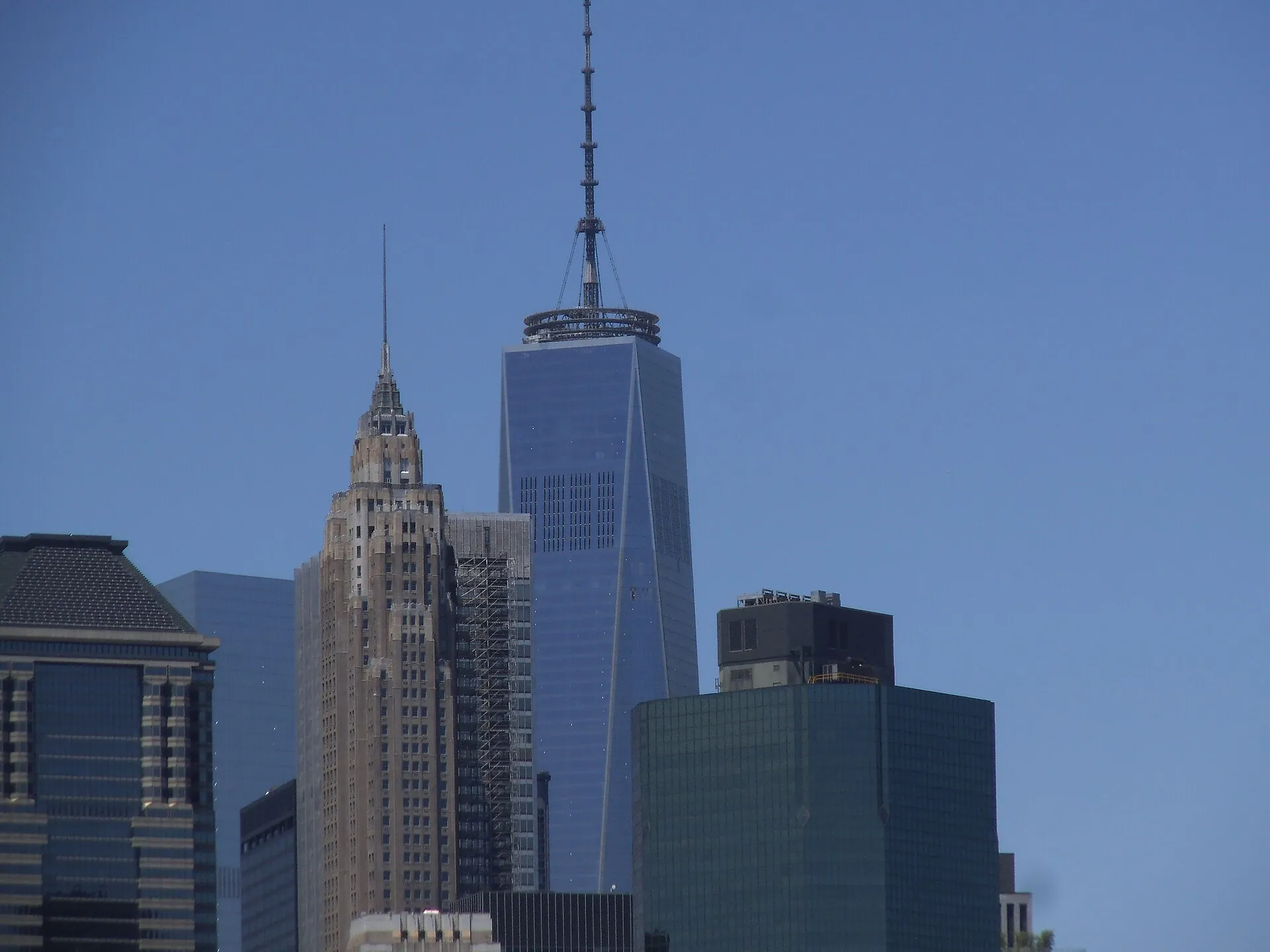
The tower beneath the observatory is an engineering statement as much as a symbolic one. It rises from a roughly 185-foot windowless base — a reinforced-concrete pedestal sheathed in shimmering glass fins that conceals mechanical floors and hardens the structure against a street-level blast.
Above the base, the building climbs to a roof height of 1,368 feet, deliberately matching the original North Tower, before a 408-foot stainless-steel spire carries it to the symbolic 1,776 feet certified by the Council on Tall Buildings and Urban Habitat — the international authority whose 2013 height-committee ruling that the spire counts as permanent architecture, rather than a removable antenna, settled a public debate and confirmed the tower as the tallest in the Western Hemisphere.
Behind the glass, a dense reinforced-concrete core — with walls up to three feet thick — ties the tower into Manhattan's schist bedrock and shelters pressurised, extra-wide egress stairwells and a dedicated firefighter lift, safety systems shaped directly by the lessons of September 11.
- Sky Pod elevators: among the fastest in the hemisphere, rising at roughly 23 miles per hour to reach the 102nd floor in about 47 seconds, and slowing automatically in high wind.
- Cost and authorship: designed by architect David Childs of Skidmore, Owings & Merrill for the Port Authority of New York & New Jersey, the tower cost an estimated $3.9 billion, among the most expensive office buildings ever built.
- Sustainability: One World Trade Center earned LEED Gold certification, with rainwater capture, a greywater system, and extensive recycled structural steel and concrete among its credentials.
- Scale: the building carries 104 numbered floors and encloses roughly 3.5 million square feet of space.
Certified-height and construction details are published by the Council on Tall Buildings and Urban Habitat.
Observation Points
A standard ticket includes timed entry and access to all three observatory levels, each with its own draw. On the 102nd floor, the City Pulse feature pairs a ring of live digital screens with Ambassadors who spin the display to answer questions and spotlight landmarks in real time.
The 100th floor holds the main glass gallery and the Sky Portal, a 14-foot circular glass disc set into the floor that streams a live high-definition feed of the streets 1,250 feet directly below. Between them sits ONE Dine, a sit-down restaurant and bar where a window table turns the panorama into the backdrop for a meal.
The view itself is the headline. To the south, the Statue of Liberty and Ellis Island stand clearly in the harbour; to the north, Central Park bisects the island as a green rectangle and the Empire State Building rises from Midtown.
On clear days the panorama extends to the Catskill Mountains 100 miles away. Directly below, the memorial pools of the 9/11 Memorial trace the footprints of the fallen towers — a juxtaposition of soaring height and ground-level remembrance that gives the observatory an emotional depth no purely recreational deck can match.
Getting There
One World Observatory sits atop one of the best-connected transit nodes in New York, so most visitors arrive by subway or train.
- Subway: the Fulton Center hub (2/3/4/5/A/C/J/Z) and WTC Cortlandt (1) stations are both a 5-minute walk from the entrance, and the E train terminates directly beneath the site at World Trade Center.
- PATH: trains from New Jersey surface inside the Oculus, Santiago Calatrava's soaring winged transit hall, which connects underground straight to the tower's base.
- Ferry: NY Waterway and NYC Ferry landings at Brookfield Place and Pier 11/Wall Street put you a short walk west or south of the tower.
The entrance is on the west side of the building off West Street near Vesey Street; follow signs for the observatory rather than the office lobby. Because the 9/11 Memorial pools lie at the building's base, most visitors ride up first for the aerial perspective and then descend to walk the plaza at street level. Current hours and ticketing are published on the official One World Observatory site.
One World Observatory timeline
-
The original Twin Towers open
The first of the original World Trade Center towers was dedicated in 1973, and for a short time the 110-story North Tower stood as the tallest building in the world, anchoring Lower Manhattan's skyline for a generation.
- Sept 11, 2001
The Twin Towers are destroyed
The September 11 attacks brought down both towers, killing 2,753 people at the site and leaving a 16-acre void in the heart of the Financial District that would take more than a decade to rebuild.
-
Daniel Libeskind's master plan
Architect Daniel Libeskind won the competition to master-plan the rebuilt site, proposing a spiralling cluster of towers rising toward a symbolic 1,776-foot pinnacle at the northwest corner of the complex.
-
Construction begins
After years of debate over design, financing, and security, work on the foundations of the new tower — then widely called the Freedom Tower — began in earnest, with David Childs of Skidmore, Owings & Merrill leading the final architecture.
-
Tallest in New York once more
In April 2012 the rising steelwork passed the roof of the Empire State Building, and by year's end the structure had topped out, reclaiming the title of tallest building in the city.
-
The spire counts — 1,776 feet confirmed
The Council on Tall Buildings and Urban Habitat ruled that the stainless-steel spire is permanent architecture rather than a removable antenna, confirming One World Trade Center as the tallest building in the Western Hemisphere at 1,776 feet.
- Nov 2014
One World Trade Center opens
The tower received its first office tenants in November 2014, a little over thirteen years after the attacks, with Condé Nast anchoring the building's return to working life.
- May 29, 2015
One World Observatory opens
The observatory on floors 100 to 102 opened to the public, giving visitors a 360-degree panorama from 1,250 feet and a vantage directly above the memorial pools at the building's base.
When to Visit
- Hours: open daily from 10 AM, with the last elevator boarding shortly before the 8 PM close; peak-summer evenings from late June through Labor Day extend the final ascent to 9 PM.
- Timed entry: admission is by reserved slot rather than a door queue, so book a specific window online before you arrive.
- Best light: weekday mornings in autumn (September-November) tend to offer the clearest skies and the least crowded platform, with May a strong second choice.
- Sunset: a slot 60 to 90 minutes before sunset lets you watch the city shift from daylight to golden hour to a field of lights in a single visit.
- Avoid: weekend afternoons, holiday periods, school-vacation weeks, and cruise-ship port days bring the heaviest crowds.
- Weather check: low cloud can drop visibility to near zero at 1,250 feet, so check the observatory's live webcam before setting out on an overcast day.
Admission and Costs
- Standard ticket: about $43 for adults, $37 for children ages 6-12, and free for under-6s; it covers timed entry and access to all three observatory levels.
- Priority access (~$60): a shorter wait at security and the elevators, useful on a busy afternoon.
- Flex ticket (~$56): priority access plus the freedom to arrive on any date rather than a fixed slot.
- Combination ticket (~$65): bundles the observatory with the 9/11 Memorial & Museum next door and usually undercuts buying the two separately — the most natural pairing given their shared footprint.
- City passes: multi-attraction passes such as CityPASS and Go City include admission alongside other landmarks and can pay off across a packed itinerary.
Higher tiers buy a shorter wait and more flexibility rather than a different view — the panorama is identical from every ticket.
The Case for a Guide
From 1,250 feet above Manhattan, hundreds of buildings, bridges, and neighbourhoods spread before you, and without someone to identify them the panorama can blur into an undifferentiated mass of steel and glass. Guides make the view legible and give the building's extraordinary weight of meaning its full due.
- Reading the skyline: Guides name every major structure on the horizon — from the Gothic spires of the Brooklyn Bridge to the green rectangle of Central Park four miles north — explaining the architectural ambitions and rivalries that shaped the skyline over the past century.
- The rebuilding story: Guides narrate the original Twin Towers, the attacks that destroyed them, the fourteen-year debate over what to build in their place, and the deliberate symbolism embedded in the new tower's 1,776-foot height — context that transforms a scenic ride into something far more meaningful.
- Unprecedented safety engineering: A windowless concrete base, blast-resistant curtain walls, and pressurised stairwells make One World Trade Center the safest skyscraper ever built; guides explain the specific engineering decisions and what each feature protects against.
- Connecting the aerial to the ground-level: After descending, guides continue to the 9/11 Memorial directly below, where the aerial perspective you just experienced deepens the impact of standing beside the reflecting pools at street level.
- Neighbourhood geography: Guides orient visitors to Lower Manhattan's distinct districts visible from above — the Financial District, Tribeca, SoHo, and the bridges connecting to Brooklyn — building a mental map that makes the rest of the New York trip more legible.
Tips for Visitors
Sky Pod elevator experience: The 47-second ride features a stunning time-lapse animation of Manhattan's skyline growing over 500 years, culminating in a theatrical reveal as the walls become transparent at the top. City Pulse interactive display: A ring of live screens on the 102nd floor lets Ambassadors spotlight buildings, neighbourhoods, and transit routes below in real time. Sky Portal glass disc: A 14-foot circular glass panel set into the 100th-floor floor lets you look straight down 1,250 feet to the street below.
Sunset transition: If your timed ticket spans the sunset hour, watch the city transform from a sunlit stone-and-glass grid into a glittering constellation of lights stretching to the horizon. Statue of Liberty view: The southern windows provide the clearest aerial perspective of the Statue of Liberty, Ellis Island, and the harbour available from any indoor location in Manhattan. Memorial pools from above: Looking down at the 9/11 Memorial pools from 100 stories above offers a perspective on the Twin Towers' footprints that visitors at ground level cannot experience.
Save it for a clear day if you can: crisp air behind a cold front can push visibility from roughly 10 miles to 50 miles. Afterwards, head south to walk the Brooklyn Bridge for a pedestrian crossing with street-level views of the tower you just stood atop, or go north up the West Side to stroll The High Line, the elevated park built on a disused freight viaduct.
Frequently Asked Questions
Which months offer the best viewing conditions at One World Observatory?
September through November typically provides the clearest skies and most expansive visibility from 1,776 feet up, with autumn air producing views that can stretch over fifty miles on ideal days. May is another strong month, with warming temperatures and extended daylight for sunset visits. Summer haze can limit sightlines, and winter brings the risk of cloud cover obscuring the panorama, though a clear winter day after a cold front can be spectacular.
When is One World Observatory open to visitors?
The observatory runs daily from 10 AM, and because entry is by timed ticket you reserve a slot rather than queue at the door. The last elevator boards shortly before the 8 PM close, extended to 9 PM on peak summer evenings from late June through Labor Day. Weekday mid-mornings feel markedly calmer than weekend afternoons or the busy hour around sunset, and low cloud can drop visibility to near zero at 1,250 feet, so check the observatory's live webcam before setting out on an overcast day.
What does a visit to One World Observatory cost?
A standard adult ticket runs about $43, with children ages 6-12 at $37 and under-6s free, and covers timed entry to all three observatory levels. Paying up for Priority ($60) or Flex ($56) access mainly buys a shorter wait and date flexibility rather than a different view, while the combined ticket with the 9/11 Memorial & Museum next door (around $65) usually undercuts buying the two attractions separately. City-wide passes such as CityPASS and Go City also bundle admission with other landmarks.
What is the best way to experience One World Observatory?
Ride the Sky Pod elevator up rather than heading straight for the glass: its 47-second ascent plays a time-lapse of Manhattan growing across 500 years and ends with a theatrical reveal as the walls turn transparent at the top.
On the platform, orient yourself south toward the harbour, the Statue of Liberty, and the 9/11 Memorial pools directly below, then work north up the island to Central Park and the Empire State Building. A timed slot 60 to 90 minutes before sunset lets you watch the city shift from daylight to golden hour to a field of lights.
Is One World Observatory wheelchair accessible?
Yes. The observatory is fully accessible: the Sky Pod elevators and all three levels (100, 101, and 102) are reachable step-free, and accessible restrooms are provided on the observation floors. The glass runs floor-to-ceiling, so seated visitors enjoy the same uninterrupted sightlines as standing ones, and wheelchairs can be borrowed on request. The ground-level entrance, security screening, and ticketing are all step-free.
How much time should I budget for One World Observatory?
Plan on about 60 to 90 minutes for the core experience: a few minutes in the entry gallery and pre-show, the 47-second Sky Pod ascent, the See Forever Theater film, and time on the observation levels themselves. Add another 30 to 45 minutes if you want to linger through sunset or have a drink or meal at ONE Dine. Allowing a little over an hour comfortably covers security and the full sequence without feeling rushed.
Is One World Observatory better than the Empire State Building or Top of the Rock?
Each deck offers a different view rather than a strictly better one. One World Observatory is the highest, gives the widest harbour panorama, and places you directly above the 9/11 Memorial, but because it sits near the island's southern tip the classic Midtown skyline reads as distant.
The Empire State Building puts you in the middle of that skyline, and Top of the Rock is prized for framing the Empire State Building itself in the view. If the harbour, the Statue of Liberty, and the memorial context matter most, One World wins; for the Midtown skyline, the other two have the edge.