Seasonal Highlights
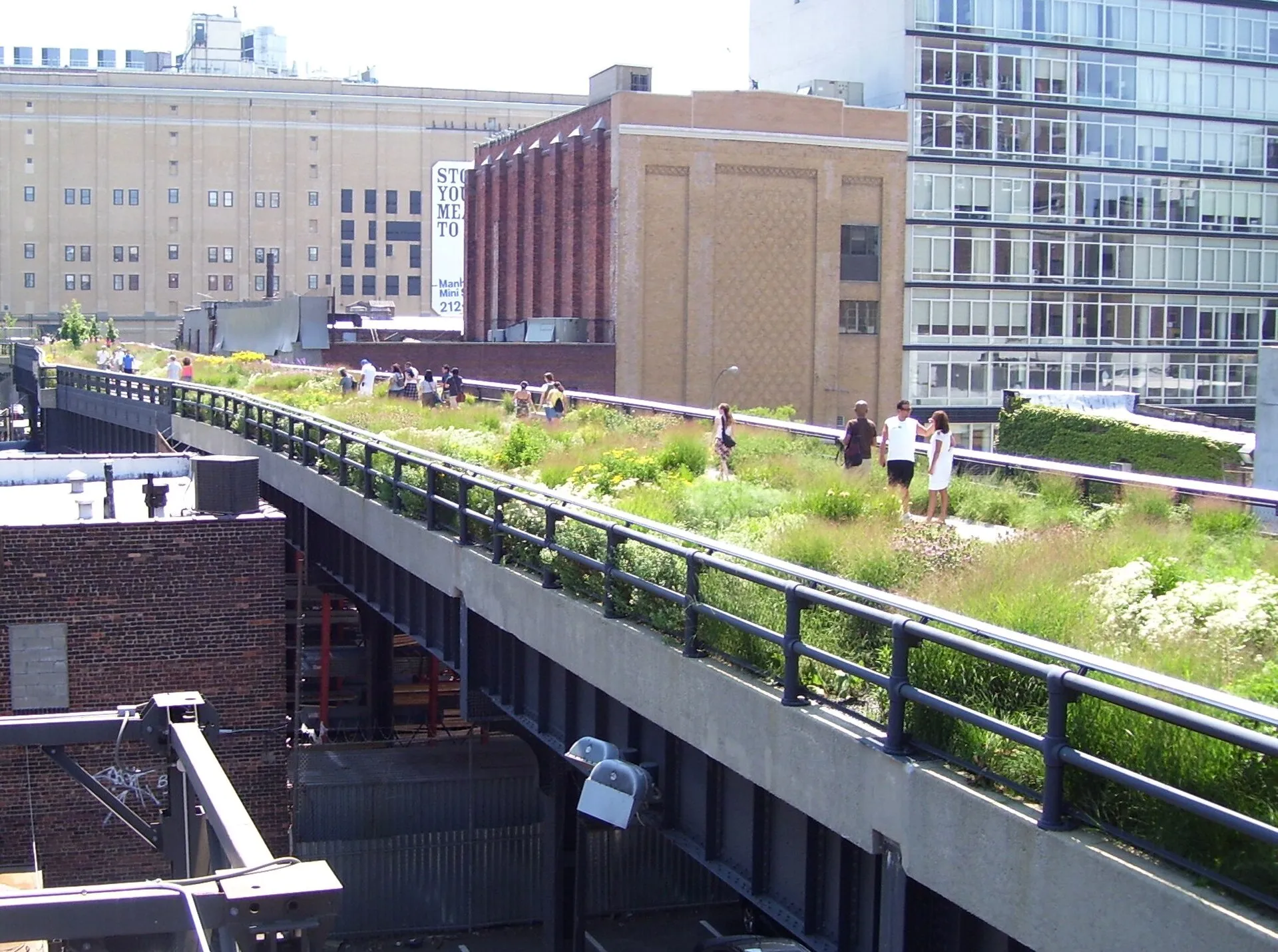
Piet Oudolf's planting design is the reason the High Line looks different every week of the year. Working with more than 500 species of perennials, grasses, shrubs, and trees, Oudolf arranged the gardens to echo the wild meadow that reclaimed the tracks, favoring structure and seed heads over tidy, manicured beds. The result rewards repeat visits and careful photography far more than a single quick walk-through.
- Late spring (April–June): The designed wildflower plantings reach peak bloom, with the Chelsea Grasslands and the gardens between 14th and 16th Streets at their most dramatic — the single best window for color.
- Summer (July–August): Tall grasses and perennials fill in, the water feature at the 14th Street Passage draws children, and the long western light over the Hudson River is ideal for golden-hour photos.
- Autumn (September–October): A second wave of beauty as ornamental grasses turn copper and gold and the low sun throws long shadows down the walkway.
- Winter (November–March): The plantings are left standing through the cold months, so frost-rimmed seed heads and bare architecture give the park a stark, near-solitary beauty on weekday mornings.
For the most photogenic vantage points, aim for the 10th Avenue Square amphitheater at 17th Street, the cantilevered overlook nearby with its clear-day views toward the Statue of Liberty, and the preserved rail tracks woven into the plantings throughout the park.
Activities
The most rewarding way to experience the park is to walk it end to end, and the direction matters. Starting at Gansevoort Street and heading north keeps the Hudson River and — in the late afternoon — the sunset ahead of you, and it finishes among the glittering towers of Hudson Yards.
- Enter at Gansevoort Street beside the Whitney Museum of American Art, in the heart of the Meatpacking District.
- Pass the 10th Avenue Square at 17th Street and the Chelsea Grasslands, the horticultural heart of the park.
- Reach the Spur at 30th Street, home to the Plinth, a rotating platform for major contemporary art commissions.
- Exit at 34th Street into Hudson Yards, with the Vessel and the Edge observation deck a short walk away.
Because staircases and elevators sit every few blocks, you can join or leave at Chelsea or Hudson Yards whenever you like, and the elevators at Gansevoort, 14th, 16th, 23rd, 30th, and 34th Streets make the full route step-free (see the official visitor page for which are in service). The flat, paved route is only 1.45 miles, but pairing it with a neighborhood wander easily doubles the distance — so wear comfortable shoes. To extend the day, One World Observatory is roughly a 20-minute walk south, Times Square about 15 minutes east of the northern end, and the Empire State Building a short subway ride away.
When to Visit
The High Line is open daily with seasonal closing times: roughly 7 AM to 10 PM from spring through autumn and 7 AM to 7 PM in the depths of winter, though exact hours shift each season — check the official visitor page before a late visit. Entry is from street level only, so plan around the nearest open staircase or elevator.
- Fewest crowds: Weekday mornings before 10 AM; the park is busiest on weekend afternoons from May through October.
- Best light for photos: The hour before sunset, when the west-facing park catches dramatic light over the Hudson River.
- Seasonal highlights: Late May through June for peak wildflower bloom, October for autumn foliage, and December for holiday installations near the southern entrance.
- Art programming: Rotating exhibitions and performances run throughout the year under the High Line Art program.
Admission and Costs
Entry to the High Line is completely free, always, with no tickets or reservations required — the park is funded largely by private donations rather than admission. The only costs are optional:
- Guided group walking tour: roughly $20–35 per person for a 90-minute tour covering history, architecture, horticulture, and public art, led by trained High Line volunteers or licensed NYC guides.
- Private tour: about $250–400 for a group of up to 10, with a specialist focusing on architecture, art, or garden design.
- Food and drink: seasonal carts and pop-up vendors sell artisanal snacks, ice cream, and beverages for roughly $5–15 per item.
The Case for a Guide
Without context, the High Line can read as a pleasant stroll past some wildflowers; with a guide it becomes a layered story of industrial decline, grassroots activism, and radical landscape design. A good guide turns the quiet details — a switch left in the track bed, a species chosen to bloom in November, a tower angled toward the park — into the heart of the visit.
- The vanished industrial landscape: Guides reconstruct the Meatpacking District's slaughterhouses and packing plants and explain why the viaduct was raised thirty feet above the street in the first place.
- The architecture that followed: They identify the "starchitect" buildings that rose along the route after the park opened, including works by Zaha Hadid, Jean Nouvel, Frank Gehry, and Renzo Piano that now define the Chelsea skyline.
- Reading Oudolf's planting design: What looks like random wildflowers is a deliberate succession of more than 500 species; a guide explains how the meadow is cultivated as controlled chaos rather than manicured perfection.
- Spotting the art you would miss: High Line Art commissions range from monumental sculptures to interventions embedded in the path itself, and a guide ensures you notice the subtle ones.
- The gentrification debate: Thoughtful guides address the displacement of longtime residents alongside the undeniable beauty of the neighborhood the project remade.
Tips for Visitors
- 10th Avenue Square: Bleacher-style seating frames a glass window in the walkway through which you watch 10th Avenue traffic pass directly beneath your feet — a mesmerizing piece of urban theater.
- Oudolf's perennial meadows: The plantings between 14th and 16th Streets are the park's horticultural heart, especially during the June and September blooms.
- Hudson River overlook: Near 17th Street a cantilever extends over the street with unobstructed views of the river and, on clear days, the Statue of Liberty and the New Jersey shoreline.
- Preserved rail tracks: Original tracks and switches are woven into the walkway and plantings throughout, a reminder of the structure's freight-rail origins.
- The Spur at 30th Street: The northern stretch curves toward the Vessel and the Edge at Hudson Yards, connecting the park to Manhattan's newest neighborhood.
- Rotating art installations: Large-scale sculptures and conceptual works change regularly; the High Line has commissioned pieces from artists including El Anatsui, Carol Bove, and Simone Leigh.
- Getting there: The A/C/E at 14th Street, the 1/2/3 at 14th or 23rd Street, and the 7 at Hudson Yards all connect to the park's access points.
Frequently Asked Questions
What season brings the High Line to life?
April through June is peak bloom when the designed wildflower plantings erupt in color and the park's landscape architects intended the gardens to be at their most dramatic. September and October offer a second wave of beauty as ornamental grasses turn golden and the autumn light creates long shadows along the elevated walkway. Winter visits have a stark charm with the plantings dormant and shorter hours, but crowds thin to near-solitude on weekday mornings.
What are the opening hours at The High Line?
Park hours: Open daily 7 AM to 10 PM (April through November); 7 AM to 7 PM (December through March). Best for fewer crowds: Weekday mornings before 10 AM; the park is busiest on weekend afternoons from May through October.
Is The High Line free to enter?
Park admission: Completely free, always, no tickets or reservations required. The park is funded largely by private donations rather than admission, so the only costs are optional guided tours and food from seasonal vendors.
What activities are available at The High Line?
The signature experience is walking the full 1.45-mile route past the Oudolf gardens, rotating public art, and preserved rail tracks. At the 10th Avenue Square, bleacher-style seating frames a glass window in the walkway through which you watch 10th Avenue traffic pass directly beneath your feet, a mesmerizing piece of urban theater.
Is the High Line wheelchair and stroller accessible?
Yes. The walkway is flat and paved along its full length, and elevators serve the entrances at Gansevoort Street, 14th Street, 16th Street, 23rd Street, 30th Street, and 34th Street. Elevators occasionally close for maintenance, so the official visitor page lists which are in service on a given day.
Can I bring a bike, dog, or stroller on the High Line?
Strollers are welcome, but bicycles, skateboards, and scooters are not permitted on the walkway, and pets are not allowed anywhere in the park except for service animals. If you are walking with a dog, the street-level parks around Chelsea and the Meatpacking District are the better option.