
NYC for First-Time Visitors
Comprehensive NYC guide for first-timers covering 3-4 day itinerary, subway navigation, budget tips, and must-see neighborhoods with expert tour recommendations.
Read the full guideUpdated · 14 min read
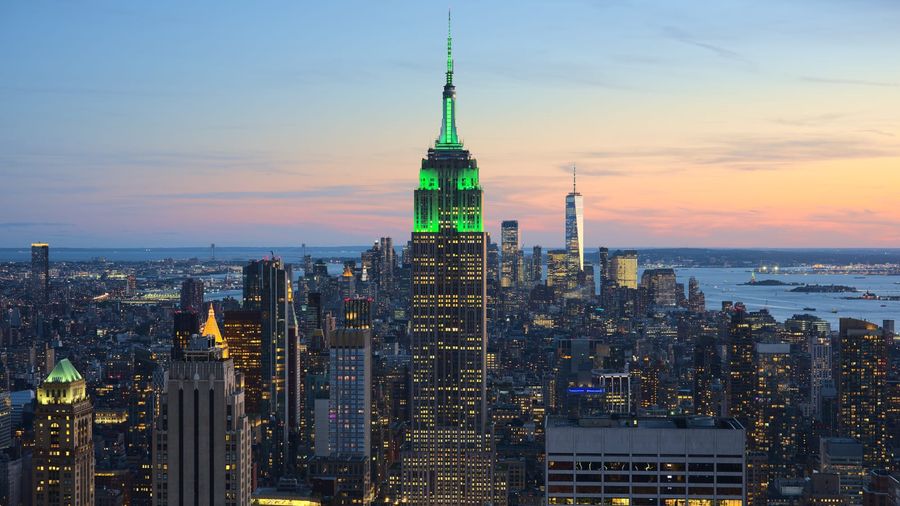
A first visit to New York needs three to four days to cover Manhattan's highlights and a taste of Brooklyn. Treat the city as distinct neighborhoods rather than one block: pick two or three areas per day, master the subway with a $34 weekly MetroCard, and book major attractions and Broadway shows ahead.
New York City hits you all at once: the noise, the scale, the relentless energy of eight million people sharing 302 square miles. First-timers often make the mistake of treating Manhattan as one undifferentiated block of attractions. It's not. NYC is a collection of distinct neighborhoods, each with its own rhythm, food, and architecture. The best approach is to pick two or three areas per day and let yourself get absorbed. The New York city guide connects with the wider United States overview for continued planning.
What should you see in Midtown Manhattan?
Midtown is the New York of postcards, packing an entire city into the blocks between 34th and 59th Streets. Start with the Empire State Building's 86th-floor deck ($44–79) for orientation, take an Art Deco architecture walk, glance at Times Square for fifteen minutes, then eat in Hell's Kitchen and admire Grand Central's ceiling.
This is the New York of postcards and movie establishing shots. Midtown packs the density of an entire city into a few dozen blocks between 34th and 59th Streets.
The view from above
Start at the Empire State Building's 86th-floor observation deck (open from 8 AM, $44-79 depending on time slot). Sunrise and early morning tickets dodge the worst crowds. The 360-degree panorama orients you to the city's layout: the grid of avenues running north-south, Central Park's green rectangle, the rivers on either side, and the clusters of skyscrapers in Midtown and Lower Manhattan.
Guided architecture walks around Midtown ($40-60 per person) trace the Art Deco history of buildings like the Chrysler Building, Rockefeller Center, and the Empire State itself. These tours reveal details invisible from street level: lobby murals, setback engineering, and the Depression-era competition between builders racing to claim the world's tallest tower.
Times Square, briefly
You have to see it. The neon overload, the costumed characters, the sheer visual assault. But fifteen minutes is enough. The restaurants surrounding Times Square are overpriced and poor; walk west to Hell's Kitchen (9th through 11th Avenues) for some of the most affordable, diverse dining in Manhattan. Thai, Ethiopian, Mexican, Italian, ramen: it's all here, and it's all good.
Broadway
A show is non-negotiable. Book popular productions weeks ahead, or try same-day options: the TKTS booth in Times Square sells 30-50% discounted tickets, and lottery/rush systems on TodayTix regularly offer $30-40 seats to sold-out shows.
Grand Central Terminal
Twelve minutes on foot from Times Square, Grand Central's Beaux-Arts main concourse is one of America's most beautiful interior spaces. Free guided tours run regularly. Look up: the ceiling depicts an astronomical mural with over 2,500 painted stars, deliberately reversed (the Vanderbilts claimed it showed God's perspective).
What makes Lower Manhattan worth exploring?
South of 14th Street the grid dissolves into colonial-era streets holding the city's most emotionally layered sites. Budget a full morning for the Statue of Liberty and Ellis Island, where twelve million immigrants entered between 1892 and 1954. The free 9/11 Memorial pools and the Financial District's canyons complete a powerful day.
South of 14th Street, the grid gives way to older, tangled streets that follow colonial-era cow paths and Dutch property lines. This is the oldest part of Manhattan and the most emotionally layered.
Statue of Liberty & Ellis Island
The first ferry departs Battery Park early morning. Budget the full morning for both islands. Crown access tickets sell out two to three months in advance; pedestal access (still excellent views) is easier to secure. The earliest ferry departure means smaller crowds and more breathing room on Liberty Island.
Ellis Island is where the visit deepens. Twelve million immigrants entered the United States through this processing center between 1892 and 1954. The exhibits are self-guided and powerful, but a guided tour ($65-85 per person, with skip-the-line ferry benefits) adds firsthand stories and historical context that make the immigration experience visceral rather than abstract.
Eat breakfast before you board. Island food options are limited and marked up.
The 9/11 Memorial & Museum
The twin reflecting pools occupy the exact footprints of the fallen towers. The memorial is free and open to the public. The museum below (timed tickets, $33) traces the events of September 11 through artifacts, audio recordings, and survivor accounts. It is emotionally demanding and historically essential.
The museum's own audio tour is excellent. Group tours led by guides with firsthand experience of the day offer an additional dimension of personal testimony.
Wall Street & the Financial District
Walk north from the memorial through the canyon of skyscrapers that houses global finance. The Charging Bull and Fearless Girl on Broadway, Trinity Church (Alexander Hamilton's burial place), and Federal Hall (where Washington took the oath of office) are all within a few blocks. The area empties after business hours, making late afternoon a good time for an unhurried walk.
Dinner down here: Stone Street, a cobblestone pedestrian block dating to the 1600s, comes alive in the evening with outdoor dining. Brookfield Place's food hall offers upscale options with Hudson River views.
How do you make the most of Central Park and the Upper West Side?
Above Midtown, Manhattan exhales into 843 acres of parkland Frederick Law Olmsted designed to feel like open country. A guided walking or bike tour surfaces Bethesda Terrace, Bow Bridge, and Strawberry Fields efficiently. Pair the park with the American Museum of Natural History and the brownstone-lined, local Upper West Side.
Above Midtown, Manhattan exhales. The pace slows, the buildings drop to residential scale, and 843 acres of parkland cut through the middle of the island.
Central Park
You need a strategy. The park is massive and its geography is deliberately deceptive: Frederick Law Olmsted designed it so you'd lose sight of the city and feel transported to the countryside. A guided walking tour ($35-50) or bike tour ($50-70, bike included) covers the highlights efficiently and surfaces stories you'd never find on your own: film locations, hidden sculptures, and the engineering behind what looks like untouched nature.
Landmarks worth seeking out:
- Bethesda Terrace and Fountain (the park's ceremonial heart)
- Bow Bridge (the most photographed spot)
- Strawberry Fields, the John Lennon memorial near the Dakota building
- Belvedere Castle (miniature fortress with views over the Great Lawn)
- The Mall and Literary Walk (lined with American elm trees and author statues)
Spring cherry blossoms (April-May) and fall foliage (October) are the most visually striking seasons.
American Museum of Natural History
Bordering the park on the west side, this museum could absorb days. Focus on the dinosaur halls (T-Rex and Titanosaur fossils), the Rose Center for Earth and Space (the Hayden Planetarium show is worth the $12 surcharge), and the Hall of Ocean Life with its blue whale model suspended overhead.
Admission is technically pay-what-you-wish ($28 suggested). A guided highlights tour prevents the overwhelm that sends most visitors wandering aimlessly after an hour.
The neighborhood itself
The Upper West Side is one of New York's most livable neighborhoods: brownstone-lined streets, independent bookshops, and restaurants that serve locals rather than tourists. Barney Greengrass (Jewish deli, operating since 1908), Jacob's Pickles (comfort food with absurd portion sizes), and Boulud Sud (upscale Mediterranean) are all within walking distance. If you booked ahead, an evening performance at Lincoln Center (Metropolitan Opera, New York Philharmonic, New York City Ballet) caps the day.
Is Brooklyn worth a day on your first visit?
If you have a third or fourth day, cross the East River to Brooklyn's 2.7 million residents and distinct cultural identity. Walk the 1.1-mile Brooklyn Bridge from City Hall Park into DUMBO's converted warehouses, then explore Williamsburg or Brooklyn Heights. Brooklyn food tours ($75–95) are among the city's best guided experiences.
If you have a third or fourth day, cross the East River. Brooklyn has 2.7 million residents and a cultural identity increasingly distinct from Manhattan. Getting here is part of the experience.
Walking the Brooklyn Bridge
Start from the Manhattan side at City Hall Park. The 1.1-mile walk takes 30-40 minutes with photo stops and drops you into DUMBO (Down Under the Manhattan Bridge Overpass), a waterfront neighborhood of converted warehouses with Manhattan skyline views.
In DUMBO: The Washington Street photo spot (Manhattan Bridge framed between brick buildings) is iconic for a reason. Jane's Carousel sits in a glass pavilion on the waterfront. Brooklyn Bridge Park stretches along the East River. Time Out Market food hall consolidates Brooklyn's best restaurants under one roof.
Beyond the bridge
Williamsburg draws visitors for vintage shops, street art, craft breweries, and waterfront views of the Manhattan skyline. It's accessible by L train from 14th Street-Union Square.
Brooklyn Heights offers historic brownstones, quiet tree-lined streets, and the Brooklyn Heights Promenade: a walkway perched above the BQE with an unobstructed panorama of Lower Manhattan and the harbor.
Brooklyn food tours ($75-95 per person, 5-7 tastings included) and neighborhood walking tours are among the best guided experiences in the city. Local guides reveal layers of immigrant history, street art stories, and food traditions that tourists walking solo would never encounter.
How do you master the subway?
The subway is faster, cheaper, and more reliable than taxis for any distance over a mile, so don't fear it. A 7-day unlimited MetroCard costs $34 and pays off past three days. Trains run 24 hours; uptown means north, downtown means south, and express trains skip stops, so check before boarding.
The subway is faster, cheaper, and more reliable than taxis, Ubers, or walking for any distance over a mile. Don't fear it.
Essentials: A 7-day unlimited MetroCard ($34) is the best value if you're staying more than three days. Trains run 24 hours, though less frequently late at night. "Uptown" means north, "Downtown" means south. Express trains skip stops, so check before boarding.
Lines tourists use most:
- Red (1/2/3): West Side, Times Square, Upper West Side
- Green (4/5/6): East Side, Grand Central, Brooklyn Bridge
- Yellow (N/Q/R/W): Times Square to Brooklyn
- Orange (B/D/F/M): Midtown to Brooklyn
Etiquette and safety: Subways are safe. Stay alert, don't flash expensive electronics, and move to center cars late at night. Use Citymapper or Google Maps for real-time navigation.
What free things are worth doing?
New York rewards travellers who look beyond ticketed attractions. The Staten Island Ferry glides past the Statue of Liberty free and runs 24/7, the High Line and Central Park cost nothing, and walking the Brooklyn Bridge is one of the world's great pedestrian experiences. Many museums offer pay-what-you-wish hours too.
Not everything in New York costs money. Some of the best experiences are free:
- Staten Island Ferry: 25-minute ride past the Statue of Liberty, free, runs 24/7
- The High Line: Elevated park built on a decommissioned railway, open daily
- Central Park: 843 acres of free parkland, no ticket required
- Brooklyn Bridge walk: One of the world's great pedestrian experiences
- Grand Central Terminal: Architecture, free tours, whispering gallery
- Chelsea Market: Browsing costs nothing (eating is another story)
- Many museums offer pay-what-you-wish hours or free Friday evenings
How do you spend wisely in New York?
Eat lunch as your main meal, since the same restaurants charge roughly half the dinner price. Happy hours from 4 to 7 PM discount food and drinks, and food halls like Chelsea Market and Time Out Market deliver quality cheaply. Budget travellers can cover three to four days from around $850.
Eat lunch as your main meal: the same restaurants charge half the dinner price. Happy hours (typically 4-7 PM) offer discounted food and drinks across the city. Food halls (Chelsea Market, Time Out Market, Eataly) deliver quality at lower prices than sit-down restaurants. Free walking tours (tip-based, offered by companies like Free Tours by Foot) are surprisingly good.
Budget ranges for 3-4 days
| Category | Budget | Mid-Range | Comfort |
|---|---|---|---|
| Hotel (3 nights) | $210-330 | $450-750 | $1,000+ |
| Tours & admissions | $200 | $350 | $500+ |
| Meals (per day) | $40-60 | $75-110 | $150+ |
| Transport | $34 | $50 | $100+ |
Total estimate: $850-$2,500+ depending on accommodation, dining, and show choices.
Where do you find good guides?
The Guides Association of New York City certifies guides for historical accuracy, while Big Apple Greeter pairs visitors with volunteer locals for free personalized tours booked well ahead. Context Travel runs scholar-led deep dives. Look for native New Yorkers with specialized knowledge, group sizes under 15, and strong review histories.
The Guides Association of New York City (GANYC) certifies guides for historical accuracy. Big Apple Greeter pairs visitors with volunteer locals for free personalized neighborhood tours (book well ahead). Context Travel offers scholar-led cultural deep dives. Free Tours by Foot operates excellent tip-based walking tours across multiple neighborhoods.
Look for native New Yorkers or long-term residents with specialized knowledge (architecture, food, immigration history), small group sizes under 15, and strong review histories on platforms like GetYourGuide or Viator.
What are the tipping and local customs?
Tipping is not optional in New York. Restaurants expect 18 to 20 percent on the pre-tax total, bartenders get a dollar or two per drink, hotel porters $10 to $15 per bag, and tour guides $10 to $20 per person. New Yorkers walk fast, so stand right and walk left on escalators.
Tipping is not optional in New York. Restaurants expect 18-20% on the pre-tax total. Bartenders get $1-2 per drink. Hotel porters get $10-15 per bag. Tour guides get $10-20 per person for a good experience.
New Yorkers walk fast. If you need to stop, step to the side. Stand right, walk left on escalators. Yellow cabs only accept street hails; green cabs serve the outer boroughs. And yes, the pizza and bagels really are better here: try both early and often.
When is the best time to visit New York?
Spring (April–May) and fall (September–October) deliver the best weather and most comfortable walking conditions. Summer is hot, humid, and crowded but full of outdoor events and energy. Winter turns genuinely cold, yet the holiday decorations — the Rockefeller Center tree, department-store windows, and Bryant Park ice skating — make December magical.
Spring (April-May) and fall (September-October) offer the best weather and the most comfortable walking conditions. Summer is hot, humid, and crowded but buzzing with energy and outdoor events. Winter is genuinely cold but the holiday decorations (Rockefeller Center tree, department store windows, Bryant Park ice skating) make December magical.
Related Guides
For more NYC travel planning resources, check out:
- Los Angeles on a Budget - Compare the two greatest American cities for budget-savvy travellers
- Planning the Perfect Paris Trip - First-timer tactics that translate to any major world city
- New York city guide - Deep-dive into neighbourhoods, transport, and attractions
Three or four days gives you a real introduction to New York, but you'll leave knowing you barely scratched the surface. That's the point. Book your major attractions and shows in advance, master the subway on day one, invest in at least one expert-guided neighborhood tour, and leave room for the unplanned: a jazz club you stumble into in the Village, a street vendor's lamb over rice that changes your life, a sunset over the Manhattan skyline from a Brooklyn rooftop. New York reveals itself best at street level, one block at a time.
Have questions about planning your NYC trip? Contact us for personalized neighborhood recommendations and connections to expert local guides.
Frequently Asked Questions
How many days do I need for a first visit to New York City?
Three to four days covers the major Manhattan highlights and a taste of Brooklyn. A week lets you explore neighbourhoods at a more relaxed pace.
Is the New York subway safe and easy to use for tourists?
Yes, it runs 24 hours and is the fastest way around the city. Tap in with a contactless card or phone using OMNY, and stay aware of your surroundings as in any big city.
How much should I tip in New York?
Tipping around 18 to 20 percent is standard in restaurants, a dollar or two per drink at bars, and 15 to 20 percent for taxis. Many service workers rely on tips as core income.
What free things can I do in New York City?
The Staten Island Ferry past the Statue of Liberty, walking the High Line and Brooklyn Bridge, and Central Park are all free, as are several museums with pay-what-you-wish or suggested-donation entry.