
Spiritual Significance
St Mark's is the parish church of the Upper Town and has served the Gradec community for some seven centuries. Though small and overshadowed in scale by the cathedral on Kaptol, it has long been the church of the city's civic and political classes, standing as it does between the Parliament and the government palace.
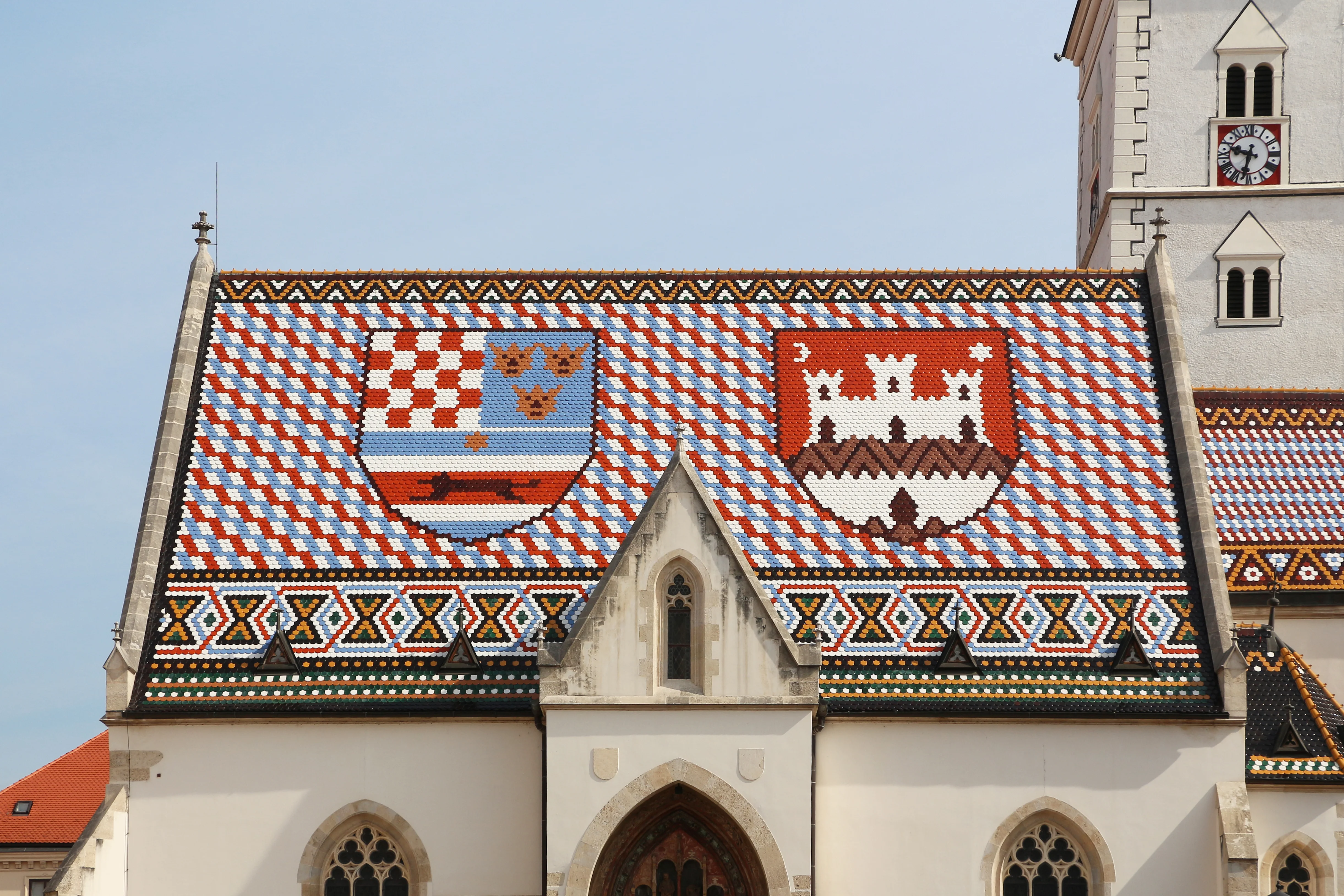
Its dedication to Saint Mark the Evangelist gives the parish its patronal feast on 25 April. For Croatians the building carries a weight beyond the religious: the roof's heraldry makes it a shrine to national identity as much as a place of worship, and it has backdropped moments of statehood from the 19th-century national revival to independence in 1991.
Visitor Etiquette
Because the interior opens chiefly for worship, treat any visit as attending a service rather than touring a monument. Enter quietly, dress modestly with shoulders covered, and silence your phone. Do not wander the aisles or photograph people at prayer during mass.
Outside, remember the square is flanked by active government buildings. Keep to the public space, follow any instructions from the guards, and do not climb on the low chains or block the ceremonial entrances. Photographing the church and the palace facades is fine; photographing security checkpoints or official vehicles up close is not. A little restraint keeps this working civic square welcoming for everyone.
When to Visit
The square and the famous roof can be seen free at any hour, and most visitors come for the exterior. The church interior opens mainly for mass — generally Sunday mornings and some weekday evenings — rather than for general sightseeing, so check the times posted at the door.
Allow 10–15 minutes at the square itself, longer if you fold it into a wider Gornji Grad walk taking in the Lotrščak Tower and the Museum of Broken Relationships. Late afternoon light falls kindly on the roof, while early mornings give you the emptiest square for photographs before the tour groups climb up from the funicular.
Admission and Costs
There is no charge to see St Mark's Church. The square is a public space, the exterior is always accessible, and attending a mass is free. Because the church sits at the top of the Upper Town, most people reach it via the Uspinjača funicular (fare under €1) or on foot.
Many visitors see it as one stop on a guided Gornji Grad walking tour, which typically runs €15–25 (about $16–27) per person in a small group, or €90–150 (about $97–162) for a private half-day guide covering the whole historic core.
The Case for a Guide
The roof speaks for itself, but a Zagreb guide turns a two-minute photo stop into the story of how the capital was born.
- Reading the roof: A guide decodes each coat of arms and explains why a parish church became a 19th-century statement of Croatian nationhood
- The two-hills story: St Mark's on Gradec and the cathedral on Kaptol mark Zagreb's rival medieval settlements; a guide traces the old boundary and the Stone Gate between them
- The Gothic portal: The fifteen carved figures of the south door are easy to walk past without noticing their age or quality
- Politics on the square: With parliament and government flanking the church, a guide can explain the 1848 and 1991 events that unfolded here
- Finding the Meštrović works: When the interior is open for mass, a guide points out the sculptures most visitors miss
Tips for Visitors
Shoot from the corner: The classic framing of the roof is from the south-west corner of the square, where both coats of arms read clearly. Come early or late: Midday brings the densest crowds and the flattest light. Respect the working buildings: The Sabor and Banski dvori on either side are active government offices with security — admire them, but do not block the entrances.
Build a loop: Pair St Mark's with the nearby Lotrščak Tower viewpoint and the Stone Gate shrine, then walk down to Kaptol for Zagreb Cathedral and Dolac Market to cover the whole old town in a single morning.
Frequently Asked Questions
Can you go inside St. Mark's Church?
The interior is not open for general sightseeing; St Mark's is a working parish church, and the only reliable way in is to attend a mass. Services are typically held on Sunday mornings and some weekday evenings, with times posted on the door and shifting with the liturgical calendar.
Most visitors admire the famous roof and the Gothic south portal from the square outside — which is free and open at all hours. If you do get in for a service, look for the sculptures by Ivan Meštrović, Croatia's greatest modern sculptor, including a crucifix and a Madonna.
What do the coats of arms on the roof mean?
The glazed tiles were laid in 1880 during Hermann Bollé's restoration and carry two emblems. On the left is the combined coat of arms of the Triune Kingdom of Croatia, Dalmatia and Slavonia — the red-and-white chequy šahovnica, the three crowned lions' heads, and the marten-and-star of Slavonia. On the right is the white-castle emblem of the city of Zagreb.
It is a deliberately political roof: a 19th-century statement of Croatian identity rendered in ceramic, and the single most recognisable image of the capital.
Is St. Mark's Church the same as Zagreb Cathedral?
No — they are two different churches on two neighbouring hills, and the mix-up is the most common in the city. Zagreb Cathedral is the tall, twin-spired neo-Gothic building on the Kaptol hill, the seat of the archbishop and the tallest structure in Croatia.
St Mark's is the small medieval parish church with the coloured-tile roof on St Mark's Square up in Gornji Grad, a short walk across the old boundary onto the Gradec hill. The postcard roof belongs to St Mark's; the towering spires belong to the cathedral. Most visitors see both in one morning.