
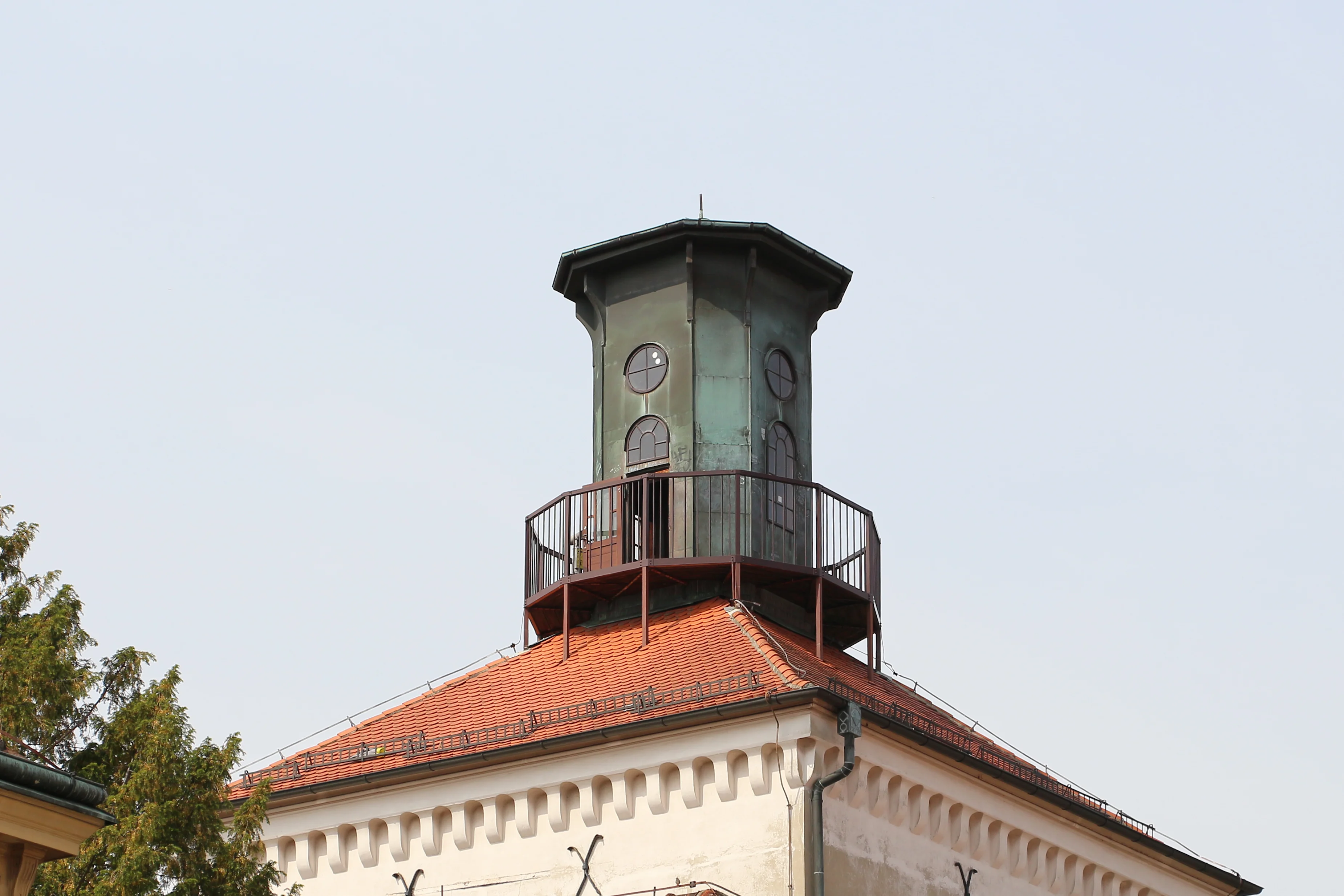
Architecture
Lotrščak is a compact square tower of rough local stone, built for defence rather than display, with thick walls, narrow openings, and the solidity typical of 13th-century fortification. Over the centuries it was altered and heightened — a 19th-century upper storey added the observation level and, eventually, a small shop and gallery space within.
Unlike the ornate neo-Gothic work that Hermann Bollé brought to the cathedral and St Mark's roof, the tower's appeal is its unpolished medieval honesty: it reads immediately as a surviving fragment of the old walls. The rooftop terrace, reached by the internal stair, is a modern addition that turns a defensive structure into one of the city's finest public viewpoints.
Historical Significance
The tower is the clearest surviving witness to Gradec, the free royal town granted its charter in 1242 and walled against raiders. For centuries Gradec and the clerical town of Kaptol were rival settlements on neighbouring hills; Lotrščak guarded Gradec's southern gate, and its evening bell governed who could pass.
As the walls were dismantled and the two towns grew together into modern Zagreb, the tower lost its military role but kept its civic one. The 1877 noon cannon gave it a fresh purpose as the city's timekeeper, and it remains a fixed point of local identity — a medieval survivor that still, quite literally, marks the hours of the capital.
When to Visit
Lotrščak Tower is generally open Tuesday to Sunday, roughly 10 AM to 7 PM, and closed on Mondays, though hours tighten in winter — check locally before a late-afternoon visit. Allow 20–30 minutes to climb the stairs, browse the small exhibition floors, and take in the terrace.
The signature moment is the noon cannon: arrive a few minutes before 12 to watch or to be ready for the blast, whether you are on the terrace or in the streets below. For photography, late afternoon bathes the Lower Town rooftops in warm light from the terrace, while clear mornings give the sharpest view across to the cathedral spires.
Admission and Costs
Entry to the tower and its viewing terrace costs around €3 (about $3) for adults, with reduced rates for students and seniors — one of the best-value viewpoints in the capital. The Uspinjača funicular that drops you at the door is a separate fare of under €1, or you can climb the stairs from Ilica for free.
If you prefer context, a guided Upper Town walk that includes the tower runs roughly €15–25 (about $16–27) per person in a small group. Standing in the streets below to hear the noon cannon, of course, costs nothing at all.
The Case for a Guide
You can climb the tower alone, but a Zagreb guide ties it into the whole story of the walled upper town.
- The nightly bell: A guide explains the campana latrunculorum and how the gate-closing ritual shaped daily life on fortified Gradec
- The noon cannon: Standing by at 12, a guide separates the timekeeping history from the Ottoman-cannonball legend most tourists repeat
- Reading the skyline: From the terrace a guide names what you are seeing — Kaptol, the cathedral, the Lower Town grid, Medvednica beyond
- The vanished walls: A guide shows where the rest of Gradec's fortifications once ran and why only this tower and the Stone Gate survive
- Linking the Upper Town: Tied to St Mark's and the funicular, the tower becomes one chapter of a coherent walk rather than an isolated stop
Tips for Visitors
Time it for noon: The Grič Cannon fires at 12 sharp — plan around it, and cover your ears if you are close. Pair it with the funicular: Ride the 66-second funicular up and reward yourself with the terrace view before walking the rest of Gornji Grad downhill. Wear sure shoes: The internal stair is steep, narrow, and uneven.
Chain the sights: The tower is two minutes from St Mark's Church and a short walk from the Museum of Broken Relationships, so build all three into one loop. Check the gallery: The exhibition floors rotate, so the climb often comes with a small show you were not expecting.
Frequently Asked Questions
What is the cannon fired from Lotrščak Tower at noon?
The Grič Cannon (Grički top) has been fired from the tower's top floor every day at exactly 12 noon since 1 January 1877. The single blast once helped the city's bell-ringers synchronise the church bells of Zagreb; today it is a beloved ritual that startles first-time visitors and sends pigeons scattering across the Upper Town.
One popular legend ties the tradition to a cannonball fired at the Ottoman camp across the Sava, though the historical purpose was timekeeping. Stand on the terrace or in the streets below just before noon — and brace for the bang, which is genuinely loud.
Can you climb Lotrščak Tower, and what can you see from the top?
Yes. A staircase winds up past small gallery floors to an open rooftop viewing terrace, one of the best panoramas in the city. From it you look out over the red roofs of Gornji Grad, across the Lower Town to the valley, and over to the twin spires of Zagreb Cathedral on the Kaptol hill opposite.
The climb is short but the stairs are steep and narrow, as you would expect of a medieval tower. The interior floors usually host small art exhibitions, so the ascent doubles as a gallery visit before you reach the open air at the top.