
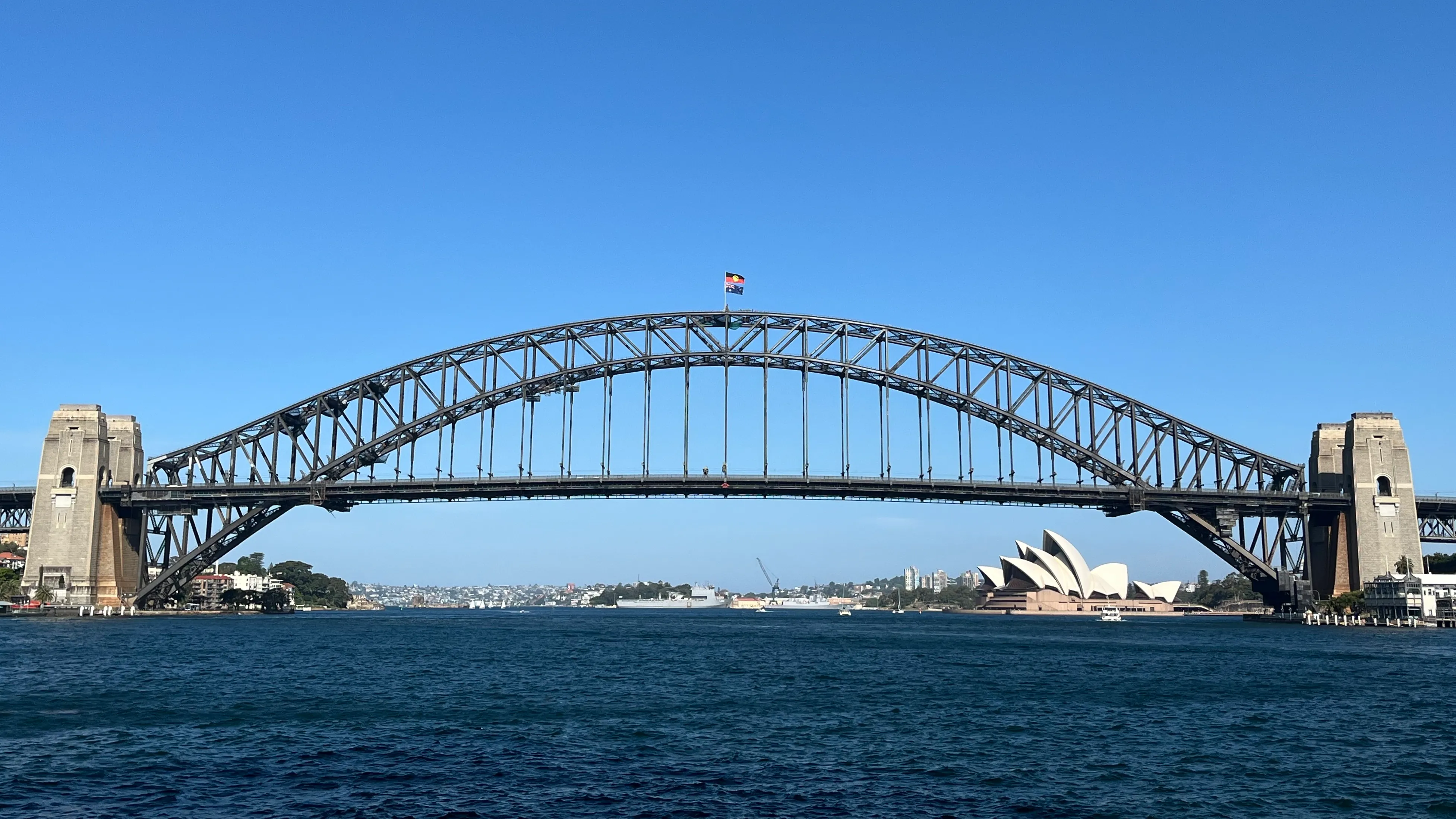
Engineering Facts
The bridge's structural form — a hinged arch rather than a rigid arch — allows thermal expansion of up to 18 cm daily between winter and summer without cracking the steel. The arch rises 1.5 metres higher in summer than winter due to this thermal movement, a fact made visible by instruments near the south pylon. The paint system protecting the structure uses approximately 80,000 litres of grey paint and is continuously refreshed; by the time painters reach one end, they return to the other — giving rise to the expression "painting the Harbour Bridge" as a metaphor for an endless task.
The pylons at each corner of the bridge are purely decorative — they do not support any load — added at public insistence after the chief engineer's original pylon-free design was deemed aesthetically lacking. The actual structural load is carried entirely by the steel arch and its hangers. The eight traffic lanes are held on a stiffening truss suspended below the arch chord by vertical hanger rods — the deck is, effectively, hanging rather than resting on the structure below.
Observation Points
The arch summit at 134 metres is the primary viewpoint: an unobstructed 360-degree panorama spanning the Blue Mountains to the west, the Pacific Ocean to the east through The Heads, and the full harbour basin below. The south pylon lookout (accessible independently via stairs from Cumberland Street, A$19 adult) provides a lower but still impressive perspective from 89 metres and includes an exhibition on the bridge's construction history. The Milsons Point shore on the northern approach delivers the classic full-arch view with the CBD behind and is the best position for photography of the bridge in context with the Opera House.
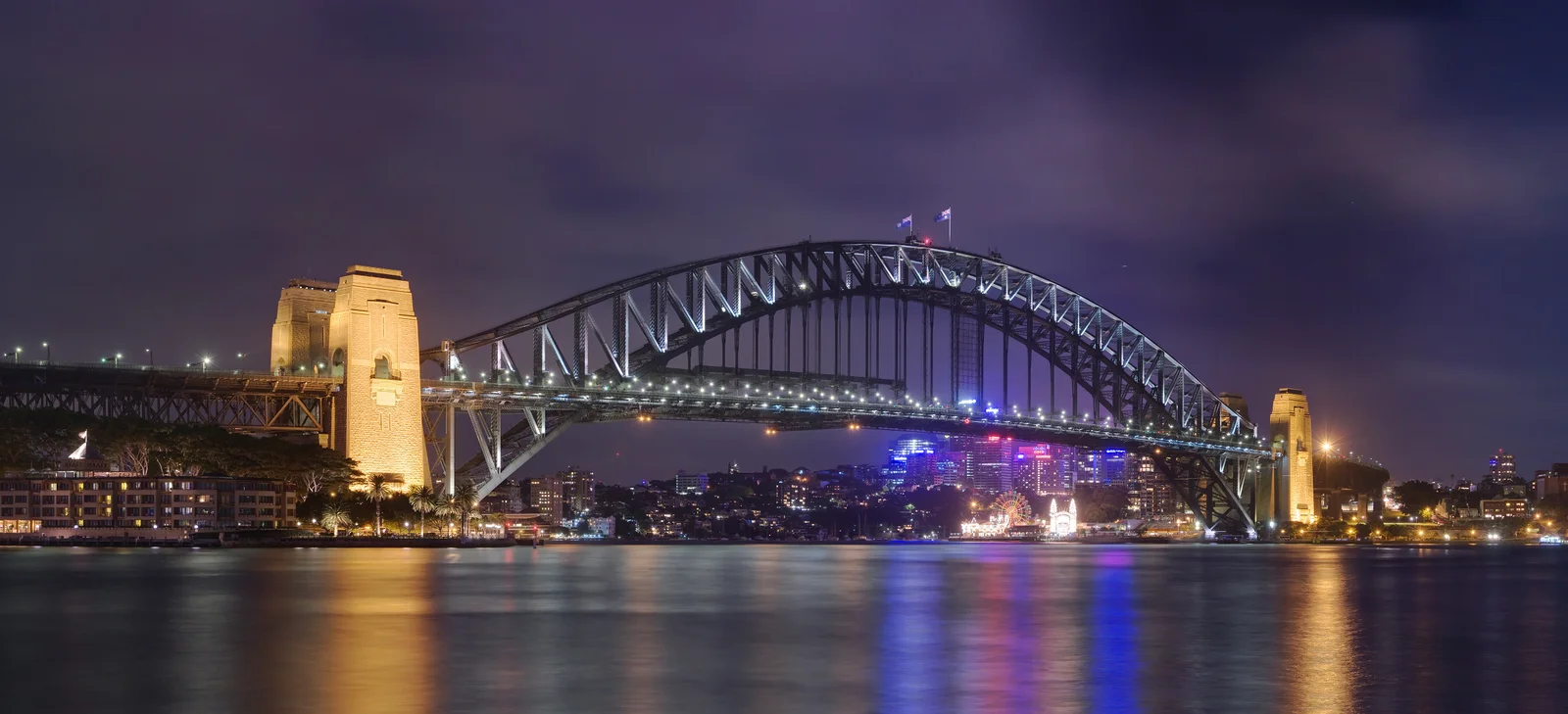
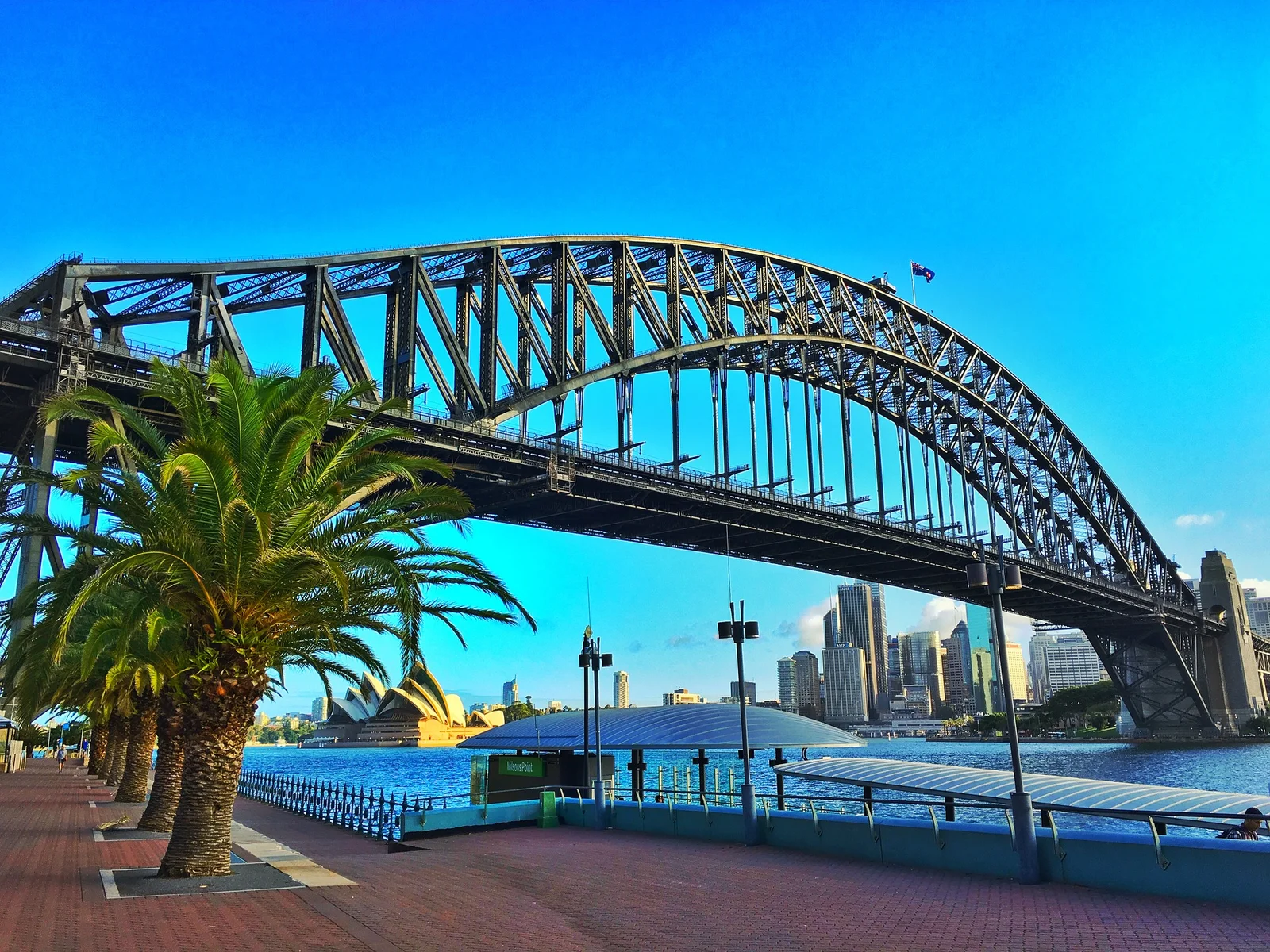
Sydney Harbour Bridge in Pictures
When to Visit
BridgeClimb operates 365 days a year across four daily session types: Dawn (seasonal start, approximately 4–6 AM), Day (from 8 AM, multiple sessions), Twilight (approximately 4–7 PM, seasonal), and Night (from 7 PM). Check-in at 3 Cumberland Street, The Rocks, begins 30 minutes before the scheduled departure. Sessions run throughout the year in all weather except lightning strikes within 10 km of the harbour, which trigger a temporary hold. The free pedestrian walkway on the eastern side is open 24 hours; access from Cumberland Street Stairs or Milsons Point on the north shore.
Admission and Costs
Explorer Climb (abbreviated route to the arch peak): A$174–208 per person (weekday/weekend). Summit Climb (full outer arch route): A$208–308 per person. Summit Climb at Dawn or Twilight: A$308–388 per person (premium slots). Night Climb: A$258–298 per person. Youth (8–15 years): reduced rates approximately 20–25% below adult pricing. The free pedestrian walkway provides modest bridge views at no cost; the BridgeClimb experience is required for access to the arch exterior and summit. Online booking is strongly recommended; peak weekend and holiday slots often sell out 2–4 weeks ahead.
The Case for a Guide
- Depression-era human stories — the bridge's eight-year construction coincided precisely with the Great Depression; the workforce included thousands of men who rode the rail from rural New South Wales to seek work, and the guides preserve the oral histories of the rivet gangs and their four-person throwing teams
- Engineering mechanics at height — the guide explains the thermal expansion phenomenon in real time during the climb, pointing out the expansion joint gaps visible underfoot near the arch crown where the structure is designed to flex
- Urban geography from 134 metres — from the summit, a guide identifies the 14 bays of the harbour, the Olympic site at Homebush to the west, the Blue Mountains escarpment on the horizon, and the arc of the eastern beaches — including Bondi — running south along the coastline toward Botany Bay
- Pylon myth — most visitors assume the pylons are load-bearing; the guide's explanation of their decorative origin (and the chief engineer's irritation at being overruled) is a memorable piece of architectural trivia
Tips for Visitors
Book the dawn or twilight slot at least three weeks ahead — these premium sessions sell out fastest. Wear enclosed shoes; sandals and open-toed footwear are not permitted. Arrive 30 minutes before check-in opens for dawn climbs to avoid the rushed morning briefing if travelling from the CBD. After the climb, walk east from Cumberland Street through The Rocks — the colonial-era sandstone quarter directly beneath the bridge's southern approach — before continuing to Circular Quay and the Opera House forecourt. The bridge's pedestrian walkway on the eastern side offers a free, less-dramatic alternative for those who experience strong height anxiety or are below the minimum age for the commercial climb.
Frequently Asked Questions
How difficult is the Sydney Harbour Bridge Climb?
The BridgeClimb is rated as moderate physical activity, comparable to climbing approximately 200 steps at a walking pace over 3.5 hours. The gradient steepens near the summit of the arch but remains manageable for most reasonably fit adults. You clip to a safety rail throughout and are never unclipped at height. Minimum age is 10 years; participants must pass a breathalyser test and cannot have consumed alcohol within 8 hours. People who experience strong vertigo may find the outer arch sections challenging, though the slow pace and group setting help considerably. Many visitors report the fear dissipating entirely within the first 15 minutes as the harness system and guide's confidence become reassuring.
What time of day is best for the Sydney Harbour Bridge Climb?
Dawn climbs (starting before sunrise, seasonal timing) offer extraordinary light quality as the harbour catches the first colours above the horizon and the city is still quiet. The hour immediately after sunrise is what professional photographers call the golden hour, and from the bridge summit the effect is spectacular. Twilight climbs transition from afternoon light to the illuminated city; the Opera House sails light up below as the climb ends. Night climbs show the CBD towers and bridge lit against darkness, with car headlights tracing the curved Cahill Expressway. Day climbs are the most affordable and offer the clearest distant views on a fine morning, with the Blue Mountains visible 80 kilometres west.
What is included in the BridgeClimb experience?
BridgeClimb provides all equipment — harness, oversuit, headlamp, hat, and a sun protection kit for day climbs. The experience includes a comprehensive pre-climb training session on the bridge's inner catwalks, where the guide covers the structure's history while participants acclimatise to the height. A certified climb leader accompanies every group (maximum 14 participants) at all times. A photo taken at the summit is included in the climb package; additional photos may be purchased. The entire experience from check-in to return takes approximately 4 hours including the 3.5-hour climb itself.