
Observation Spots
Formation
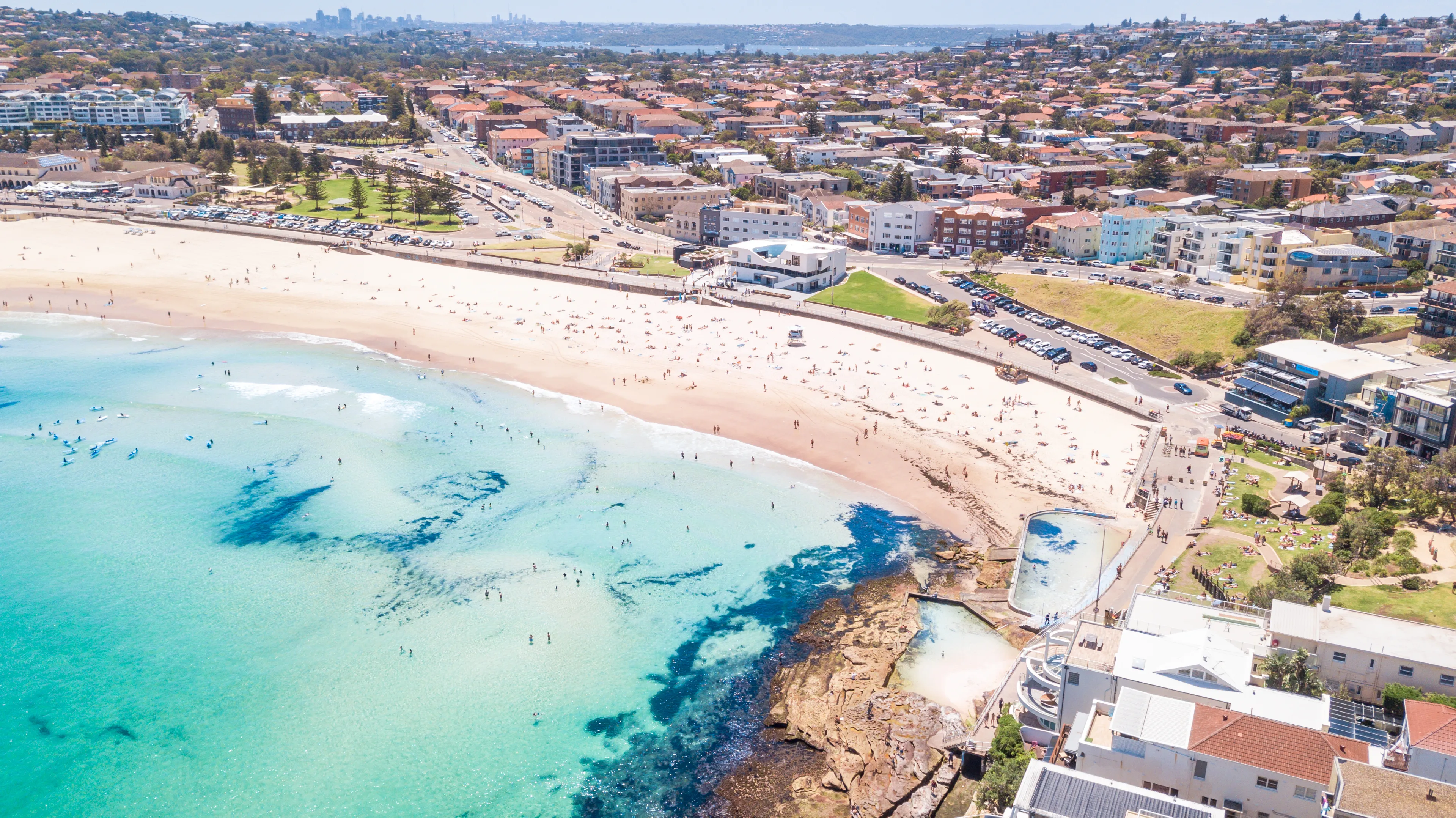
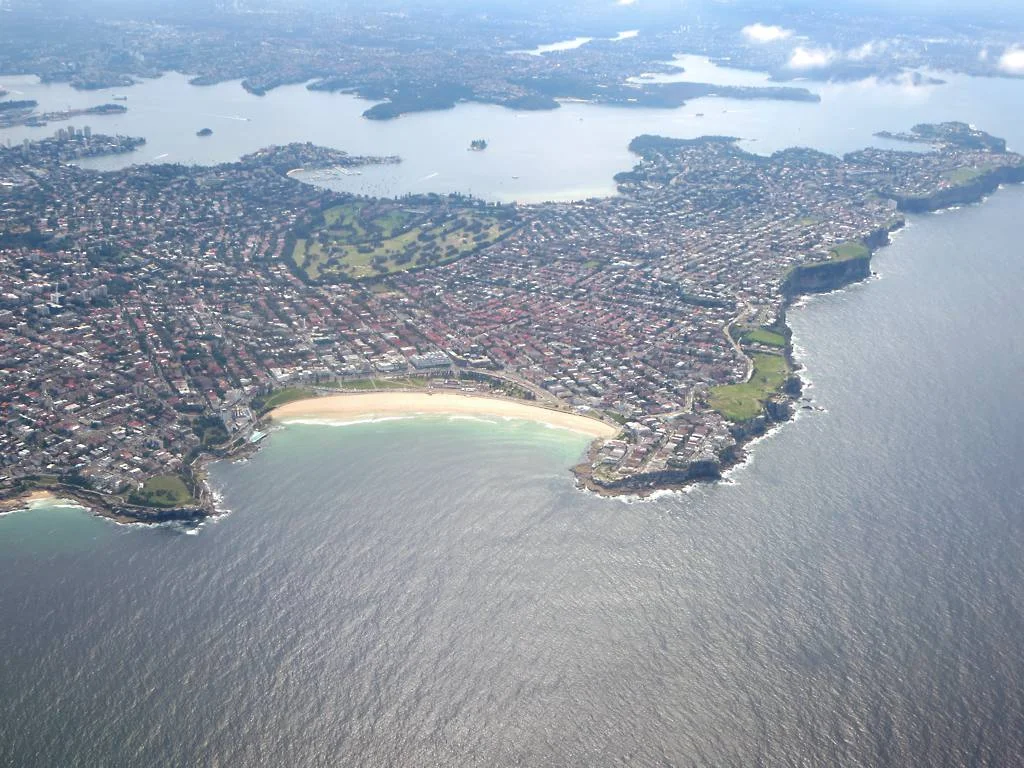
Bondi is a textbook embayed beach, and reading its geology explains almost everything about how it behaves. The two headlands that frame the bay — Ben Buckler to the north and the ridge running out to Mackenzies Point to the south — are Hawkesbury Sandstone, the pale, cross-bedded rock laid down by an enormous braided river system across the Sydney Basin in the Triassic period, roughly 240 million years ago. The same stone quarried by convicts at The Rocks forms the cliffs here; the Australian Museum traces the whole basin's formation from the rivers that deposited it to the uplift and faulting that later tilted it toward the sea.
Where that sandstone meets the swell, the Pacific has done the sculpting:
- Wave-cut platforms — the flat rock shelves exposed at low tide below each headland, planed off by millions of years of wave action and now studded with rock pools
- The rock pools and gutters — deep channels between the shelves where the swell funnels, the same gutters that concentrate marine life and the beach's permanent rip currents
- Sea caves and blowholes along the Bronte and Tamarama cliffs, where softer beds erode faster than the sandstone around them
The sand itself is comparatively young. It accumulated only after the last ice age, once sea levels rose and then stabilised around 6,000 years ago, trapping wave-transported sand against the resistant headlands to build the crescent you walk on today. Because the bay opens south-east into the dominant swell, Bondi receives consistent, powerful surf — the reason it became a surfing beach and the reason its rips are so pronounced. The sand migrates seasonally, building a wide, flat summer berm and cutting back to a steeper winter profile, so the beach is never quite the same shape from one visit to the next.
Trails
The Bondi to Coogee Coastal Walk (6 km, 2–3 hours each way, easy to moderate) is the primary walking route, tracing sandstone cliffs above five beaches. The trail begins at the southern end of Bondi Beach, passes through Mackenzies Point with its Aboriginal rock engravings, descends to Tamarama Beach (nicknamed Glamarama for its fashion-conscious crowd), climbs past the Waverley Cemetery graves overhanging the cliffs, and continues through Bronte and Clovelly before reaching Coogee. Return transport from Coogee via the 372 bus.
The Bondi Golf Course clifftop path (north headland, 30 minutes, easy) offers arguably the best elevated view back over the full beach crescent and is far less crowded than the southern coastal walk; the Aboriginal engraving of a marine creature on the golf-course headland is one of the most accessible rock-art sites in eastern Sydney. The Marks Park Aboriginal Heritage Walk interprets stone grinding grooves and rock art on the headland above Tamarama — best experienced with an Aboriginal cultural guide who can provide contextual interpretation not available from signage alone. All three routes are managed as public coastal reserve; the clifftop edges are unfenced in places, so keep to the paved path.
Wildlife
Bondi's marine environment supports grey nurse sharks (critically endangered on Australia's east coast) that congregate in the rocky gutters at each end of the beach — seen occasionally from the headlands. Australian fur seals sometimes haul out on the rocks near the Icebergs pool in winter. Humpback and southern right whales migrate past the headlands between May and November during their annual journey between Antarctic feeding grounds and warmer Queensland breeding waters; NSW National Parks lists the eastern-suburbs clifftops among the best shore-based whale-watching spots in the state, and the northern headland above the golf course provides an excellent land-based vantage without a boat tour. Little penguins — Australia's smallest penguin — nest in rock crevices on several headlands along the coastal walk, best seen at dusk during the winter-to- spring breeding season. The rock platforms below the cliffs are living intertidal ecosystems of cunjevoi, neptune's necklace, sea stars, and crabs; look but never collect, as the platforms are a protected part of the coastal reserve.
Bondi Beach in Pictures
When to Visit
Bondi Beach is open and accessible 24 hours. Lifeguard patrol operates daily from September through April (generally 7 AM–6 PM) and weekends only from May through August. Always swim between the flags regardless of season. The Bondi Icebergs pool opens Tuesday to Friday 6 AM–6:30 PM and Saturday and Sunday 6:30 AM–6:30 PM; closed Thursday afternoons for pool maintenance. Surf lessons with local schools typically run from 8 AM and 11 AM, with two-hour sessions best booked ahead during summer.
The climate is the other half of the timing question. Bondi sits in a warm-temperate zone with no dry season, and the sea lags the air by a couple of months, so the best swimming is in late summer and autumn: water temperature peaks around 22–24°C from February to April and bottoms out near 17–18°C in August and September. Summer air temperatures usually sit in the high 20s but can spike above 40°C on a southerly buster day before the afternoon sea breeze arrives. Winter days are mild and often brilliantly clear — cold water but excellent light for photography and whale watching from the headlands.
Admission and Costs
Beach access: Free (public beach). Surf lessons: A$65–90 ($43–59) per person for a 2-hour group lesson including board and wetsuit hire. Private surf lesson: A$150–200 ($99–132) per hour. Icebergs pool entry: A$9 ($6) per person (A$6 / $4 children). Bondi to Coogee coastal walk: Free (no entry fee). Guided Aboriginal heritage walk along the coastal path: A$95–150 ($63–99) per person, typically 2.5 hours. Photography tours at dawn: A$80–120 ($53–79) per person (2 hours). Prices are indicative and vary by operator and season; local currency is the Australian Dollar (AUD/A$) and contactless card payment is near-universal.
The Case for a Guide
Bondi rewards a casual visit, but almost all of its deeper story — the Aboriginal heritage, the geology, the rip science, the lifesaving history — is invisible from a beach towel. A knowledgeable local guide is the difference between a swim and an understanding of the place.
- Aboriginal cultural interpretation — the grinding grooves and engravings on the headlands are protected sites that mean little without a Gadigal or Bidjigal guide to read them; a cultural walk connects the marks to fishing, food, and ceremony rather than treating them as scenery
- Reading the surf safely — a surf-school instructor or lifeguard-led session teaches you to spot the three permanent rips before you swim, a skill that matters far more than technique for anyone new to open-ocean beaches
- Naturalist knowledge on the walk — a guide on the Bondi to Coogee coastal path identifies the wave-cut platforms, the whale-migration timing, and the little penguin colonies you would otherwise stroll straight past
- Efficient sequencing — a guide links the beach with the harbour icons — the Sydney Opera House, the Sydney Harbour Bridge, and The Rocks — into a single coherent day rather than two disconnected halves of the city
Tips for Visitors
Avoid peak summer weekends: Bondi on a Saturday in January can draw tens of thousands of visitors — parking is impossible and the beach is effectively standing room only. Arrive before 8 AM or visit on weekdays. The beach is equally good in autumn (March–May) with warm water and far smaller crowds.
Rip currents: Bondi has three permanent rip currents. Swim only between the red and yellow flags patrolled by the Bondi Surf Bathers' Life Saving Club. If caught in a rip, float and signal — do not fight the current by swimming directly toward shore.
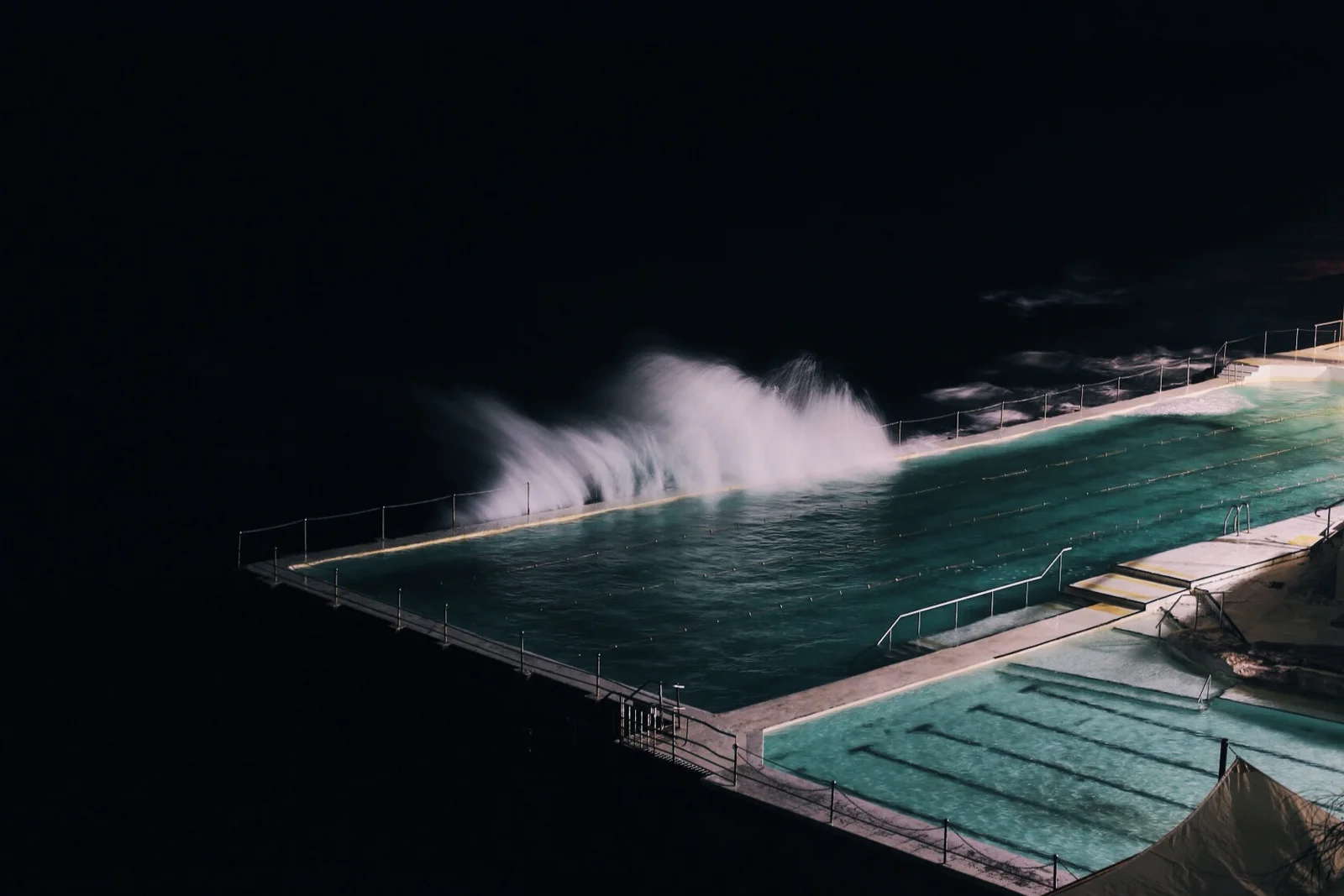
Icebergs pool: The ocean pool at the southern end charges around A$9 ($6) entry and provides calmer swimming than the open surf — useful for children, non-swimmers, and anyone wanting a pool swim with the beach backdrop. The pool fills with seawater from breaking waves and is drained and scrubbed on Thursdays, so plan around the mid-week closure.
Bondi to Coogee walk timing: Begin from the Bondi end in the early morning (before 9 AM) for the best light on the headland views and the thinnest crowds. The walk takes 2.5–3 hours at a relaxed pace; allow 4 hours if visiting Waverley Cemetery along the route. Carry water and sun protection — Australia has the world's highest UV levels and the clifftop path has almost no shade.
Combine with the harbour: Bondi pairs naturally with a harbour day. The 333 and 380 buses connect the beach to Bondi Junction and the Sydney CBD, from which Circular Quay, the Sydney Opera House, and the Sydney Harbour Bridge are a short train and walk away.
Frequently Asked Questions
Is Bondi Beach safe for swimming?
Bondi Beach is patrolled by Surf Life Saving Australia lifeguards daily from September to April, and on weekends throughout the rest of the year. Always swim between the red and yellow flags, which indicate where conditions are safest and where lifeguards maintain visual coverage. The beach experiences rips — underwater currents that can pull swimmers offshore — particularly near the rocks at each end of the beach. If caught in a rip, do not swim against it; float, wave for help, or swim parallel to the shore until you are out of the current. Children are safest in the shallows near the centre of the beach. The Bondi Icebergs ocean pool at the southern end is calm and suitable for weak swimmers.
Why is the beach called Bondi, and whose country is it?
The name comes from an Aboriginal word — usually rendered as Boondi — for the sound of water tumbling over rocks, a fitting description for the surf that breaks against the sandstone headlands at each end of the bay. The land is the traditional country of the Gadigal and Bidjigal people of the Eora nation, who fished, gathered shellfish, and left rock engravings along these clifftops for thousands of years before European settlement. Grinding grooves and figurative carvings survive on the headland above Tamarama, on the Bondi to Coogee coastal walk, and are best understood on a guided Aboriginal heritage tour that reads the marks in their cultural context rather than as isolated curiosities.
What is the Bondi to Coogee coastal walk?
The Bondi to Coogee walk is a 6-kilometre clifftop trail connecting five beaches — Bondi, Tamarama, Bronte, Clovelly, and Coogee — along a sequence of sandstone headlands above the Pacific Ocean. The walk takes 2–3 hours at a relaxed pace, passing Aboriginal rock engravings at several points, the Waverley Cemetery (one of the most atmospheric in Australia, with graves overlooking the ocean), and multiple rock pools carved into the wave platforms. The path is well-signposted and mostly paved; there are moderate inclines between beaches. Bronte Beach has the best café stop mid-walk. The walk ends at Coogee Beach, from which the 372 bus returns to Central Station.
How do I get to Bondi Beach from the Sydney CBD?
Take the Eastern Suburbs Railway from Town Hall Station to Bondi Junction (about 12 minutes), then the 380 or 333 bus from the Bondi Junction interchange directly to Bondi Beach (about 10 minutes). The journey costs one standard Opal card fare with a tap on at Town Hall and tap off at the beach. Alternatively, the 333 bus runs directly from Circular Quay to Bondi Beach, taking approximately 35–40 minutes depending on traffic. Driving is possible but parking is extremely limited and expensive in summer; public transport is strongly preferred. Taxis and rideshare from the CBD typically take 20–30 minutes.