
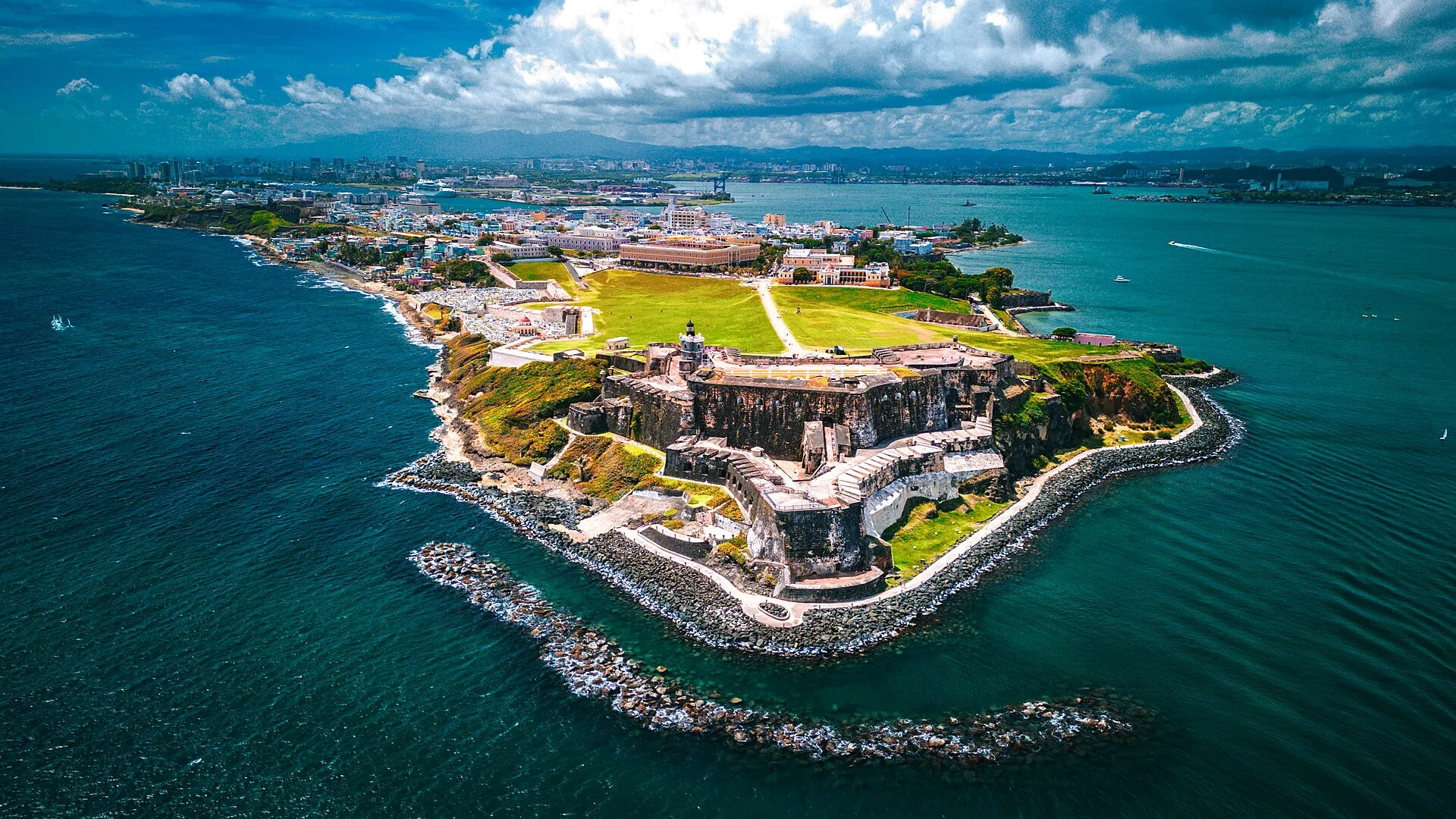
Castillo San Felipe del Morro timeline
-
Construction begins
Spain starts fortifying the headland guarding San Juan Bay to protect treasure fleets bound for Seville.
-
Drake repelled
Sir Francis Drake's fleet is driven off from the harbour mouth by El Morro's guns.
-
Cumberland's overland capture
The Earl of Cumberland takes San Juan from the landward side; disease soon forces the English out.
-
Dutch assault held
Boudewijn Hendricksz burns the town but cannot storm the fort, prompting a full rebuild of the walls.
-
Six-level form completed
A century of Bourbon-era modernisation gives El Morro the layered profile visitors see today.
-
US bombardment and transfer
A US Navy shelling during the Spanish-American War precedes the fort passing to the United States.
-
National Historic Site
Congress establishes San Juan National Historic Site, later administered by the National Park Service.
-
UNESCO World Heritage
El Morro and the San Juan fortifications are inscribed on the World Heritage List.
Fortification History
El Morro was engineered as an artillery fortress, and its defensive record is central to Caribbean military history. The hornwork and layered gun platforms let Spanish cannon rake the mouth of San Juan Bay, and for two and a half centuries the castle turned back every naval assault mounted against it.
- The Drake attack (1595) — Sir Francis Drake bombarded El Morro from the harbour mouth for several days without breaching it; by one celebrated account a Spanish cannonball crashed through the cabin of his flagship as he dined, killing officers at his table. Spanish gunners crippled his ships and forced him to withdraw, and Drake died in the Caribbean the following year
- Cumberland's overland victory (1598) — By landing east of the city and attacking from the undefended land side, the Earl of Cumberland exposed the fort's landward blind spot. He held San Juan for months, but dysentery ravaged his troops and drove the English out — the hard lesson that later justified building Castillo San Cristóbal to guard the eastern approach
- The Dutch assault (1625) — Admiral Boudewijn Hendricksz burned the town but could not storm El Morro itself, prompting a complete rebuilding and extension of the city walls into the 18th century
- Transfer to the US (1898) — After the Spanish-American War the fort passed to the US Army, which garrisoned it through World War II, adding concrete observation posts along the seaward ramparts to watch for German U-boats prowling the Atlantic approaches
Notable Rooms
Climbing El Morro's six levels reveals the working spaces of a self-sustaining garrison:
- The main plaza and gun ramparts — The upper firing platform, ringed with cannon embrasures, offers the fort's signature view back over the city walls toward Old San Juan and out across the Atlantic
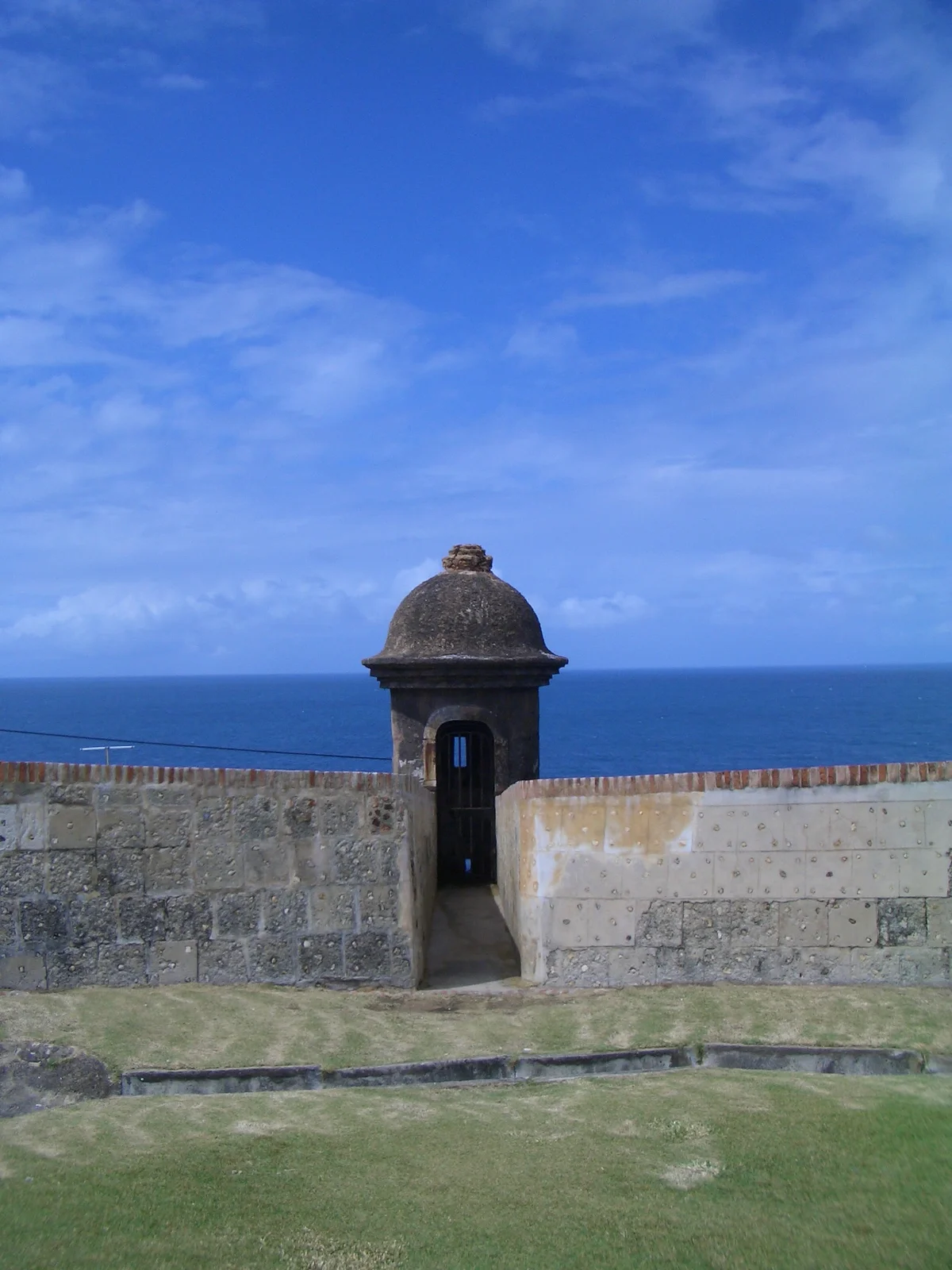
- The garita sentry boxes — The domed stone garitas cantilevered over the sea are the emblem of Puerto Rico itself, reproduced on licence plates and souvenirs across the island; the Devil's Sentry Box legend that clings to its twin at San Cristóbal colours these lonely stone bubbles with centuries of folklore
- The vaulted casemates and barracks — Barrel-vaulted underground rooms once housed 400+ soldiers, with bread ovens, water cisterns, and a chapel that let the fortress hold out for months under siege
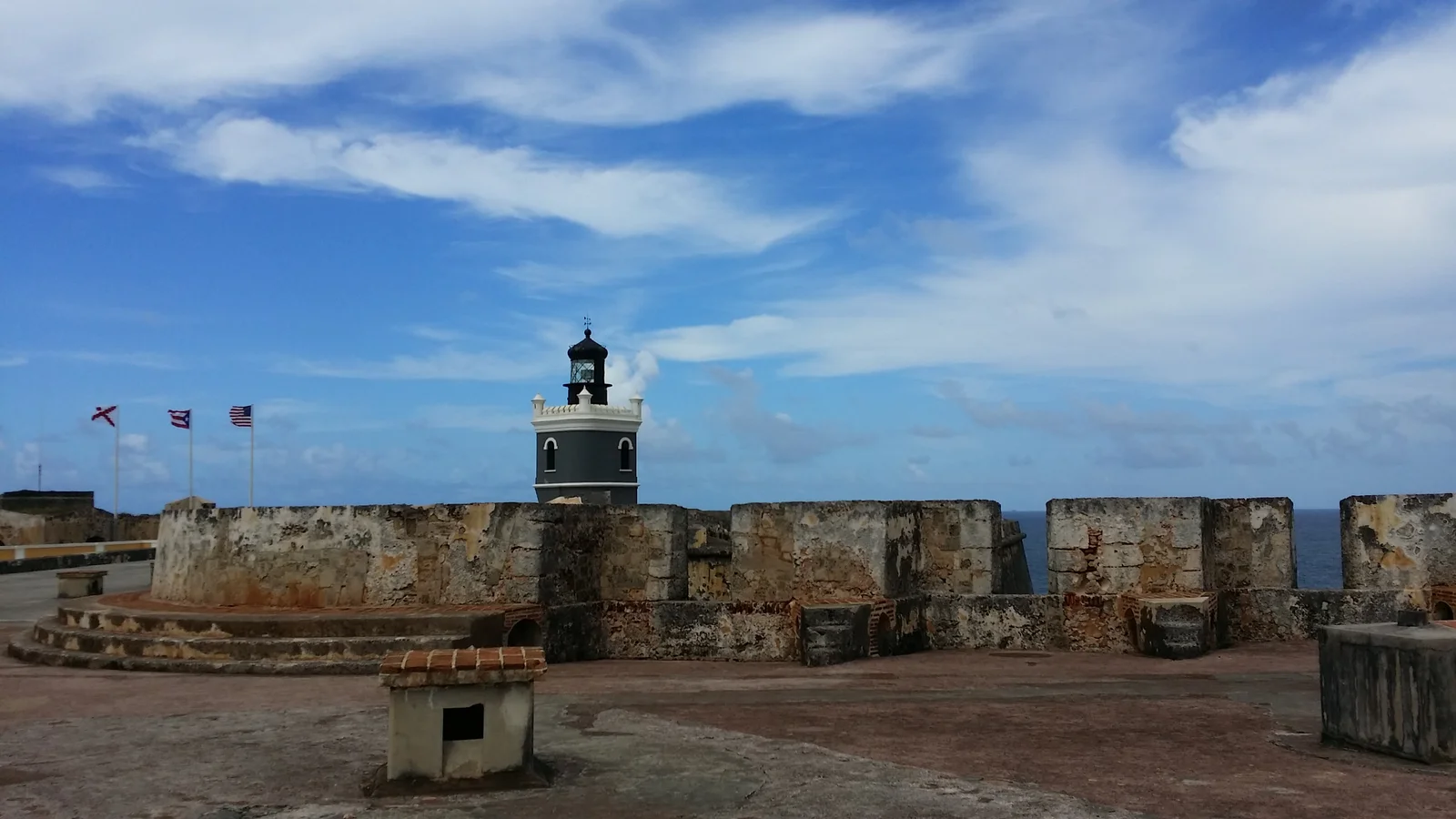
- The lighthouse tower — The highest point of the fort, its 1908 light (the U.S.-built beacon that replaced the Spanish lamp damaged in the 1898 bombardment, still an active aid to navigation) guides ships into the harbour while the tower doubled as a lookout for enemy sails on the horizon
- The dry moat and ramp system — The sloping ramps and dry moat let defenders move artillery between levels while denying attackers any foothold against the escarpment
- The great lawn (esplanade) — The vast green field between the fort and the old city is not a park but a former field of fire, deliberately kept clear of buildings so El Morro's guns had an unobstructed line against any force approaching by land; today it is Puerto Rico's most famous kite-flying ground
Castillo San Felipe del Morro in Pictures
When to Visit
Fort interior: Daily 9 AM–6 PM. Park grounds (the great lawn): Daily 6 AM–9 PM. Ranger programs typically run at 10 AM and 2 PM — confirm the day's schedule at the ticket desk, and note that talks are given in both English and Spanish.
- Best arrival — Reach the lawn by 7–8 AM, before the fort opens, for unobstructed photographs and golden-hour light raking across the bastions
- Avoid — Friday and Saturday afternoons, when cruise-ship tours concentrate at the lower entrance and the ticket line is longest
- Late afternoon — The lawn fills with kite-flyers and local families, and the low sun turns the grass gold against the grey stone — the fort closes at 6 PM, but the grounds stay open until 9 PM
- Check ahead — Hours can shift on federal holidays and during storm advisories; the NPS San Juan National Historic Site page is the authoritative source
Admission and Costs
Entry is $10 per adult, free for under-15s. The $20 combination ticket covering both El Morro and Castillo San Cristóbal is valid two days and is the strongest value for anyone seeing both forts — buy it once and walk the walls between the two.
- NPS ranger tour — Free with admission; no reservation needed
- Private licensed guide — $20–40 per person for a roughly 90-minute interpretation
- Audio guide — Available at the entrance for about $5 in English and Spanish
- Free entry — Seniors, active military, and America the Beautiful / Access Pass holders; the National Park Service also runs a handful of fee-free days each year, published on its official fees page
The Case for a Guide
El Morro's physical complexity rewards a guide who can translate military architecture into narrative, and an NPS-authorized guide or licensed private interpreter turns a walk over old stone into the story of an empire's Atlantic frontier.
- The geometry of the bastions — Each projecting triangular bastion was positioned so that artillery could fire along the wall face without blind angles, preventing attackers from hugging the base; a guide walks the ramparts pointing out exactly which cannons covered which approach vectors
- The lighthouse's double function — The lighthouse visible from the upper level guided friendly ships into the harbour while simultaneously serving as an observation post for enemy sails; a guide explains why its height was calculated to be seen far out to sea yet give attackers no easy landmark
- The escarpment height calculation — The walls rise some 43 metres (140 feet) above sea level — high enough to keep cannonballs fired from ships at the harbour mouth from reaching the gun platforms; a guide demonstrates the angle from the water's edge
- The casemates and garrison life — The vaulted underground rooms held 400+ soldiers in conditions of remarkable organization — a guide shows the bread ovens, water cisterns, and chapel that made the fortress a self-sustaining community capable of holding out for months under siege
- The two-fort system — El Morro only makes full sense paired with Castillo San Cristóbal; a guide explains how the sea fort and the land fort divided the defence of the peninsula between them
Tips for Visitors
- Arrive early — The great lawn opens at 6 AM and the morning light on the Atlantic fortifications is spectacular before the fort itself opens at 9 AM
- Buy the combination ticket — The $20 two-day pass also admits you to Castillo San Cristóbal; both forts are needed to understand how the complete defensive system worked
- Sun protection — There is no shade on the upper ramparts, so a hat, sunscreen, and water are essential, especially from May to October
- Best photograph — The view from the lighthouse level looking back over the city walls toward Old San Juan is the finest in Puerto Rico; take it in the first hour after opening before other visitors arrive
- Make a day of it — Pair the fort with the pastel streets of Old San Juan and, if you have a second day, the cloud forest of El Yunque National Forest an hour east — the two are the classic one-two of any San Juan itinerary
Frequently Asked Questions
When is the best time to visit El Morro?
Open year-round, 9 AM–6 PM daily; the park grounds (the great lawn) open at 6 AM. The best time is early morning between 7 and 9 AM, before cruise ship passengers arrive and while the Atlantic light is at its most dramatic on the stone bastions. December through April is the most comfortable season — the northeast trade winds cool the exposed ramparts and skies are generally clear. Summer visits are hot on the shadeless upper levels; bring water and a hat if visiting between May and October.
How much does it cost to visit El Morro?
Entry is $10 per adult (16+), free for children under 15, with a $20 combination ticket covering both El Morro and Castillo San Cristóbal — the combination ticket is valid for two days and is the best value for visitors planning to see both forts. Senior, military, and Access Pass holders receive free or discounted entry. NPS-authorized guides are available inside the fort for $20–40 per person for a 90-minute guided tour; private guides accompanying visitors are permitted with prior coordination.
How long does a visit to El Morro take?
A self-guided visit through the fort's six levels takes about 90 minutes. Adding the NPS ranger program or a private guide extends the visit to 2–2.5 hours. The great lawn outside the fort is a popular kite-flying area and worth additional time, especially in the late afternoon when families arrive and the Atlantic light turns the grass gold. Allow time to walk the full length of the city walls from El Morro toward San Cristóbal — about a 20-minute walk with views over the Atlantic on one side and the old city on the other.
How do you get to El Morro, and is it accessible?
El Morro sits at the northwestern tip of Old San Juan, a 10–15 minute walk up Calle Norzagaray or across the great lawn from the Plaza del Quinto Centenario. There is no parking at the fort itself; drivers use the Doña Fela or Frente Portuario garages near the cruise piers and walk up, and the free Old San Juan trolley stops nearby. The visitor entrance, ticket desk, restrooms, and lower plaza are wheelchair accessible, but the upper gun platforms and the ramps between the six levels are steep cobbled inclines with no elevator, so the highest ramparts are difficult for visitors with limited mobility. Wear flat, grippy shoes — the historic ramps are slick after rain.