
Formation
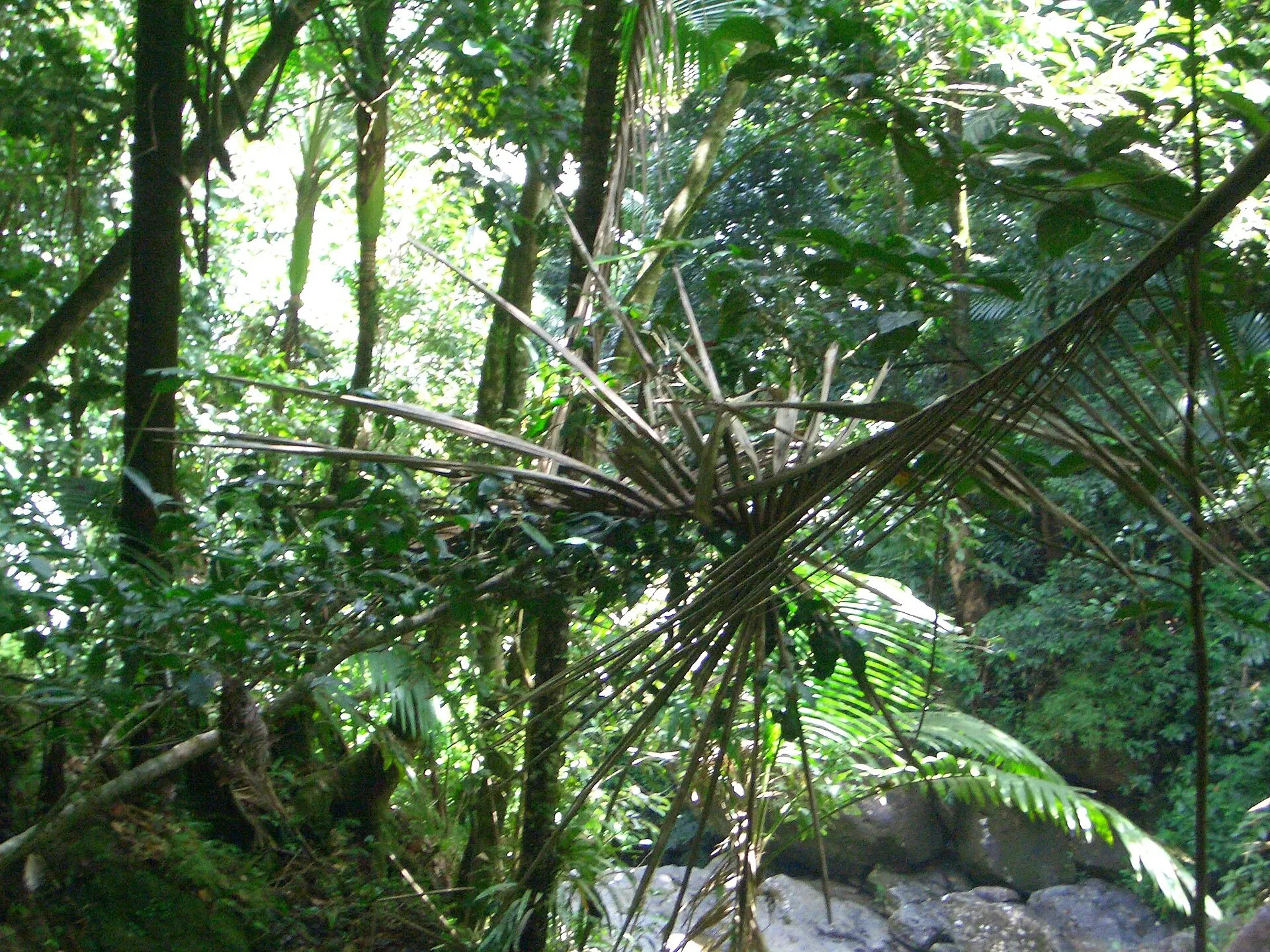
El Yunque's ecology rewards those who look slowly:
- La Mina Falls — The most accessible waterfall in the forest, a 15-minute walk from the Big Tree Trail parking area; the cascade drops into a swimming pool popular with local families, best visited early morning before crowds arrive
- The cloud forest canopy — At the 1,065-meter summit (El Yunque Peak), cloud forest trees drip with epiphytic bromeliads and orchids; a specialist guide can identify dozens of orchid species that are invisible to the untrained eye among the moss-covered branches
- The coquí at night — The endemic coquí tree frog begins its two-note call ("ko-KEE") at dusk and continues through the night; evening forest walks with a headlamp in the lower tabonuco forest offer the best chance of seeing — not just hearing — these tiny frogs clinging to leaves
When to Visit
El Portal Visitor Center: Daily 9 AM–4:30 PM. The parking area and main trailheads: 7 AM–6 PM. Best arrival: 7–8 AM at La Coca Falls trailhead before tour buses arrive. Afternoon showers: Common from 1–4 PM; morning visits are more reliably clear. Hurricane closures: El Yunque suffered severe damage from Hurricane Maria in September 2017 and remained partially closed for over a year; the forest has largely recovered but check USDA Forest Service advisories before visiting following any major storm.
Admission and Costs
Timed entry pass: $2 per vehicle reserved in advance at recreation.gov; walk-in entry is permitted when capacity allows but is not guaranteed on weekends. El Portal Visitor Center: Free. La Mina Falls trail: Free. Guided tours: $60–120 per person for group tours from San Juan including transport. Private naturalist guide: $150–300 for a half-day in the forest with transport; specialist birdwatching guides slightly higher.
The Case for a Guide
El Yunque is richest with a naturalist guide who can decode what the forest is saying:
- Puerto Rican parrot identification — Wild parrots are heard more often than seen; a guide who has worked with the parrot recovery program knows the territories of specific flocks and the flight paths they follow between feeding trees, dramatically increasing the probability of a sighting
- Hurricane Maria recovery story — The 2017 storm stripped nearly all the leaves from the forest canopy in a single night; a guide who worked in the recovery program can show the before and after, explain how forest succession proceeded, and identify the areas that are still recovering from the most severe damage
- Ethnobotany of the tabonuco trees — The dominant tree of the lower forest, the tabonuco (Dacryodes excelsa), produces a resin the Taíno people used for torches, medicine, and ceremonial purposes; a guide who knows the Taíno traditions connects the visible tree to centuries of human relationship with the forest
Tips for Visitors
Arrive early: The trailhead parking fills by 9 AM on weekends — arriving at 7 AM virtually guarantees a space. Waterproof layer: Even on clear mornings, a light rain jacket is useful; the cloud line descends unpredictably. Swimming: La Mina Falls has a swimming hole that is cold, clear, and safe in dry season — bring a towel. Combine with Luquillo: The food kiosks on PR-3 near Luquillo beach are 20 minutes from El Yunque and serve the best alcapurrias (stuffed fritters) on the island — a natural post-forest lunch stop.
Frequently Asked Questions
When is the best time to visit El Yunque?
El Yunque receives rain year-round — this is a rainforest, and daily showers are normal even in the driest months of January through March. The best strategy is to visit early (arrive at 7 AM when the El Portal visitor center opens) to beat both the rain and the tour groups. Mornings are clearer than afternoons, and the highest peaks often disappear into cloud by midday regardless of season. The driest and most comfortable period is December through April, corresponding to San Juan's trade-wind season.
How do you get to El Yunque from San Juan?
El Yunque is approximately 45 minutes east of San Juan via PR-3 and PR-191. There is no public bus service. Options include renting a car (most flexible), joining an organized guided tour from San Juan ($60–120 per person, departs most hotels), or hiring a private driver ($80–150 round trip). Many tour operators combine El Yunque with the Luquillo beach area and Luquillo food kiosks for a full-day excursion.
Is El Yunque accessible without a guide?
The main Angelito, La Coca, and La Mina trails are well-marked and accessible independently. The El Portal Rainforest Center offers excellent exhibits on the forest's ecology and wildlife. However, specialist naturalist guides dramatically improve the experience — they identify bird calls (including the endemic Puerto Rican parrot), explain the cloud forest ecology, and access off-trail areas unavailable to self-guided visitors. Guides who led conservation work after Hurricane Maria in 2017 can also explain the forest's remarkable recovery.