
Fortification History
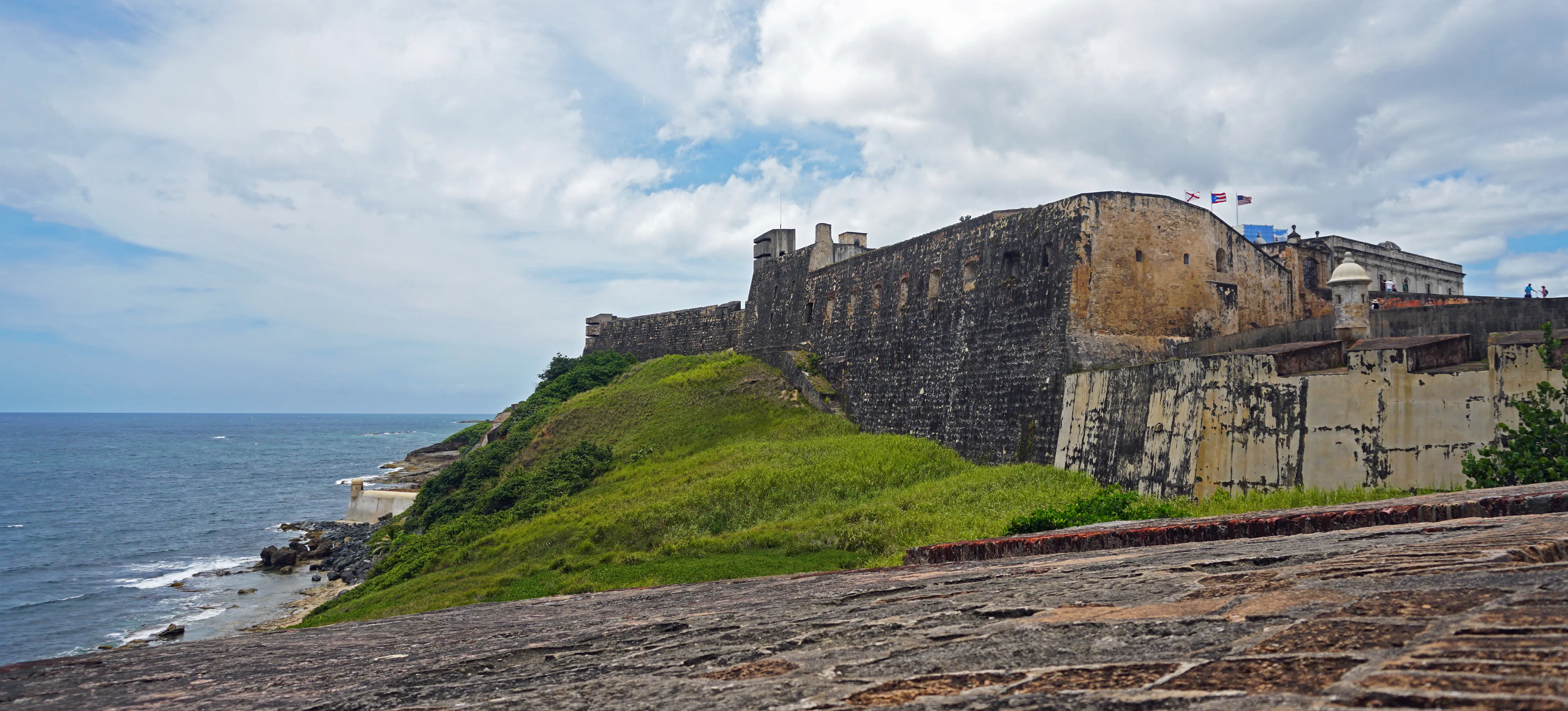
San Cristóbal was built to answer defeats El Morro could not prevent. In 1598 the Earl of Cumberland took San Juan by landing his army east of the city and marching overland, and in 1625 the Dutch commander Boudewijn Hendricksz repeated the trick, occupying and burning the town before withdrawing. Both attackers exploited the same weakness: the peninsula had no land-facing defense. Spain's answer, expanded from 1765 under engineers Tomás O'Daly and Juan Francisco Mestre, was a defense-in-depth system of seven concentric works — outer walls, a covered road, counter-guards, moats, and an inner citadel — so that seizing any outer line only exposed the attacker to fire from the works behind it.
The design was tested in the 1797 British siege led by Sir Ralph Abercromby with roughly 7,000 troops; the garrison held, and the British abandoned the attempt after two weeks. San Cristóbal also fired some of the first shots of the Spanish-American War in 1898, and remained militarily useful enough that the US Army garrisoned it through World War II, watching the Atlantic approaches for German U-boats.
Notable Rooms
San Cristóbal rewards visitors who explore its interlocking spaces rather than rushing the ramparts:
- The Devil's Sentry Box (Garita del Diablo) — The oldest sentry post at the Atlantic cliffside, reached by a long tunnel; a legend holds that a guard stationed here vanished overnight in the 18th century, embedding the spot in Puerto Rican folklore
- The upper gun platforms — The highest ramparts carry the fort's heavy ordnance positions and open onto sweeping views over Old San Juan, the bay, and the open Atlantic
- The tunnel network — Cool underground passages linking the seven defensive systems let defenders shift between positions unseen; walking them conveys how the fort functioned as a self-contained garrison
- The Plaza de Armas and troop quarters — The central parade ground and the vaulted barracks, cisterns, and powder magazines around it show how a garrison lived and provisioned for a months-long siege
- The Devil's Sentry observation post — A concrete lookout the US Army added in 1942, perched incongruously atop an 18th-century bastion
When to Visit
Daily 9 AM–6 PM. Best time: 9–11 AM weekdays before cruise passengers arrive. Ranger programs: Typically at 10 AM and 2 PM — check the schedule at the entrance. Allow: 90 minutes minimum for self-guided visit; 2–2.5 hours with ranger or guide. Evening note: The views of Old San Juan from the upper gun platforms are spectacular at sunset, but the fort closes at 6 PM.
Admission and Costs
Entry: $10 per adult, free under 15. Combination ticket with El Morro: $20, valid 2 days — best value. NPS ranger programs: Included with entry. Private guide: $20–40 per person for a 90-minute guided interpretation; licensed private guides may accompany groups.
The Case for a Guide
San Cristóbal's complexity rewards a guide who can reconstruct how it was designed to be used:
- The killing ground geometry — The spaces between defensive lines were deliberately designed to concentrate attacking forces while maximizing the defenders' fire coverage; a guide positions you in these spaces and shows you from the attacker's perspective exactly why each approach was lethal
- The Devil's Sentry Box legend — The story of the vanished sentry is embedded in Puerto Rican folklore; a guide connects the physical location to its cultural resonance in Puerto Rican literature and popular imagination
- The WWII additions — The concrete observation post added by the US Army in 1942 sits incongruously atop an 18th-century bastion; a guide explains what the Army was watching for (U-boats operating in the Florida Strait) and why this peninsula was considered a strategic Atlantic asset 150 years after Spain built these walls
Tips for Visitors
Buy the combination ticket: At $20 it covers both forts and is valid for two days — see San Cristóbal first in the morning, then walk the city walls to El Morro in the afternoon. The upper gun platform: Climb to the highest level for the best view over Old San Juan — you can see the full layout of the colonial city and the bay from here. Tunnel walk: The underground passages are cool even on hot days and give the best sense of how the fortress functioned as a self-contained military community. Photography: The Atlantic cliffside views from the Devil's Sentry Box are among the most dramatic in Puerto Rico.
Frequently Asked Questions
What is the best time to visit Castillo San Cristóbal?
The fort is open daily 9 AM–6 PM year-round. Weekday mornings between 9 and 11 AM are the least crowded; Friday and Saturday afternoons draw the largest cruise ship and weekend crowds. The upper gun platforms have no shade — early morning visits are cooler and provide the best light for photography of the city below and the Atlantic horizon. December through April is the most pleasant season, when northeast trade winds cool the exposed ramparts.
How much does it cost to visit Castillo San Cristóbal?
Entry is $10 per adult (16+), free for under-15s, with a $20 combination ticket covering both Castillo San Cristóbal and El Morro — valid for two days, this is the best value for visitors planning to visit both forts. NPS ranger programs run throughout the day and are included with admission. Senior, military, and America the Beautiful Pass holders receive free or reduced entry.
How does Castillo San Cristóbal differ from El Morro?
El Morro guards San Juan Bay from sea attack — a single massive fort on the Atlantic tip of the peninsula. San Cristóbal is the land-side fortress, designed to defeat armies that had already landed and were approaching from the east. Its complexity is far greater than El Morro's — seven concentric defensive systems with interconnecting tunnels, trap areas, and moats designed so that capturing any outer section exposed the attacker to fire from multiple inner positions simultaneously. Together, the two fortresses made San Juan almost militarily impregnable by the 18th century.