
Tromsø timeline
-
Town charter granted
Tromso became a chartered town and northern trading hub.
- 19th century
Arctic gateway
Expeditions, trade, and polar science made Tromso a base for the High North.
-
University founded
The university strengthened Tromso's role as a northern research city.
Cited city facts
Key facts for visiting Tromsø
Tromsø sits at 69.6°N, making it the world's northernmost city with a university and regular scheduled flights
The University of Tromsø (UiT Arctic University of Norway), founded in 1968, makes the city an unexpected hub of polar research, indigenous Sámi studies, and Arctic medicine — giving Tromsø a cosmopolitan, intellectual character that surprises many first-time visitors expecting only wilderness
The polar night in Tromsø lasts from 27 November to 15 January — 49 continuous days without direct sunlight
During polar night, the sun never rises above the horizon, though a twilight blue glow illuminates the mountains for a few hours each midday. Rather than a hardship, Tromsø has turned polar night into a celebration — the Nordlysfestivalen (Northern Lights Festival) fills theatres and concert halls during January with world-class classical music
Tromsø hosts the world's northernmost botanical garden, which blooms despite 49-day polar winters
The Arctic-Alpine Botanic Garden (Arktisk-alpin botanisk hage) at the University of Tromsø maintains collections of arctic and alpine plants from all over the world — including plants from Svalbard, Alaska, and Siberia — demonstrating remarkable horticultural adaptation to extreme light and temperature cycles
Roald Amundsen departed from Tromsø's harbour on his final Arctic expedition in June 1928
The polar explorer who was first to reach the South Pole in 1911 launched a search-and-rescue mission for missing Italian airship survivors from Tromsø, and was never seen again — cementing the city's identity as the launchpad for Norway's extraordinary tradition of polar exploration
Source: tour-guide.com — Free to cite with attribution
Things to see
What are the top attractions in Tromsø?
- Northern Lights experiences — Guided aurora chases by minibus or snowmobile to dark fjord valleys, October–March
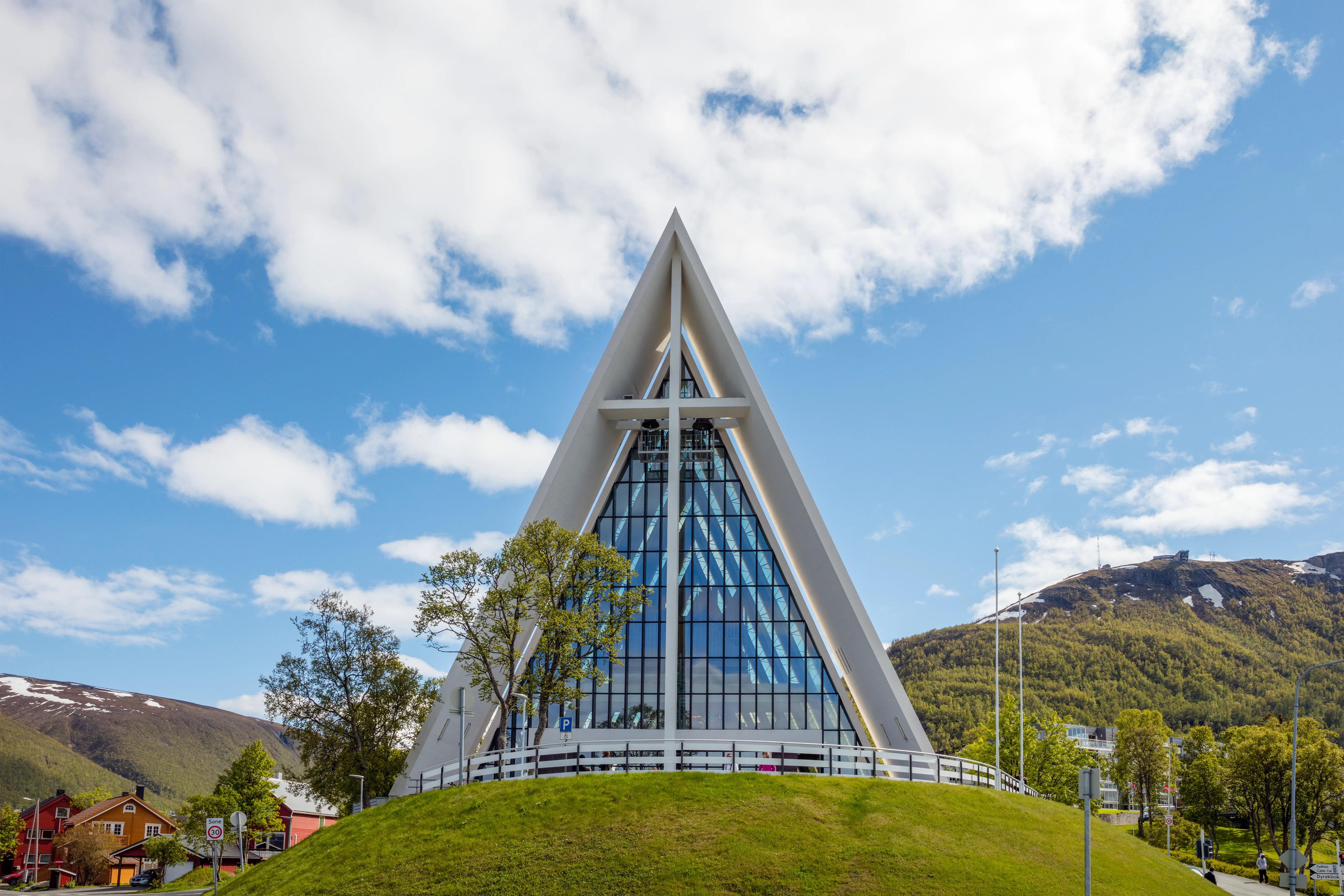
- Arctic Cathedral (Ishavskatedralen) — Striking 1965 cathedral with enormous stained-glass west window depicting the Second Coming; guided organ concerts in summer
- Whale watching from Skjervøy — Humpback and orca in the fjords November–January; guided zodiac or RIB boat tours
- Midnight sun cruises — Fjord boat tours at 11 PM–2 AM under golden light, May–July
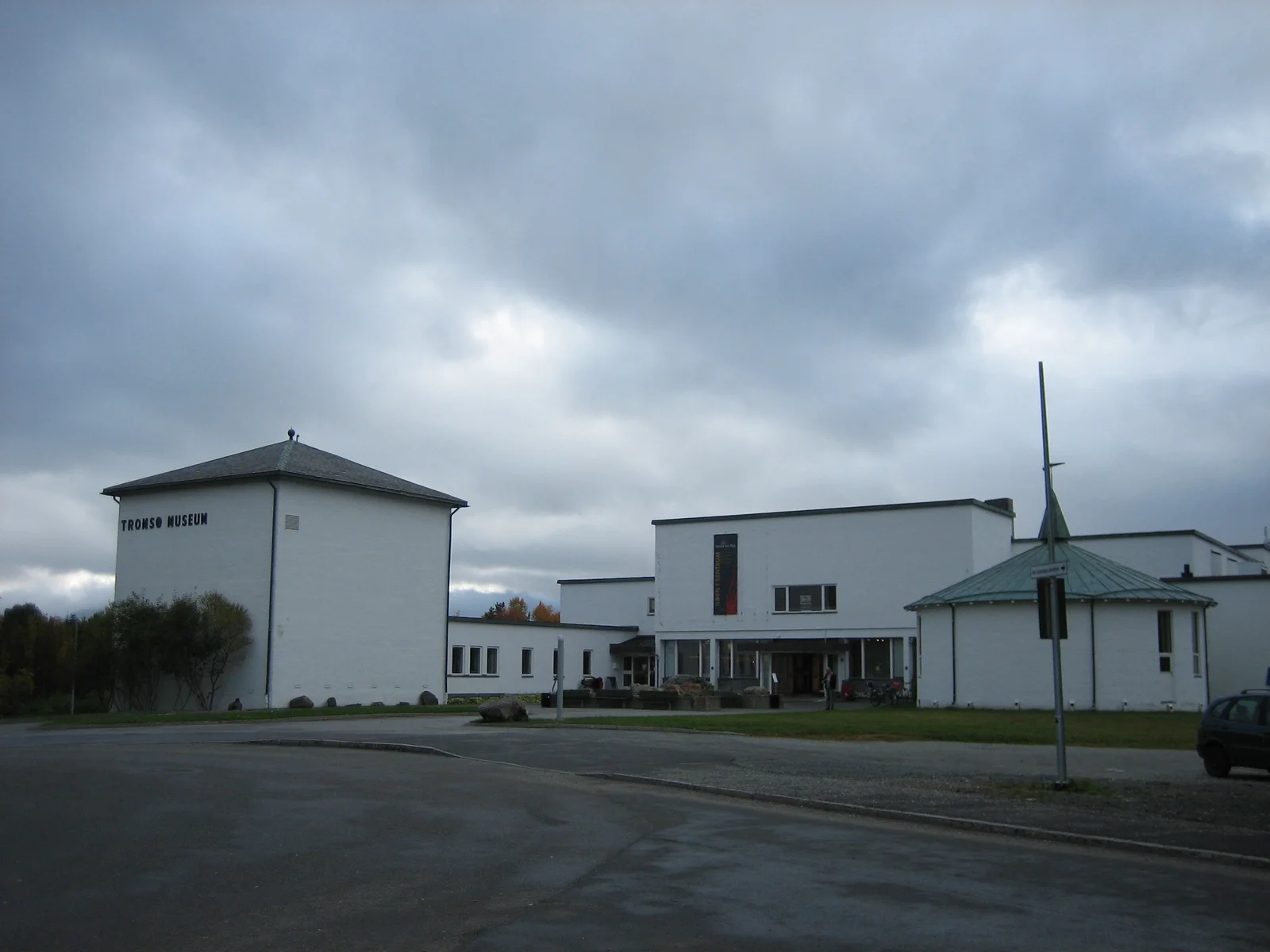
- Tromsø University Museum — Permanent exhibition on Northern Lights science, Sámi culture, and Arctic natural history
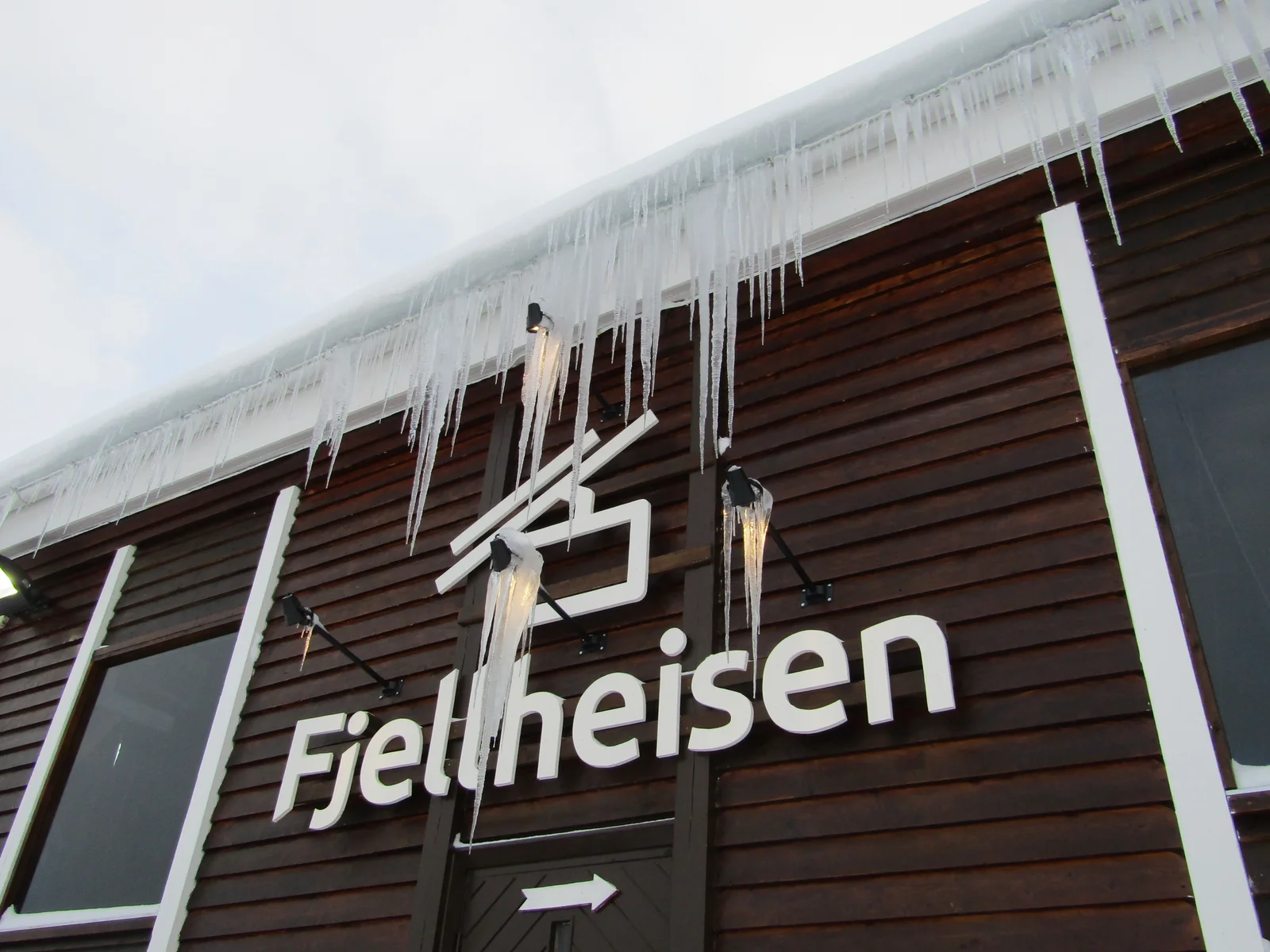
- Fjellheisen cable car — 10-minute ride to 420 metres above Tromsø for panoramic views of the city, islands, and open sea
Arctic Cathedral
A soaring triangle of white concrete and glass built for the light of the far north
Fjellheisen Cable Car
A four-minute climb to the balcony viewpoint over Tromsø, its island and its mountains
Tromsø University Museum
Northern Norway's oldest museum, decoding the Sámi north, the Arctic and the aurora
Guide planning
How much does a tour guide cost in Tromsø?
| Tour Type | Price | Details |
|---|---|---|
| Northern Lights minibus tour (3–4 hrs) | NOK 1,200–1,800 per person | Guide drives to clear skies |
| Northern Lights snowmobile excursion | NOK 2,000–2,800 per person | Active adventure, minimum age 18 |
| Whale watching day trip (8–10 hrs) | NOK 1,800–2,500 per person | From Tromsø including transport to Skjervøy |
| Midnight sun fjord cruise (3 hrs) | NOK 800–1,200 per person | May–July departures |
| Private city guide (3 hrs) | NOK 1,800–3,000 | Arctic history, Sámi culture, WWII |
| Fjellheisen cable car (return) | NOK 235 | Adults; open year-round, best views at midnight in summer |
Book a Local Guide
The guides below are independent local businesses we recommend purely on editorial merit. We don't sell placement and we earn no commission when you book with them — see our booking and affiliate disclosure.
Season planner
When is the best time to visit Tromsø?
- January–February — Peak Northern Lights season, long polar nights, whale watching still active, coldest temperatures (-10°C to -18°C)
- October–November — Aurora season begins, whale watching peaks in November, fewer tourists than midwinter
- March — Late aurora season with milder temperatures; Sami Week (Samefolkets dag) in February celebrates indigenous culture
- July — Midnight sun at its most spectacular; ridge hiking, kayaking, and wildlife in constant daylight
- May and June — Midnight sun begins; shoulder season with good availability and the botanical garden in bloom
Spring
Mar-May
Summer
Jun-Aug
Autumn
Sep-Nov
Winter
Dec-Feb
Each score averages that season’s monthly ratings out of 5. The top-rated window is usually the peak season too, so read the guidance above for its trade-offs before you book.
On the ground
How do you get around Tromsø?
- Walking — Tromsø's city centre on the island is compact and mostly flat; the Arctic Cathedral is a 10-minute walk across the bridge
- Bus — City buses connect the island to the mainland and outlying neighbourhoods; single ride NOK 42 via the Ruter app
- Fjellheisen cable car — Departs from Solliveien on the mainland side; 10 minutes from the city centre by taxi or bus 26
- Northern Lights tours — All reputable operators provide round-trip transport from central Tromsø hotels in heated vehicles
- Taxi — Widely available; Uber does not operate in Tromsø; pre-book for early morning and late-night returns from aurora tours
- Hurtigruten — The coastal ferry calls at Tromsø northbound and southbound, connecting to Hammerfest, Honningsvåg, and ultimately Kirkenes on the Russian border
Frequently Asked Questions
What is the best time to see the Northern Lights in Tromsø?
The Northern Lights season in Tromsø runs from late September through late March, with January and February offering the longest polar nights and therefore the most viewing hours per night. The aurora requires three conditions: solar activity (measured by the Kp-index), clear skies, and darkness. Tromsø's position above the auroral oval means the lights are overhead rather than on the horizon, and the city's gulf stream climate keeps temperatures more bearable than inland Arctic destinations — expect -5°C to -15°C on clear winter nights. Guides track real-time forecasts and know the valleys and fjord arms where light pollution is minimal. November and March can produce spectacular displays with shorter cold-weather commitment; avoid July and August as the midnight sun makes the sky too bright for aurora observation.
What is it like during the midnight sun period?
From 19 May to 26 July, the sun never sets in Tromsø — it traces a full circle above the horizon, dipping only slightly in the north at 2 AM before rising again. The effect is genuinely disorienting at first: restaurants are packed at 11 PM, hikers are on the trails at midnight, and the fjord glows in a golden light that shifts between orange, pink, and silver through the night hours. The city comes fully alive during this period, with outdoor festivals, midnight sun cruises, and some of the most atmospheric wildlife watching in Europe, as seabird colonies, porpoise, and occasional orca are active around the clock.
Is it possible to see whales near Tromsø?
Yes — humpback and orca (killer whale) follow herring shoals into the fjords near Skjervøy, about 90 km north of Tromsø, typically from November through January when the herring spawn is at its peak. Guided boat tours depart from Tromsø's harbour and from Skjervøy, with zodiac and rigid inflatable vessels getting close enough for extraordinary encounters. Tours cost NOK 1,500–2,500 per person for a 6–8 hour excursion including transport. The same boats that do whale tours in winter often convert to midnight sun fjord cruises in summer, showcasing the same dramatic landscape in entirely different light.